Pluto's planetary status remains fiercely contested two decades after demotion
A controversial 2006 vote stripped the frozen world of its major status, sparking an enduring scientific divide over how astronomers define a planet.
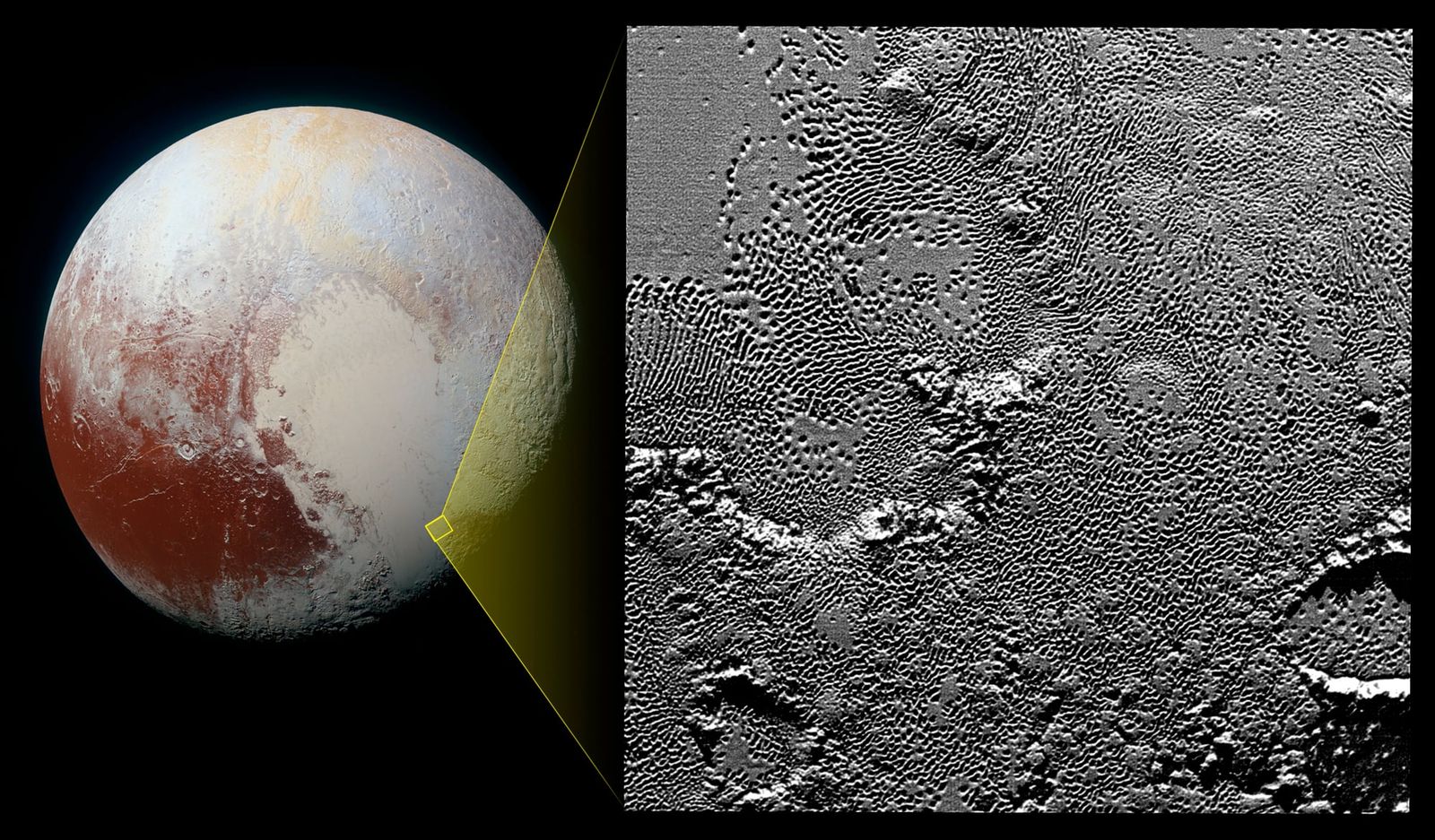
For more than seven decades, classroom wallcharts and astronomy textbooks presented a tidy cosmic order of nine planets orbiting the Sun. That certainty dissolved in August 2006 when the International Astronomical Union convened in Prague to vote on a formal definition of what constitutes a planet.12 When the ballots were counted, Pluto was relegated to the status of dwarf planet, reducing the recognized planetary census of our solar system to eight.12
The downgrade transformed Pluto from a quiet celestial body on the perimeter of the solar system into a symbol of scientific disagreement. Twenty years after the Prague assembly, the dispute over Pluto has grown increasingly polarized rather than fading into historical consensus. Planetary researchers continue to debate whether planethood should depend on the intrinsic physical properties of an object or on the specific orbital path it travels through space.
To understand why the designation changed, it helps to examine how astronomers categorize objects moving through the cosmos. A planetary system begins as a disk of dust and gas circling a central star. Over millions of years, gravitational attraction pulls material together into distinct lumps. Some lumps accumulate enough mass to compress themselves into rounded spheres under their own gravity. The largest among these bodies gradually alter the orbits of nearby debris, either pulling smaller fragments inward during collisions or slinging them into distant paths until the orbital track is largely empty.
For decades, astronomers lacked a formal scientific boundary separating major planets from smaller icy rocks. The search for Pluto began after the astronomer Percival Lowell published calculations in 1915 predicting a hypothetical Planet X whose gravitational pull was thought to disturb the orbits of Uranus and Neptune.12 In 1930, Clyde Tombaugh discovered a faint moving speck on photographic plates at Lowell Observatory in Arizona, which was christened Pluto and accepted as the ninth planet.21 Decades later, researchers realized Lowell's calculations rested on an overestimation of Neptune's mass, and Pluto turned out to be far smaller than initially assumed, containing less mass than Earth's moon.12

What prompted the decision to reclassify Pluto?
The discovery of distant worlds beyond Neptune forced astronomers to establish formal criteria for what qualifies as a planet. Starting in 1992, researchers began identifying a vast population of icy bodies in the Kuiper Belt, a frigid reservoir of debris orbiting past Neptune.21 The decisive turning point arrived in 2005 when an observing team led by the astronomer Mike Brown at the Palomar Observatory identified a distant body later named Eris.12 Calculations revealed that Eris was roughly the same size as Pluto, with less volume but greater mass, and that it also possessed a satellite.12
The identification of Eris made it impossible to maintain the status quo without expanding the planetary roster. Sky surveys were already uncovering other substantial frozen bodies in the trans-Neptunian region, including Sedna, Haumea, and Makemake.1 If Pluto remained a major planet simply because of historical tradition, then Eris and potentially dozens or hundreds of similar Kuiper Belt objects would inevitably demand the same recognition.
Confronted with this dilemma, the International Astronomical Union formed a Planet Definition Committee to collect input from scientists, historians, and educators over two years.2 At the 2006 General Assembly, members voted to adopt a three-part standard. To qualify as a planet, a celestial body must orbit the Sun, possess sufficient mass to pull itself into a nearly round shape through hydrostatic equilibrium, and have cleared the neighbourhood around its orbit.21 Because Pluto shares its orbital zone with a multitude of Kuiper Belt bodies, it failed the third requirement and was classified alongside Eris as a dwarf planet.12
Why do planetary scientists dispute the orbital clearing rule?
Critics of the definition argue that determining planethood by whether a body clears its orbit creates an arbitrary standard that ignores an object's actual physical makeup. Laurel Kornfeld, an amateur astronomer and advocate for Pluto, noted that under the current rules, an identical physical body could be classified as a planet in one orbit but disqualified if placed in another.1 The planetary scientist Alan Stern pointed out that if Earth itself were transported to Pluto's distant location, it would lack the gravitational influence needed to sweep clear such a vast volume of space, causing it to lose its planetary classification.1
This fundamental disagreement split researchers into two camps. Dynamicists focus primarily on an object's celestial mechanics, orbital position, and gravitational dominance over its surroundings. In contrast, the geophysical camp argues that planethood should be defined by intrinsic physical characteristics, such as whether an object has sufficient gravity to become round and sustain geological processes. Philip Metzger, director of the Stephen W Hawking Centre for Microgravity Research and Education at the University of Central Florida, stated that the orbital clearing metric makes the formal classification unusable for researchers studying planetary surfaces and interiors.1

The geophysical argument gained substantial physical evidence in 2015 when the New Horizons spacecraft completed its historic flyby of Pluto. Instruments on the probe beamed back images of soaring water ice mountains, vast plains of frozen nitrogen, and evidence of recent geological activity.1 Advocates pointed to these complex landscapes as proof that Pluto behaves like a dynamic planet rather than an inert hunk of space rock.
How could expanding the definition alter the planetary roster?
Adopting a geophysical standard would dramatically increase the number of recognized planets across the solar system. If any round body with complex geology qualifies, the planetary registry would swell to include several hundred Kuiper Belt objects, large asteroids such as Ceres, and dozens of planetary moons. Paul Byrne, an associate professor of earth, environmental, and planetary sciences at Washington University in St Louis, maintained that science should welcome a larger planetary inventory, comparing the situation to the extensive rosters of characters that children easily memorize.1
Opponents of reinstatement contend that classifying moons as planets undermines centuries of astronomical distinction. Mike Brown argued that the scientific community decided long ago that Earth's moon is a satellite rather than a planet, and that maintaining that logic necessarily excludes Pluto.1 Byrne countered that a single celestial body can easily fulfill multiple descriptive roles at once, serving simultaneously as a satellite because of its orbit and as a planet because of its geophysical nature.1
The classification debate also exposes the inherent limitations of rigid scientific taxonomies. The resolutions drafted by the International Astronomical Union are conventions established to assist scientific communication, not immutable physical laws.2 In nature, celestial objects exist along a continuous spectrum: comets exhibit behavior reminiscent of asteroids, brown dwarfs blur the line between giant gas planets and faint stars, and dwarf planets share numerous geophysical qualities with their larger siblings.2 The official definitions cannot resolve every edge case, and planetary scientists who examine internal structures often continue to use terminology that differs from the conventions preferred by astronomers tracking orbits.
Two decades after the Prague vote, Pluto's status continues to stir public sentiment and political commentary, including remarks by commercial spaceflight figures and public petitions seeking reinstatement. Yet many researchers on both sides agree that another formal administrative vote is unlikely to settle the underlying scientific tension. Instead, researchers who study planetary geology continue examining Pluto through the lens of its active landscapes, while dynamicists continue categorizing the solar system by the gravitational architecture of its orbital pathways.
What this rests on
21 sentences trace to 2 sources.
-
1
TG
The Guardian Document · theguardian.com Forbidden planet: was Pluto’s 2006 demotion a big mistake? See the source
-
2
I
iauarchive.eso.org Third-party reporting · iauarchive.eso.org International Astronomical Union | IAU See the source