A slow planetary spin could explain why Venus lacks a moon
Tidal forces from a sluggish rotation would drag any natural satellite downward into a collision, altering how astronomers evaluate rocky worlds across the galaxy.
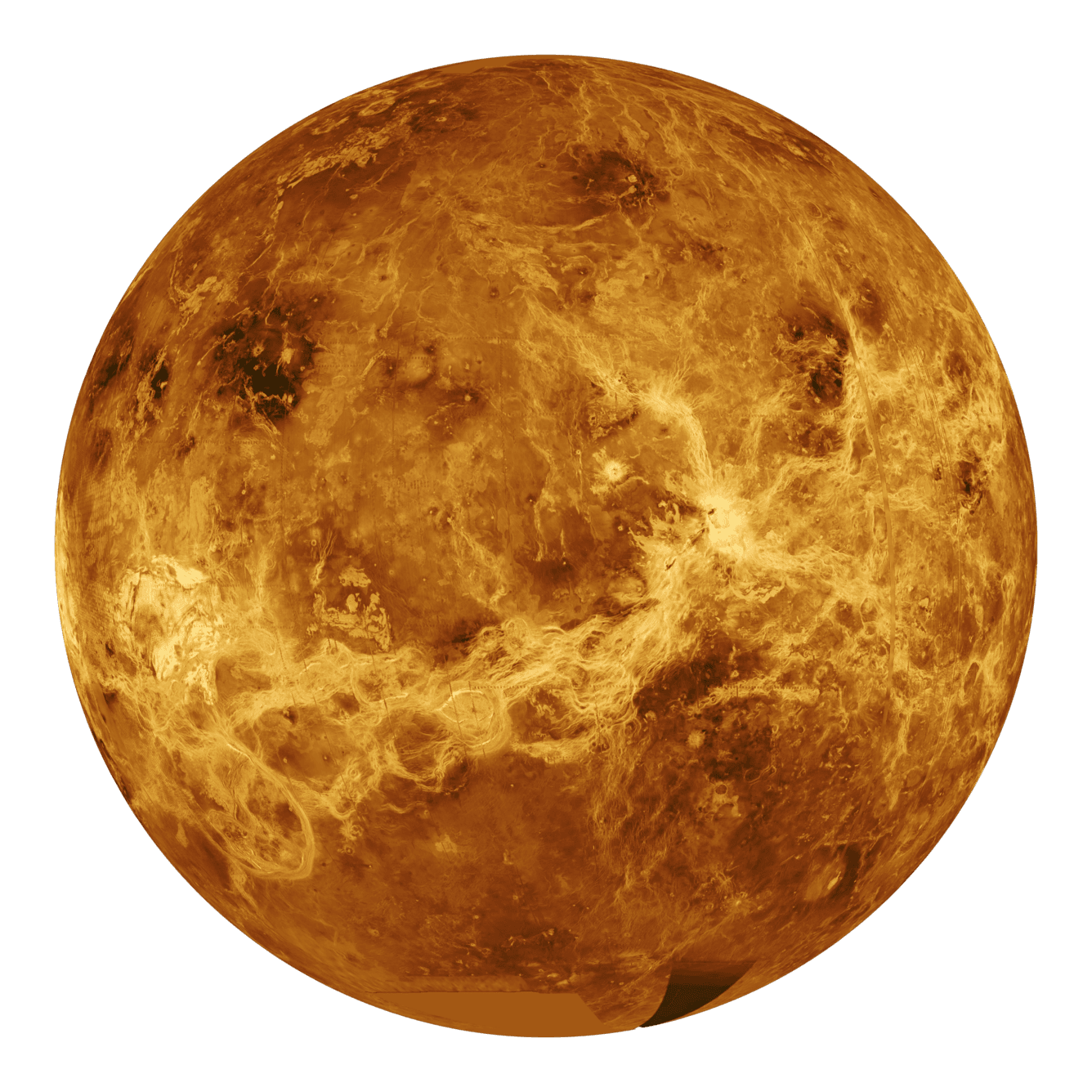
Venus and Earth share comparable bulk dimensions, rocky compositions, and gravitational profiles, yet they present two completely different orbital arrangements.1 While Earth travels around the sun accompanied by a substantial natural satellite that brightens the night sky and pulls ocean tides, Venus moves entirely alone through space without a single companion.1 For generations, observers assumed that two terrestrial worlds formed from the same regional reservoir of planetary building blocks would end up with similar companion systems.1
A missing satellite leaves fundamental questions unanswered about how rocky planets mature after their formation. Large moons influence their host worlds by regulating rotational stability, driving tidal currents across surface waters, and altering mantle convection deep underground.1 Understanding why Venus lacks such a partner helps clarify how neighboring worlds that began with comparable physical ingredients followed divergent evolutionary courses over billions of years.1
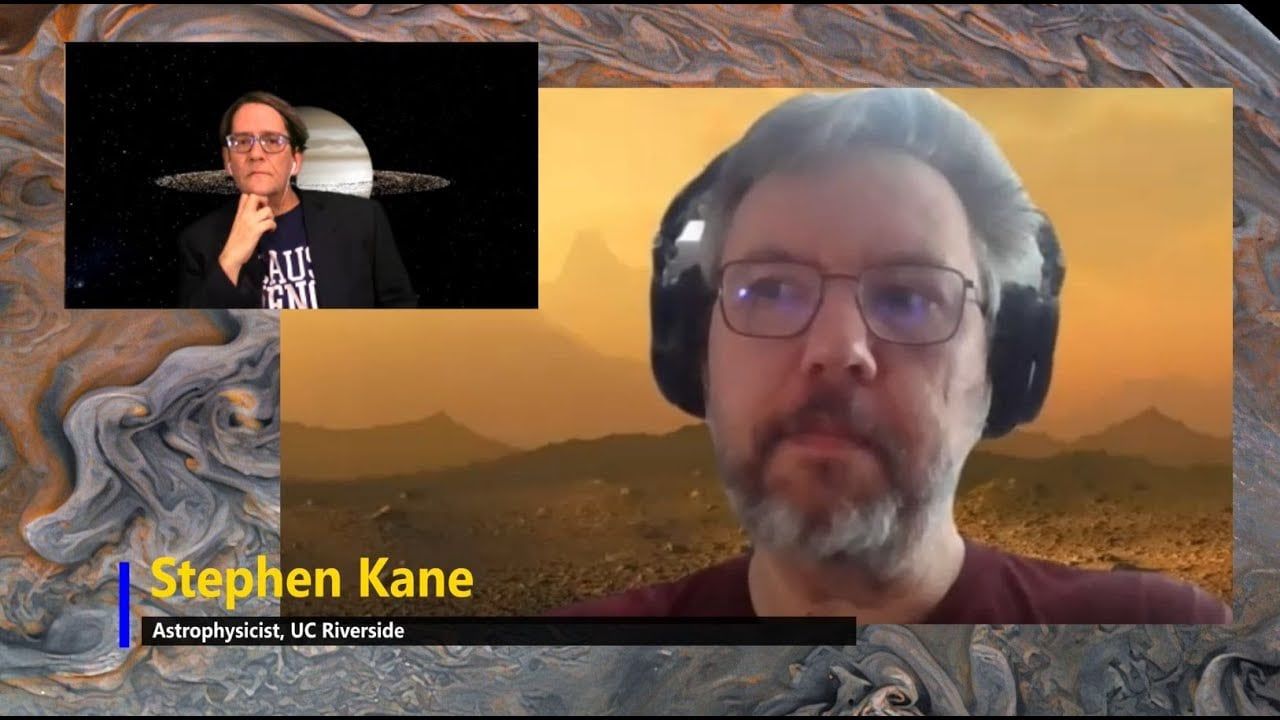
Theoretical simulations published in The Astrophysical Journal by Stephen Kane, an astrophysicist at the University of California, Riverside, suggest that Venus may have formed or captured a moon only to destroy it.1 According to the research, the sluggish rotation rate of Venus creates gravitational drag that would force any nearby companion inward along a terminal spiral, eventually causing the satellite to crash directly into the planetary surface.1
How does planetary spin dictate whether a moon moves away or crashes inward?
A planet's rate of rotation determines whether its gravitational tidal forces push an orbiting moon outward or drag the satellite downward into the planet itself.1 The physical interaction relies on tidal friction between two interacting celestial bodies.1 When a satellite orbits a planet, the gravitational attraction between them deforms both objects, raising subtle gravitational tidal bulges on their rocky surfaces or across any surface liquids.
The timing of the planetary spin relative to the satellite's orbital motion governs the direction of orbital travel.1 If a host planet completes a rotation faster than its moon completes an orbit, the planet carries its tidal bulge slightly ahead of the moon.1 This leading bulge exerts a forward gravitational pull on the satellite, transferring rotational energy to the moon and boosting it into an ever-widening orbit.1 If the planet spins more slowly than the satellite completes its orbital loop, the tidal bulge lags behind the moon, acting as a gravitational brake.1 That persistent backward drag saps the moon of its orbital velocity, causing the satellite to lose altitude and fall inward toward the planetary surface.1
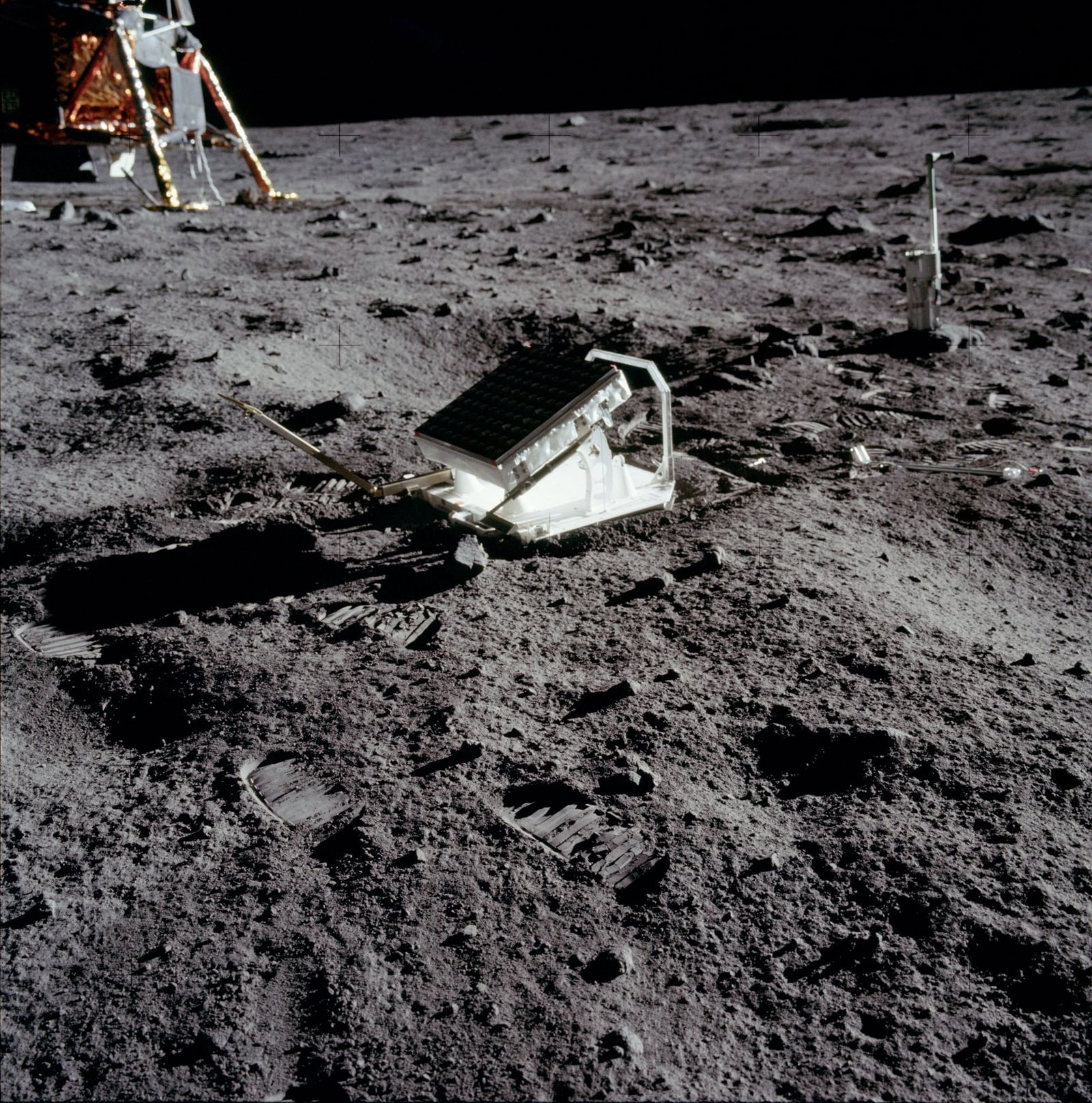
Measurements taken using retroreflectors left on the lunar surface during the Apollo 11 mission established that Earth's moon recedes at a rate of around four centimeters per year against its baseline distance.1 Earth completes a full spin in approximately 24 hours, rotating much faster than the roughly 27 days the moon takes to complete one orbit, which continuously transfers planetary spin energy outward.1 Venus experiences different conditions, requiring 243 Earth days to complete a single rotation around its central axis.1 Because Venus turns far more slowly than any typical natural satellite would take to complete an orbit, the planetary tidal bulge perpetually trails the companion, pulling the satellite downward.1
What did gravitational simulations reveal about hypothetical Venusian moons?
Computational models tracking gravitational interactions show that moons orbiting Venus consistently spiral inward to collide with the planet across a wide range of masses.1 Stephen Kane designed computer simulations based on the governing equations of orbital mechanics to trace how planetary bodies exchange gravitational forces through time.1 To confirm that the computational system produced reliable results, Kane first simulated the known historical evolution of the Earth-moon system, replicating the observed outward drift of Earth's lunar companion before applying the model to Venus.1
Simulations testing hypothetical Venusian satellites evaluated moon masses ranging from half to ten times the mass of Earth's moon alongside different planetary rotation speeds.1 Across the broad spectrum of initial conditions, the model produced the same fundamental outcome, showing that the hypothetical moon eventually collided with Venus.1 The simulations also revealed that more massive satellites experienced stronger gravitational drag from the tidal bulge, accelerating their downward descent and causing them to crash into the planet faster than smaller companions.1
The model provides a physical mechanism that challenges previous explanations for why Venus orbits alone.1 Earlier astronomical theories proposed that Venus may have possessed a moon that was obliterated after being struck by an outside planetary projectile, or that Venus never experienced the kind of giant impact that created Earth's moon.1 Kane's findings suggest that Venus did not require an external catastrophe to eliminate a natural satellite, because the natural physics of planetary gravity and slow rotation would inevitably drag any existing moon to its destruction.1
What limits exist in determining whether Venus once possessed a moon?
Theoretical orbital simulations cannot confirm whether a natural satellite ever actually formed in orbit around Venus.1 The computer models determine only that if a moon existed around a slowly rotating Venus, the laws of gravity would prevent the satellite from surviving over long geological timescales.1 The mathematical calculations trace orbital decay without providing direct physical observation of an ancient impact.1 Furthermore, geological evidence that could verify an ancient collision remains hidden because volcanic activity resurfaced roughly 80 percent of the Venusian exterior approximately one billion years ago, wiping away early surface impact craters.1
Clues regarding a prehistoric lunar collision could remain preserved beneath the volcanic crust of Venus.1 When Earth's moon formed after a collision with a Mars-sized body early in planetary history, the event left distinct structural remnants and density anomalies deep within the mantle that modern seismic instruments can detect.1 Planetary scientists could eventually deploy seismic monitoring probes to Venus to search for comparable subterranean structures that might mark the burial site of an absorbed moon.1
How could a destroyed moon alter planetary climates and the search for alien life?
A falling moon that crashed into Venus would deliver immense quantities of kinetic energy and angular momentum capable of restructuring the planet's atmospheric and geological evolution.1 Such a collision would inject heat throughout the crust, potentially driving intense volcanic resurfacing, altering planetary spin dynamics, and transforming any early climate systems.1 If early Venus possessed liquid surface oceans or temperate surface environments that could have supported biological activity, the physical disruption from an impacting satellite could have ended those hospitable conditions.1
The findings alter how astronomers assess the habitability of Earth-sized planets orbiting other stars in the galaxy.1 When astrophysicists identify rocky worlds that resemble Earth in size and mass, they frequently consider whether the presence of a large moon is necessary to stabilize climate cycles and support biological development.1 While a large satellite generates tides and may encourage ongoing geological motion, Kane noted that a moon is not strictly mandatory for a planet to remain habitable.1
Astronomers searching for potentially habitable exoplanets must account for planetary rotation rates when evaluating whether distant rocky worlds can retain their satellites.1 If an Earth-sized world rotates too slowly, tidal braking forces will drag any companion moon inward until it strikes the surface, reshaping the planet's environmental trajectory in the process.1 Determining how planetary rotation, tidal friction, and satellite lifespans interact will help researchers narrow down which distant planetary systems can preserve stable companion moons and sustain life over billions of years.1
The record
43 sentences trace to 1 source.
-
1
E
EurekAlert! Document · eurekalert.org Venus ate its moon See the source