Microscopic medical robots edge closer to treating human disease
Tiny machines could soon deliver targeted therapies inside blood vessels and dissolve stroke clots, according to a twenty-year review of physical and engineering progress.
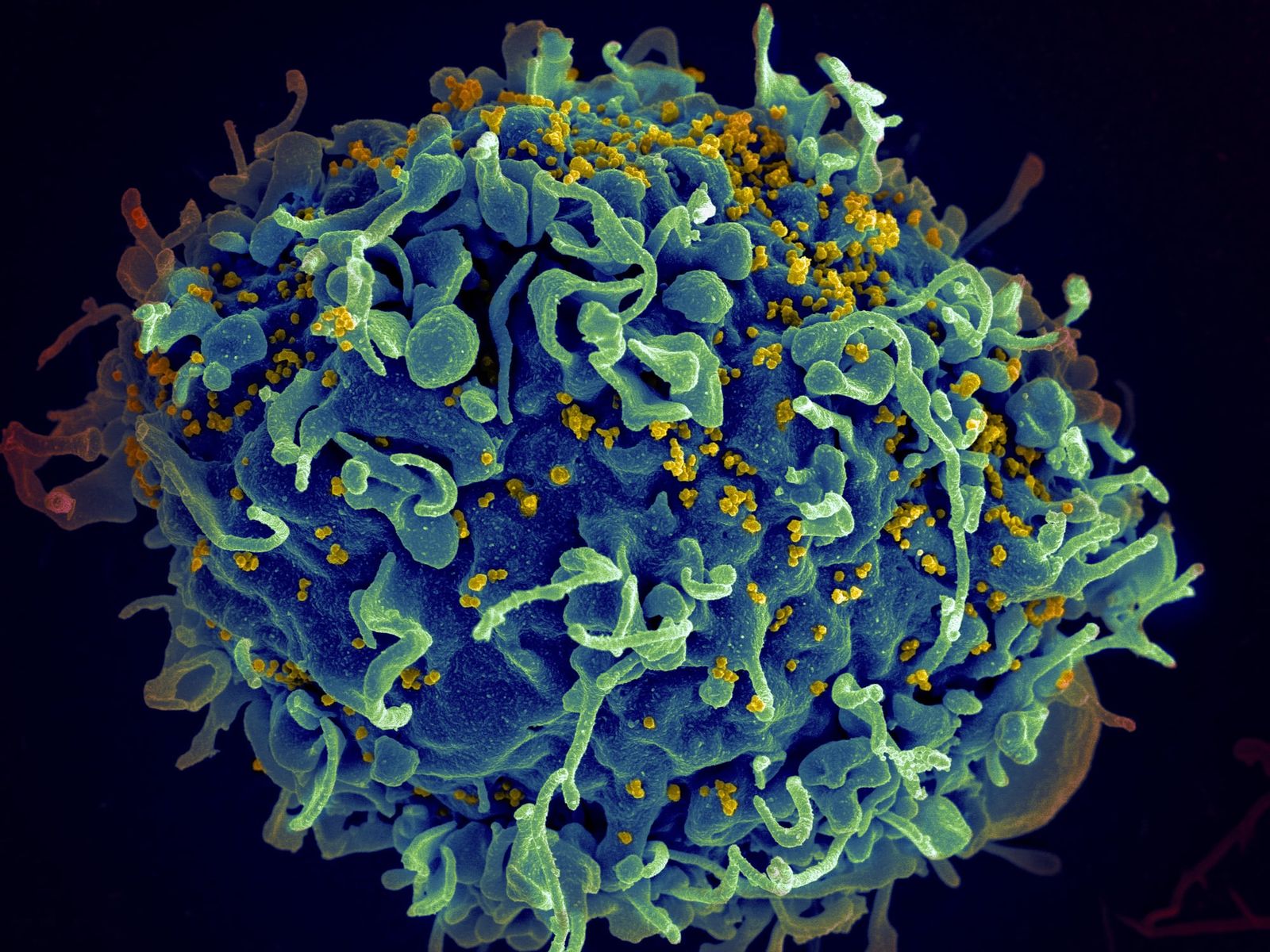
Moving through fluid at the scale of human cells is fundamentally different from swimming through an open pool of water. When an object measures from roughly one millimetre down to several microns across, the physical rules governing motion change completely.1 In this microscopic realm, liquid behaves like dense syrup, and the momentum that propels a human swimmer forward after a stroke disappears almost instantaneously.1 Microscopic organisms such as motile bacteria have adapted to these demanding physical laws over evolutionary timescales, using specialized structures to push themselves through thick biological environments.1
Translating these microscale locomotion strategies into artificial medical machines offers profound benefits for human healthcare, allowing physicians to deliver concentrated drugs directly to stroke-induced clots or aggressive tumors while reducing systemic exposure.1 For such an intervention to succeed, several physical and biological events must occur in strict sequence: a microscopic device must first generate sustained propulsion against the heavy drag of circulating blood, follow tortuous vascular pathways to its target, release its therapeutic payload or perform a biopsy, and then either degrade harmlessly or clear from the body.1
On May 20, 2026, the journal SmartBot published a perspective article reviewing two decades of scientific progress aimed at mastering this sequence of challenges.1 The analysis evaluates how engineers and physical scientists have tackled the physical principles governing microscale motion, developed five primary propulsion mechanisms, and integrated functional materials to move microscopic devices closer to precision medicine.1
Why does swimming change inside the microscopic world?
Microscopic swimmers cannot rely on conventional paddling because viscous drag completely overwhelms momentum at cellular scales.1 In fluid mechanics, the balance between inertial forces and viscous resistance is quantified by the Reynolds number, a dimensionless ratio comparing momentum to internal fluid friction.1 Because microrobots operate at low Reynolds numbers, viscous forces dominate their surroundings while inertial effects become negligible.1 When an external driving force stops, forward motion halts almost immediately, preventing microscopic objects from gliding through biological fluids.1
This physical condition imposes severe mathematical constraints on locomotion, formalized by physicist Edward Purcell as the scallop theorem.1 At a macroscopic scale, an ocean scallop swims by opening its shell slowly and snapping it shut rapidly to displace water. At low Reynolds numbers, reciprocal motion that retraces its path over time generates zero net displacement, returning the swimmer to its precise starting location regardless of speed.1 The SmartBot review emphasizes that microrobots must therefore break time-reversal symmetry to move forward, adopting non-reciprocal motions such as corkscrew rotations or flexible undulations.1 Operating at these minute dimensions also forces miniature vehicles to contend with constant Brownian motion from thermal molecular collisions, surface interactions, and strict limits on onboard energy storage.1
Which propulsion methods can drive microscopic machines?
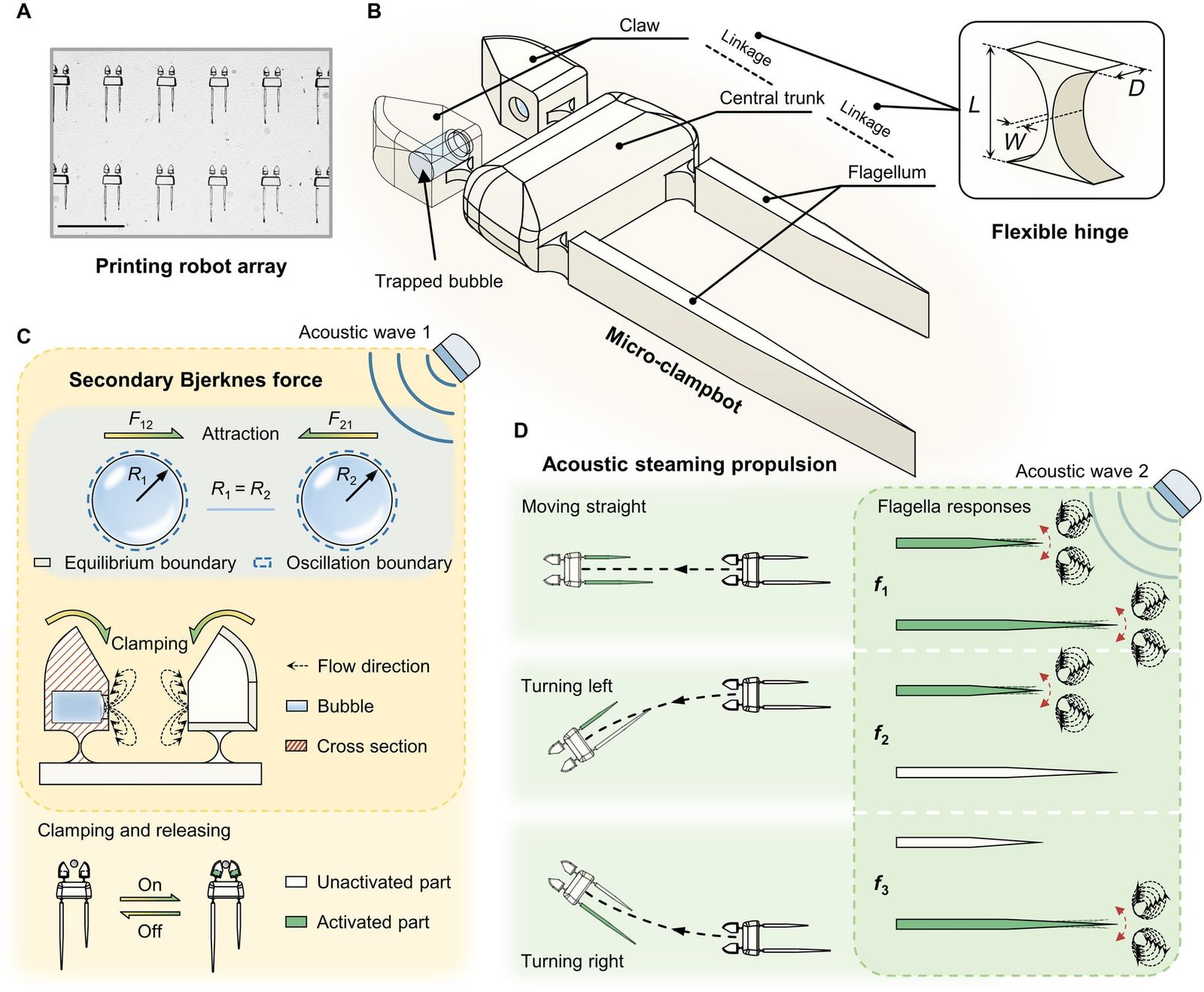
Engineers have explored five distinct propulsion mechanisms to push microrobots through fluids, with magnetic actuation offering the clearest clinical path. The SmartBot review details how researchers initially developed chemical propulsion systems that relied on catalytic reactions, such as bubble generation, to achieve autonomous movement.1 Although catalytic bubble-driven motion provided early proof that artificial microscale devices could propel themselves, biomedical translation remains limited because chemical fuels frequently present toxicity risks and poor biocompatibility inside human tissue.1
Other non-magnetic propulsion techniques have yielded mixed clinical promise due to physical constraints inside living tissues. Acoustic propulsion uses ultrasonic fields to manipulate individual microrobots or swarms noninvasively, yet ultrasonic manipulation often demonstrates lower spatial precision than magnetic systems.1 Optical propulsion directs miniature objects using focused light beams, functioning effectively in transparent or semi-transparent laboratory media, but limited tissue penetration restricts its use inside the human body.1 Biohybrid propulsion harnesses living cells such as bacteria or sperm to supply motive force and biological adaptability.1 However, the SmartBot analysis explains that biohybrid devices face significant challenges, including adverse host immunogenicity, unstable biological lifespans, and difficulty maintaining precise external control.1
Because of these limitations, magnetic actuation stands out as the most viable approach for clinical medicine.1 External magnetic fields penetrate biological tissues without losing strength or harming living cells.1 Clinicians can dynamically control these fields to guide microrobots along complex blood vessels.1 Magnetic guidance systems also integrate naturally with existing hospital medical imaging technologies, making magnetic navigation exceptionally attractive for delivering clot-dissolving drugs in stroke treatment and transporting therapeutic agents directly to diseased sites.
How can miniature devices function without electronic processors?
Miniature machines achieve functional control by embedding intelligence directly into their structural geometries, responsive chemical materials, and collective behaviors.1 Conventional electronic components, such as microprocessors, batteries, and wireless communication antennas, cannot be miniaturized down to dimensions of a few microns.1 To bypass this hardware limitation, engineers rely on embodied intelligence, encoding necessary robotic responses directly into the physical architecture of the vehicle.1
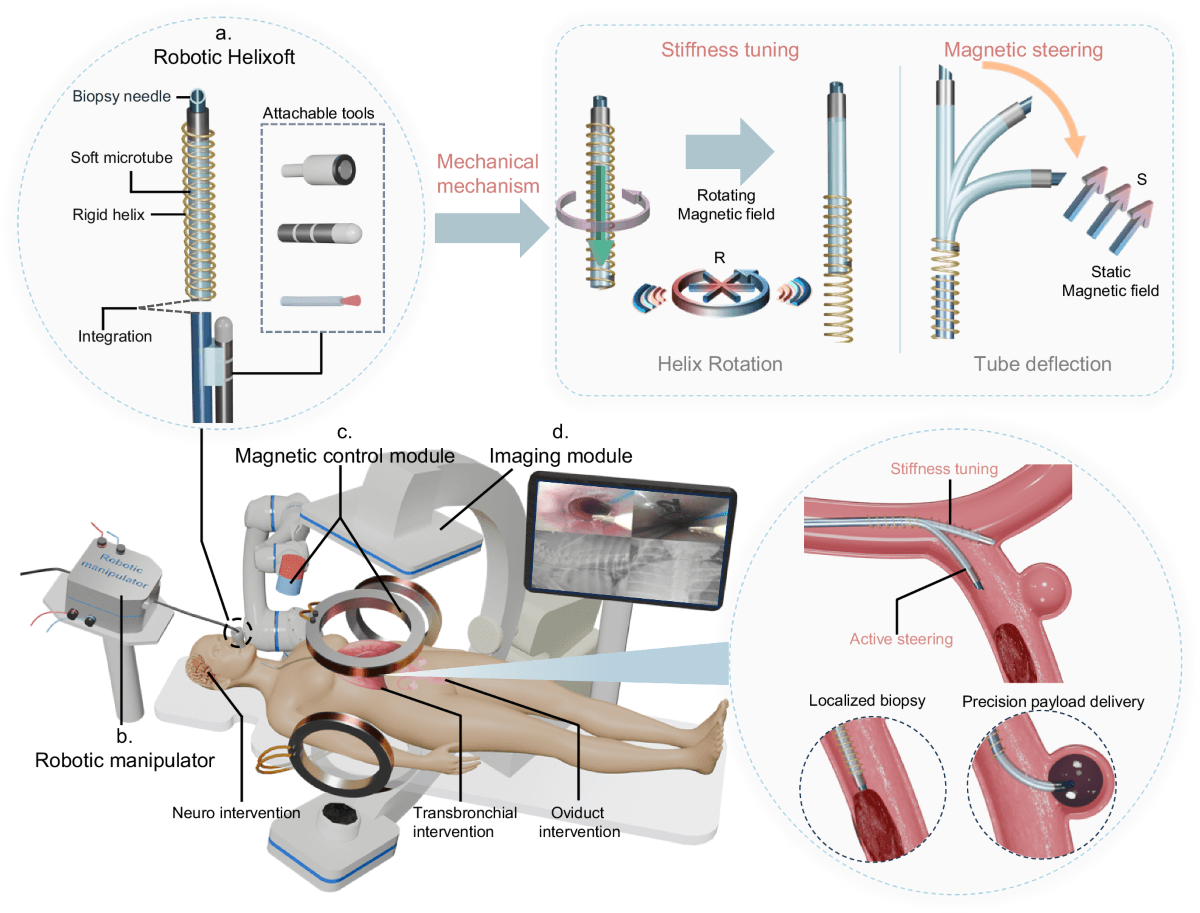
Structural geometry serves as a primary tool for microscale intelligence. By fabricating microrobots into helical architectures, researchers enable the devices to convert external rotating magnetic fields directly into forward thrust, mimicking the corkscrew motion of bacterial flagella.1 Advanced microfabrication techniques, including two-photon polymerization, microelectromechanical systems, nanofabrication, and molecular self-assembly, allow engineers to construct complex microscale shapes such as artificial cilia, mobile cages, and other biomimetic configurations.1
Functional materials provide another layer of passive microscale autonomy. Stimuli-responsive hydrogels allow microrobots to swell, contract, or release encapsulated drugs when exposed to environmental triggers, such as shifting acidity or temperature variations near a tumor.1 Biodegradable polymers allow tiny devices to dissolve harmlessly within the body after completing their therapeutic task, reducing the clinical need for surgical retrieval.1 Surface modifications further enhance biocompatibility, shielding miniature devices to reduce immune recognition.1 When operating in swarms, groups of simple microrobots can coordinate to complete distributed medical tasks, supporting collective cargo transport, broad-area sensing, or concentrated drug delivery.1
What technical obstacles keep microrobots out of hospitals?
Clinical adoption of microrobots remains stalled by practical hurdles in real-time medical imaging, safe bodily clearance, and wireless power delivery.1 The perspective article in SmartBot synthesizes two decades of physical principles and experimental demonstrations, without presenting new human clinical trials.1 Most microrobotic systems tested to date have operated inside idealized laboratory channels or animal models that fail to reproduce the full biological complexity, blood flow dynamics, and immune responses found in human patients.
Translational barriers also encompass scalable industrial manufacturing, closed-loop steering control, reliable wireless communication, long-term safety, regulatory approval, and ethical acceptance.1 The SmartBot review indicates that future progress will depend on uniting multiple engineering disciplines, observing that "the next stage of microrobotics will depend on combining biocompatible materials, high-resolution imaging, AI-driven control" and navigation systems.1 Navigating soft microrobots through tortuous biological pathways while tracking their exact location in deep tissues requires imaging capabilities that stretch existing diagnostic equipment.1
If researchers can overcome these translational hurdles, early clinical trials will likely target life-threatening conditions where targeted interventions offer immediate clinical benefits.1 Stroke intervention represents an urgent priority, where magnetic microrobots could deliver clot-dissolving medications directly to arterial blockages while reducing systemic exposure.1 Oncology represents another critical frontier, enabling microrobots to deliver localized tumor therapy, perform microscale biopsies, and release antibiotics directly to persistent infection sites.1 By shifting from isolated proofs of concept toward integrated medical systems, microrobots are establishing the technological groundwork required to operate as practical tools of precision medicine.1
What this rests on
42 sentences trace to 1 source.
-
1
S
scientificinquirer Document · scientificinquirer.com · 28 Sep 2026 Microrobots move closer to precision medicine after two decades of progress See the source