SpaceX puts Starship in orbit before ocean blast
Flight 14 released 26 Starlink satellites and tested heat shield cameras during a three-hour run cut short by an engine failure.
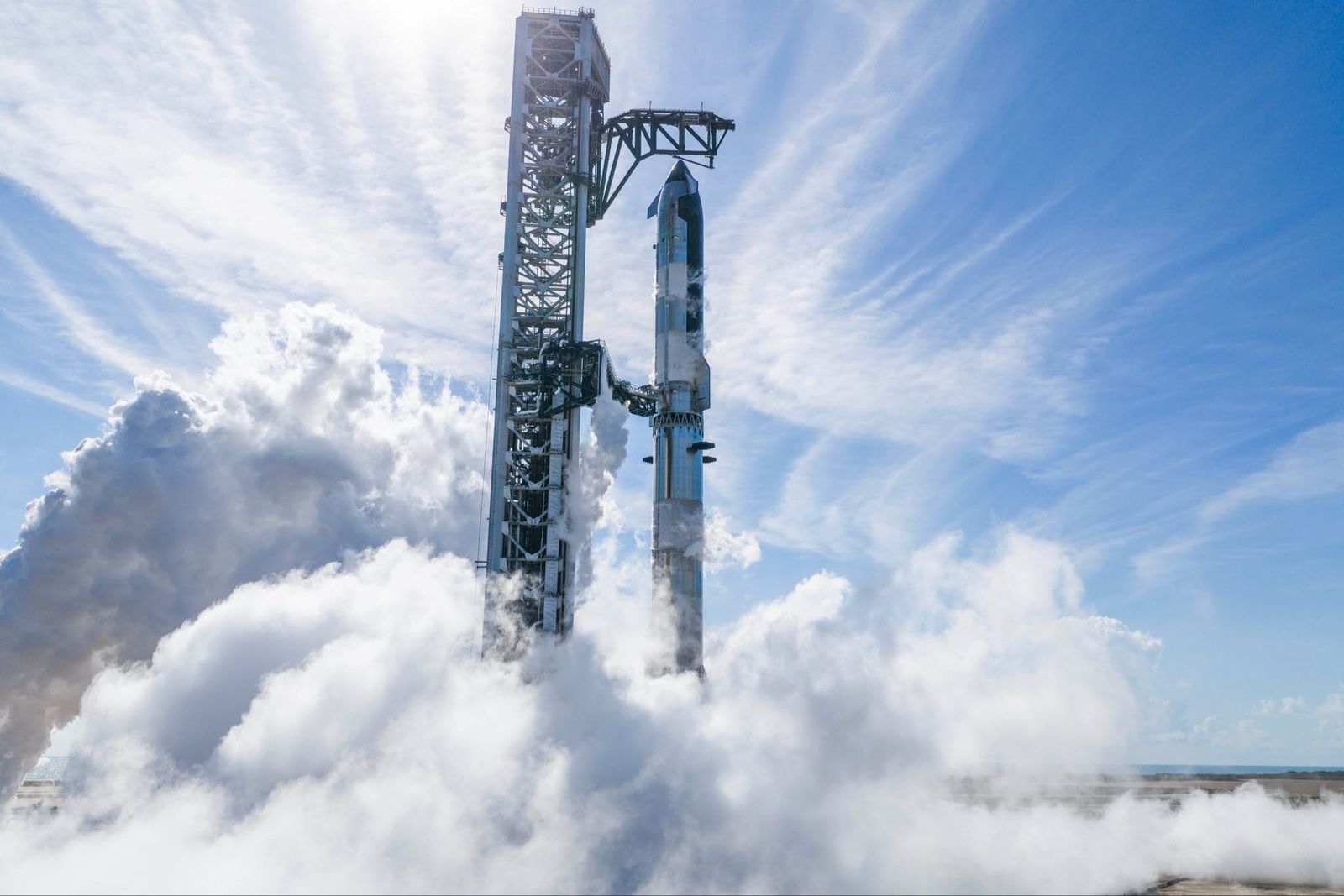
A SpaceX Starship vehicle reached Earth orbit for the first time on Monday morning, climbing past an engine failure during ascent to release 26 operational broadband satellites before returning to Earth hours earlier than planned.12
The two-stage vehicle lifted off from Orbital Launch Pad 2 at the company's Starbase facility in Boca Chica, Texas, at 7:48 a.m. local time on September 28, 2026.32 The mission, designated Flight 14, paired the Super Heavy booster designated Booster 21 with the upper-stage spacecraft designated Ship 41.34 Propelled by 33 engines on the first stage, the vehicle cleared the launch pad without holds, ending a campaign of 13 consecutive suborbital test flights dating back to 2023.214
Stage separation took place two and a half minutes into flight using a hot-staging maneuver, in which the upper stage ignited its engines while still attached to the booster.23 Booster 21 then reversed course to complete a boostback burn and descended toward the Gulf of Mexico.31 Flight controllers guided the booster through a controlled landing burn that concluded with a soft splashdown offshore.32 No catch attempt by the launch tower arms was scheduled for the mission.45
Trouble developed shortly after separation when one of the six Raptor engines on Ship 41 failed during the climb toward space.21 The propulsion loss prompted flight directors to pause and evaluate vehicle health. Telemetry during the ascent indicated the lost unit was a vacuum-optimized Raptor engine, leaving controllers to weigh whether to abort onto a suborbital arc toward the Indian Ocean or commit the spacecraft to orbital insertion.35 Approximately 22 minutes into the flight, mission control cleared the ship to proceed.21
A single sea-level Raptor engine ignited roughly 25 minutes after liftoff for an orbital insertion burn that placed the spacecraft into low Earth orbit.53 The spacecraft achieved orbital speeds of approximately 17,500 miles per hour, reaching a peak altitude of 170 miles above Earth's surface.21 The maneuver marked the first time the Starship upper stage entered a sustained orbital trajectory since SpaceX began full-scale test flights.34
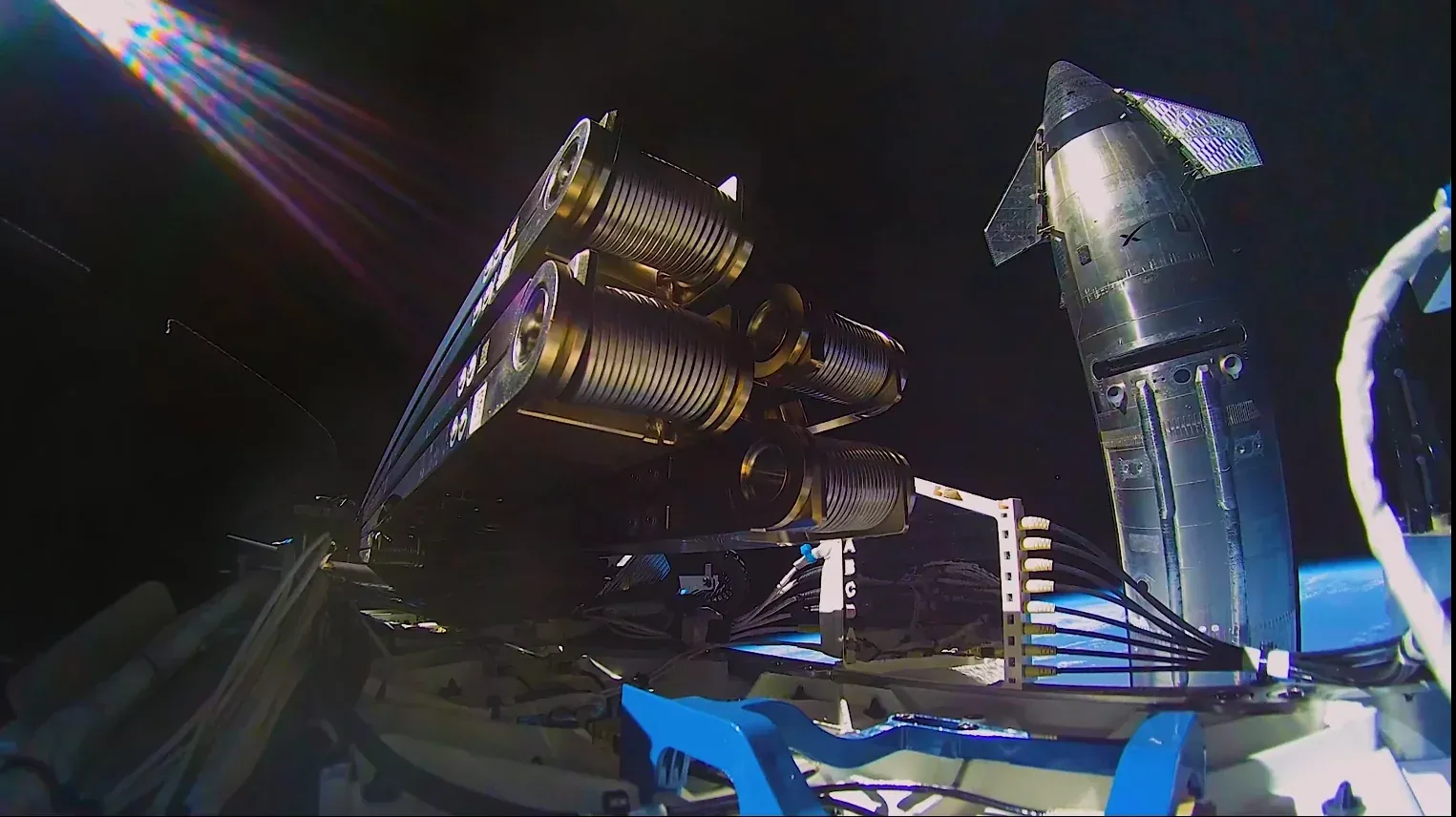
Ten minutes after circularizing its orbit, the spacecraft opened its payload bay to deploy 26 next-generation Starlink V3 satellites, designated Starlink Group 31-1.53 The deployment sequence took approximately 30 minutes, ejecting the satellites one by one through a narrow dispenser door.54 Ground teams subsequently confirmed two-way radio contact with all 26 spacecraft.4 SpaceX designed the heavier V3 satellites to expand network capacity by up to tenfold compared to older models, adding approximately one terabit per second of throughput per unit.34
Three of the deployed Starlink satellites carried dedicated external camera packages designed to inspect Ship 41's thermal protection system from orbit.53 SpaceX engineers used the orbital vantage point to gather high-resolution imagery of the ship's hexagonal heat shield tiles, seeking data on tile durability and gap conditions before the vehicle attempted atmospheric entry.52 The demonstration formed part of a broader push to qualify the reusable heat shield for operational returns.2
Flight controllers originally intended for Ship 41 to remain in space for nearly 10 hours, completing six orbits around the planet before deorbiting.51 The planned itinerary included extensive on-orbit systems evaluations and propellant management checks.5 Following an on-orbit contingency assessment that evaluated the earlier ascent engine failure, SpaceX managers chose to truncate the timeline and initiate an early return after roughly two hours in space.3
The company stated in a post-flight update that the decision to cut the mission short was taken out of an abundance of caution due to the engine failure experienced during ascent.2 Managers instructed the flight team to compress the schedule, conduct early reentry operations, and direct the spacecraft toward a designated disposal corridor in the northern Pacific Ocean rather than risk an extended coast with a degraded propulsion system.2
Ship 41 executed its deorbit burn two hours and 12 minutes after liftoff, firing an engine for 11 seconds to brake out of orbit.35 The spacecraft oriented itself for atmospheric entry at an altitude of approximately 75 miles, withstanding peak reentry heating along a descent path north of Hawaii.32 Telemetry confirmed the vehicle transitioned through the transonic and subsonic flight regimes before initiating its terminal landing sequence.3
Two hours and 50 minutes after launch, Ship 41 fired its landing engines to execute the signature flip from horizontal belly-flop to vertical orientation.3 The spacecraft completed its terminal deceleration and touched down on the surface of the Pacific Ocean three hours and eight minutes after departing Texas.31 Immediately after striking the water, the vehicle exploded in a large fireball.1 SpaceX had forecast an explosive destruction upon ocean impact, having made no provision to recover the hull intact.1
The flight concluded under commercial launch and reentry authorization VOL 23-129 Rev 9.0, granted by the Federal Aviation Administration on September 26.45 Regulators had cleared the launch window after SpaceX satisfied safety evaluations stemming from Flight 13 in July 2026.5 On that mission, an intact ship made an unexpectedly soft splashdown in the Indian Ocean after releasing 20 test satellites on a suborbital trajectory, while its booster suffered an engine relight failure during landing.4
Flight 14 represents a technical transition for SpaceX as it attempts to move the Starship program from developmental prototypes to revenue-generating operations.31 The company previously relied on its Falcon 9 rocket to deploy Starlink satellites from launch sites in Florida and California, but recently concluded Florida operations to shift future constellation launches to Starship.2 In public disclosures ahead of a June initial public offering, SpaceX cautioned that any delay in scaling Starship's launch cadence and reusability would directly constrain corporate growth.2
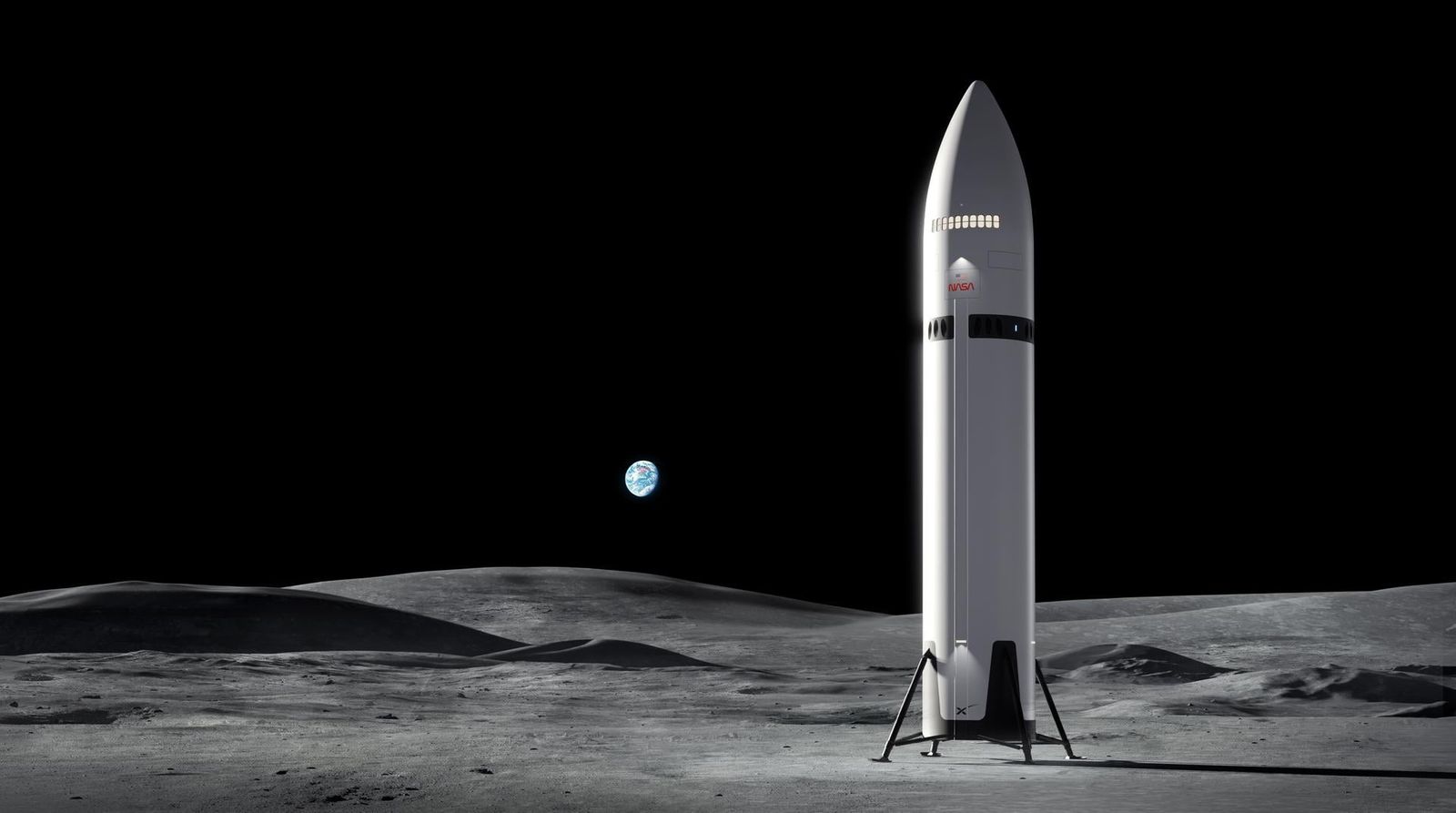
The test also carried direct consequences for NASA's Artemis program, which aims to return astronauts to the lunar surface.12 The space agency selected a modified Starship vehicle as the human landing system for the Artemis IV mission, targeted for early 2028.15 Under NASA's mission architecture, astronauts will launch aboard the Orion spacecraft atop the Space Launch System rocket, rendezvous with Starship HLS in lunar orbit, descend to the lunar south pole, and return to Orion for the transit home.1
NASA plans to conduct an orbital docking demonstration during the Artemis III mission in 2027, sending Orion into low Earth orbit to test rendezvous operations with commercial lander prototypes.41 NASA leadership has maintained that lander readiness will dictate whether SpaceX or a competing lander developed by Blue Origin carries the crew on Artemis IV.14 Blue Origin suffered its own development setback in May when a New Glenn launch vehicle exploded during a test.1
Before Starship can transport humans to the moon, SpaceX must still demonstrate in-space cryogenic propellant transfer, an unproven procedure that requires multiple tanker flights to refill a lunar lander depot in orbit.4 The Government Accountability Office noted in July that SpaceX aimed to conduct an uncrewed ship-to-ship propellant transfer test before the end of 2026.4 Monday's milestone proved the vehicle can insert payloads into orbit, even as propulsion anomalies keep mission operations under scrutiny.3
What this rests on
48 sentences trace to 5 sources.
-
1
PP
Patrick Pester Document · livescience.com · 28 Sep 2026 SpaceX's Starship reaches orbit for the first time, then returns early and explodes See the source
-
2
N
NPR Third-party reporting · npr.org · 28 Sep 2026 SpaceX's Starship launches on first orbital mission from Texas See the source
-
3
WF
Wikimedia Foundation, Inc. Third-party reporting · en.wikipedia.org · 18 Nov 2024 Starship flight 14 - Wikipedia See the source
-
4
S
SpaceNexus Third-party reporting · spacenexus.us Starship Program Tracker: Live Flight History & News | SpaceNexus See the source
-
5
AW
Aviation Week Network Third-party reporting · aviationweek.com · 27 Sep 2026 FAA Clears SpaceX For Starship 14 Flight | Aviation Week See the source