Smooth black hole cores alter the ringing tones of disturbed spacetime
A regular interior shifts the light ring and slows wave damping, changing the ringdown signals that future gravitational wave observatories could record.
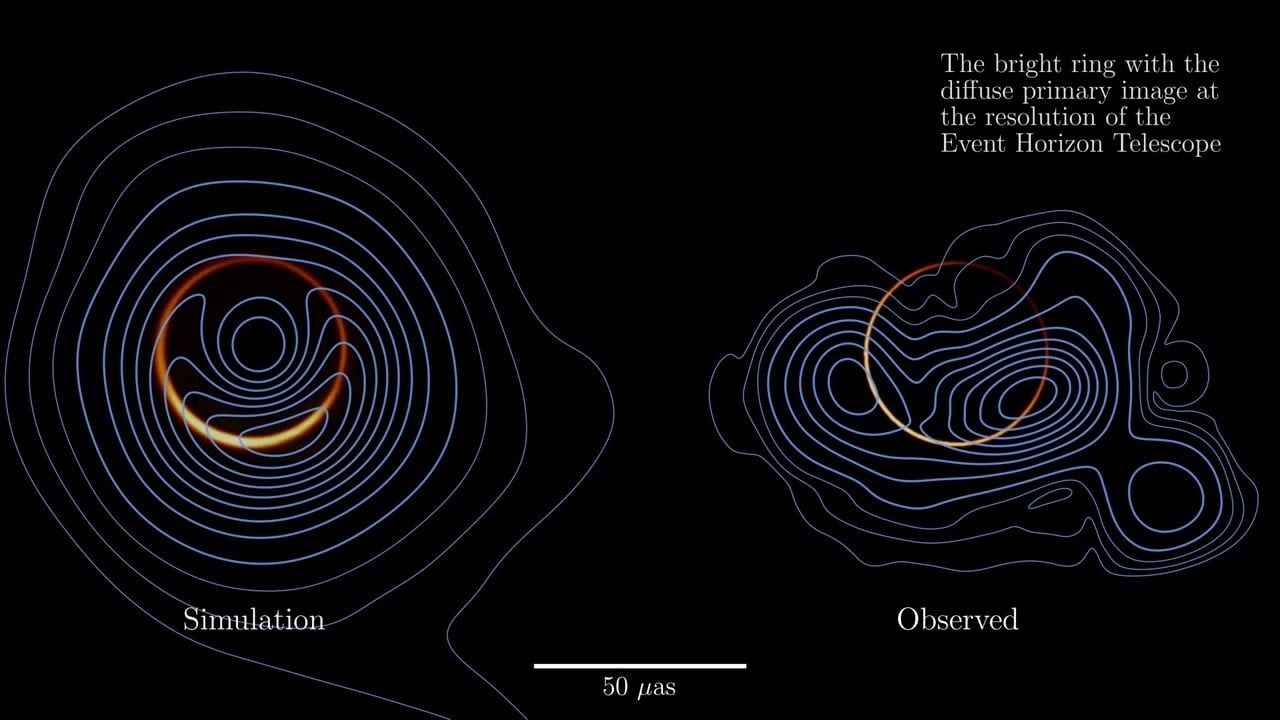
When two massive celestial objects collide, the newly formed black hole vibrates like a struck bell, shedding energy through gravitational ripples that gradually fade into space.1 In standard general relativity, these vibrations echo across a geometry that conceals an infinitely dense central singularity where physical laws fail.1 For decades, theorists have studied regular black holes, alternative models where quantum effects replace that singular point with a smooth, finite-density core.1 Changing the interior structure alters how mass curves the surrounding spacetime, subtly shifting the notes and decay rates of the gravitational radiation emitted during ringdown.1
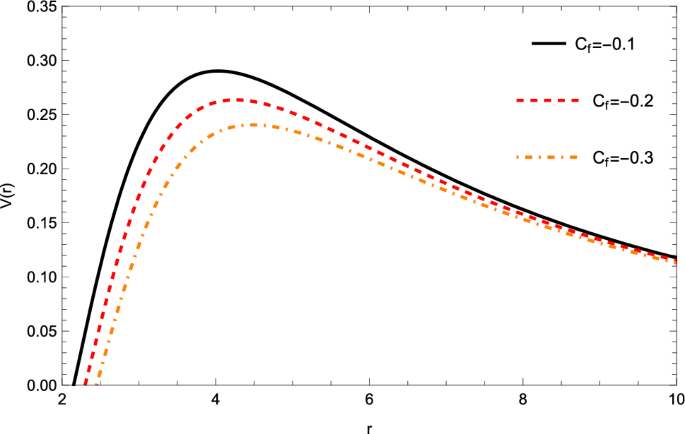
The path of this gravitational ringing follows a strict causal chain through curved space. An external disturbance first shakes the geometry outside the event horizon.1 This shaking produces wave packets that encounter a steep barrier in the gravitational potential created by the mass of the black hole. Part of the wave reflects off this barrier and journeys outward across space, while the remainder slips past the peak and drains permanently across the event horizon.12 Because energy continually radiates outward and vanishes inward, the trapped vibration loses amplitude, fading as an exponentially damped signal.
Davide Batic and Denys Dutykh, mathematical physicists at Khalifa University of Science and Technology in Abu Dhabi, examined how these vibrations behave across a regular black hole spacetime.1 In research posted to the arXiv preprint server and accepted by the journal Physics of the Dark Universe, the authors analyzed scalar, electromagnetic, and gravitational perturbations of the Hayward black hole geometry.13 Their study mapped the spectrum from a standard non-rotating black hole to the extreme limit where horizons merge, comparing their findings against earlier benchmarks established across the theoretical literature.13
These characteristic resonances, known as quasinormal modes, provide a mathematical bridge between quantum-gravity models and astronomical observations. While the dominant ringdown tone reflects broad mass and spin properties, higher-frequency overtones and deeply damped modes probe the geometry closer to the horizon.1 If future gravitational-wave observatories detect minute deviations from general relativity, spectral maps will be essential to determine whether those signals point to a regular core or an ordinary vacuum solution.
How does a regular core change the way black holes ring?
Increasing the deformation of a Hayward black hole raises its real oscillation frequencies and lowers its damping rates across low-lying vibrational modes.1 The Hayward spacetime, proposed by physicist Sean Hayward as a nonsingular model of black hole formation and evaporation, replaces the central singularity of general relativity with a flat de Sitter-like core.1 A deformation parameter, denoted by the Greek letter gamma, controls the scale of this modification.1 When gamma equals zero, the geometry reproduces the classical Schwarzschild black hole.1 As gamma increases above zero, the regular core alters the exterior geometry, shifting the horizon and changing the potential barrier that scatters waves.1
This frequency shift originates not in the central core itself, but in the altered gravitational field surrounding the photon sphere. Denys, an author of the paper, explained that the core is shielded behind the event horizon, meaning the ringing is generated in the region where light rays can orbit the black hole. Denys said in response to questions from Primary that because mass is distributed across a finite volume rather than concentrated at a single point, gravity near the light ring is weaker, causing the ring to shift inward by about 12 percent at extremality while waves circulate around it faster and the potential barrier becomes flatter, allowing the object to complete 20 to 40 percent more oscillations before its sound fades away.contributed
Batic and Dutykh tracked this geometry as gamma increased from zero to its critical value of 32/27, which equals approximately 1.185 in mass-scaled units.1 Within the parameter range between zero and 32/27, the Hayward black hole contains two distinct geometric boundaries: an outer event horizon and an inner Cauchy horizon.1 As the authors increased gamma toward 32/27, the rescaled event horizon radius, defined as the ratio of horizon radius to mass, decreased monotonically from 2.0 in the Schwarzschild limit to 4/3, or approximately 1.333, at exact extremality. For values of gamma exceeding 32/27, the horizons vanish entirely, leaving a horizonless droplet of vacuum energy.1
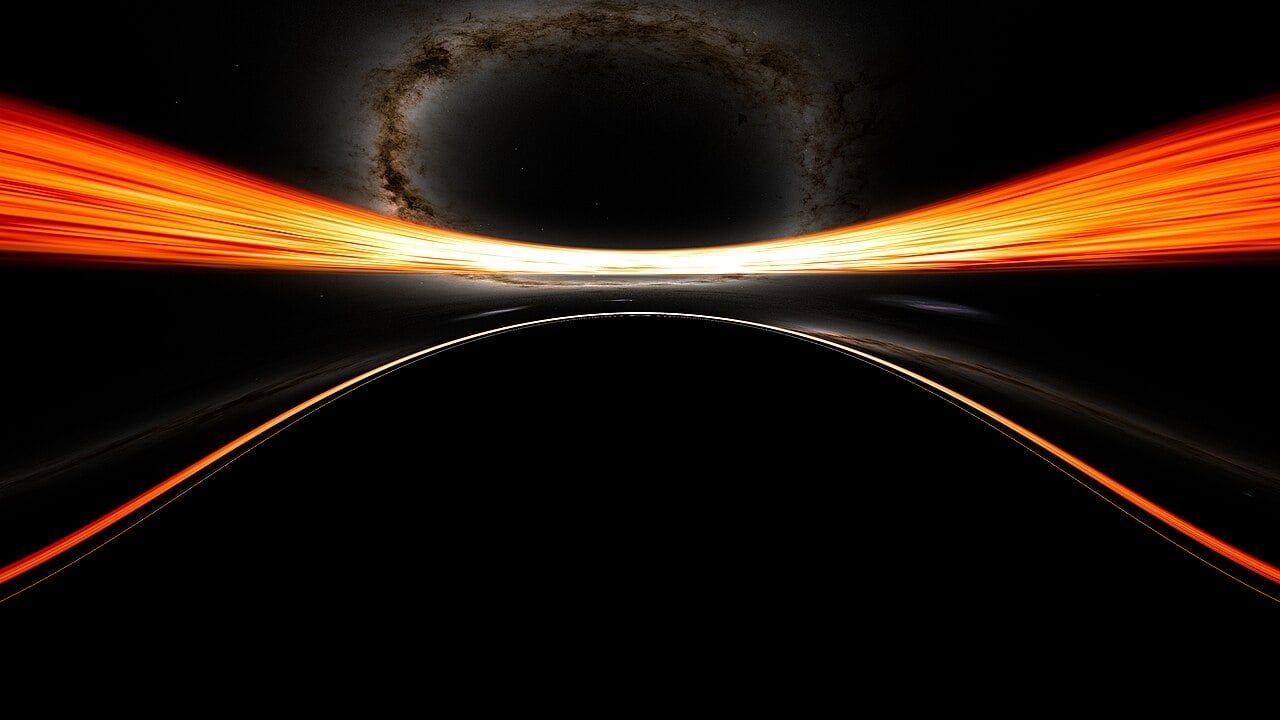
Beyond that critical threshold, the nature of the ringing signal is expected to transform into a sequence of late-time reverberations. Denys noted that while the published analysis terminates at exact extremality, exceeding that boundary removes any horizon capable of absorbing infalling waves, allowing the regular core to reflect radiation back toward space. Denys told Primary that the initial signal would still resemble a black hole because it is generated at the outer light ring, but waves trapped near an inner stable light ring would dissipate very slowly and return as late-arriving echoes due to severe gravitational time dilation near the former horizon location, with light rings persisting up to a deformation parameter value of about 1.81.contributed
These structural shifts directly modify how test fields oscillate and decay outside the event horizon. Batic and Dutykh evaluated massless scalar test fields, which model spinless particles, alongside electromagnetic fields, which describe spin-one radiation.13 Across both test fields, the presence of the regular core causes the fundamental quasinormal mode to oscillate at a slightly higher frequency and damp more slowly than its classical Schwarzschild counterpart.1 The fundamental mode represents the longest-lived tone in the ringing spectrum, and its frequency shift tracks the contraction of the event horizon as the deformation parameter climbs toward extremality.
Why do different physical models change gravitational wave frequencies?
Different physical assumptions regarding how the effective matter supporting a regular black hole reacts to disturbances generate distinct wave equations and shifted frequencies for axial gravitational perturbations.13 Unlike test fields that traverse spacetime without affecting it, genuine gravitational waves distort the background metric.1 In general relativity, an isolated Schwarzschild black hole is surrounded by pure vacuum. In a regular Hayward black hole, however, the central singularity is resolved by an effective distribution of matter and energy.1 Because the Hayward line element does not specify how this underlying matter reacts when shaken, theorists must choose effective closures that alter the wave equations.1
Determining which effective model describes physical reality requires a fully realized dynamical theory rather than a static metric alone. Denys explained that because the Hayward metric describes spacetime curvature without specifying the microscopic composition of the core, the dynamic response of that matter remains unconstrained until derived from a complete field action, such as Einstein gravity coupled to nonlinear electrodynamics. Denys said that while scalar and electromagnetic modes depend solely on background geometry, gravitational modes also register the matter response, leading to differences between competing closures of about 3 percent in oscillation frequency and 6 percent in damping rate near extremality, meaning that observing two independent ringdown tones from a single remnant would provide an observational test of the underlying matter model.contributed
To evaluate this ambiguity, Batic and Dutykh examined an axial wave equation based on a Regge-Wheeler-type effective model and compared its potential against an alternative effective-source potential used in recent studies by researchers such as Malik, as well as Bolokhov and Skvortsova. When evaluated for the Hayward mass profile, the potential adopted by Batic and Dutykh differs from the alternative effective-source potential by a strictly positive term equal to twelve times gamma multiplied by the fourth power of mass, divided by the square of the quantity r cubed plus gamma times the mass cubed.1 This difference vanishes in the Schwarzschild limit where gamma equals zero, but it remains positive everywhere outside the horizon when gamma exceeds zero.1
This divergence in the effective potential produces measurable frequency differences for axial gravitational perturbations, which have a spin value of two.1 Batic and Dutykh reported that among all fundamental modes examined, the axial quadrupole mode, which represents the primary gravitational-wave tone with multipole number two, showed the largest relative frequency increase as the deformation parameter grew.1 Denys explained that this pronounced shift occurs because a specific spin-dependent term in the radial equation, which is absent for electromagnetic fields and enters with opposite sign and triple the weight for the adopted gravitational model, amplifies the potential barrier, causing the quadrupole frequency at extremality to rise by 9.5 percent in their model compared to roughly 6 percent under the alternative effective-source closure.contributed
The authors noted that this discrepancy stems from model dependence in the governing equations and does not represent an error in numerical calculation.1 Earlier research on the Hayward geometry by Omar Pedraza, L. A. López, R. Arceo, and I. Cabrera-Munguia had similarly evaluated axial gravitational perturbations alongside scalar and electromagnetic fields using third-order WKB approximations, showing that surrounding environments like quintessence introduce additional parameter dependencies into the spectrum.
What keeps mathematical grid roots from qualifying as physical modes?
Purely imaginary eigenvalues produced by numerical discretizations cannot be classified as physical quasinormal modes because finite computational grids can generate spurious roots that mimic true resonances along the negative imaginary axis.13 When physicists compute quasinormal modes, they solve differential equations subject to radiation boundary conditions: waves must travel purely inward across the event horizon and purely outward toward spatial infinity.1 In the complex frequency plane, the real part governs the oscillatory pitch of the ringing, while the negative imaginary part dictates exponential decay over time. When a frequency has zero real component, the perturbation does not oscillate, fading purely monotonically as energy dissipates through the system.
To calculate these spectra, Batic and Dutykh used multiprecision Chebyshev collocation, a numerical technique that maps the infinite radial domain outside the black hole onto a compact interval between negative one and positive one.1 By expanding the regular parts of the wave functions in Chebyshev polynomials, the authors converted the radial equations into matrix eigenvalue problems known as polynomial pencils. This approach successfully reproduced established low-lying oscillatory benchmarks and identified candidate overtone frequencies.13 It also yielded ladders of purely imaginary eigenvalues along the negative imaginary axis, where successive candidates showed regular spacings near 0.25 in rescaled units of mass times frequency, alongside an extremal product near 1/3 with the black hole throat radius.13
Despite the high mathematical reproducibility of these imaginary-axis sequences, Batic and Dutykh explicitly withheld classifying them as genuine quasinormal modes.13 In classical black hole perturbation theory, the analytically continued Green function, which describes how spacetime responds to an external impulse, features a continuous branch cut along the negative imaginary axis, which does not behave like a discrete collection of isolated physical poles.1 The authors emphasized that finite-grid spectral algorithms cannot determine whether a converged eigenvalue represents a true Green function pole or merely an artifact of discretizing that branch cut.1
Resolving whether an imaginary root is genuine requires testing whether the two physical wave solutions become linearly dependent at that frequency. Denys explained that a true physical resonance corresponds to a zero in the Wronskian determinant formed by ingoing and outgoing wave solutions evaluated on opposite sides of the negative imaginary branch cut. Denys told Primary that in their subsequent examination of Schwarzschild black holes, an independent series computation demonstrated that a stable 68-point imaginary ladder failed this determinant test completely, whereas true overtones caused the determinant to vanish across 50 digits of precision, confirming that an analogous check must still be performed to determine the reality of the Hayward candidates.contributed
What limits remain before these vibrations can be observed?
Current ringdown calculations cannot predict actual astrophysical signals until theoretical models account for black hole rotation and dynamic matter interactions. The Hayward metric analyzed by Batic and Dutykh is an idealized, non-rotating, static solution developed to explore how resolving curvature singularities alters the mathematics of horizons and wave scattering.1 Real black holes formed through energetic astrophysical collisions spin rapidly, requiring an axisymmetric geometry that breaks spherical symmetry and splits the perturbation spectrum into complex multiplet structures. Furthermore, while the Hayward metric resembles constructions inspired by asymptotically safe gravity, it remains a phenomenological model that does not yet constitute a confirmed microscopic description of quantum spacetime.
The findings reported by Batic and Dutykh represent linear perturbation calculations on a fixed background geometry, which assume that passing gravitational ripples do not interact nonlinearly with each other or reshape the underlying metric.1 Denys noted that while linear perturbation theory reliably captures the ringdown signal shortly following the merger peak in classical general relativity, nonlinear effects could become pronounced near extremality where vibrations decay slowly, leaving more time for energy backreaction to accumulate. Denys also pointed out that although the inner Cauchy horizon is causally separated from exterior radiation, internal mass inflation instabilities could cause the regular core itself to dynamically evolve after an energetic merger event.contributed
The mathematical results are projections derived from idealized coordinate compactifications, meaning they do not model the messy environments, accretion disks, or plasma flows that surround real cosmic black holes. In addition, because the manuscript is an arXiv preprint that has been accepted for publication but remains subject to final production proofs, the tabulated overtone candidates and unclassified imaginary-axis entries remain open mathematical questions that require verification through time-domain wave simulations.
For gravitational-wave astronomy, these spectral calculations highlight the precise theoretical groundwork required before future observatories can search for quantum-gravity signatures in cosmic ringdown data.1 Instruments such as the space-based Laser Interferometer Space Antenna and the proposed ground-based Einstein Telescope are expected to record black hole ringdowns with sufficient sensitivity to resolve multiple overtones.1 To determine whether an observed ringdown departs from classical general relativity, theorists must resolve how effective matter fields perturb rotating regular geometries while developing rigorous criteria to separate physical damping modes from computational artifacts.
What this rests on
47 sentences trace to 3 sources and 1 contributor.
-
1
DB
Davide Batic, Denys Dutykh Paper · arxiv.org · 29 Sep 2026 Quasinormal modes of Hayward black holes from Schwarzschild to extremality: a comparative spectral analysis Preprint · may not have been peer reviewed See the source
-
2
A
-
3
A
- 4 Contribution — Denys 11 statements added to this article
Article history
-
6 statements 30 Sep 2026, 05:08What was added
The findings reported by Batic and Dutykh represent linear perturbation calculations on a fixed background geometry, which assume that passing gravitational ripples do not interact nonlinearly with each other or reshape the underlying metric.
On the record as reference 4What was addedDenys told Primary that in their subsequent examination of Schwarzschild black holes, an independent series computation demonstrated that a stable 68-point imaginary ladder failed this determinant test completely, whereas true overtones caused the determinant to vanish across 50 digits of precision, confirming that an analogous check must still be performed to determine the reality of the Hayward candidates.
On the record as reference 4What was addedBatic and Dutykh reported that among all fundamental modes examined, the axial quadrupole mode, which represents the primary gravitational-wave tone with multipole number two, showed the largest relative frequency increase as the deformation parameter grew.
On the record as reference 4What was addedBecause the Hayward line element does not specify how this underlying matter reacts when shaken, theorists must choose effective closures that alter the wave equations.
On the record as reference 4What was addedFor values of gamma exceeding 32/27, the horizons vanish entirely, leaving a horizonless droplet of vacuum energy.
On the record as reference 4What was addedIncreasing the deformation of a Hayward black hole raises its real oscillation frequencies and lowers its damping rates across low-lying vibrational modes.
On the record as reference 4D Denys · Contributor An author of the paper. -
Published 30 Sep 2026, 14:56Assembled by the Primary desk from 3 sources · 1 contributor · 47 cited sentences