Wearable pulse sensors stumble on blood pressure because identical waveforms conceal different bodies
Matching momentary wrist pulses against a multi-day physiological baseline helps optical sensors distinguish between healthy arteries and hypertensive strain.
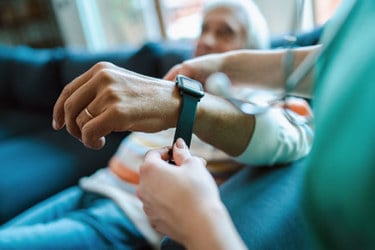
When a heart beats, it pushes a surge of blood through the circulatory tree, briefly expanding the tiny arterioles nestled beneath the skin. An optical sensor on a smartwatch detects this pulse by shining light into tissue and measuring how much reflects back, tracing a rhythmic wave known as a photoplethysmogram. For years, computer models have tried to convert these undulating light curves into blood pressure numbers, hoping to replace the tight, pneumatic arm cuffs that pinch patients in clinics. Yet when algorithms trained on tens of thousands of people meet an unfamiliar wrist, their precision regularly falters.
The central stumbling block is a deceptive biological ambiguity. Two individuals standing side by side can produce near-identical pulse wave profiles on a sensor, yet one person may have healthy vessels while the other experiences hypertensive strain. Because arterial stiffness, vessel diameter, and baseline vascular tone differ markedly from one body to the next, identical light absorption patterns conceal vastly different hydraulic pressures. When a standard model relies solely on a single isolated snapshot of light, it lacks the context needed to resolve which underlying cardiovascular state created that wave.
Why does identical pulse data hide different blood pressure levels?
Blood pressure depends on how hard the heart pumps and how much resistance the blood encounters as it flows through the vascular system. When a pressure wave travels down an artery, three main physical events determine the shape of the optical pulse recorded at the skin. First, the left ventricle ejects blood into the aorta, generating a forward pulse wave that expands peripheral capillaries. Second, that wave encounters branch points in the arterial tree and reflects backward, blending with the oncoming wave. Third, the rigidity of the vessel wall dictates how fast that wave travels and how steeply the skin swells.
In a stiff, aging artery, the reflected pulse races back quickly and merges early with the forward pulse, raising peak systolic pressure without necessarily altering the simple rise and fall of light registered by a small photodiode. In a more compliant artery, the reflected wave arrives later, sustaining pressure during diastole under a completely different internal workload. Because traditional machine-learning models attempt to map an instantaneous wave directly to a pressure number without knowing whether the vessel wall is supple or hardened, they inevitably drift toward the population average. According to a preprint paper posted by Shuailong Tang and colleagues at Shenzhen Technology University, OPPO Health Lab, Peking University, and Southeast University, previous physiological studies revealed that up to 33 percent of optical pulse segments with highly similar waveform shapes correspond to markedly different blood pressure levels across individuals.12
Tina, an independent expert in cardiovascular sensing, told Primary that this challenge is rooted in peripheral physiology.contributed Tina said "this ambiguity is widely recognized in cuffless blood pressure research" because optical sensors measure volumetric fluctuations rather than absolute fluid force.contributed "A PPG waveform is not a direct measurement of blood pressure; it reflects peripheral blood-volume changes that are influenced not only by pressure, but also by vascular stiffness, vascular tone, wave reflection, and individual anatomy," Tina noted, explaining why standard cross-subject models struggle to generalize across broad populations.contributed
This mismatch makes cuffless monitoring especially difficult for people whose baseline health deviates from the statistical middle. High blood pressure affects more than one billion adults globally and accounts for approximately 19 percent of annual deaths worldwide, according to the World Health Organization 2023 Global Report on Hypertension cited by the researchers.12 While inflatable cuffs provide accurate intermittent snapshots, their physical discomfort and disruption limit how often people use them, frequently missing night-time surges or spikes induced by clinic stress. Overcoming the one-to-many ambiguity in optical sensors is therefore essential if wearable monitors are to detect cardiovascular deterioration reliably throughout ordinary daily life.
How does tracking multi-day habits resolve the ambiguous signal?
Individual baseline physiology provides the missing constraint that allows an algorithm to interpret an ambiguous optical pulse correctly. Rather than treating each momentary sensor reading as an isolated puzzle, the researchers built an architecture called SIFPBPNet that evaluates incoming pulses through two distinct computational streams: one that captures instantaneous dynamics, and another that maps the user long-term baseline.12 The instantaneous path observes the immediate optical wave, while the steady-state path extracts a personalized profile from historical measurements collected over several preceding days.
To build this individual profile, the steady-state path uses a graph attention network, a type of neural network designed to find meaningful relationships between data points regardless of how many records are supplied.12 In real-world smartwatch use, people do not record their vitals on a rigid schedule; some wearers take readings twice a day, while others record dozens. The graph attention structure treats each historical pulse record as an interconnected node, weighting earlier patterns according to their diagnostic relevance. During training, this path learns to predict auxiliary vascular indicators: user age, which mirrors arterial stiffening; hypertension classification, which reflects chronic vascular strain; and blood pressure variability, which tracks day-to-day hemodynamic volatility.contributedcontributed
Yali, a study author from Shenzhen Technology University, told Primary that these auxiliary targets reflect physiological realities.contributed Yali explained that in ablation testing, age regression or blood pressure variability classification alone proved less effective than hypertension classification because the ultimate clinical goal focuses on estimating absolute pressure values.contributed Yali also pointed out that this supervised training requires explicit diagnostic labels, prompting ongoing research into unsupervised pretraining to broaden device applicability.contributed
Weighing that design, Tina told Primary that relying on surrogate targets represents a sensible engineering choice while still falling short of direct mechanical measurement.contributed Tina noted that while age, chronic hypertensive state, and pressure variability reflect longer-term vascular behavior, none of them uniquely defines vascular compliance or vessel tone. Tina said these auxiliary metrics "should therefore be viewed as useful anchors for personalization rather than a complete characterization of the underlying vascular system."contributed
When the user takes a fresh measurement, the instantaneous path extracts the short-term features from that single sixty-second wave and checks them against the steady-state profile.1 However, Yali clarified to Primary that while raw sensor recording blocks lasted 60 seconds, the model actually evaluates shorter waveform slices during inference.contributed Yali explained that cross-attention conditions the immediate 12-second waveform on individualized historical context.contributedcontributed Using a cross-attention mechanism, the model uses the immediate reading as a query, searching the historical baseline for matching hemodynamic context.1 As Yali described it, a single pulse wave resembles a word whose meaning remains ambiguous in isolation, while the multi-day graph provides the surrounding grammatical sentence: "Cross-attention then conditions the current 12-sec (not 60-sec) waveform on this individualized context, allowing similar pulse morphologies from different individuals to be mapped to different BP values."contributed
Tina told Primary that pairing a 12-second window with an individualized baseline is a promising strategy to separate transient hemodynamic fluctuations from persistent personal vascular traits.contributed However, Tina added that whether a 12-second duration captures enough dynamics during sudden exercise or stress remains an open question that requires validation under varied real-world conditions.
What did the dual-path evaluation demonstrate on wearable data?
Testing on real-world wearable data showed that incorporating a multi-day physiological profile significantly sharpens blood pressure estimation.12 The researchers evaluated the framework on the OPPO HBPM dataset, which contains records from 790 adult participants who tracked both optical sensor readings and cuff-based reference pressures over one to two months.1 The participant cohort had an average age of 38.53 years, with a standard deviation of 9.93 years, and was composed of 366 men and 424 women.1 For each participant, ten consecutive days of measurements served as the historical baseline, while subsequent records provided testing data, yielding 20,342 historical samples and 98,258 prediction samples across morning, noon, and evening windows.
Across the prediction dataset, SIFPBPNet achieved a mean absolute error of 8.57 millimeters of mercury for systolic blood pressure and 5.97 millimeters of mercury for diastolic blood pressure.12 The reference systolic pressures in the target prediction subset averaged 115.55 millimeters of mercury with a standard deviation of 15.34 millimeters of mercury, while reference diastolic pressures averaged 76.04 millimeters of mercury with a standard deviation of 9.62 millimeters of mercury. In the historical subset, reference systolic values averaged 114.09 millimeters of mercury with a standard deviation of 15.77 millimeters of mercury, and diastolic values averaged 75.74 millimeters of mercury with a standard deviation of 10.16 millimeters of mercury.
The study also examined whether the steady-state feature module could improve other existing neural network models. When the researchers plugged their historical graph attention module into different deep-learning backbones, the addition yielded relative reductions in systolic mean absolute error ranging between 2.8 percent and 13.1 percent.1 In response to questions from Primary, Yali provided the underlying baseline error values across those external backbones before the module was attached: systolic and diastolic mean absolute errors stood at 9.93 and 6.65 millimeters of mercury for ResNet18, 10.24 and 6.23 millimeters of mercury for VGGNet, 9.83 and 6.62 millimeters of mercury for BiLSTM, and 9.36 and 6.38 millimeters of mercury for SEM-ResNet.contributed
Evaluating those gains, Tina told Primary that while the absolute numerical shift is modest rather than transformative, seeing error reductions across multiple distinct architectures indicates that historical baseline modeling supplies genuinely new physiological information that single pulse snapshots cannot offer.contributed
What can these experimental results not tell us?
These performance figures reflect a retrospective evaluation on a proprietary dataset rather than an active intervention in clinical medical care. In response to questions about independent verification, Yali told Primary that the OPPO HBPM dataset remains unavailable to external researchers due to commercial privacy restrictions, though future iterations plan to employ public datasets alongside published code.contributed The experimental findings were posted as a preprint on arXiv in September 2026 and accepted for presentation at the 48th Annual International Conference of the IEEE Engineering in Medicine and Biology Society.1
Clinical diagnostic benchmarks present a major hurdle for practical deployment. Tina told Primary that an 8.57 millimeters of mercury systolic error exceeds the threshold required for clinical grade monitoring, pointing out that under the IEEE 1708 standard for wearable cuffless devices, an error above 7 millimeters of mercury falls outside top accuracy tiers.contributed Tina emphasized that while the findings show encouraging progress on noisy wearable data, standardized validation is necessary before the method could support medical decisions.contributed
Crucially, the architecture assumes that vascular health remains stable across the observation period. Yali told Primary that the system could produce misleading predictions during rapid hemodynamic disruptions such as acute hemorrhage, sepsis, or active medication titration.contributed Under those conditions, anchoring a prediction to a historical baseline risks biasing results toward an outdated normal, potentially performing worse than a model that evaluates only the immediate pulse.contributedcontributed Yali explained that "the architecture may fail during rapid hemodynamic changes, such as those caused by hemorrhage, sepsis, or medication titration, because it assumes that multi-day historical data accurately represent the user’s steady vascular state."contributed
Tina agreed that this anchoring effect introduces significant risks during clinical crises.contributed Tina said that if a patient experiences an acute cardiovascular emergency, excessive reliance on past baseline data could dull the model sensitivity, meaning practical systems will need safeguard mechanisms to detach historical constraints when immediate sensor readings diverge sharply from earlier patterns.contributed
Furthermore, Yali noted that the participant pool had a narrow age distribution centered below 40 years, meaning the study cannot confirm accuracy in older patients with advanced arterial calcification.contributedcontributed Commenting on that limitation, Tina said that because arterial stiffening alters pulse wave velocity and reflection points, models trained predominantly on younger cohorts cannot be assumed to generalize to older adults without dedicated testing across stiffer vascular profiles.contributed
What happens next for wearable cardiovascular monitoring?
Continuous cuffless estimation could transform cardiovascular medicine by enabling passive background screening throughout routine life. Detecting nocturnal hypertension, where blood pressure fails to experience its normal nighttime dip, remains difficult with inflating arm cuffs that interrupt sleep cycles. An unobtrusive wrist monitor that interprets incoming pulse waves through an individualized physiological baseline could identify early signs of vascular stiffening before overt hypertensive organ damage occurs.
Realizing that goal will require understanding how baseline tracking handles irregular device usage. Future investigations must establish how many consecutive days of historical readings are strictly necessary to construct a stable vascular profile, and how quickly that baseline degrades if a user removes their device for weeks. By showing that historical context can resolve identical optical waveforms, the research provides a concrete mathematical strategy for moving wearable health sensors beyond population averages toward truly individualized monitoring.
What this rests on
37 sentences trace to 2 sources and 2 contributors.
-
1
ST
Shuailong Tang, Xiaoyu Li, Donglin Xie, Wei Chen, Guangpu Zhu, Yelei Li, Yali Zheng Paper · arxiv.org · 14 Sep 2026 SIFPBPNet: A Dual-Path Network for Wearable and Cuffless Blood Pressure Estimation via Individualized Steady-state Representation Preprint · may not have been peer reviewed See the source
-
2
A
- 3 Contribution — Tina 19 statements added to this article
- 4 Contribution — Yali 18 statements added to this article
Article history
-
Published 30 Sep 2026, 15:11Assembled by the Primary desk from 2 sources · 2 contributors · 37 cited sentences
-
Tina, an independent expert in cardiovascular sensing
- Go to the sentence: According to a preprint paper posted by Shuailong Tang and colleagues at Shenzhen Technology University, OPPO Health Lab, Peking University, and Southeast University, previous physiological studies revealed that up to 33 percent of optical pulse segments with highly similar waveform shapes correspond to markedly different blood pressure levels across individuals.
- Go to the sentence: Tina, an independent expert in cardiovascular sensing, told Primary that this challenge is rooted in peripheral physiology.
- Go to the sentence: Tina said "this ambiguity is widely recognized in cuffless blood pressure research" because optical sensors measure volumetric fluctuations rather than absolute fluid force.
- Go to the sentence: "A PPG waveform is not a direct measurement of blood pressure; it reflects peripheral blood-volume changes that are influenced not only by pressure, but also by vascular stiffness, vascular tone, wave reflection, and individual anatomy," Tina noted, explaining why standard cross-subject models struggle to generalize across broad populations.
- Go to the sentence: During training, this path learns to predict auxiliary vascular indicators: user age, which mirrors arterial stiffening; hypertension classification, which reflects chronic vascular strain; and blood pressure variability, which tracks day-to-day hemodynamic volatility.
- Go to the sentence: Weighing that design, Tina told Primary that relying on surrogate targets represents a sensible engineering choice while still falling short of direct mechanical measurement.
- Go to the sentence: Tina said these auxiliary metrics "should therefore be viewed as useful anchors for personalization rather than a complete characterization of the underlying vascular system."
- Go to the sentence: Yali explained that cross-attention conditions the immediate 12-second waveform on individualized historical context.
- Go to the sentence: Tina told Primary that pairing a 12-second window with an individualized baseline is a promising strategy to separate transient hemodynamic fluctuations from persistent personal vascular traits.
- Go to the sentence: Across the prediction dataset, SIFPBPNet achieved a mean absolute error of 8.57 millimeters of mercury for systolic blood pressure and 5.97 millimeters of mercury for diastolic blood pressure.
- Go to the sentence: When the researchers plugged their historical graph attention module into different deep-learning backbones, the addition yielded relative reductions in systolic mean absolute error ranging between 2.8 percent and 13.1 percent.
- Go to the sentence: Evaluating those gains, Tina told Primary that while the absolute numerical shift is modest rather than transformative, seeing error reductions across multiple distinct architectures indicates that historical baseline modeling supplies genuinely new physiological information that single pulse snapshots cannot offer.
- Go to the sentence: Tina told Primary that an 8.57 millimeters of mercury systolic error exceeds the threshold required for clinical grade monitoring, pointing out that under the IEEE 1708 standard for wearable cuffless devices, an error above 7 millimeters of mercury falls outside top accuracy tiers.
- Go to the sentence: Tina emphasized that while the findings show encouraging progress on noisy wearable data, standardized validation is necessary before the method could support medical decisions.
- Go to the sentence: Under those conditions, anchoring a prediction to a historical baseline risks biasing results toward an outdated normal, potentially performing worse than a model that evaluates only the immediate pulse.
- Go to the sentence: Tina agreed that this anchoring effect introduces significant risks during clinical crises.
- Go to the sentence: Tina said that if a patient experiences an acute cardiovascular emergency, excessive reliance on past baseline data could dull the model sensitivity, meaning practical systems will need safeguard mechanisms to detach historical constraints when immediate sensor readings diverge sharply from earlier patterns.
- Go to the sentence: Furthermore, Yali noted that the participant pool had a narrow age distribution centered below 40 years, meaning the study cannot confirm accuracy in older patients with advanced arterial calcification.
- Go to the sentence: Commenting on that limitation, Tina said that because arterial stiffening alters pulse wave velocity and reflection points, models trained predominantly on younger cohorts cannot be assumed to generalize to older adults without dedicated testing across stiffer vascular profiles.
-
Yali, a study author from Shenzhen Technology University
- Go to the sentence: During training, this path learns to predict auxiliary vascular indicators: user age, which mirrors arterial stiffening; hypertension classification, which reflects chronic vascular strain; and blood pressure variability, which tracks day-to-day hemodynamic volatility.
- Go to the sentence: Yali, a study author from Shenzhen Technology University, told Primary that these auxiliary targets reflect physiological realities.
- Go to the sentence: Yali explained that in ablation testing, age regression or blood pressure variability classification alone proved less effective than hypertension classification because the ultimate clinical goal focuses on estimating absolute pressure values.
- Go to the sentence: Yali also pointed out that this supervised training requires explicit diagnostic labels, prompting ongoing research into unsupervised pretraining to broaden device applicability.
- Go to the sentence: When the user takes a fresh measurement, the instantaneous path extracts the short-term features from that single sixty-second wave and checks them against the steady-state profile.
- Go to the sentence: However, Yali clarified to Primary that while raw sensor recording blocks lasted 60 seconds, the model actually evaluates shorter waveform slices during inference.
- Go to the sentence: Yali explained that cross-attention conditions the immediate 12-second waveform on individualized historical context.
- Go to the sentence: Using a cross-attention mechanism, the model uses the immediate reading as a query, searching the historical baseline for matching hemodynamic context.
- Go to the sentence: As Yali described it, a single pulse wave resembles a word whose meaning remains ambiguous in isolation, while the multi-day graph provides the surrounding grammatical sentence: "Cross-attention then conditions the current 12-sec (not 60-sec) waveform on this individualized context, allowing similar pulse morphologies from different individuals to be mapped to different BP values."
- Go to the sentence: The researchers evaluated the framework on the OPPO HBPM dataset, which contains records from 790 adult participants who tracked both optical sensor readings and cuff-based reference pressures over one to two months.
- Go to the sentence: The participant cohort had an average age of 38.53 years, with a standard deviation of 9.93 years, and was composed of 366 men and 424 women.
- Go to the sentence: When the researchers plugged their historical graph attention module into different deep-learning backbones, the addition yielded relative reductions in systolic mean absolute error ranging between 2.8 percent and 13.1 percent.
- Go to the sentence: In response to questions from Primary, Yali provided the underlying baseline error values across those external backbones before the module was attached: systolic and diastolic mean absolute errors stood at 9.93 and 6.65 millimeters of mercury for ResNet18, 10.24 and 6.23 millimeters of mercury for VGGNet, 9.83 and 6.62 millimeters of mercury for BiLSTM, and 9.36 and 6.38 millimeters of mercury for SEM-ResNet.
- Go to the sentence: In response to questions about independent verification, Yali told Primary that the OPPO HBPM dataset remains unavailable to external researchers due to commercial privacy restrictions, though future iterations plan to employ public datasets alongside published code.
- Go to the sentence: Yali told Primary that the system could produce misleading predictions during rapid hemodynamic disruptions such as acute hemorrhage, sepsis, or active medication titration.
- Go to the sentence: Under those conditions, anchoring a prediction to a historical baseline risks biasing results toward an outdated normal, potentially performing worse than a model that evaluates only the immediate pulse.
- Go to the sentence: Yali explained that "the architecture may fail during rapid hemodynamic changes, such as those caused by hemorrhage, sepsis, or medication titration, because it assumes that multi-day historical data accurately represent the user’s steady vascular state."
- Go to the sentence: Furthermore, Yali noted that the participant pool had a narrow age distribution centered below 40 years, meaning the study cannot confirm accuracy in older patients with advanced arterial calcification.