Chilean desert bloom spans 6,560 square miles after record rains
A rare super El Niño weather pattern triggered the largest flowering across the Atacama since 1997, drawing 300,000 anticipated visitors.
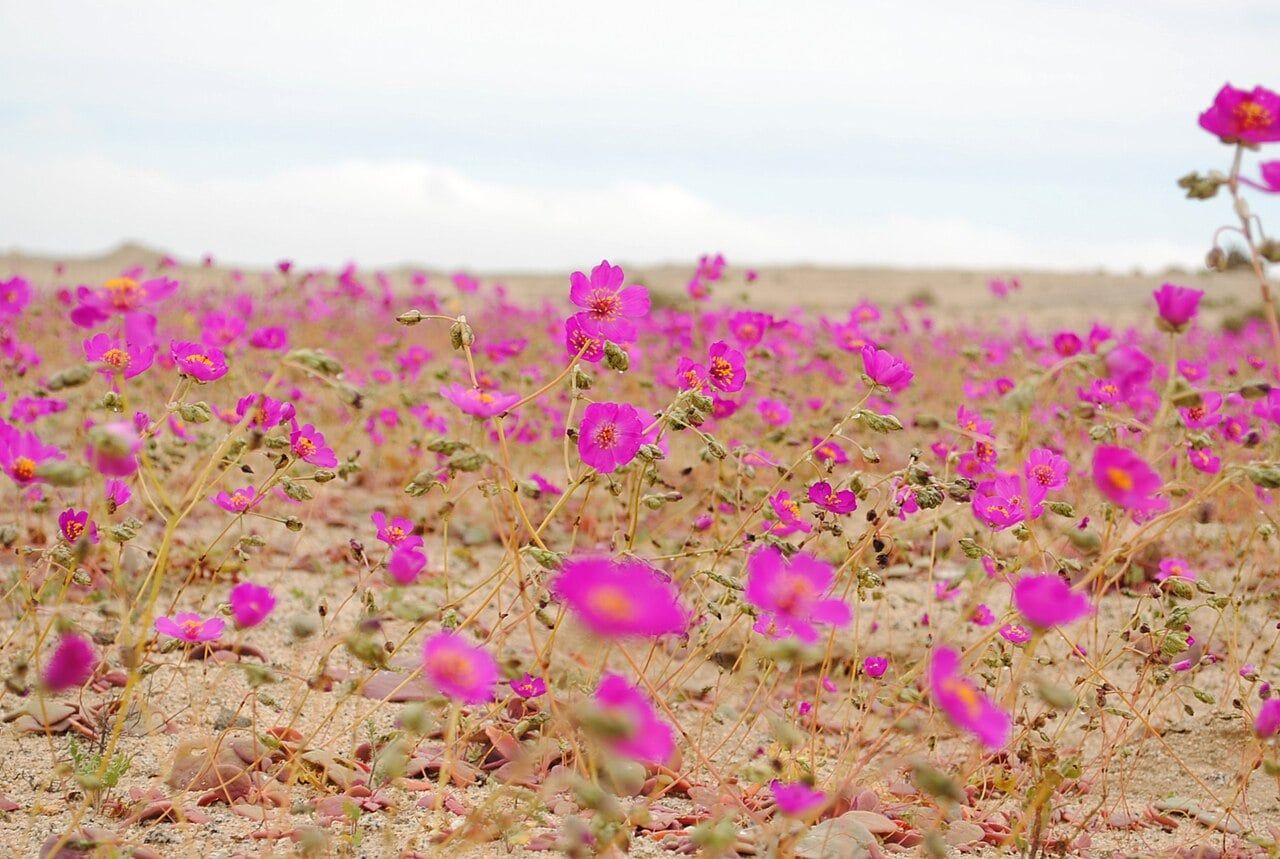
A historic pulse of winter precipitation has carpeted 6,560 square miles of northern Chile's Atacama Desert in wildflowers, marking the most extensive flowering event the territory has recorded since 1997.12 The transformation extends across an area roughly equal in size to the Santiago Metropolitan Region, waking dormant plant life across terrain that often goes years without measurable moisture.23
The surge in plant growth followed extraordinary rainfall between July and August driven by a powerful El Niño weather system.12 While the Atacama typically averages approximately 0.6 inches, or 15 millimeters, of annual rain, localized downpours delivered between 6 and 7 inches across several northern districts.12 Some monitoring sites registered 160 to 190 millimeters of precipitation, setting benchmarks that had not been recorded since regional weather records began in the 1950s.24
The Atacama Desert sits between the Pacific Ocean and the Andes Mountains, running roughly 1,000 miles down the northern Chilean coast.24 A desert bloom, known locally as desierto florido, can occur at irregular intervals of five to 10 years when winter rainfall exceeds 15 to 30 millimeters per square meter.3 The 2026 storms delivered more than triple that threshold, allowing surface moisture to seep unusually deep into dry sand and gravel.35
"Since rainfall records began, these are the most significant figures in terms of volume: 160, 180, 190 millimeters (6 to 7 inches) in some locations," explained César Pizarro, a biologist who directs the Biodiversity Conservation Section at Chile's National Forest Corporation, known as CONAF.24 Pizarro noted that the heavy rainfall activated long-dormant germplasm, which encompasses buried seeds, bulbs, and tubers alongside the eggs of local reptiles and invertebrates.24
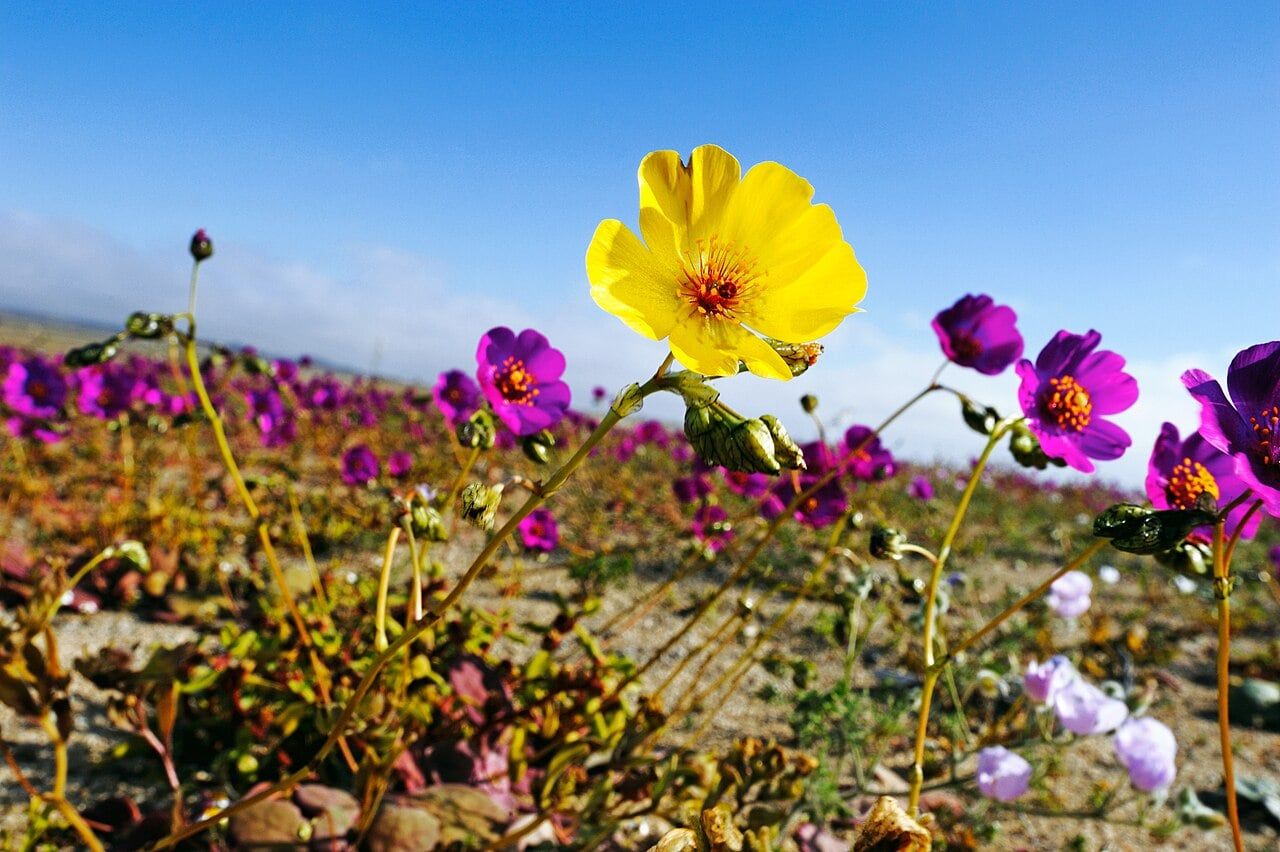
The resulting growth has brought more than 200 plant species into flower across plains, ravines, and coastal hills.12 Many of these species are endemic to the Atacama, having evolved specialized survival mechanisms that allow them to endure extreme aridity for decades.32 The seasonal mix includes purple rock purslane, white suspiros, yellow and red ñañucas, orange terciopelos, and the distinctive native claw flower known as garra de león.24
"It is a unique phenomenon; there are more than 200 plant species," said Jorge Carabantes, head of the Protected Areas Department at CONAF.12 Carabantes emphasized that the event represents an extraordinary occurrence that differs markedly from seasonal blooms documented in other arid parts of the world.12
The biological resurgence extends beyond plant life to the broader desert food web.5 Emerging vegetation supports rising numbers of insects, snails, birds, and small mammals.5 Native bees have mobilized to pollinate the blooms, while desert beetles consume plant remnants and deposit nitrogen-rich waste that enriches the soil before the next prolonged dry span sets in.5

The weather driver behind the event is a super El Niño characterized by elevated surface water temperatures across the central and eastern equatorial Pacific Ocean.56 The phenomenon altered regional atmospheric circulation, pushing moist maritime air masses inland over northern Chile.3 In high-altitude areas of the desert, the storms even brought snow during August.3
The storms also inflicted severe damage across other parts of the country before enabling the northern bloom.21 Torrential rainfall in central and southern Chile during July killed 13 people and destroyed or badly damaged approximately 4,000 homes.56 Regional officials noted that while the weather system produced devastation in populated river basins, it simultaneously triggered renewal across the northern wastes.5
Conservation managers are now working to protect the sensitive desert flora from human disturbance during the peak bloom in October.5 In 2023, the Chilean government established the Desierto Florido National Park across more than 57,000 hectares to safeguard vulnerable seed banks after a previous bloom drew large crowds.3 CONAF projections indicate that flowering in protected sectors will encompass roughly 15,000 hectares at its height.56
Regional tourism authorities project that nearly 300,000 overnight trips will take place across the Atacama region before the flowering cycle concludes in November.24 Visitors traveling along regional highways near Copiapó have stopped along roadsides to view hillsides colored by purple and white blossoms.15 Park rangers have urged tourists to keep vehicles on designated routes, remain on established footpaths, and leave domestic pets at home to prevent damage to unsprouted bulbs that must survive until the next major rain.53
What this rests on
30 sentences trace to 6 sources.
-
1
KH
Kenna Hughes-Castleberry Document · livescience.com · 2 Oct 2026 Colorful wildflowers bloom across Chile's Atacama Desert in wake of 'super' El Niño See the source
-
2
AN
ABC News Third-party reporting · abcnews.com · 1 Oct 2026 It's spring in the Southern Hemisphere and even Chile's Atacama Desert is blossoming See the source
-
3
D
dw.com Third-party reporting · dw.com Chile's Atacama desert in full bloom See the source
-
4
N
Newsday Third-party reporting · newsday.com · 1 Oct 2026 Earth's driest desert is covered in wildflowers right now See the source
-
5
"F
"@type":"Organization","name":"Agence France-Presse","url":"http://www.afp.com/en" Third-party reporting · afp.com · 23 Sep 2026 Chile's Atacama Desert blossoms with life after El Nino rains See the source
-
6
U
UA.NEWS Third-party reporting · ua.news · 23 Sep 2026 Chile’s Atacama Desert blooms after El Niño rains — Euronews See the source