Infections cause one in eight cancer cases across the world
Widespread vaccination and antimicrobial treatments could avert millions of tumors, according to a global analysis mapping how common viruses and bacteria trigger malignant disease.
Cancer is often viewed as an internal failure of cellular aging, inherited genetic mutations, or chemical exposure to substances like tobacco smoke and industrial pollutants. Yet across the globe, a substantial portion of all cancer diagnoses begins not with internal cellular decay, but with microscopic invaders that enter the body from the outside world. Viruses, bacteria, and parasites routinely trigger biological cascades that turn healthy human tissue into invasive tumors.1 Because these pathogens are communicable biological agents, the cancers they provoke are fundamentally distinct from spontaneous genetic mutations. They can be anticipated, intercepted, and prevented before malignant changes take hold.1
The biological progression from an initial infection to a malignant tumor follows a distinct sequence. A pathogen first enters human tissue and evades the immune response, establishing a chronic foothold.1 Over years or decades of persistent survival, the continuous presence of the microbe generates sustained tissue inflammation, releases cellular toxins, or directly inserts foreign viral genes into human cellular DNA.1 This relentless biological stress disables internal regulatory systems that normally force damaged cells to stop dividing or self-destruct. Deprived of those critical safeguards, abnormal cells divide without restraint and accumulate further genetic errors until a malignant tumor emerges. Intervening at the earliest link of that sequence by stopping transmission or clearing the microbe breaks the chain before malignant transformation can occur.1
In an epidemiological modeling analysis published on September 28 in the journal The Lancet Oncology, researchers mapped how this biological progression unfolds worldwide by examining 12 cancer-causing pathogens.1 The authors estimated that infections drove approximately 2.3 million new cancer cases in 2024, accounting for about 12% of the roughly 20 million new cancer cases diagnosed globally that year.1 To calculate that burden, the researchers drew upon population data from the Global Cancer Observatory's GLOBOCAN database, which aggregates records from registries around the world.1 The research team combined those cancer incidence figures with published epidemiological surveys examining how frequently specific infectious microbes appear in patients diagnosed with distinct types of tumors, allowing them to determine the proportion of cases attributable to each pathogen.1
Which pathogens are responsible for the most tumors?
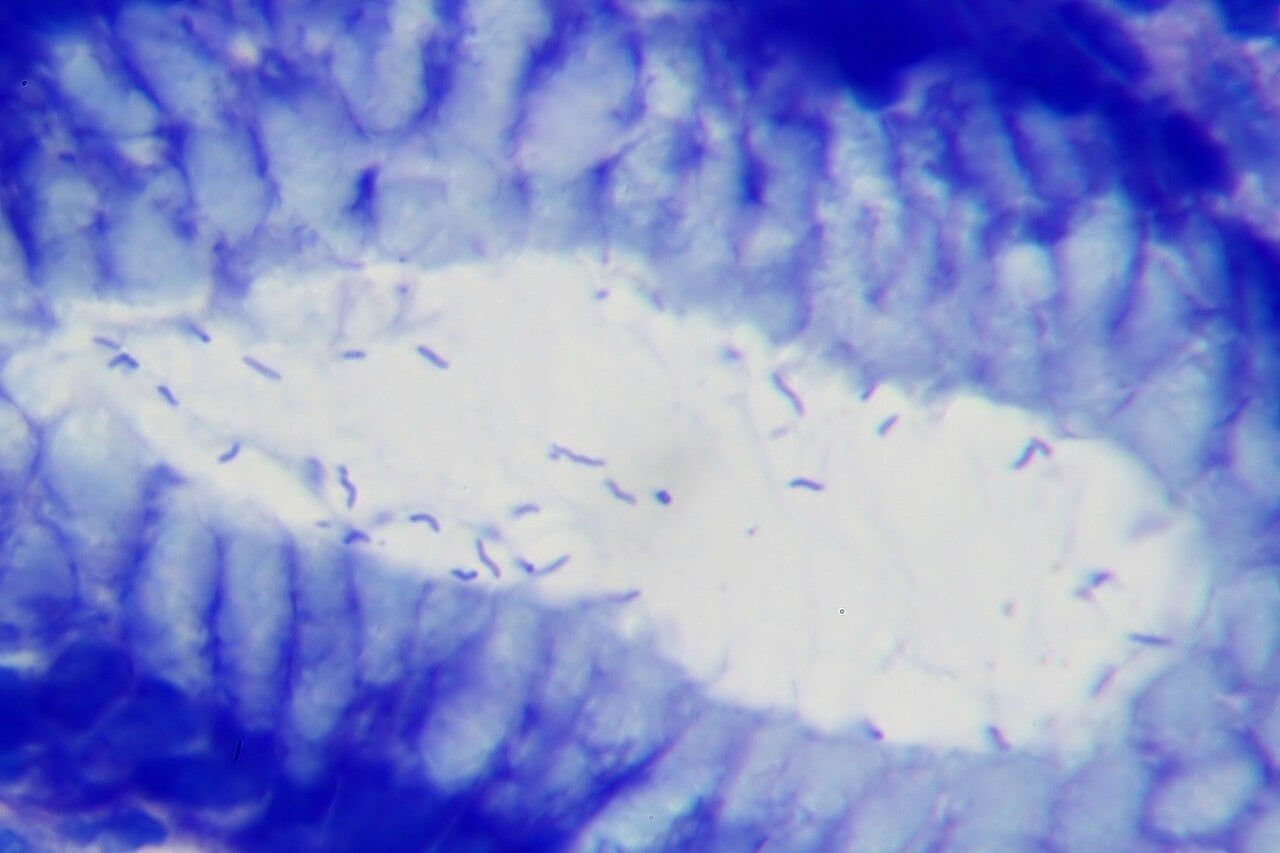
Four infectious agents generate roughly 92% of the 2.3 million cancer cases triggered by infections worldwide in 2024.1 The single largest contributor was a bacterium known as Helicobacter pylori, which colonizes the stomach lining and accounted for 760,000 of the 2.3 million infection-related cancer cases diagnosed in 2024, primarily producing gastric malignancies.1 The other three leading triggers were viral agents that disrupt host cellular machinery.1 Human papillomavirus, or HPV, was responsible for 750,000 cases of the 2.3 million infection-driven cancer total in 2024, causing cervical malignancies alongside cancers of the penis, throat, and mouth.1 Hepatitis B virus, which attacks the liver, accounted for 360,000 of the 2.3 million infection-related cancer cases diagnosed in 2024.1 Epstein-Barr virus, the agent behind infectious mononucleosis, drove 260,000 of the infection-caused cancer cases in 2024, raising risks for throat tumors, stomach cancers, and certain lymphomas.1 While the study also evaluated other cancer-linked microbes including hepatitis C and HIV, those four pathogens dominated the global total.1
Why do cancer prevention efforts remain uneven?
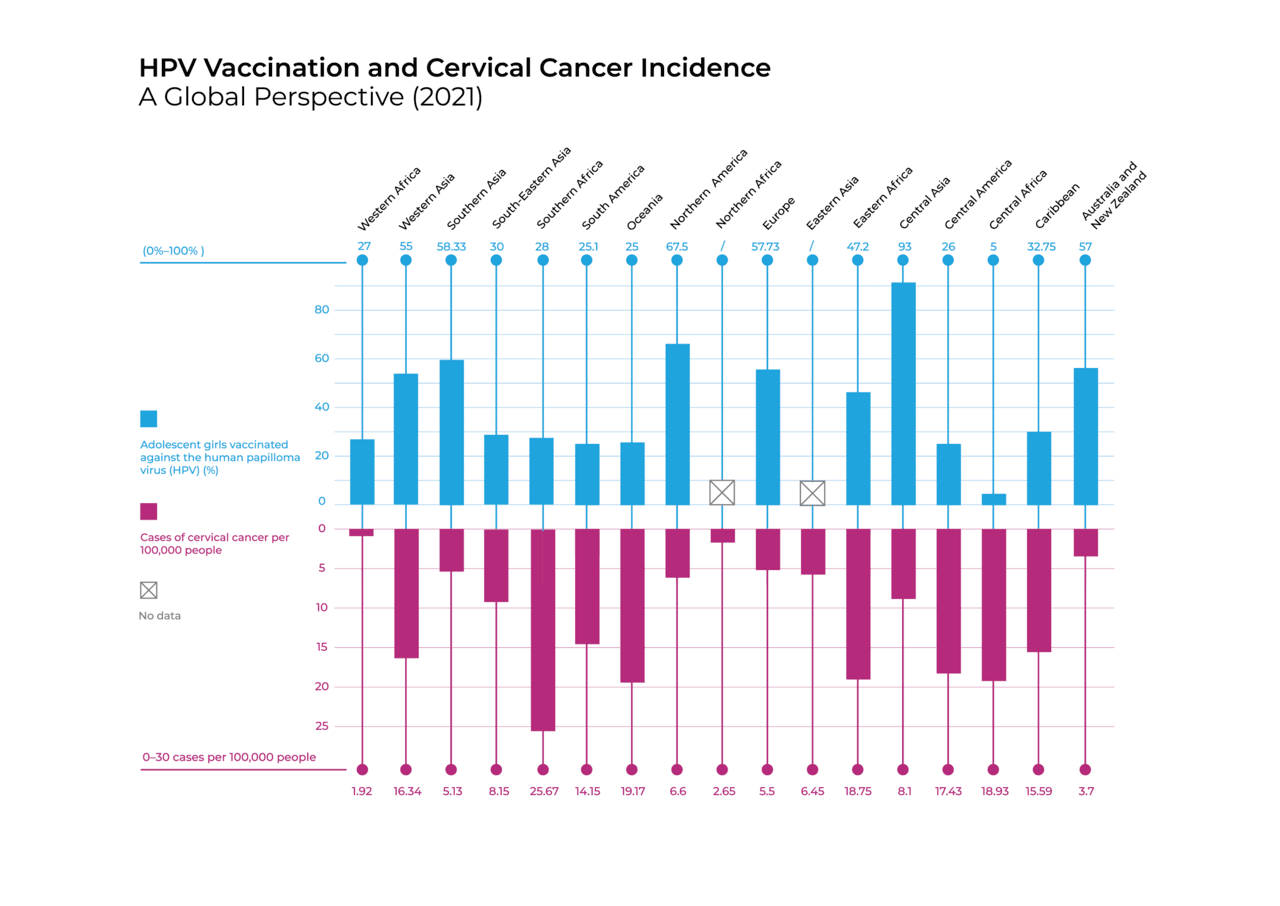
Deep economic disparities and vaccine delivery gaps leave the populations facing the highest infection rates with the least protection.1 The study in The Lancet Oncology found that low- and middle-income nations bore 77% of the 2.3 million infection-driven cancer cases diagnosed globally in 2024.1 That geographic divide was especially severe for human papillomavirus, where roughly 81% of the 750,000 HPV-linked cancer cases recorded in 2024 occurred in developing countries.1 According to figures from the World Health Organization, only 31% of eligible adolescent girls worldwide received at least one dose of the HPV vaccine in 2024, falling far short of the international public health target of 90%.1
Where high vaccination coverage has been achieved, the biological shield is striking.1 Rebecca Perkins, an obstetrician-gynecologist at Tufts University School of Medicine, noted that cervical cancer is beginning to disappear in countries that achieved vaccination rates above 80% among eligible populations.1 Perkins pointed to evidence from Australia, England, and Finland showing zero recorded cases of HPV-related cancers or deaths among young adults who completed vaccination by age 13.1 To address the global disparity, Perkins observed that shifting from a standard two-dose vaccine regimen to a single-dose protocol using the same formulas could ease mass campaigns, lower procurement expenses, and eliminate the need to track patients for follow-up appointments, an approach supported by recent clinical trials.1
Immunization efforts encounter different barriers in wealthier nations, where shots are widely available but uptake lags. In the United States, progress remains uneven because some caregivers assume their children are too young for the HPV vaccine or feel the shot is unnecessary, Perkins noted.1 Hepatitis B prevention faces its own policy headwinds. Although a highly protective vaccine against hepatitis B has long been recommended immediately after birth to prevent chronic liver infections and subsequent liver cancers, recent decisions by the U.S. Centers for Disease Control and Prevention to stop recommending universal newborn vaccination could raise future infection and cancer rates.1
What hurdles stand in the way of controlling other cancer triggers?
Developing vaccines against complex microbes like Epstein-Barr virus and expanding screening for bacterial stomach infections remain demanding scientific and logistical challenges.1 Claire Shannon-Lowe, a tumor virologist at the University of Birmingham, explained that Epstein-Barr virus is unusually difficult to target because it relies on multiple viral proteins to enter cells, unlike simpler viruses that use only one or two entry proteins.1 Once inside, the pathogen conceals itself within host cells for the remainder of a person's life. While up to 95% of adults worldwide contract Epstein-Barr virus by adulthood without developing cancer, its massive prevalence still yields 260,000 cancer diagnoses each year.1 Shannon-Lowe noted that growing clinical evidence connecting Epstein-Barr virus to autoimmune conditions, including multiple sclerosis and lupus, has renewed momentum to create candidate vaccines that could prevent initial infection and treat virus-associated tumors.1
Controlling bacterial triggers requires a different public health strategy focused on treatment rather than immunization. For Helicobacter pylori, medical systems are pursuing population-wide screening initiatives and antimicrobial therapies to eradicate the bacterium before chronic inflammation causes gastric cancer, while funding for a preventive vaccine remains an ongoing need.1
What limits the reach of the current global estimates?
The findings represent an epidemiological attribution model based on combining regional cancer registries with published infection prevalence rates, rather than a direct count of every patient on earth.1 Cancer registries included in the Global Cancer Observatory dataset cover only about 19% of the world population, and only 2% of the population across Africa, according to the researchers.1 Because data collection is sparse in the low- and middle-income regions where infectious diseases circulate most heavily, the true global toll of infection-driven malignancies could exceed the modeled estimates.1 The figures also describe population-wide statistical associations, which cannot predict whether any individual person carrying a pathogen will ultimately develop an invasive malignancy.1
Prashant Mathur, director of the National Centre for Disease Informatics and Research in India, observed that investing in cancer prevention produces far greater economic returns over the long term than funding cancer treatment after tumors develop.1 Mathur reported that about 50% to 60% of all cancers in India are avoidable when infection control is combined with reductions in tobacco use, alcohol consumption, unhealthy diets, physical inactivity, and environmental pollution, with past research suggesting similar proportions hold globally.1 Expanding vaccine distribution, simplifying dosing schedules, and widening access to bacterial diagnostics will determine whether public health programs can eliminate these avoidable tumors in the decades ahead.
What this rests on
38 sentences trace to 1 source.
-
1
AM
Anirban Mukhopadhyay Document · livescience.com · 3 Oct 2026 1 in 8 cancer cases are caused by infections, underscoring the importance of vaccines, experts say See the source