Dark energy mixed into neutron stars could explain undersized stellar remnants
Simulating a continuous blend of nuclear matter and exotic dark fluid produces lighter, highly stable compact stars that match puzzling observations without violating physical laws.
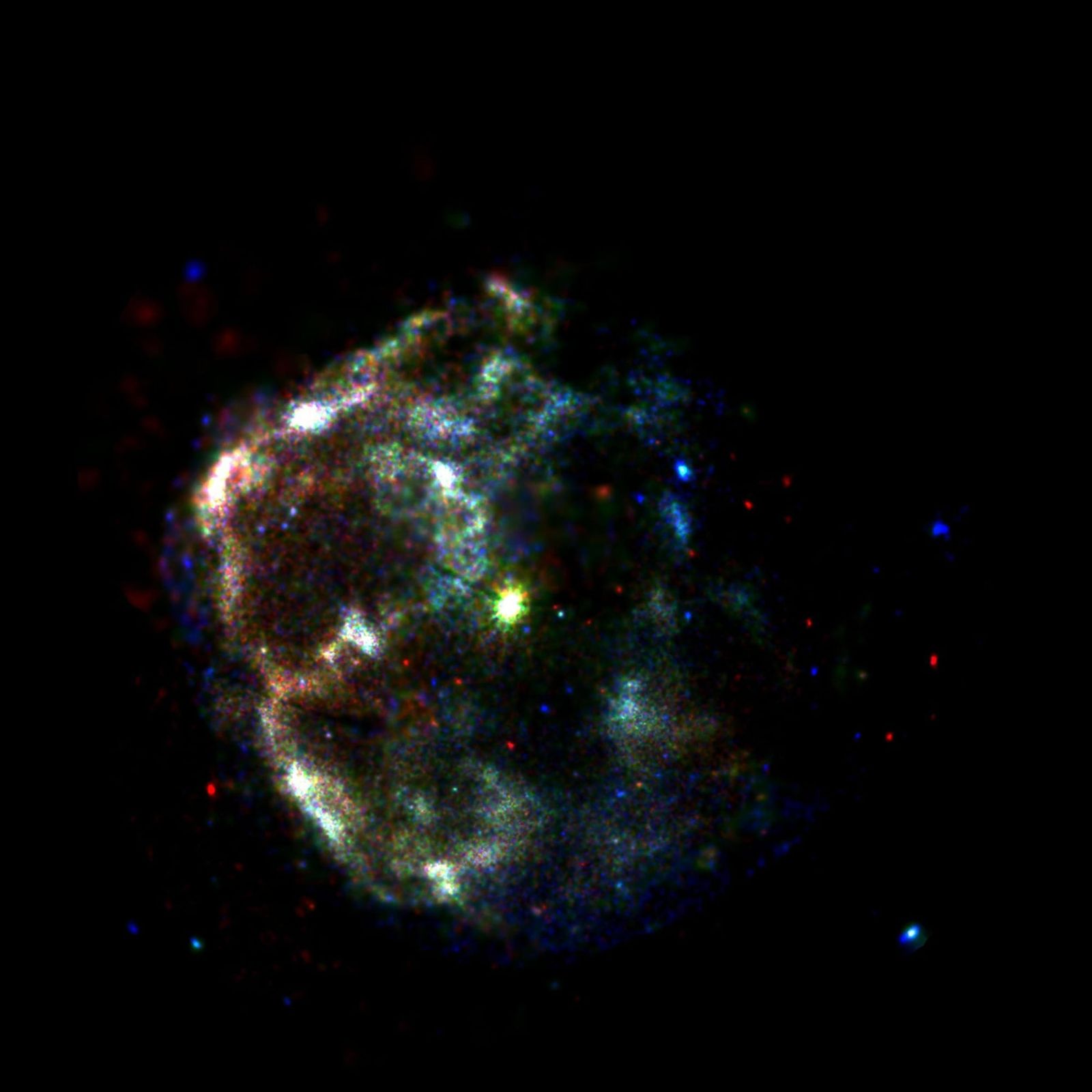
Neutron stars pack the mass of an entire sun into a sphere no wider than a city, creating gravitational fields so intense that ordinary atomic structures collapse entirely. Under these crushing conditions, subatomic particles squeeze together until nuclear repulsion pushes back, arresting the collapse and establishing an equilibrium between inward gravitational attraction and outward pressure. For decades, astrophysicists have treated these stellar corpses almost exclusively as cauldrons of ordinary nuclear material, occasionally contemplating exotic particles such as hyperons or deconfined quarks deep in their interiors. Yet several observed stellar remnants do not conform cleanly to the predictions of pure nuclear models, appearing noticeably lighter or smaller than standard astrophysical equations anticipate.
Dark energy presents the opposite physical extreme across the universe, operating on cosmic scales as a diffuse, negative-pressure influence that drives the accelerated expansion of space itself. Because dark energy accounts for the vast majority of the total energy density of the cosmos, theoretical physicists have begun evaluating whether its influence extends into compact astrophysical bodies. If dark energy penetrates these extreme gravitational wells, it could alter how dense nuclear matter behaves under pressures unreachable in any terrestrial laboratory. Rather than remaining an exclusively cosmic phenomenon, dark energy might actively participate in the local physics of collapsed stars.
A research preprint posted to the arXiv server on September 21, 2026, by Juan M. Z. Pretel and Sergio B. Duarte of the Centro Brasileiro de Pesquisas Físicas, alongside Mariana Dutra and Odilon Lourenço of the Instituto Tecnológico de Aeronáutica, models what happens when dark energy mixes directly with nuclear matter throughout a neutron star.1 The study examines an intimate, continuous admixture where ordinary nucleons and an exotic dark fluid coexist from the center of the star all the way to its surface.1 This preprint has not yet undergone formal peer review by independent academic referees.1
Understanding this internal mixture matters because several observed stellar remnants defy the conventional boundaries predicted by pure nuclear theory. Notably, the central compact object within the supernova remnant HESS J1731-347 exhibits an unusually low mass and a small radius, challenging standard equations that describe dense matter.1 When asked about this discrepancy, Test., lead author, told Primary that "this is commonly observed as exotic physics rather than conventional solid-state physics."contributed If dark energy actively admixes into stellar cores, it could account for these anomalous objects without violating the fundamental physical laws governing gravity and relativity, offering an alternative mechanism to explain unusually compact or lightweight corpses scattered across the Milky Way.
The physical balance inside a neutron star follows an intuitive causal chain. Inward gravitational attraction pulls the stellar material toward the center, while the internal pressure of compressed nucleons pushes outward to resist collapse. When an exotic dark fluid mixes into this dense medium, it alters the thermodynamic relationship between density and pressure. Instead of reinforcing outward resistance, the exotic fluid softens the response of the medium, generating less pressure for a given density. To maintain hydrostatic balance against gravity, the star contracts into a smaller, denser object, shifting its overall mass and radius while damping the speed at which internal sound waves propagate through the core.
Why would dark energy exist inside a collapsed star?
Dark energy represents the dominant energy component of the universe, leading researchers to examine whether its presence influences spherically symmetric compact stars embedded in cosmic space. Pretel, Duarte, and Dutra had previously investigated hybrid stellar models where dark energy was confined exclusively to an isolated core beneath a conventional crust.41 In a December 2024 paper published in Physical Review D, Pretel, Duarte, Dutra, Lourenço, and José D. V. Arbañil explored how a central core composed of Chaplygin dark fluid modifies the macroscopic structure and tidal deformability of neutron stars.5 That earlier study showed that an energy density jump across a core boundary could enhance radial stability, but it treated the interior as two distinct, unmixed phases separated by a sharp dividing surface.61

The preprint posted in September 2026 takes that foundation in a new direction by removing the sharp phase boundary and allowing dark energy to blend continuously with ordinary matter.1 Asked about the shift from isolated cores to full mixing, Odilon Lourenço, a study co-author at the Instituto Tecnológico de Aeronáutica, told Primary that isolating dark energy requires explaining why it would preferentially pool at the center and develop a sharp boundary without a known microscopic phase transition. In the absence of such a microscopic interaction, Lourenço explained, it is equally reasonable to consider that the dark fluid permeates the ordinary matter throughout the star, a possibility that is "particularly natural when dark energy is modeled by means of a Chaplygin gas, which was originally proposed as a fluid capable of unifying the dark matter and dark energy components, without requiring them to be confined to a specific spatial region."contributed
In the new formulation, the dark energy fluid is combined with ordinary hadronic matter through an energy density parameter labeled f, which sets the ratio of dark energy density to the total energy density of the mixed fluid.1 The authors employed a Chaplygin-type dark fluid, an equation of state, meaning a formula connecting pressure and density, that introduces negative pressure to model the accelerated expansion of the universe. When this parameter approaches zero, the mathematical description cleanly returns to standard nuclear matter without any exotic contribution.1 Because the pure Chaplygin formula contains a density term in its denominator, setting the dark energy fraction to absolute zero makes that standalone term diverge, but adopting small positive fractions smoothly reproduces standard hadronic configurations.
To model the ordinary matter sector, the researchers relied on two established frameworks: relativistic mean-field theory using the BSR8 parametrization, and the nonrelativistic Skyrme interaction using the SLy4 parametrization. Both nuclear models were calibrated against empirical data from terrestrial nuclei, including binding energies and charge radii across isotopes of oxygen, calcium, nickel, tin, and lead.1 Leptons were included to maintain electrical neutrality, beta equilibrium was imposed, and the low-density crust was described using the Baym, Pethick, and Sutherland equation of state.1
How does mixing dark energy alter a neutron star?
Infusing a neutron star with dark energy softens its overall equation of state, producing lower internal pressure at high densities and reducing the speed at which acoustic disturbances move through the star. The preprint reports that increasing the dark energy fraction f from 10 percent up to 50 percent causes a systematic softening across both the SLy4 and BSR8 hadronic models.1 This change directly lowers the square of the speed of sound, defined by the rate of change of pressure with respect to energy density, throughout the stellar interior.1
This drop in sound speed resolves a persistent theoretical problem known as causality violation, the physical requirement that sound waves must never travel faster than the speed of light. Under the pure SLy4 model without dark energy, the sound speed reaches the speed of light at an energy density of approximately 2.97 times 10 to the 15th grams per cubic centimeter, crossing into unphysical superluminal territory at extreme densities.1 The authors found that introducing a positive fraction f of Chaplygin dark fluid suppresses the sound speed, expanding the range of densities over which the fluid respects causality.1 For all tested non-zero values of the fraction up to 50 percent, the speed of sound remains strictly below the speed of light across the entire examined density range.
The softening of the equation of state alters the macroscopic structure of the star calculated by the Tolman-Oppenheimer-Volkoff equations of relativistic hydrostatic equilibrium. For high central densities, such as 2.5 times 10 to the 15th grams per cubic centimeter, the surface radius of the star consistently decreases as the dark energy fraction increases from zero to 50 percent. The mass enclosed within a given radial coordinate also decreases across the stellar profile as the dark energy ratio rises.1 As a result of these shifts in the mass-radius relation, the authors reported that the unusually lightweight central compact object in HESS J1731-347 can be satisfactorily described as a neutron star admixed with dark energy.1
What do the models reveal about stellar stability and signals?
Calculations of radial vibrations show that adding dark energy reinforces the dynamic stability of neutron stars against catastrophic collapse. In general relativity, the stability of a spherical star against infinitesimal radial perturbations depends on the sign of the squared vibration frequency of its fundamental pulsation mode, where positive values denote stable equilibrium and negative values indicate collapse. The authors demonstrated that in their admixed models, the central density corresponding to the maximum allowable gravitational mass matches the exact threshold where the squared radial frequency vanishes, mirroring the classical stability boundary known for stars made purely of ordinary matter.1 Higher concentrations of dark energy systematically enhance this stability, allowing the star to remain intact across a wider range of configurations.1

Addressing how a softer equation of state can actually improve stability, Lourenço told Primary that the dark energy component lowers pressure and mass at a given central density, causing the star to become less massive and less compact in these sequences. Lourenço said that "although the presence of dark energy softens the total equation of state, it allows the stable branch of the stellar sequence to extend to higher central densities."contributed This stabilizing shift means that stars containing dark fluid can endure higher central concentrations of matter before encountering the point of gravitational collapse.
The presence of dark energy also imprints measurable changes on the signals emitted by these compact stars. For sufficiently massive stellar configurations, the paper states that increasing the dark energy fraction causes a significant rise in both the surface gravitational redshift and the fundamental frequency of nonradial oscillation modes.1 Surface gravitational redshift measures how much light loses energy as it climbs out of the star's gravitational field, meaning a more compact star shifts escaping photons to noticeably longer wavelengths. Lourenço clarified to Primary that this rise in the fundamental nonradial oscillation frequency occurs specifically for stellar masses above approximately 0.4 solar masses, while below that threshold the dependence can change and exhibit more complex behavior.contributed
Conversely, the calculations indicate an opposite pattern for total gravitational mass and tidal deformability, both of which decrease as the dark energy fraction increases.1 Tidal deformability measures how easily an external gravitational field stretches a neutron star into an egg shape during an orbital collision. A lower tidal deformability indicates a more compact, rigid core that resists distortion. That reduction aligns with observational constraints gathered from gravitational wave events, such as the binary neutron star merger GW170817, which favor more compact stellar interiors.16
What are the limits of treating dark energy as a stellar fluid?
These findings describe mathematical solutions to relativistic fluid equations rather than direct observational detections of dark energy inside an actual stellar remnant. The model relies on a phenomenological fluid framework rather than an experimentally confirmed microscopic theory of dark energy particles, and it assumes that the dark energy fraction f remains constant throughout the star. In physical reality, any real dark component could have spatial gradients, thermal interactions, or coupling behaviors with ordinary matter that are not captured by a single uniform fraction parameter. Furthermore, the preprint has been posted to arXiv and has not yet undergone formal peer review by independent academic referees.
The numerical calculations also rely on fixed model parameters, specifically choosing constants A equal to 0.015 and B equal to 1.0 times 10 to the negative 26th meters to the fourth power, within geometric units, to ensure that the mixed fluid preserves causality across all examined densities.1 In the original paper draft, the units for B were described in shorthand as inverse meters, but Lourenço noted in response to questions from Primary that B has units of meters to the power of minus four in geometric units. Lourenço emphasized that these values "were not fixed by a specific observational constraint" but were instead selected phenomenologically to produce noticeable changes in mass and radius while maintaining causality, leaving a broader parameter space exploration for future studies.
Differentiating a dark energy admixture from other exotic astrophysics remains a substantial hurdle. Observational instruments such as NASA's Neutron star Interior Composition Explorer, or NICER, along with gravitational wave observatories, provide empirical mass and radius boundaries, but current data cannot uniquely distinguish dark energy admixture from alternative nuclear physics hypotheses, such as strange quark cores or modified gravity theories.1 Lourenço told Primary that "no single observational signature is currently expected to uniquely identify a dark-energy-admixed configuration," pointing out that resolving the true nature of compact objects like HESS J1731-347 will require sufficiently precise joint measurements of mass, radius, and tidal deformability alongside surface thermal emission data.contributed
Lourenço also explained that a future measurement placing the central compact object in HESS J1731-347 outside the predicted mass and radius boundaries could rule out the dark energy interpretation.contributed Future investigations will need to determine whether dynamic phase transitions, rapid stellar rotation, or finite temperatures alter how dark energy distributes itself within dense nuclear matter. For astrophysicists studying the boundary between cosmology and compact objects, the admixture framework provides a concrete tool for testing whether the dark energy driving the universe outward might also be leaving quiet signatures inside collapsed stars.
5 Oct 2026, 17:14 UTC — This article was updated to reflect new contributions and sources.
What this rests on
31 sentences trace to 4 sources and 2 contributors.
-
1
JM
Juan M. Z. Pretel, Sergio B. Duarte, Mariana Dutra, Odilon Lourenço Paper · arxiv.org · 21 Sep 2026 Structure and astrophysical properties of dark energy admixed neutron stars Preprint · may not have been peer reviewed See the source
- 2 Contribution — Odilon 11 statements added to this article
- 3 Contribution — Test. 1 statement added to this article
-
4
A
-
5
A
-
6
L
link.aps.org Third-party reporting · link.aps.org Dark energy effects on realistic neutron stars | Phys. Rev. D See the source
Article history
-
Update 5 Oct 2026, 17:14
This article was updated to reflect new contributions and sources.
-
Published 5 Oct 2026, 13:20Assembled by the Primary desk from 4 sources · 2 contributors · 31 cited sentences
-
Odilon
- Go to the sentence: Notably, the central compact object within the supernova remnant HESS J1731-347 exhibits an unusually low mass and a small radius, challenging standard equations that describe dense matter.
- Go to the sentence: In the absence of such a microscopic interaction, Lourenço explained, it is equally reasonable to consider that the dark fluid permeates the ordinary matter throughout the star, a possibility that is "particularly natural when dark energy is modeled by means of a Chaplygin gas, which was originally proposed as a fluid capable of unifying the dark matter and dark energy components, without requiring them to be confined to a specific spatial region."
- Go to the sentence: As a result of these shifts in the mass-radius relation, the authors reported that the unusually lightweight central compact object in HESS J1731-347 can be satisfactorily described as a neutron star admixed with dark energy.
- Go to the sentence: Higher concentrations of dark energy systematically enhance this stability, allowing the star to remain intact across a wider range of configurations.
- Go to the sentence: Lourenço said that "although the presence of dark energy softens the total equation of state, it allows the stable branch of the stellar sequence to extend to higher central densities."
- Go to the sentence: For sufficiently massive stellar configurations, the paper states that increasing the dark energy fraction causes a significant rise in both the surface gravitational redshift and the fundamental frequency of nonradial oscillation modes.
- Go to the sentence: Lourenço clarified to Primary that this rise in the fundamental nonradial oscillation frequency occurs specifically for stellar masses above approximately 0.4 solar masses, while below that threshold the dependence can change and exhibit more complex behavior.
- Go to the sentence: The numerical calculations also rely on fixed model parameters, specifically choosing constants A equal to 0.015 and B equal to 1.0 times 10 to the negative 26th meters to the fourth power, within geometric units, to ensure that the mixed fluid preserves causality across all examined densities.
- Go to the sentence: Observational instruments such as NASA's Neutron star Interior Composition Explorer, or NICER, along with gravitational wave observatories, provide empirical mass and radius boundaries, but current data cannot uniquely distinguish dark energy admixture from alternative nuclear physics hypotheses, such as strange quark cores or modified gravity theories.
- Go to the sentence: Lourenço told Primary that "no single observational signature is currently expected to uniquely identify a dark-energy-admixed configuration," pointing out that resolving the true nature of compact objects like HESS J1731-347 will require sufficiently precise joint measurements of mass, radius, and tidal deformability alongside surface thermal emission data.
- Go to the sentence: Lourenço also explained that a future measurement placing the central compact object in HESS J1731-347 outside the predicted mass and radius boundaries could rule out the dark energy interpretation.