An exoplanet under one million years old challenges planetary formation timelines
The confirmed discovery of Elias 2-24b gives astronomers an unprecedented look at planet building in its earliest stages, prompting fresh debate over how rapidly newborn worlds gather their mass.
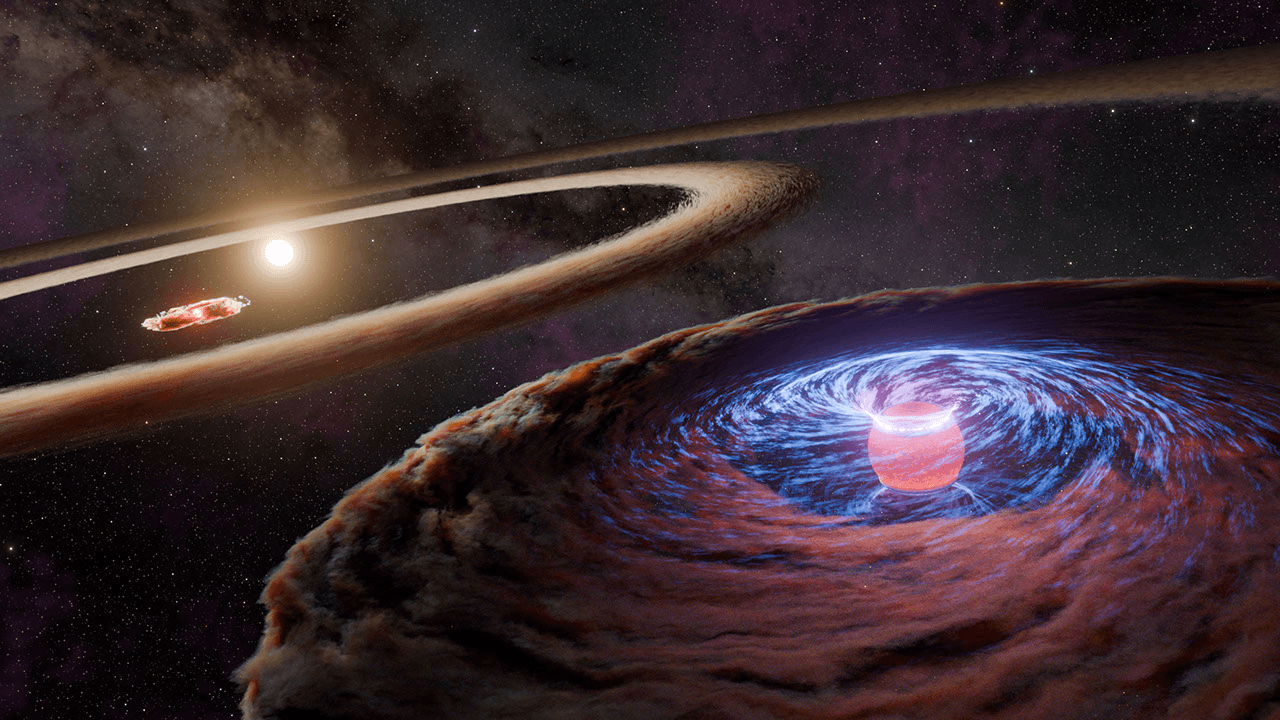
In the ordinary life of a planetary system, a million years passes in what amounts to an astronomical blink of an eye. The vast clouds of gas and dust that encircle newborn stars are chaotic, turbulent environments where matter must slowly aggregate across cosmic epochs. Planetary scientists have traditionally envisioned world building as a protracted process, one in which microscopic dust grains collide, coalesce into pebbles, and gradually assemble into massive celestial bodies over millions of years. Discovering a recognizable planet in the earliest stages of that timeline challenges the standard assumption that worlds require immense stretches of time to take shape.
The confirmed discovery of an exoplanet designated Elias 2-24b demonstrates that planetary bodies can emerge while their host environments are still in their infancy.1 At under 1 million years old, Elias 2-24b is now the youngest exoplanet ever observed.1 The finding introduces an immediate timing problem for existing astrophysics, showing that a planet can establish its identity long before the surrounding nursery has quieted.
How do planets assemble in newborn stellar systems?
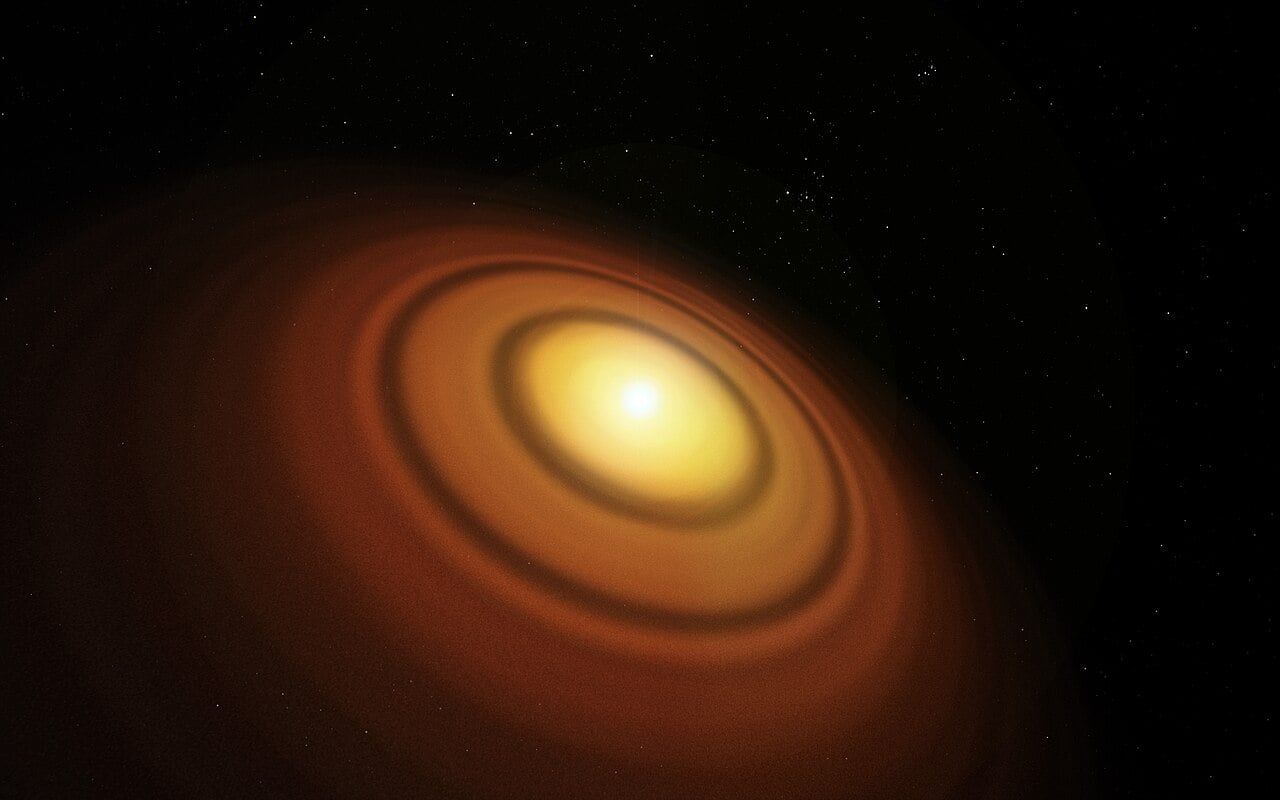
Planetary systems begin when a dense pocket of interstellar gas and dust collapses under gravity, leaving a young star encircled by a rotating protoplanetary disk. Within this pancake-shaped disk, dust particles drift through surrounding gas, colliding and occasionally adhering to one another through electrostatic and gravitational forces. Over time, these tiny clumps grow into pebble-sized fragments, which eventually gather into kilometre-scale boulders known as planetesimals.
Once planetesimals form, their gravitational pull accelerates the collection of remaining debris, building a solid planetary core over successive generations of violent collisions. If this core becomes massive enough before the surrounding gas disperses, it can rapidly sweep up hydrogen and helium to form a gas giant. In classical descriptions of this process, known as core accretion, the multi-stage buildup of a massive core demands several million years of continuous orbital interactions. When that timeline is compressed, every individual stage of dust settling, pebble growth, and gas capture must operate under extreme efficiency.
Why does an infant world challenge established models?
The presence of Elias 2-24b within an infant environment suggests that planetary assembly can occur far more rapidly than conventional frameworks accommodate.1 According to the announcement, the discovery may force researchers to reevaluate prevailing theories about how planets are formed.1 If a world can coalesce in under 1 million years, the slow, stepwise accumulation of solids described by traditional core accretion models may struggle to explain its existence.1
To account for such early emergence, theorists must consider whether alternative mechanisms drive planet formation in very young disks. One competing hypothesis is gravitational instability, in which a massive, cool protoplanetary disk fragments directly into planet-sized clumps of gas and dust under its own self-gravity. Unlike core accretion, which builds a world from the bottom up over millions of years, gravitational instability operates from the top down, potentially creating massive objects in thousands of years. Alternatively, modified versions of core accretion, such as pebble accretion, suggest that aerodynamic drag allows growing cores to vacuum up small pebbles at rates orders of magnitude faster than traditional boulder collisions would allow.
What can the current observation leave unanswered?
The confirmation of Elias 2-24b establishes the existence of an exceptionally young world, but it cannot reveal which physical pathway assembled it.1 As a single observational detection, the finding demonstrates that rapid planet formation is physically achievable without clarifying how common that outcome is across the wider galaxy. Century-scale questions about whether young exoplanets migrate inward after birth or form in place also remain unresolved by the initial confirmation. Furthermore, observing young worlds embedded in dusty disks presents severe technical challenges, as localized disk structures can sometimes mimic the signatures of emerging planetary companions.
Where do planetary scientists turn next?
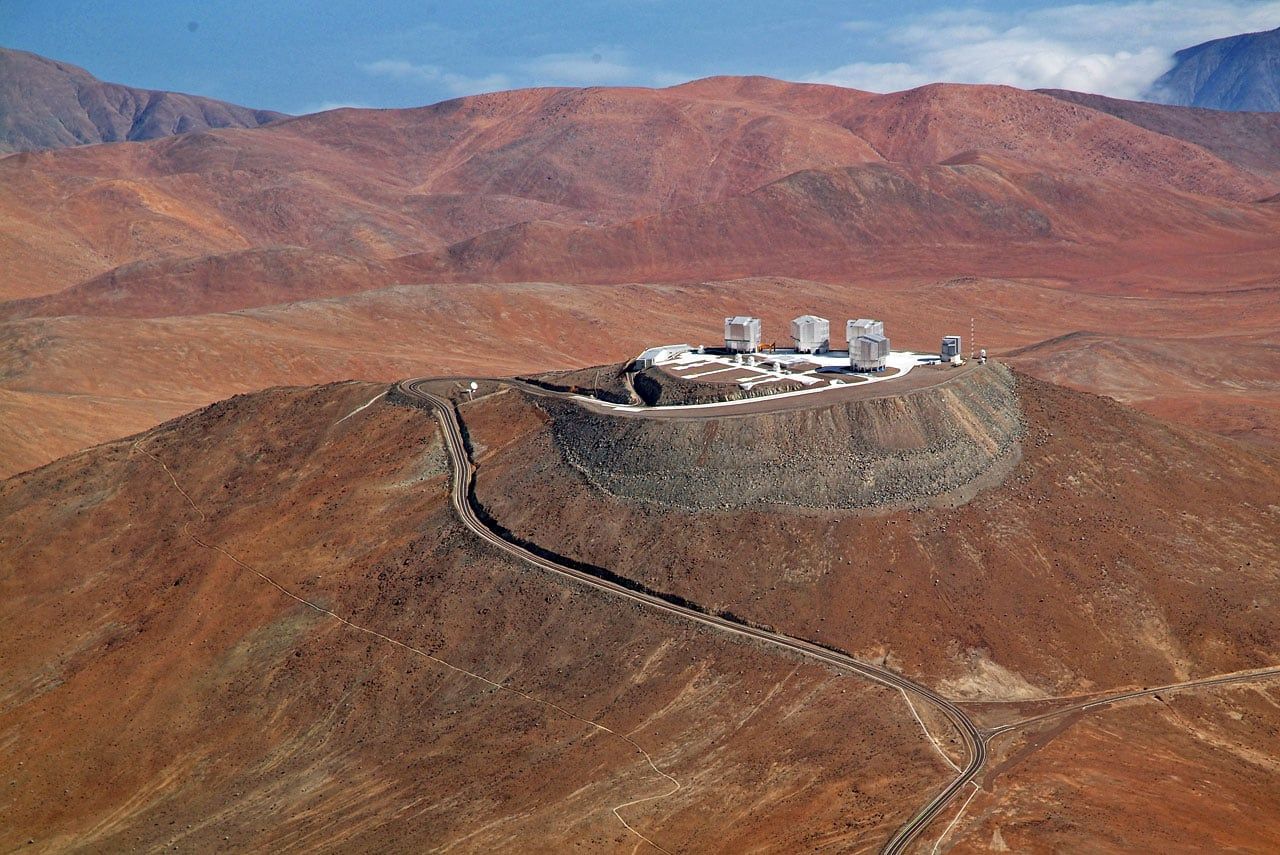
Researchers will now look to high-resolution observations of circumstellar disks to determine whether other nascent stars host similarly young planetary companions. Comparing the physical conditions of multiple young disks will help astronomers pinpoint whether rapid planet building requires exceptionally massive initial disks or occurs routinely around ordinary newborn stars. As future instruments probe deeper into the dust-shrouded envelopes of young stellar objects, theoretical models of planetary origins will need to incorporate the compressed timelines that Elias 2-24b has made undeniable.1
What this rests on
7 sentences trace to 1 source.
-
1
TH
Teruyuki Hayakawa Document · wired.com · 5 Oct 2026 Astronomers Confirm Discovery of the Youngest Known Exoplanet Ever See the source