Jupiter will vanish behind the crescent moon across eastern North America
Skywatchers across the eastern and central continent will witness a rare lunar occultation before dawn, an alignment that will not return to the region for eleven years.
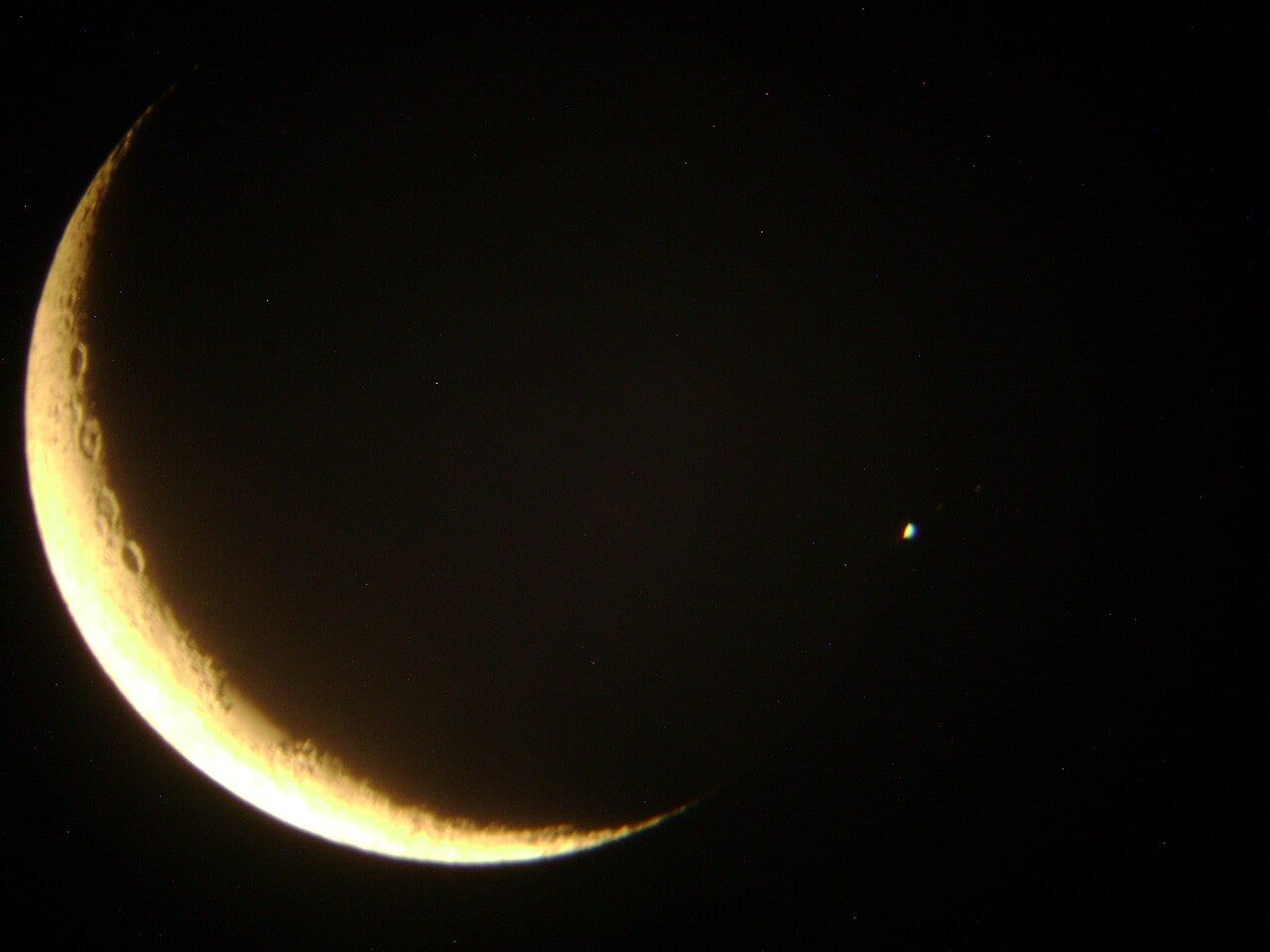
Most skywatchers associate celestial blockages with solar eclipses, when the moon passes directly across the sun. The same orbital geometry occasionally aligns Earth's satellite with the bright planets of the solar system, temporarily hiding distant worlds behind the lunar limb. In the pre-dawn sky on October 6, 2026, the moon will cross directly in front of Jupiter, an alignment that will not happen again for viewers in North America for 11 years.1
An occultation relies on a straightforward sequence of celestial mechanics. Both the moon and the planets orbit within a relatively narrow band along the ecliptic, the plane of Earth's orbit around the sun. As the moon completes its monthly journey around Earth, it steadily drifts eastward against the background stars. When its path intersects the exact line of sight between an observer on the ground and a background planet, the lunar disc acts as a moving screen, blocking the planet from view until the moon's orbital motion carries it past.
How does a lunar occultation take place?
A lunar occultation occurs when the moon glides directly between an observer on Earth and a more distant celestial body, temporarily blocking that background object from view.1 Because the moon sits roughly 384,000 kilometres away while Jupiter orbits hundreds of millions of kilometres deeper in space, the event is entirely a perspective alignment. The two bodies rise together in the eastern sky early Tuesday morning, gradually appearing to draw closer as the moon moves eastward against the background constellations.1
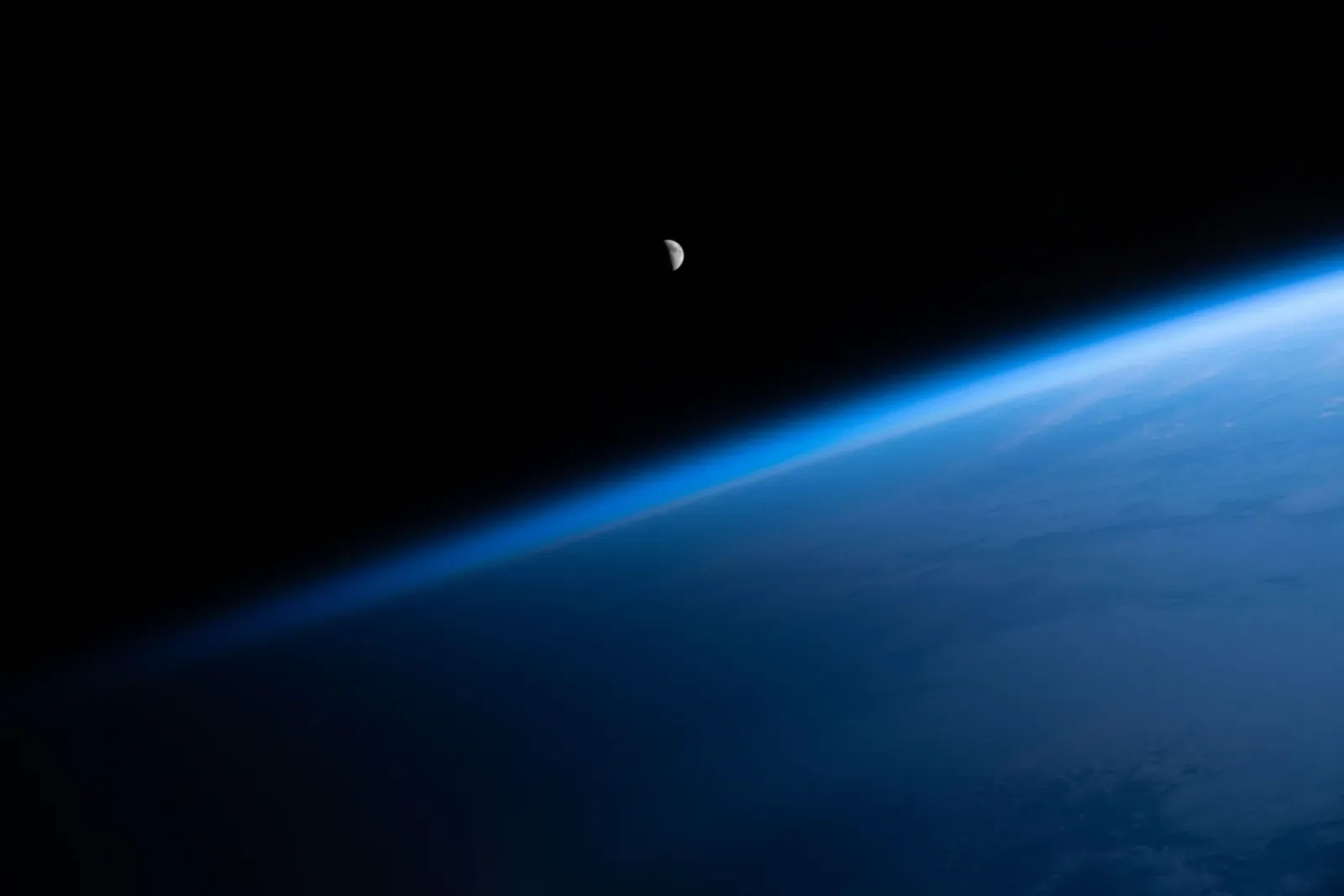
During the event, the moon will appear as a waning crescent illuminated to just 20 percent of its surface.1 Jupiter will shine brightly right beside the illuminated sliver.1 When the occultation begins, the gas giant will slip behind the edge of the moon and remain hidden for up to about an hour before suddenly reappearing on the opposite side.1
Where and when will the occultation be visible?
The occultation will be visible before dawn across much of the eastern and central United States, Canada, and the Caribbean.1 According to data compiled by In-The-Sky.org, observers in parts of Africa will also experience the alignment, though the event will occur there during daylight hours.1 Because the moon is relatively close to Earth, perspective shifts dramatically across different latitudes, meaning the timing of the disappearance varies by location.
The International Occultation Timing Association calculated specific pre-dawn disappearance and reappearance intervals for major metropolitan areas on Tuesday morning.1 In Chicago, the planet will disappear from 3:22 a.m. to 4:17 a.m. Central Daylight Time.1 In Atlanta, the occultation runs from 4:15 a.m. to 5:17 a.m. Eastern Daylight Time, while Detroit observers will see the event between 4:16 a.m. and 5:20 a.m. Eastern Daylight Time.1 Miami will witness the disappearance from 4:20 a.m. to 5:09 a.m. Eastern Daylight Time, Washington, D.C. from 4:20 a.m. to 5:24 a.m. Eastern Daylight Time, and Philadelphia from 4:22 a.m. to 5:26 a.m. Eastern Daylight Time.1
Further north along the eastern seaboard, New York will see Jupiter disappear between 4:23 a.m. and 5:27 a.m. Eastern Daylight Time.1 In Toronto, the event spans from 4:25 a.m. to 5:22 a.m. Eastern Daylight Time, Boston records the occultation from 4:26 a.m. to 5:30 a.m. Eastern Daylight Time, and Montreal will observe it from 4:30 a.m. to 5:26 a.m. Eastern Daylight Time.1
What can skywatchers expect to see through equipment?
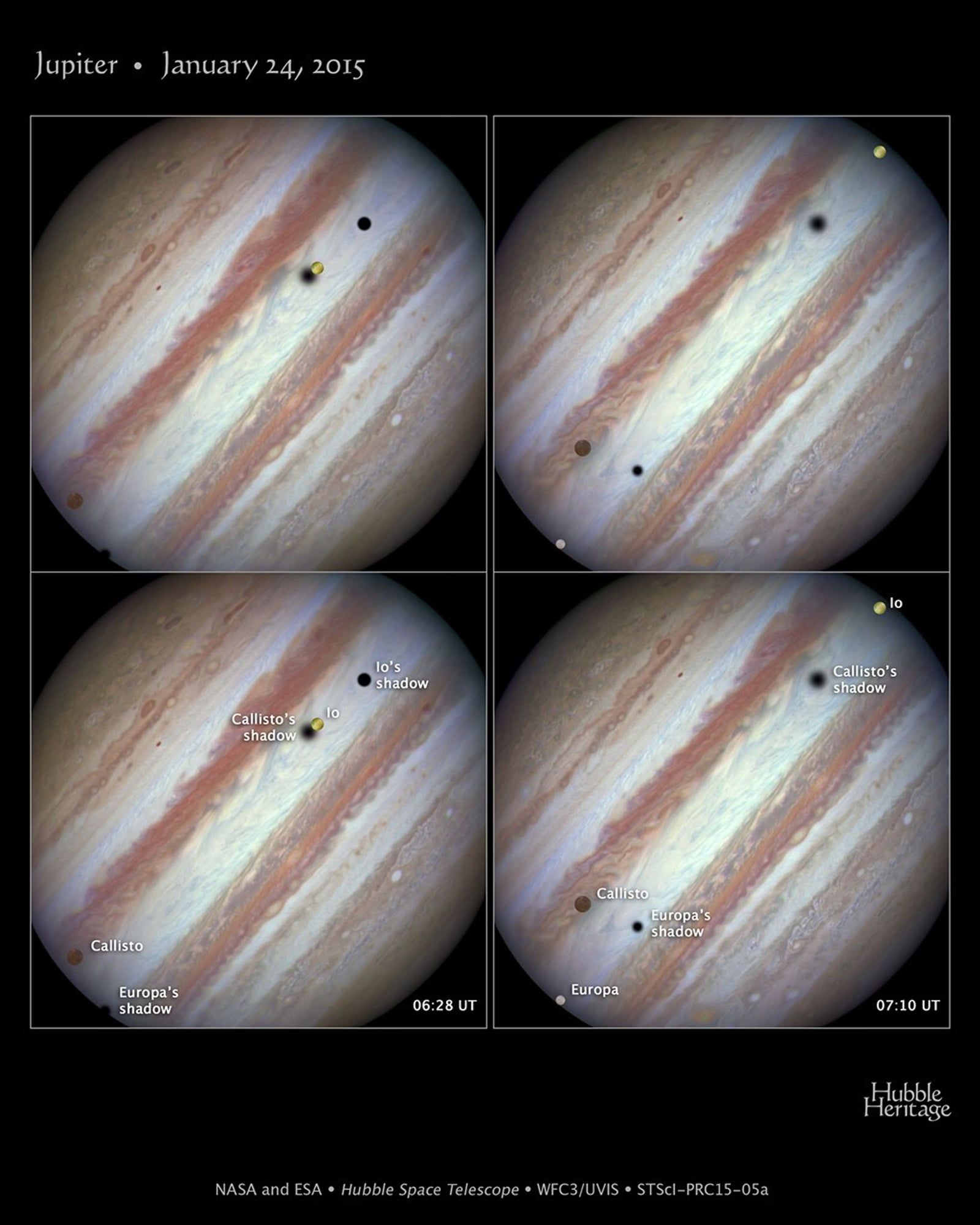
Optical equipment reveals Jupiter as a physical disc rather than a single point of light, transforming what appears to the naked eye as an abrupt blink into a measured disappearance lasting about a minute.1 No telescope is required to watch the planet vanish and re-emerge, though a pair of binoculars or a small telescope provides a far more dramatic perspective.1 Astrophotographers can also document the passage by using a smart telescope to capture high-contrast images of the moon and the planetary disc.1
These observations are strictly local geometrical events, subject to terrestrial weather and regional visibility corridors. An occultation projection is an ephemeris calculation of apparent positions, which cannot account for local cloud cover or atmospheric turbulence that may obscure the pre-dawn sky. Furthermore, observers situated outside the defined occultation path will not see Jupiter vanish at all.1 For those viewers, the crescent moon will appear to skim past the planet, presenting an exceptionally close conjunction in the sky.1
For skywatchers who miss the Tuesday morning alignment, a comparable vantage point will take more than a decade to return. According to calculations published by When The Curves Line Up, the next lunar occultation of Jupiter visible from North America will not occur until November 27, 2037.1
What this rests on
30 sentences trace to 1 source.
-
1
JC
Jamie Carter Document · livescience.com · 5 Oct 2026 Jupiter will disappear behind the moon in a once-in-a-decade alignment tomorrow See the source