Brazilian study ties $96 million jaguar plan to ranch deeds
A proposed conservation framework would compensate rural properties in Mato Grosso do Sul for protecting apex predators while requiring verified anti-predation measures.
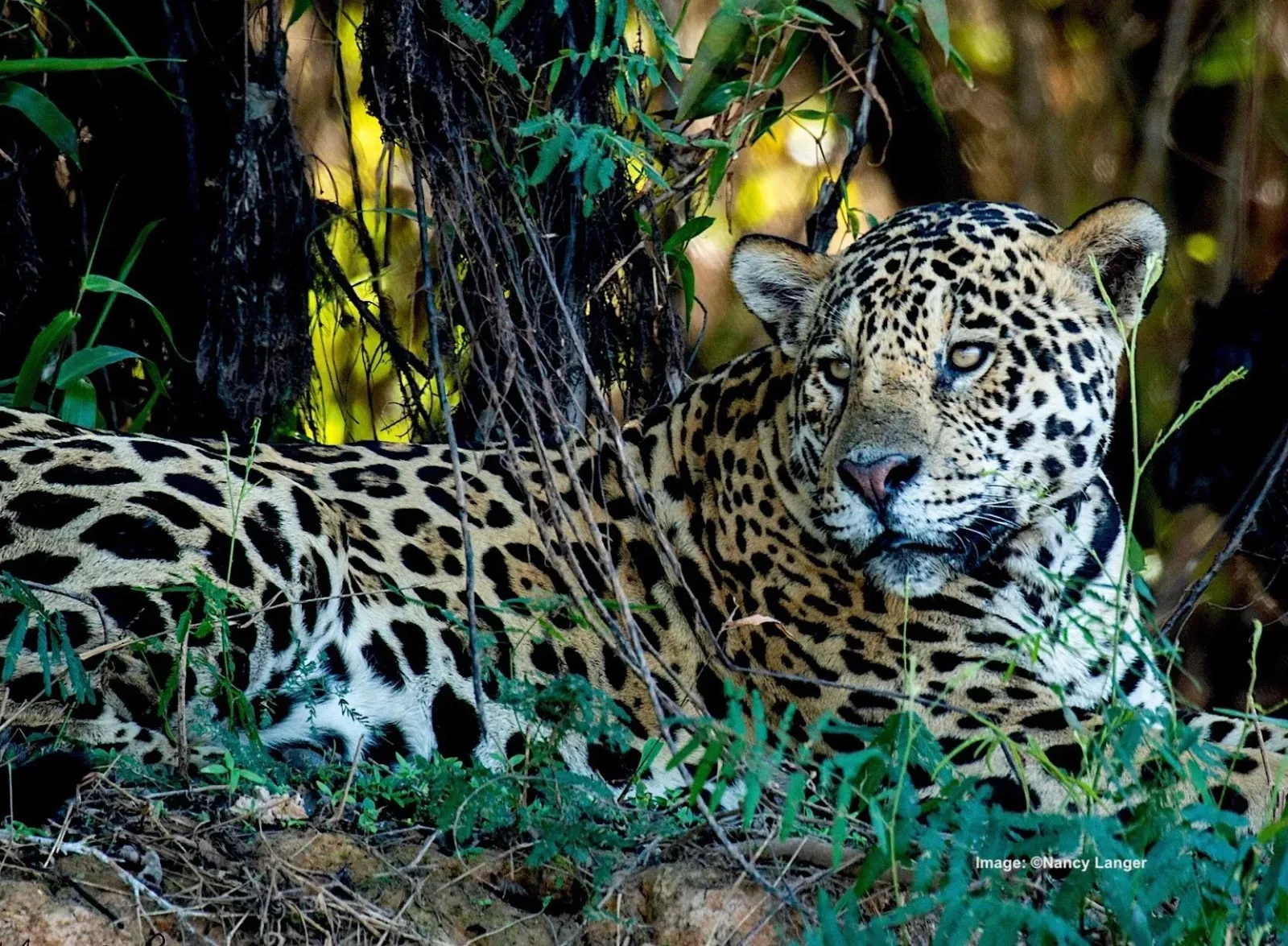
Across 14,197 rural properties in central Brazil, an estimated 1,457 jaguars kill roughly 24,800 head of cattle each year, according to a research model published in Animal Conservation.contributed
The losses drive persistent retaliatory killings by ranchers across the southern Pantanal and neighbouring savannas, threatening an apex predator that has already disappeared from nearly half of its historical range in South America.2
To halt that cycle, a research team led by José Alexandre Felizola Diniz-Filho of the Universidade Federal de Goiás and Leandro Silveira of the Jaguar Conservation Fund proposed an operational financial framework that would compensate rural landowners through a structured Payment for Environmental Services program.32
The proposal directly ties conservation payments to Brazil's rural land registry, offering economic incentives to cattle ranchers who preserve native habitat while requiring verified herd-management practices to prevent attacks.contributed
The state of Mato Grosso do Sul provided the empirical testing ground for the framework, spanning 35.7 million hectares in Brazil's Central-West region.32
Cattle ranching and intensive agriculture dominate the state, which accounted for 1.6 percent of Brazil's national economy in 2021 and ranked as the country's fifteenth largest state economy across 71,164 active properties.
Large landholdings exceeding 1,000 hectares account for 83 percent of the rural area in Mato Grosso do Sul, while smallholdings under 50 hectares represent only 4 percent.3
Public conservation reserves cover just 0.92 percent of the state, and indigenous territories represent roughly 2.5 percent, meaning wildlife survival depends almost entirely on the management of privately owned ranchlands.3
A legal impasse in the pastures
Across Brazil, approximately 95 percent of remaining jaguar habitat sits outside strictly protected governmental reserves, placing the cats in constant geographic competition with expanding agriculture and livestock grazing.
Historical habitat conversion has already reduced the species' extent of occurrence in Brazil to less than 54 percent of its original range, leaving the Atlantic Forest population functionally extinct.
In agricultural border regions, persecution can be severe; in one southern Amazon study site examined by researchers, ranchers killed at least 140 jaguars and pumas in a single year following pasture disputes.3
Wagner Fischer, a researcher at the Instituto Brasileiro de Informação em Ciência e Tecnologia and co-author of the study, told Primary that the southern Amazon figure documented how intense rural conflicts become along deforestation frontiers.contributed
Fischer said that the count originated in earlier research on fragmented Amazonian landscapes, providing a documented benchmark of conflict severity without relying on fresh field data gathered by the modeling team.contributedcontributed
Silveira, who heads the Jaguar Conservation Fund, confirmed to Primary that the toll reflected documented rancher persecution in an agricultural frontier zone and derived from independent published records.contributedcontributed
Studies in the human dimensions of wildlife conflict demonstrate that rancher tolerance toward predators is shaped by cultural values, personal experiences, perceived danger, and community social norms.
The paper noted that "the mere presence of jaguars, perceived as a threat to personal safety or a symbol of a changing rural landscape, can be a more powerful driver of conflict than actual depredation events."3
Federal law has prohibited wildlife management without formal permits since 1998, but environmental agencies have never established a large-scale licensing system to help landowners manage problem predators.
The researchers noted that "the lack of management for any wildlife species is a sui generis situation of Brazilian policy, with no parallels among the developed or developing countries within the G20."
At the same time, Brazil remains the only member of the G20 group of major economies that provides no national public compensation mechanism for biodiversity damages or livestock lost to protected carnivores.
The Brazilian Forest Code mandates that private landowners preserve between 20 percent and 80 percent of native vegetation on their properties, establishing a 20 percent Legal Reserve requirement throughout Mato Grosso do Sul regardless of the local biome.
While ranchers bear the full financial burden of cattle losses and mandatory habitat preservation, jaguars generate broader societal benefits by regulating prey species and maintaining water resources, vegetation structures, and soil stability across regional watersheds.
Anchoring conservation to property lines
Conservation biologists first established the concept of Jaguar Conservation Units, or JCUs, in 2002 to delineate continental regions capable of supporting viable, self-sustaining populations for a century.contributed
Those original continental units provided valuable strategic guidance, but their broad ecological borders lacked legal anchoring to land tenure records, leaving conservation planners unable to determine which specific landowners qualified for financial incentives.
To overcome this limitation, the authors defined an operational Jaguar Conservation Unit as "the total area encompassed by all private properties that overlap with identified jaguar source populations, where source populations are defined as areas with confirmed breeding evidence."contributed
This operational framework offers three distinct advantages for policymakers: it provides a clear spatial unit tied directly to legal deeds, acknowledges that roughly 95 percent of Brazilian jaguar habitat occupies private property, and enables transparent financial accounting for environmental payments.
To assemble the operational boundaries, the researchers followed a four-step spatial methodology combining field monitoring with the National System of Rural Environmental Registry, known as SICAR.
The team assembled jaguar occurrence records collected between 2010 and 2022 from camera traps and GPS tracking collars managed by the Jaguar Conservation Fund.3
The dataset was filtered strictly for confirmed breeding evidence, defined by verified observations of females accompanied by cubs, ensuring that transient animals moving through low-quality habitat did not distort the boundaries.3
Fischer said in response to questions from Primary that the occurrence database rested on long-term field observations, explaining that records lacking breeding proof were excluded so dispersing animals in marginal corridors would not artificially expand the program.contributedcontributed
Silveira told Primary that verified records of females accompanied by cubs served as the sole biological filter to delineate reproductive populations, excluding transient individuals without applying additional secondary screening layers.contributed
Around each breeding record, the researchers generated a five-kilometer radius buffer, merging the individual circles into a single contiguous polygon representing the source population.contributedcontributed
Finally, the researchers overlaid that biological polygon with digital property boundaries from SICAR and land-cover maps from MapBiomas Collection 8, including the full acreage of every property touched by the buffer.contributed
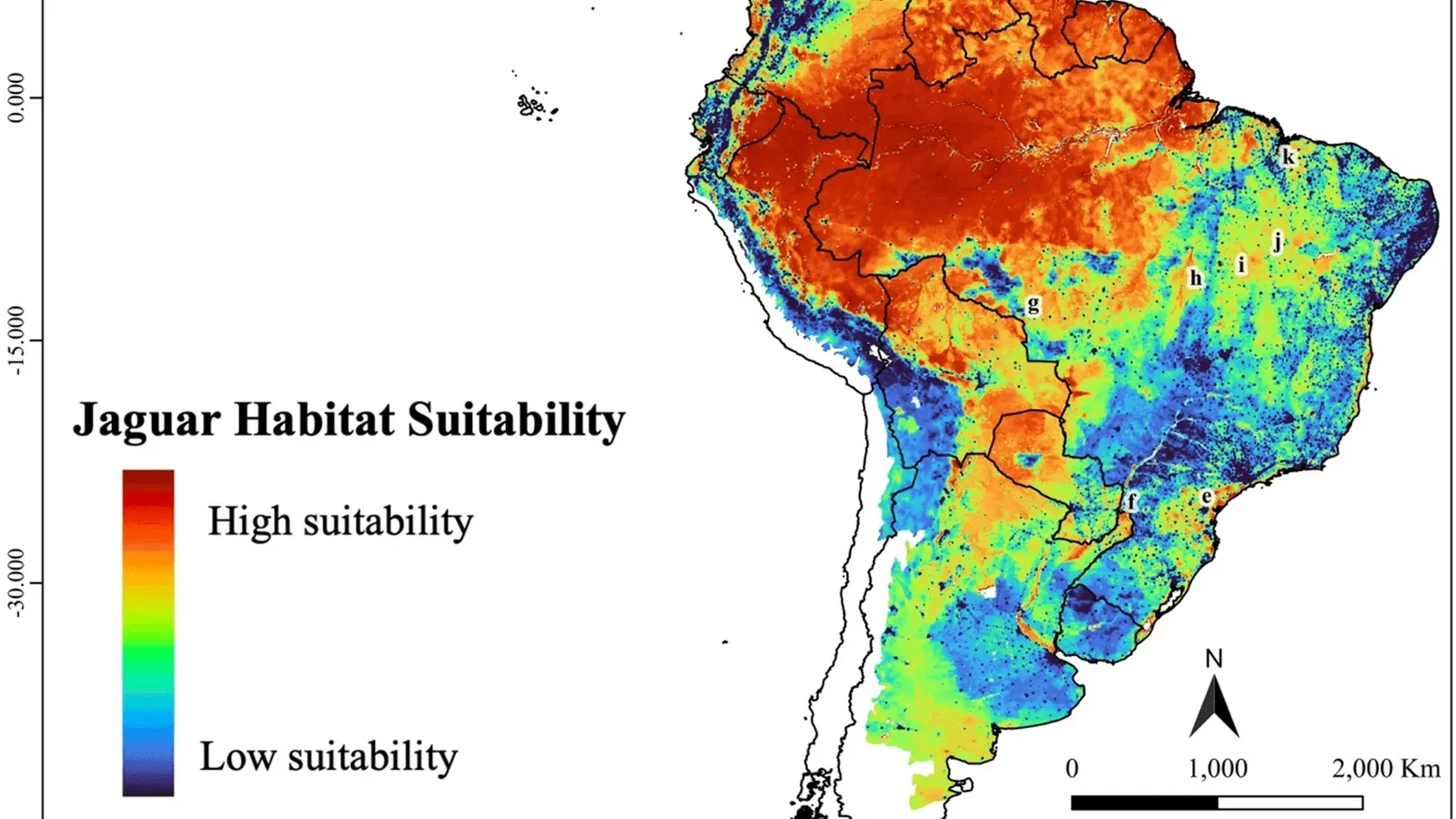
Fischer explained that "anchoring the unit to legal property deeds is what makes a PES scheme operational," because contracts require identifiable deedholders as opposed to diffuse ecological boundaries.contributedcontributed
Silveira noted that defining the conservation unit across full property boundaries allows authorities to identify specific landholders and attach financial incentives directly to verifiable real estate titles.contributedcontributed
Three diverging landscapes
The resulting map delineated three distinct Jaguar Conservation Units across Mato Grosso do Sul, encompassing 14,197 private properties covering 7,668,204 hectares, or 21.5 percent of the state's total territory.
These units cross 43 municipalities, representing 54 percent of the administrative districts in Mato Grosso do Sul.
Natural vegetation covers 5,145,500 hectares across the three units, representing 67 percent of their aggregate territory, but the preservation is heavily concentrated among the largest estates.
The Corumbá unit spans 5,462,800 hectares across 2,179 properties in the Pantanal wetland, where native vegetation covers 85.3 percent of the landscape and single ranches reach up to 119,030 hectares.
Only 17.2 percent of landowners in the Corumbá unit fail to meet the 20 percent Legal Reserve requirement set by federal law.
The situation reverses sharply in the Cerrado savanna and Atlantic Forest fragments of eastern and southern Mato Grosso do Sul.3
The Ivinhema unit contains 11,874 properties across 2,076,900 hectares, where native vegetation covers only 21.2 percent of the area and 86.5 percent of properties fail to satisfy the legal forest threshold.
In the Emas unit, which covers 128,500 hectares across 144 ranches bordering Goiás state, natural habitat stands at 25.5 percent, and 55.5 percent of landholdings fall below the legal minimum.
Across all three units combined, 75.7 percent of individual rural properties fail to retain the required 20 percent forest cover, yet the 24.3 percent of properties that do comply hold 5,019,922 hectares of native vegetation, representing 97.6 percent of all preserved habitat in the units.
This sharp spatial disparity means conservation funding can immediately target a compliant minority that controls almost all remaining intact forest.
Simulating the cost of cattle kills
To calculate the true economic burden borne by ranchers, the authors built an Individual-Based Model simulating predation encounters across the three units over annual cycles.contributed
Previous dietary research from the Pantanal shows that domestic cattle represent between 30 percent and 50 percent of a jaguar's prey intake, with calves accounting for roughly 70 percent of recorded livestock kills.
Drawing on field parameters established by Sandra M. C. Cavalcanti and Eric M. Gese, the simulation programmed each individual cat to kill a calf roughly every 13.5 days or an adult cow every 25.5 days.
Regional cattle prices recorded by the Federação da Agricultura e Pecuária de Mato Grosso do Sul in 2026 provided market benchmarks, averaging between $360 and $450 for calves and between $720 and $830 for adult livestock.3
The team established density baselines across different habitats, assigning three jaguars per 100 square kilometers in Corumbá, one per 100 square kilometers in Ivinhema, and 1.5 per 100 square kilometers in Emas.contributedcontributed
The model calculated a total population of approximately 1,457 jaguars across the three units, with a 95 percent confidence interval ranging from 983 to 1,813 individuals.3
Fischer told Primary that the team sampled densities from these regional distributions and scaled them across surviving native vegetation to establish the baseline population.contributedcontributed
Silveira confirmed that multiplying those density baselines by the total preserved acreage across the units produced the estimated population of roughly 1,457 adult cats.contributedcontributed
The simulation projected that these cats kill an average of 24,800 domestic cattle annually across the units, generating an estimated direct economic loss of $13.1 million each year.contributed
Those predation costs fall almost entirely on the Pantanal; the Corumbá unit accounts for approximately 96 percent of the state's estimated jaguar population, while Ivinhema and Emas contribute only marginally to overall livestock losses.
Field assessments in the region show that predation is often seasonal, dropping during wetter months when native aquatic prey expands across flooded grasslands.3
Lessons from regional cat compensation
The researchers reviewed existing predator payment programs across Latin America to identify workable financial mechanisms for Brazilian ranches.3
In northern Mexico, the Northern Jaguar Project provides participating ranchers with up to $1,200 per month for verified motion-triggered camera photographs of live cats on their land.3
In Belize, community members receive direct financial awards for every newly documented individual cat, generating revenue streams that run five to twelve times higher than average local daily wages.
In Guatemala's Maya Biosphere Reserve, community timber concessions certified by the Forest Stewardship Council generate up to $10 million annually from sustainable logging while supporting average jaguar densities of 11.28 cats per 100 square kilometers.
In Peru, the Jaguar Amazon REDD Project protects 180,000 hectares of forest through carbon credit sales, and the broader Jaguar Connection Project finances habitat corridors across multiple South American borders.
Domestically, the Jaguar Conservation Fund introduced the Jaguar Friendly Certificate in 2000, certifying more than 500,000 hectares of Brazilian farmland that avoids retaliatory hunting, complies with conservation laws, and secures green financing premiums for beef and grain.3
Fischer noted that the certification program requires full compliance with statutory forestry standards alongside documented non-lethal management on participating ranches.contributedcontributed
Fischer added that properties sign binding contracts and undergo annual technical inspections by accredited third-party auditors, who check compliance across environmental metrics and verified non-lethal predator deterrence before certificates renew.contributedcontributed
Silveira told Primary that farms holding the certificate undergo mandatory annual on-site inspections and comprehensive documentary checks, confirming that ranchers maintain their formal promise to prevent retaliatory killings.contributedcontributed
Wildlife managers have also explored how rural tourism alters rancher attitudes toward predators in wetland habitats.5
In the northern Pantanal around Porto Jofre, tour boat operations and wildlife lodges draw international travelers to view habituated cats along river corridors, creating substantial commercial incentives to keep predators alive.6
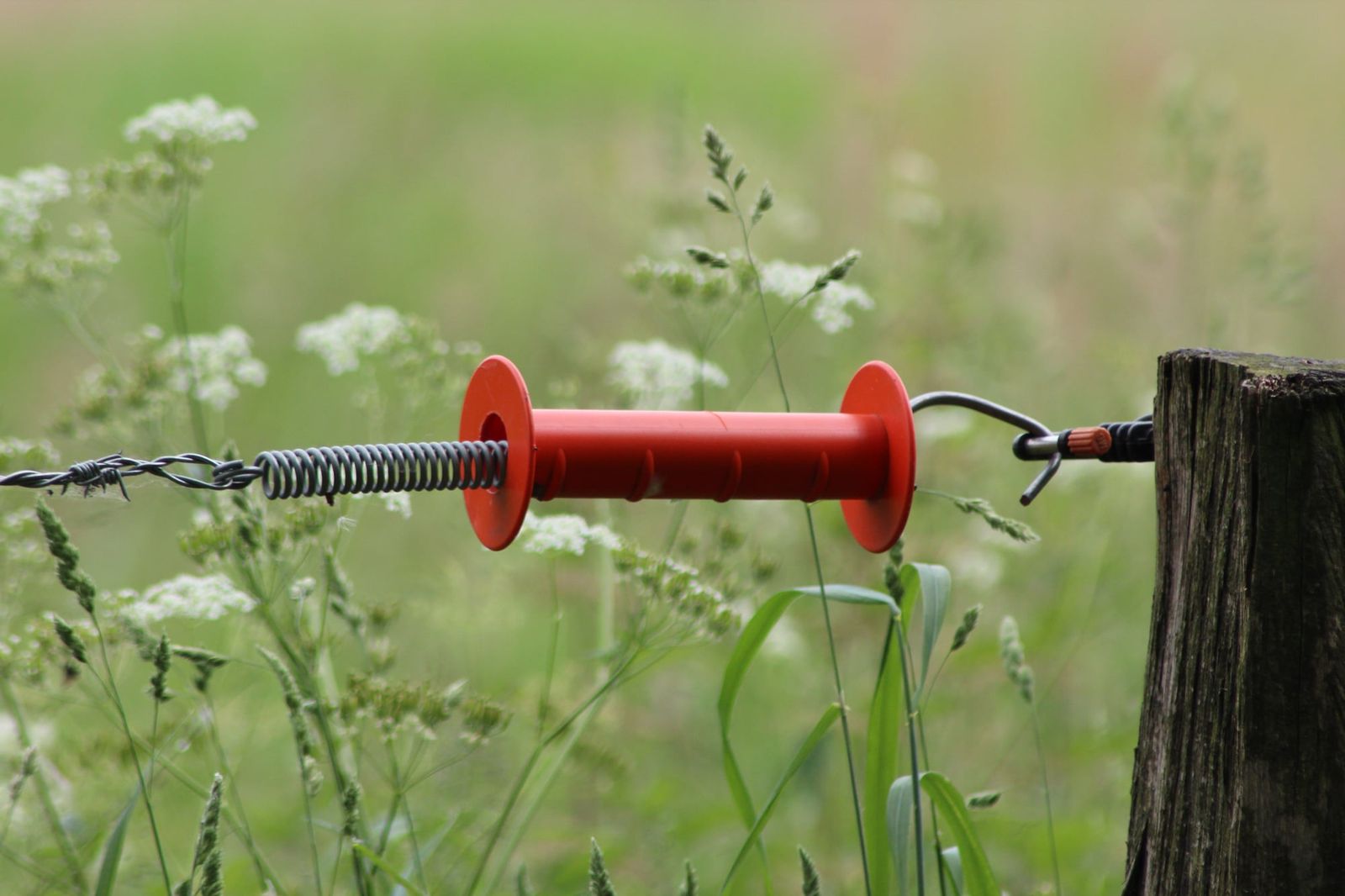
Paul Raad, founder of the Impacto Institute, works with cattle producers in the Pantanal to lower calf losses through electric fencing and post-mortem cattle examinations that confirm whether a death resulted from disease or feline attack.7
Raad said that private ranches often encompass tens of thousands of acres, making illegal killings virtually impossible for government wardens to detect when carcasses are concealed underground.5
Building a hybrid payment structure
Drawing on these international precedents, the authors recommended against simple ex-post compensation schemes that merely reimburse dead cows.
Traditional carnivore compensation programs frequently suffer from moral hazard, in which guaranteed payouts inadvertently encourage cattle owners to neglect basic protective husbandry.
The study proposed a hybrid model that combines input-based payments for preserved forest with outcome-based ecological monitoring.contributed
Under this design, landowners would receive regular payments for maintaining native vegetation above the mandatory 20 percent threshold, audited continuously using satellite remote sensing.contributed
To ensure that public funds do not pay for empty forests devoid of wildlife, the scheme couples land payments with camera-trap monitoring of resident jaguar populations and breeding females.3
Fischer told Primary that the primary payment remains input-based to ensure administrative simplicity, while camera traps provide an outcome-based audit across the broader conservation unit.contributedcontributed
He noted that individual landowners would not lose their payments simply because a secretive cat bypassed their property in a given year, protecting ranchers from arbitrary camera-trap gaps.contributed
Silveira pointed out that remote sensing provides a transparent way to verify forest cover, while camera grids confirm the functional presence of jaguars across the larger regional unit.contributedcontributed
To establish baseline budget estimates, the researchers adapted maintenance figures from the Fundo Brasileiro para a Biodiversidade, which calculated that public protected areas require approximately $16 per hectare annually.contributed
Applying that benchmark to the 5,019,922 hectares of native vegetation held by legally compliant properties inside the three units yields an estimated annual habitat payment of $83.3 million.contributedcontributed
Adding the estimated $13.1 million in annual livestock predation brings the total operational cost of the proposed conservation scheme to roughly $96.4 million per year.3
Fischer told Primary that summing the $83.3 million habitat allocation and the $13.1 million predation projection produced an initial operating benchmark of roughly $96.4 million annually.contributed
Silveira cautioned that the $83.3 million habitat figure serves as an indicative baseline estimate reported in the study rather than a direct mathematical product of multiplying preserved hectares by the unit maintenance fee.contributed
Eligibility would initially target the 24.3 percent of ranchers who currently comply with the Forest Code, creating a financial motive for surrounding non-compliant properties to restore degraded acreage.
Under the rules, participating ranchers would be required to implement verified anti-predation management practices, such as night corrals and calving pasture adjustments, before receiving payouts.3
Fischer explained to Primary that conditioning payments on preventive husbandry draws on field trials by John Polisar and other researchers, keeping cows away from dense riverbanks where jaguars ambush prey.contributedcontributed
Silveira told Primary that establishing mandatory anti-predation management requirements was essential to prevent moral hazard, though specific audit protocols for each practice must be established during rollout.contributed
Broader ecological pressures in the Cerrado
Beyond the cattle pastures of the Pantanal, wildlife in Mato Grosso do Sul encounters intense hunting and land conversion in the drier Cerrado savanna.
Research conducted in the state by Roberta Montanheiro Paolino, Caroline Testa José, Renata Carolina Fernandes-Santos, Mariana Bueno Landis, Gabriela Medeiros de Pinho, and Emília Patrícia Medici found that rural communities interact with native fauna across fragmented agricultural mosaics.
Their field surveys recorded 28 poached wildlife species across rural settlements and farms, with subsistence hunting, cultural tradition, and human-wildlife friction driving illegal harvests.
Unlike jaguars, large herbivores such as the lowland tapir rarely trigger direct property retaliation from cattle ranchers, yet they remain vulnerable to poaching and road mortality across expanding highway networks.
At the same time, rural communities throughout the Cerrado frequently battle crop and pasture damage caused by invasive feral pigs, which arrived decades ago and expanded rapidly across central Brazil.
Federal environmental authorities have permitted sport hunting of feral pigs under strict rules since 2013 as a biological control measure, yet conservationists find that some hunters continue to take native peccaries and tapirs during feral hog excursions.
The study by Paolino and her colleagues revealed that private landowners and corporate farm managers often serve as frontline barriers against poaching by barring unauthorized hunters from crossing property lines.8
By engaging ranchers directly through financial incentives, conservation planners hope to turn large rural properties into secure buffer zones that protect both apex predators and threatened herbivores.3
Funding pathways and statutory policy
Implementation could integrate directly into existing statutory mechanisms in Mato Grosso do Sul, notably the state's PSA Bioma Pantanal program and regional nature-based climate initiatives.
At the federal level, National Law 14,119 established a legal framework for environmental service payments in 2021, providing the formal statutory foundation needed to disburse funds to private property holders.3
The authors proposed blending public conservation budgets with agribusiness investments, legal reserve quota trading, carbon offset credits, and ecotourism revenues from Pantanal wildlife lodges.
While an annual program budget approaching $96 million represents a substantial financial commitment, ecological valuations of the Pantanal indicate that the ecosystem services preserved by top carnivores vastly exceed the direct costs of protection.
By anchoring conservation incentives directly to digital property boundaries, the framework provides Brazilian authorities with a mathematically grounded blueprint to convert chronic wildlife conflict into commercial coexistence.contributed
What this rests on
59 sentences trace to 6 sources and 2 contributors.
- 1 Contribution — Wagner Fischer 34 statements added to this article
-
2
S
sciety.org Third-party reporting · sciety.org Jaguar Conservation Units as Effective Tool in a Payment for Ecosystem Services Scheme for Apex Predator See the source
- 3 Jaguar Conservation Units as an Effective Tool in a Payment for Ecosystem Services Scheme for an Apex Predator Not published online
- 4 Contribution — Leandro Silveira 23 statements added to this article
-
5
SM
Smithsonian Magazine Third-party reporting · smithsonianmag.com · 4 Mar 2026 In the World's Best Place to See Wild Jaguars, Residents Are Using the Big Cat's Appeal to Reach Conservation Goals See the source
-
6
P
panthera.org Third-party reporting · panthera.org The Jofre Velho Conservation Ranch | Panthera See the source
-
7
N
news.mongabay.com Third-party reporting · news.mongabay.com · 30 Dec 2024 A deadly parasite turns jaguar conservation into a human health priority See the source
-
8
F
Frontiers Third-party reporting · frontiersin.org · 10 Jan 2024 Frontiers | Poaching and hunting, conflicts and health: human dimensions of wildlife conservation in the Brazilian Cerrado See the source
en.as.com1 page
journals.plos.org1 page
zslpublications.onlinelibrary.wiley.com1 page
Article history
-
Published 7 Oct 2026, 16:56Assembled by the Primary desk from 6 sources · 2 contributors · 59 cited sentences
-
Leandro Silveira, heads the Jaguar Conservation Fund
- Go to the sentence: Fischer said that the count originated in earlier research on fragmented Amazonian landscapes, providing a documented benchmark of conflict severity without relying on fresh field data gathered by the modeling team.
- Go to the sentence: Silveira, who heads the Jaguar Conservation Fund, confirmed to Primary that the toll reflected documented rancher persecution in an agricultural frontier zone and derived from independent published records.
- Go to the sentence: Conservation biologists first established the concept of Jaguar Conservation Units, or JCUs, in 2002 to delineate continental regions capable of supporting viable, self-sustaining populations for a century.
- Go to the sentence: The team assembled jaguar occurrence records collected between 2010 and 2022 from camera traps and GPS tracking collars managed by the Jaguar Conservation Fund.
- Go to the sentence: Fischer said in response to questions from Primary that the occurrence database rested on long-term field observations, explaining that records lacking breeding proof were excluded so dispersing animals in marginal corridors would not artificially expand the program.
- Go to the sentence: Silveira told Primary that verified records of females accompanied by cubs served as the sole biological filter to delineate reproductive populations, excluding transient individuals without applying additional secondary screening layers.
- Go to the sentence: Around each breeding record, the researchers generated a five-kilometer radius buffer, merging the individual circles into a single contiguous polygon representing the source population.
- Go to the sentence: Fischer explained that "anchoring the unit to legal property deeds is what makes a PES scheme operational," because contracts require identifiable deedholders as opposed to diffuse ecological boundaries.
- Go to the sentence: Silveira noted that defining the conservation unit across full property boundaries allows authorities to identify specific landholders and attach financial incentives directly to verifiable real estate titles.
- Go to the sentence: The team established density baselines across different habitats, assigning three jaguars per 100 square kilometers in Corumbá, one per 100 square kilometers in Ivinhema, and 1.5 per 100 square kilometers in Emas.
- Go to the sentence: Fischer told Primary that the team sampled densities from these regional distributions and scaled them across surviving native vegetation to establish the baseline population.
- Go to the sentence: Silveira confirmed that multiplying those density baselines by the total preserved acreage across the units produced the estimated population of roughly 1,457 adult cats.
- Go to the sentence: Fischer noted that the certification program requires full compliance with statutory forestry standards alongside documented non-lethal management on participating ranches.
- Go to the sentence: Fischer added that properties sign binding contracts and undergo annual technical inspections by accredited third-party auditors, who check compliance across environmental metrics and verified non-lethal predator deterrence before certificates renew.
- Go to the sentence: Silveira told Primary that farms holding the certificate undergo mandatory annual on-site inspections and comprehensive documentary checks, confirming that ranchers maintain their formal promise to prevent retaliatory killings.
- Go to the sentence: Fischer told Primary that the primary payment remains input-based to ensure administrative simplicity, while camera traps provide an outcome-based audit across the broader conservation unit.
- Go to the sentence: Silveira pointed out that remote sensing provides a transparent way to verify forest cover, while camera grids confirm the functional presence of jaguars across the larger regional unit.
- Go to the sentence: Applying that benchmark to the 5,019,922 hectares of native vegetation held by legally compliant properties inside the three units yields an estimated annual habitat payment of $83.3 million.
- Go to the sentence: Adding the estimated $13.1 million in annual livestock predation brings the total operational cost of the proposed conservation scheme to roughly $96.4 million per year.
- Go to the sentence: Fischer told Primary that summing the $83.3 million habitat allocation and the $13.1 million predation projection produced an initial operating benchmark of roughly $96.4 million annually.
- Go to the sentence: Silveira cautioned that the $83.3 million habitat figure serves as an indicative baseline estimate reported in the study rather than a direct mathematical product of multiplying preserved hectares by the unit maintenance fee.
- Go to the sentence: Fischer explained to Primary that conditioning payments on preventive husbandry draws on field trials by John Polisar and other researchers, keeping cows away from dense riverbanks where jaguars ambush prey.
- Go to the sentence: Silveira told Primary that establishing mandatory anti-predation management requirements was essential to prevent moral hazard, though specific audit protocols for each practice must be established during rollout.
-
Wagner Fischer, a researcher at the Instituto Brasileiro de Informação em Ciência e Tecnologia and co-author of the study
- Go to the sentence: Across 14,197 rural properties in central Brazil, an estimated 1,457 jaguars kill roughly 24,800 head of cattle each year, according to a research model published in Animal Conservation.
- Go to the sentence: The proposal directly ties conservation payments to Brazil's rural land registry, offering economic incentives to cattle ranchers who preserve native habitat while requiring verified herd-management practices to prevent attacks.
- Go to the sentence: In agricultural border regions, persecution can be severe; in one southern Amazon study site examined by researchers, ranchers killed at least 140 jaguars and pumas in a single year following pasture disputes.
- Go to the sentence: Wagner Fischer, a researcher at the Instituto Brasileiro de Informação em Ciência e Tecnologia and co-author of the study, told Primary that the southern Amazon figure documented how intense rural conflicts become along deforestation frontiers.
- Go to the sentence: Fischer said that the count originated in earlier research on fragmented Amazonian landscapes, providing a documented benchmark of conflict severity without relying on fresh field data gathered by the modeling team.
- Go to the sentence: Silveira, who heads the Jaguar Conservation Fund, confirmed to Primary that the toll reflected documented rancher persecution in an agricultural frontier zone and derived from independent published records.
- Go to the sentence: To overcome this limitation, the authors defined an operational Jaguar Conservation Unit as "the total area encompassed by all private properties that overlap with identified jaguar source populations, where source populations are defined as areas with confirmed breeding evidence."
- Go to the sentence: The team assembled jaguar occurrence records collected between 2010 and 2022 from camera traps and GPS tracking collars managed by the Jaguar Conservation Fund.
- Go to the sentence: The dataset was filtered strictly for confirmed breeding evidence, defined by verified observations of females accompanied by cubs, ensuring that transient animals moving through low-quality habitat did not distort the boundaries.
- Go to the sentence: Fischer said in response to questions from Primary that the occurrence database rested on long-term field observations, explaining that records lacking breeding proof were excluded so dispersing animals in marginal corridors would not artificially expand the program.
- Go to the sentence: Around each breeding record, the researchers generated a five-kilometer radius buffer, merging the individual circles into a single contiguous polygon representing the source population.
- Go to the sentence: Finally, the researchers overlaid that biological polygon with digital property boundaries from SICAR and land-cover maps from MapBiomas Collection 8, including the full acreage of every property touched by the buffer.
- Go to the sentence: Fischer explained that "anchoring the unit to legal property deeds is what makes a PES scheme operational," because contracts require identifiable deedholders as opposed to diffuse ecological boundaries.
- Go to the sentence: Silveira noted that defining the conservation unit across full property boundaries allows authorities to identify specific landholders and attach financial incentives directly to verifiable real estate titles.
- Go to the sentence: To calculate the true economic burden borne by ranchers, the authors built an Individual-Based Model simulating predation encounters across the three units over annual cycles.
- Go to the sentence: The team established density baselines across different habitats, assigning three jaguars per 100 square kilometers in Corumbá, one per 100 square kilometers in Ivinhema, and 1.5 per 100 square kilometers in Emas.
- Go to the sentence: The model calculated a total population of approximately 1,457 jaguars across the three units, with a 95 percent confidence interval ranging from 983 to 1,813 individuals.
- Go to the sentence: Fischer told Primary that the team sampled densities from these regional distributions and scaled them across surviving native vegetation to establish the baseline population.
- Go to the sentence: Silveira confirmed that multiplying those density baselines by the total preserved acreage across the units produced the estimated population of roughly 1,457 adult cats.
- Go to the sentence: The simulation projected that these cats kill an average of 24,800 domestic cattle annually across the units, generating an estimated direct economic loss of $13.1 million each year.
- Go to the sentence: Fischer noted that the certification program requires full compliance with statutory forestry standards alongside documented non-lethal management on participating ranches.
- Go to the sentence: Fischer added that properties sign binding contracts and undergo annual technical inspections by accredited third-party auditors, who check compliance across environmental metrics and verified non-lethal predator deterrence before certificates renew.
- Go to the sentence: Silveira told Primary that farms holding the certificate undergo mandatory annual on-site inspections and comprehensive documentary checks, confirming that ranchers maintain their formal promise to prevent retaliatory killings.
- Go to the sentence: The study proposed a hybrid model that combines input-based payments for preserved forest with outcome-based ecological monitoring.
- Go to the sentence: Under this design, landowners would receive regular payments for maintaining native vegetation above the mandatory 20 percent threshold, audited continuously using satellite remote sensing.
- Go to the sentence: To ensure that public funds do not pay for empty forests devoid of wildlife, the scheme couples land payments with camera-trap monitoring of resident jaguar populations and breeding females.
- Go to the sentence: Fischer told Primary that the primary payment remains input-based to ensure administrative simplicity, while camera traps provide an outcome-based audit across the broader conservation unit.
- Go to the sentence: He noted that individual landowners would not lose their payments simply because a secretive cat bypassed their property in a given year, protecting ranchers from arbitrary camera-trap gaps.
- Go to the sentence: Silveira pointed out that remote sensing provides a transparent way to verify forest cover, while camera grids confirm the functional presence of jaguars across the larger regional unit.
- Go to the sentence: To establish baseline budget estimates, the researchers adapted maintenance figures from the Fundo Brasileiro para a Biodiversidade, which calculated that public protected areas require approximately $16 per hectare annually.
- Go to the sentence: Applying that benchmark to the 5,019,922 hectares of native vegetation held by legally compliant properties inside the three units yields an estimated annual habitat payment of $83.3 million.
- Go to the sentence: Under the rules, participating ranchers would be required to implement verified anti-predation management practices, such as night corrals and calving pasture adjustments, before receiving payouts.
- Go to the sentence: Fischer explained to Primary that conditioning payments on preventive husbandry draws on field trials by John Polisar and other researchers, keeping cows away from dense riverbanks where jaguars ambush prey.
- Go to the sentence: By anchoring conservation incentives directly to digital property boundaries, the framework provides Brazilian authorities with a mathematically grounded blueprint to convert chronic wildlife conflict into commercial coexistence.