Decades of infrared sky maps reveal a candidate for Planet Nine
A faint thermal signal that drifted across the sky between two space surveys matches predictions for a massive world hidden beyond Neptune.
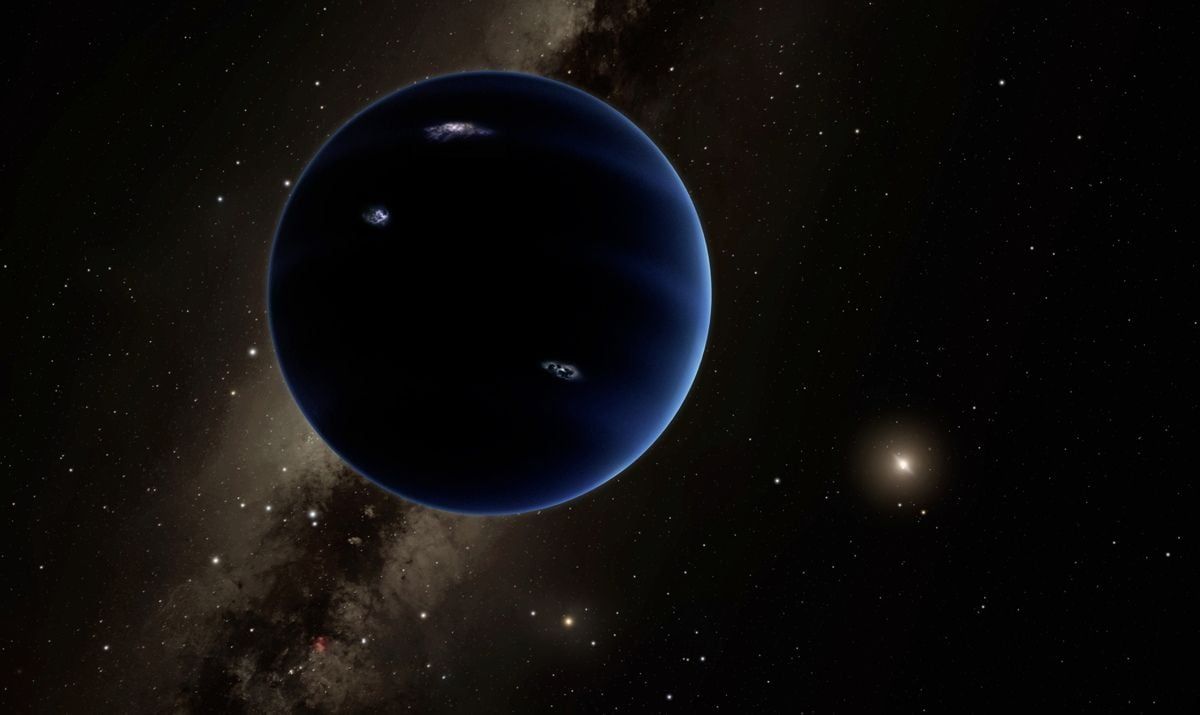
At the frozen perimeter of the Solar System, far beyond the orbit of Neptune, a gravitational puzzle has quietly lingered for more than two decades. Several small icy worlds travel on elongated, steeply tilted loops that bunch together in space rather than dispersing randomly around the Sun.12 Their strange orbital paths suggest that a heavy, undiscovered object may be gently herding them from afar. Yet scouring that distant territory with optical telescopes has repeatedly produced empty results, because the outer Solar System is nearly pitch black.
Finding a distant planet by looking for reflected sunlight becomes almost impossible as the distance grows. Light leaving the Sun must travel billions of kilometres outward, strike the surface of the planet, and bounce all the way back across the same vast distance to reach terrestrial detectors. Because of this two-way journey, the amount of reflected optical light returning to Earth drops precipitously with the fourth power of distance.2 By contrast, any planet of substantial size retains heat from its formation and radiates that energy as faint thermal glow. Because thermal emissions originate directly on the world itself, the infrared radiation reaching Earth weakens much more gently, dropping only with the square of the distance.2
A team of astronomers led by Terry Long Phan at National Tsing Hua University in Taiwan turned this thermal physics into an active search strategy.12 In a study published in the Publications of the Astronomical Society of Australia, the researchers compared two historical far-infrared sky surveys separated by a 23-year baseline.12 By screening millions of recorded signals, they identified a single faint infrared source that shifted across the sky at a rate and brightness consistent with a distant planet between 7 and 17 times the mass of Earth.21
Why do astronomers suspect an unseen planet exists?
The hypothesis of a ninth planet emerged from the clustered tracks of distant icy rocks known as Kuiper Belt objects. Beginning with the discovery of the distant minor planet Sedna in 2004, observers began noticing that several bodies traveling far beyond Neptune shared anomalous orbital characteristics, including high inclinations and clustered arguments of perihelion.1 Numerical simulations performed by Konstantin Batygin and Michael Brown in 2016 calculated that the chance of these extreme orbits aligning at random was roughly 0.007 percent, pointing toward an unseen gravitational shepherd.1
A massive body orbiting hundreds of astronomical units away would provide the steady gravitational pull needed to herd those small objects. One astronomical unit, or AU, equals the distance between Earth and the Sun, roughly 150 million kilometres. Neptune orbits roughly 30 AU from the Sun, whereas the proposed Planet Nine was predicted to travel on a wide orbit with a semi-major axis of roughly 700 AU.1 If such a world exists, its mass would likely exceed 10 Earth masses, exerting enough gravitational torque to keep the outer fringe aligned over billions of years.1
Previous searches attempted to spot this hypothetical world using wide-field optical surveys, including the Zwicky Transient Facility, the Dark Energy Survey, and Pan-STARRS1.1 Although these surveys mapped vast swathes of the night sky with high precision, they did not detect any viable planetary candidates.1 Those optical null results ruled out portions of the predicted parameter space, but they left open the possibility that the planet simply absorbs most incoming light or rests too far into the darkness for its reflected optical glint to be seen.
Why look for heat rather than reflected starlight?
Infrared radiation provides a much more direct window into the outer Solar System because cold giant planets behave as modest thermal radiators. While sunlight dimming as the inverse fourth power of distance makes an object at 600 AU millions of times fainter in optical wavelengths than an equivalent body in the inner Solar System, thermal infrared emission fades only as the inverse square of distance. Consequently, a massive planet warms internally and emits far-infrared radiation that remains comparatively detectable against the cosmic background.
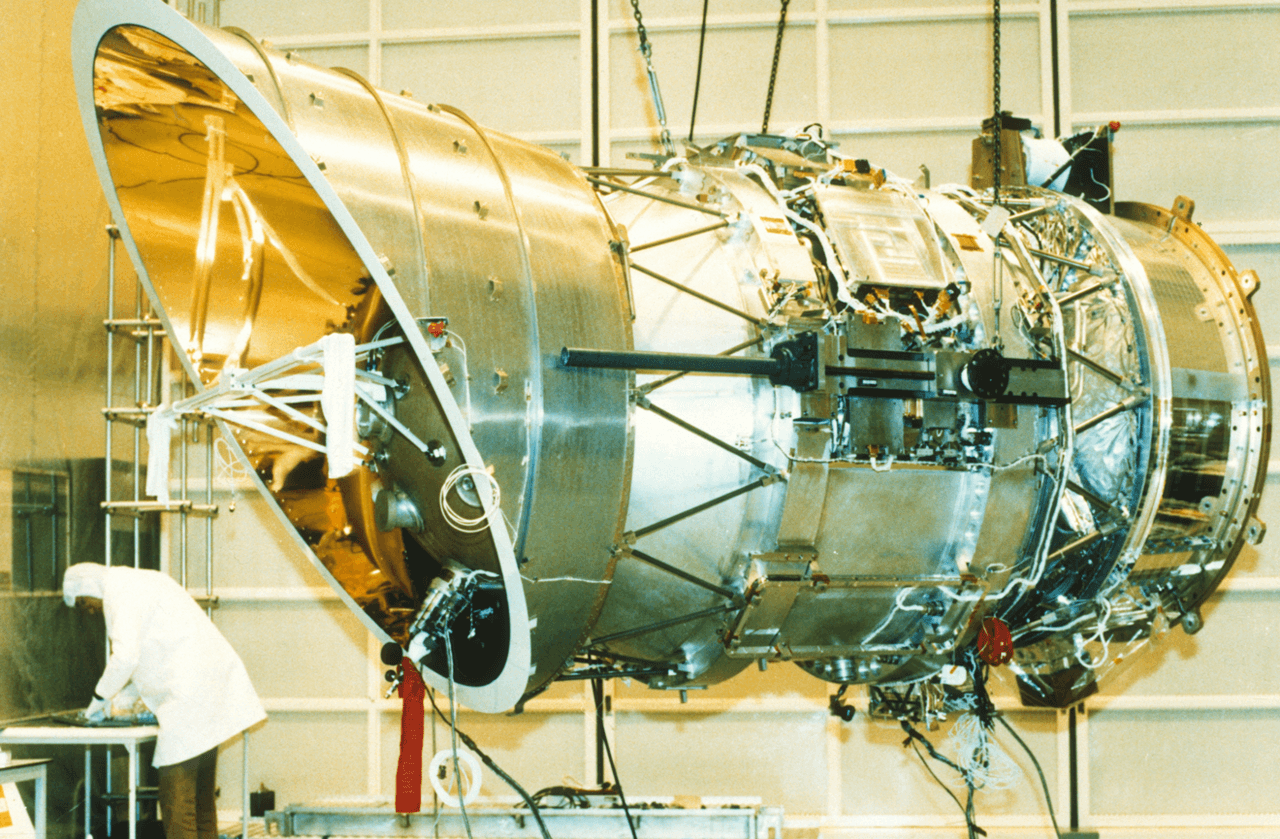
Observing those faint infrared wavelengths requires space telescopes, because the atmosphere of Earth absorbs incoming thermal radiation before it reaches ground-based mirrors.1 Astronomers had already deployed two major orbital missions capable of capturing far-infrared all-sky maps decades apart. The Infrared Astronomical Satellite, or IRAS, mapped the sky in 1983 across four infrared bands.2 More than two decades later, between 2006 and 2007, the Japanese Aerospace Exploration Agency operated the AKARI satellite, which surveyed the sky in overlapping far-infrared channels.21
The 23-year gap between IRAS and AKARI created an ideal observation window for detecting extremely slow orbital motion. A planet orbiting hundreds of astronomical units from the Sun crawls across the sky at an orbital rate of roughly 3 arcminutes per year.1 Over a short baseline of a few months, that creeping movement is masked by parallax, the apparent back-and-forth wobble caused by Earth traveling around the Sun.1 Over more than two decades, however, that cumulative drift amounts to roughly an entire degree of celestial arc, allowing a genuine planetary traveler to stand out from stationary stars, galaxies, and background dust clouds.
How did two vintage infrared sky surveys isolate a candidate?
Terry Long Phan and colleagues developed a targeted screening method designed to track moving point sources across the two satellite archives. The team examined data from IRAS, which logged hundreds of thousands of sources in its Point Source Catalogue and Faint Source Catalogue, alongside rejected source lists. For the later epoch, the researchers utilised the AKARI Far-Infrared Monthly Unconfirmed Source List, a catalogue comprising objects observed repeatedly across hours during daily scans but absent when the satellite re-scanned the same coordinates months later.1
That catalogue choice matched the physical behaviour expected of a distant world. Because Earth circles the Sun every 12 months, the parallax shift of an object located between 500 and 700 AU causes its apparent position to wobble by 10 to 15 arcminutes every six months.1 A true trans-Neptunian planet would therefore appear steady during successive orbital scans over several hours, yet vanish from that exact coordinate half a year later. Furthermore, the unconfirmed source catalogue offered a flux detection limit twice as deep as standard co-added catalogues, improving sensitivity to faint targets.1
The researchers set positional and brightness criteria reflecting a planet with a mass between 7 and 17 Earth masses located between 500 and 700 AU from the Sun.12 Based on Keplerian orbital mechanics, an object in that distance range would have shifted across the sky by an angular separation between 42 and 69.6 arcminutes over the 23-year baseline.1 From an initial pool of more than one million detections in each survey, algorithmic filtering produced 22 potential source pairings.2 Stricter criteria pruned that tally to 13 candidate pairs.12
Manual image inspection narrowed the field down to a solitary survivor. In that single remaining pairing, the source appeared distinctly in the 1983 IRAS observations and vanished from that location in the AKARI images taken 23 years later.12 Conversely, the AKARI source was detected at its new position in the 2006 to 2007 epoch, where the earlier IRAS images showed only blank sky. Between the two observations, the object shifted by 47.46 arcminutes, an angular distance equal to roughly one and a half times the apparent width of the full Moon.2
What remains to be tested before claiming a discovery?
This solitary candidate does not constitute a confirmed discovery of Planet Nine. The observation consists of two isolated snapshots separated by more than two decades, which is not sufficient to fit a closed, reliable Keplerian orbit. While the measured displacement of 47.46 arcminutes matches the angular velocity expected of a body at roughly 500 to 700 AU, two positional data points cannot distinguish between a gravitationally bound elliptical planetary orbit, an unbound interloper, or an accidental alignment between unrelated transient phenomena.12
Observational uncertainties in the historical datasets also complicate the interpretation. One of the infrared flux measurements recorded by AKARI appears unusually faint, raising questions about whether the detection was partially degraded by instrumental noise or background Galactic dust.2 Furthermore, the selection pipeline adopted specific assumptions regarding the planet's atmospheric temperature, physical radius, and internal heat generation.12 If the real Planet Nine is considerably colder, less massive, or situated farther away than the modelled parameters, it would have slipped below the sensitivity thresholds of both space telescopes.
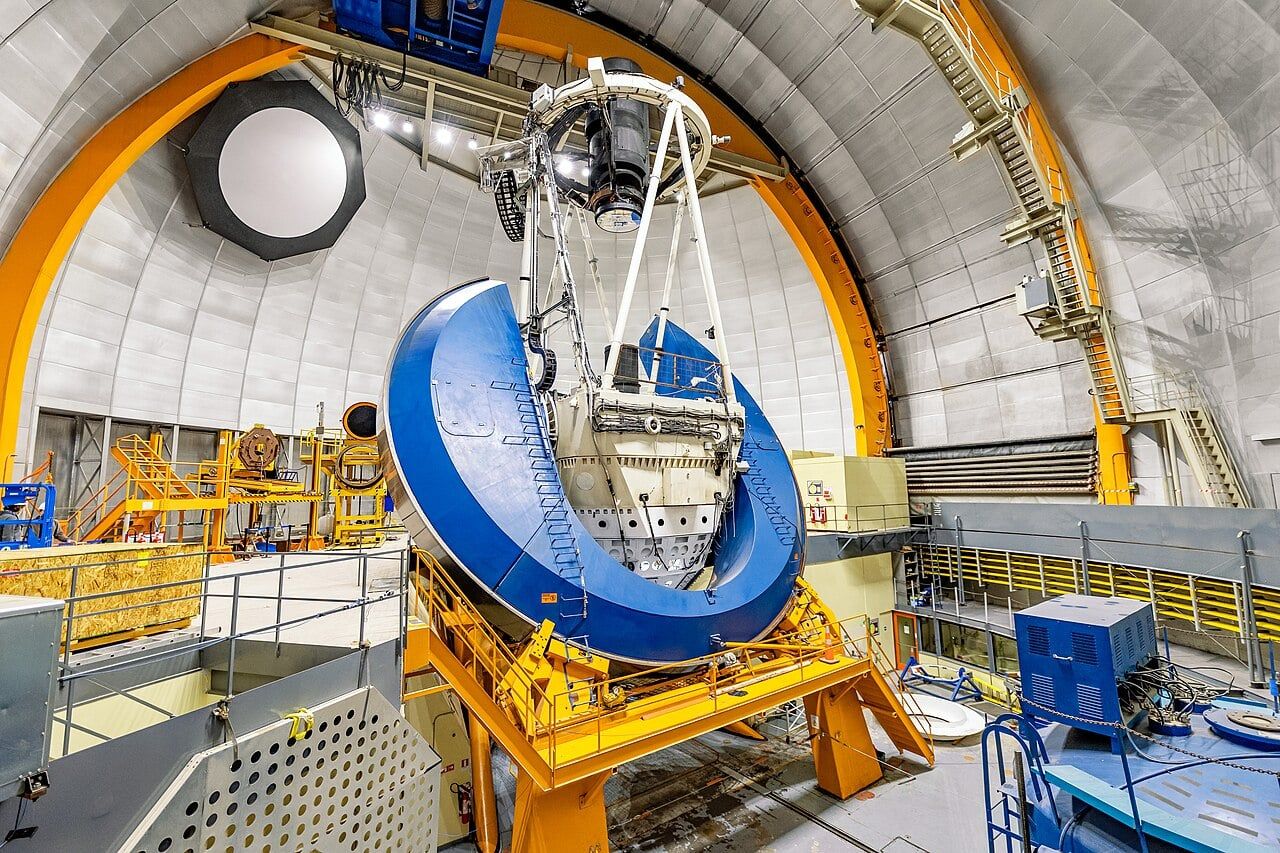
Confirming or dismissing the candidate will require directed follow-up observations using modern ground-based facilities. Phan and his co-authors suggested pointing the Dark Energy Camera on the 4-metre Victor M. Blanco Telescope in Chile toward the projected current trajectory of the object.2 High-resolution optical and near-infrared imaging could verify whether a faint planetary body continues to track along the predicted path. Until such directed observations secure a third point along the arc, Planet Nine remains a working hypothesis, but astronomers now have a specific celestial coordinate to investigate.
The record
30 sentences trace to 2 sources.
-
1
C
cambridge.org Third-party reporting · cambridge.org A search for Planet Nine with IRAS and AKARI data | Publications of the Astronomical Society of Australia | Cambridge Core See the source
-
2
TP
Tibi Puiu Document · zmescience.com · 6 Oct 2026 Astronomers May Have Found the First Direct Hint of Planet Nine See the source