Ancient Egyptian skulls reveal evidence of fatal blows at royal tombs
A forensic examination of ancient court burials at Abydos indicates early pharaohs may have sacrificed dozens of attendants to serve them in death.
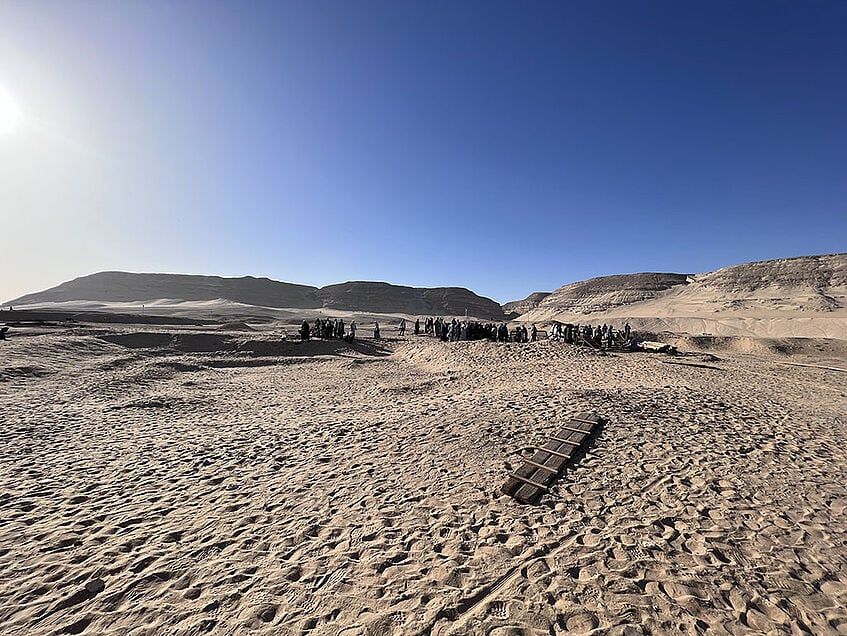
When the earliest kings of unified Egypt were laid to rest, their courts did not simply disband to serve the next monarch. Around the monumental royal burial complexes in the desert, dozens of court attendants, artisans, and administrators were buried in organized rows alongside the ruler.12 For generations, historians debated whether these royal followers died over many years and were assembled in family plots, or whether an entire living retinue was put to death simultaneously to accompany a sovereign into eternity.
Understanding how such mass burials formed is essential for deciphering how early states established absolute authority over their populations. If the graves represent natural deaths gathered over decades, the burials reflect conventional funerary devotion. If the burials occurred all at once through deliberate killing, the practice reveals an early monarchy asserting supreme power over human life itself. Demonstrating whether violent execution occurred requires identifying physical trauma that happened at the exact moment of burial rather than ordinary decay across centuries of interment.
For retainer sacrifice to take place, several events must follow in a specific sequence. A royal court first designates specific officials and craftspeople who are deemed essential for the ruler in the afterlife. Upon the monarch's death, those attendants must be gathered and killed before the royal funerary ceremonies conclude. Finally, their bodies must be sealed into subsidiary tombs around the king during the single burial event, leaving distinct physical traces on fresh bone that distinguish violent trauma from postmortem ground pressure.
What do physical injuries on ancient crania reveal about early royal funerals?
Physical injuries identified on preserved skulls from Abydos indicate that many attendants suffered deliberate, fatal blows to the head around the time of burial. In a study published in the journal Frontiers in Environmental Archaeology on October 5, 2026, bioarchaeologist Roselyn A. Campbell of Purdue University reassessed legacy collections from the site of Umm el-Qaab at Abydos.21 Campbell found that out of 46 preserved crania examined from subsidiary burials associated with First Dynasty rulers, 18 skulls, representing about 39 percent of the sample, exhibited potentially lethal trauma inflicted while the bone remained fresh.12

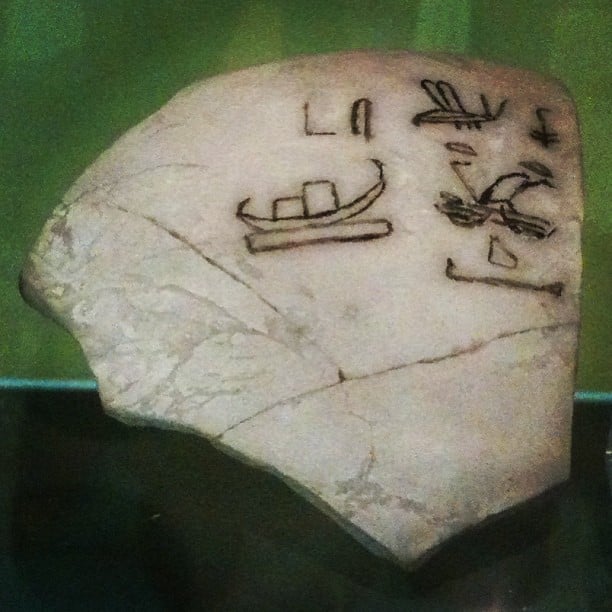
The affected burials date to roughly 3000 B.C., during the First Dynasty, an era spanning approximately 3078 to 2900 B.C. that predated the construction of the Great Pyramid by more than five centuries.12 These subsidiary graves were built around the funerary enclosures and tombs of the early rulers Djer, Djet, and Merneith.21 Historical excavation records confirm that the individuals buried in these rows were not anonymous prisoners of war. Inscribed grave stelae and recovered artifacts indicate they included palace physicians, inspectors, artisans, and seal-bearers, presenting the composition of a functional royal court.12
Most of the damaged crania displayed long, linear fractures across the cranial vault, while others retained signs of sharp-force wounds.1 One individual suffered a penetrating puncture to the side of the head, and another sustained a chopping blow near one eye.1 Forensic analysis shows that impacts of this magnitude against living cranial tissue cause immediate unconsciousness, severe intracranial bleeding, and death.1 Because the bone bent and split in ways typical of living tissue, the injuries could not have occurred centuries later from natural ground compaction.
How did forensic methods uncover evidence that early excavators missed?
Modern forensic criteria allow researchers to distinguish fractures sustained by fresh, elastic bone from brittle breaks caused by postmortem decay. British archaeologist Flinders Petrie first excavated the subsidiary graves at Abydos in the 1920s and suspected that mass retainer sacrifice had occurred because hundreds of graves appeared to be sealed at the same time.12 However, Petrie lacked the analytical tools to diagnose trauma on dry bone. At the time, excavators believed that evidence of physical violence was absent, leading Petrie to hypothesize that retainers had perhaps been stunned and buried alive.12
Petrie had noted cracked regions and coated many crania with paraffin wax to stabilize them before shipping the remains to Britain.12 Roselyn A. Campbell observed that Petrie frequently applied wax directly across fractured areas, indicating that the excavator saw the structural breaks but interpreted them as natural damage that happened long after death.12 Early twentieth-century archaeological expeditions rarely included permanent physical anthropologists, relying instead on visiting medical doctors whose training focused on living patients rather than skeletal trauma.
The surviving skulls, now housed in the Duckworth Collection at Cambridge University, were analyzed by Campbell for trauma etiology, the forensic study of how specific forces produce distinct patterns of bone breakage.21 The injuries did not resemble the circular, depressed fractures left by heavy stone maces, the spherical weapons depicted in early royal art.1 Instead, the long linear fractures point toward blows delivered by wider, flatter objects, such as wooden planks or clubs, which distributed force across the upper skull and produced lethal radiating fractures.1
Why can forensic trauma analysis never tell the full story of every burial?
Forensic analysis of legacy collections cannot prove that every individual in the royal cemetery was murdered, nor can it determine whether victims cooperated willingly with the ritual. The biological window for perimortem trauma, damage inflicted while bone retains organic collagen and moisture, can extend for days or weeks after biological death depending on environmental aridity and decomposition rates.1 Consequently, researchers cannot demonstrate with absolute certainty that every fracture caused death, as an injury inflicted shortly after death could leave identical skeletal markers.1
A further limitation stems from the severe incompleteness of the surviving skeletal material. The 46 skulls examined by Campbell represent only about 5 to 15 percent of the total population originally interred around each royal enclosure.1 Petrie measured 80 crania and the long bones of 96 individuals before commingling the postcranial remains and reburying them together in an unstratified pit inside a nearby structure built by the Second Dynasty king Khasekhemwy.21 Because the postcranial skeletons cannot be linked to individual crania, researchers cannot check for defensive wounds on forearms, restraint marks, or falls.
The social dynamic of the ritual also remains hidden behind the physical evidence. Whether the officials and artisans viewed dying beside a sovereign as a sacred privilege or faced coercion cannot be determined from bone fragments alone. The burials contained modest grave goods, including ceramic pots, ivory combs, flint knives, and copper tools, confirming personal standing but leaving individual intent unreachable.21
What happened to the practice of retainer sacrifice in ancient Egypt?
Retainer sacrifice in ancient Egypt proved to be a short-lived administrative experiment that vanished almost as quickly as it appeared. The practice began modestly under King Aha, the initial ruler of the First Dynasty, whose complex contained only a few subsidiary graves.2 The number of attendant burials expanded dramatically under succeeding First Dynasty rulers, who buried hundreds of court members around their tombs and ceremonial enclosures.21 Yet the practice dwindled rapidly toward the end of the dynasty and ceased entirely by the beginning of the Second Dynasty.12
Executing dozens of skilled administrators, physicians, and craftsmen at every royal funeral placed an unsustainable burden on the early Egyptian state. Training specialized scribes and artisans required considerable social investment, making the regular elimination of an entire administrative apparatus counterproductive for successor kings. In subsequent dynasties, Egyptian rulers replaced human victims with symbolic substitutes, such as inscribed depictions, carved reliefs, and small wooden servant figures called shabtis, preserving the religious requirement of afterlife service without destroying living human capital.
What this rests on
24 sentences trace to 2 sources.
-
1
TP
Tibi Puiu Document · zmescience.com · 7 Oct 2026 Egypt’s First Pharaohs May Have Used Retainer Sacrifice to Serve Them in the Afterlife See the source
-
2
F
Frontiers Third-party reporting · frontiersin.org · 5 Oct 2026 Frontiers | New data from old bones: using bioarchaeology and forensics to reassess legacy data from ancient Abydos, Egypt See the source