Molecular mirror images yielded to two chemical pioneers
Discoveries in asymmetric synthesis explain how living systems chose one spatial orientation, transforming the production of modern pharmaceuticals.
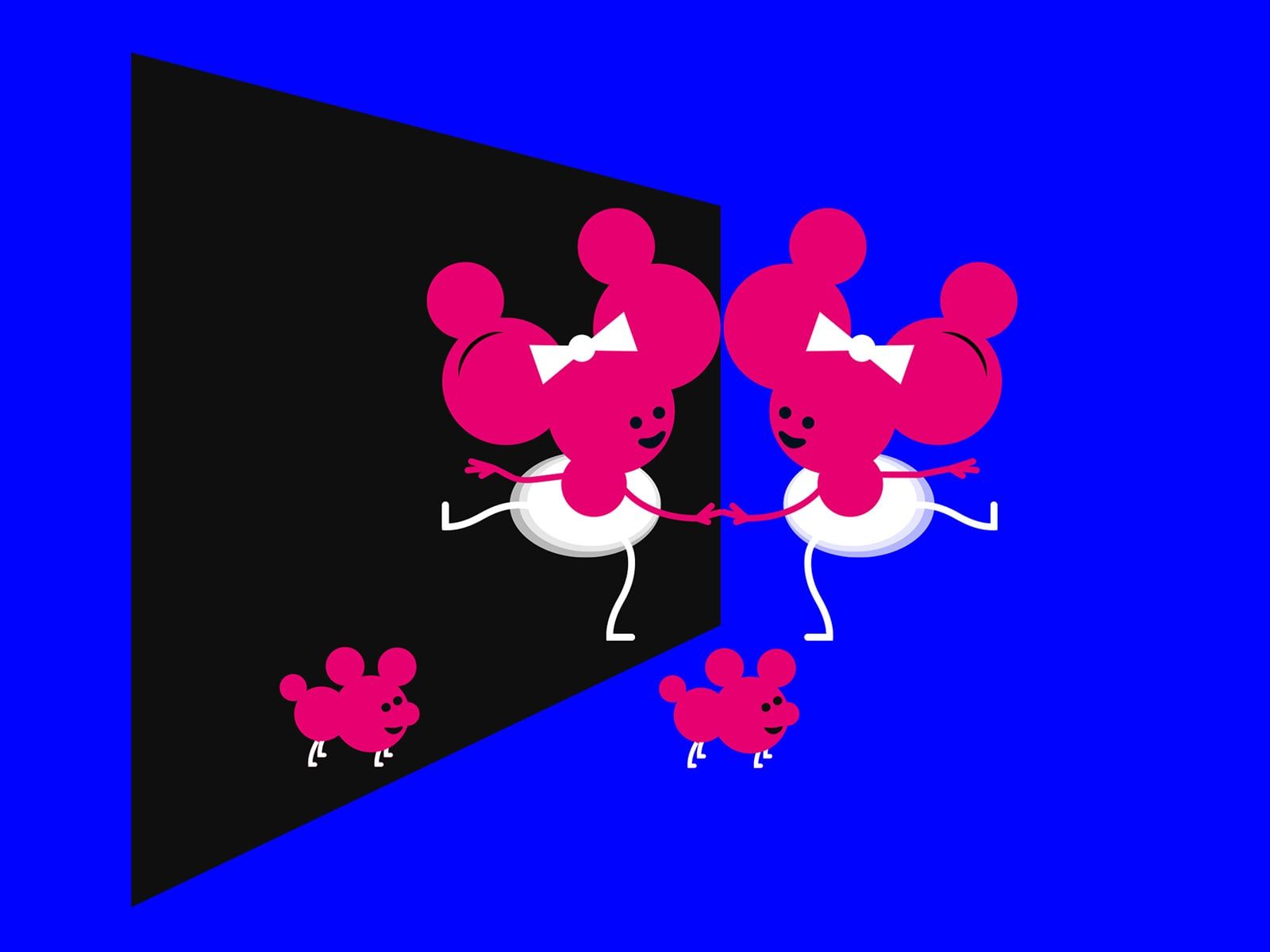
Living biology depends on a strict physical asymmetry that standard laboratory chemistry routinely fails to replicate. Many organic molecules exist as pairs of structures that mirror one another like human hands, sharing identical atomic parts and identical chemical formulas.12 Yet inside living cells, nature insists on a single geometry. The amino acids that assemble into proteins occur almost entirely in one mirrored form, while the opposite configuration remains exceedingly rare across the natural world.12
This universal preference creates a fundamental challenge for the synthesis of modern medicines, flavours, fragrances and materials.23 Because biological receptors are themselves shaped with a specific handedness, two mirror-image molecules often produce entirely different outcomes inside an organism. While one variant may bind neatly to a target receptor to treat an illness, its structural reflection can prove completely ineffective or cause unexpected harm.13 For generations, chemists working in test tubes were thwarted by basic probability: ordinary reactions starting from symmetric components yielded equal proportions of both mirrored forms, leaving researchers with mixtures that were difficult to separate.12
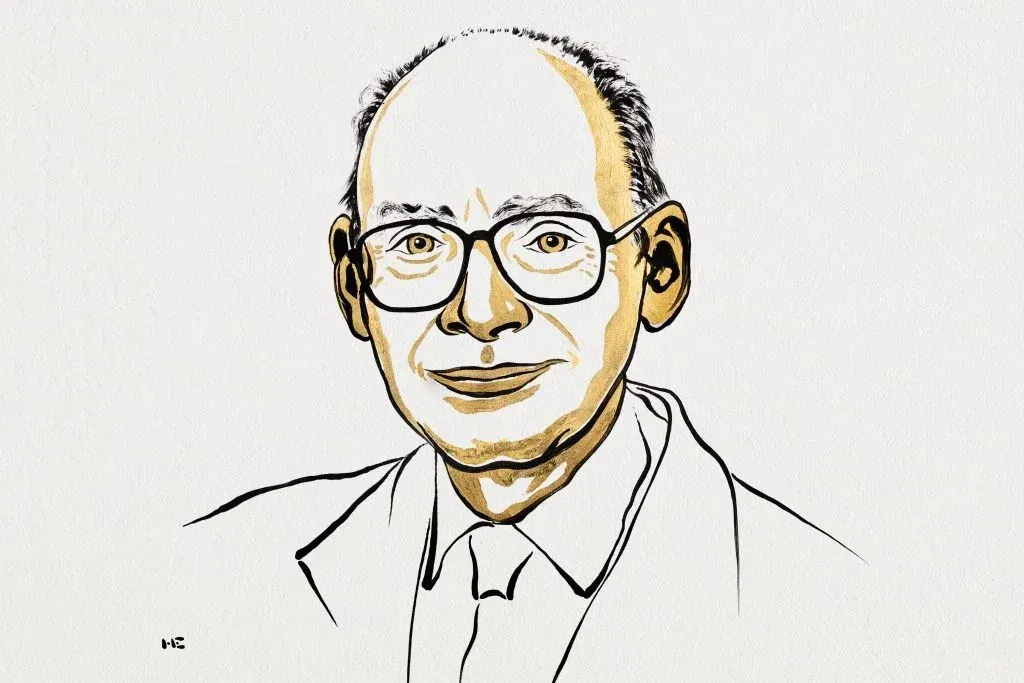
How living systems originally developed this exclusive preference without an existing biological template stood as a century-old mystery.12 The Royal Swedish Academy of Sciences announced on October 7, 2026, that it has decided to award the 2026 Nobel Prize in Chemistry to Henri B. Kagan of Université Paris-Sud and Kenso Soai of Tokyo University of Science for discovering chemical mechanisms that solve that puzzle.12 Kagan and Soai will share the prize amount of 12 million Swedish kronor equally for the discovery of non-linear effects and autocatalysis in asymmetric organic synthesis.12
Why do living systems rely on a single molecular hand?
Life's chemical architecture is homochiral, a designation derived from the Greek words for same and hand.12 In conventional chemical reactions, the pathways leading to either the left-handed or right-handed variant possess identical energy barriers, ensuring that both forms assemble at identical rates. When experimental chemists trigger these syntheses in a flask, the result is naturally a balanced, fifty-fifty blend known as a racemic mixture. Producing an excess of just one form requires introducing an asymmetric influence, such as a specialized catalyst that guides the assembly along one specific spatial trajectory.
The dilemma lay in the source of that asymmetry. To generate a single molecular orientation, synthetic chemists traditionally relied on chiral reagents or enzymes borrowed directly from nature. This dependency produced a persistent circular riddle: if creating pure handed molecules requires preexisting chiral agents, how could the very first asymmetric building blocks of life have emerged on a prebiotic Earth? A subtle initial bias would normally be swamped by symmetric reactions, leaving scientists unable to explain how living chemistry settled uniformly on one side.
How did Henri Kagan break the direct link between catalyst and product?
Henri Kagan unlocked a solution to this limitation in 1986 by discovering non-linear effects in asymmetric organic reactions.12 Before his work, researchers operated on the assumption that the optical purity of an asymmetric product was strictly proportional to the purity of the chiral catalyst guiding the reaction. If a chemist used an imperfect catalyst that contained only a modest excess of one handed form, the resulting product was expected to reflect that same weak imbalance.
Kagan demonstrated that chemical systems could behave non-linearly, allowing an imperfect catalyst with only a slight excess of one mirror-image form to yield a disproportionately high excess of the desired product.12 By manipulating reaction dynamics, his methods amplified subtle initial imbalances, enabling chemists to generate single-handed compounds far more efficiently than previously assumed possible. The discovery provided industrial chemistry with powerful new strategies to produce pharmaceuticals, scents and advanced synthetic materials without demanding impossibly pure starting catalysts.21

What allowed Kenso Soai to achieve pure mirror-image reactions?
Kenso Soai took the principle of amplification to its ultimate limit by developing an organic reaction driven by asymmetric autocatalysis.1 In 1995, Soai published the design of the first chemical reaction holding the inherent potential to become homochiral, wherein the newly formed product serves as the catalyst for its own subsequent production.12 Under this mechanism, any slight excess of one mirrored variant acts immediately to accelerate the production of itself while suppressing or outcompeting the opposite form.
In 2003, Soai succeeded in demonstrating a reaction in which only one of the two possible mirror images formed from non-chiral precursors.12 By demonstrating that a tiny, random fluctuation in molecular orientation could undergo self-replication and rapid exponential amplification, Soai showed how a reaction mixture could spontaneously drive itself to absolute homochirality. Prior to this landmark achievement, life itself was the only system known to accomplish such total asymmetric control.12
What are the boundaries of these chemical reactions?
These discoveries demonstrate how physical and chemical mechanisms can amplify minuscule asymmetries into absolute homochiral dominance, but they do not pinpoint the exact historical events that triggered life's first molecular choices on Earth. Autocatalytic and non-linear reactions show that spontaneous symmetry breaking is chemically viable in test tubes, yet determining which prebiotic molecules or environmental conditions provided the original nudge remains an active subject of ongoing inquiry. The specific reaction systems designed by Kagan and Soai serve as mechanistic demonstrations of chemical principles rather than direct historical records of primordial origins.
As Heiner Linke, chair of the Nobel Committee for Chemistry, noted during the prize announcement, Kagan and Soai resolved a foundational chemical question that had persisted for more than a century.12 By proving that non-linear kinetics and self-replicating catalysts can push simple chemical mixtures into complete structural asymmetry, their contributions have grounded the origins of biological chirality in reproducible physics while supplying crucial tools for the targeted manufacture of modern pharmaceuticals.13
What this rests on
18 sentences trace to 3 sources.
-
1
K
kva.se Third-party reporting · kva.se · 7 Oct 2026 The Nobel Prize in Chemistry 2026 See the source
-
2
N
nobelprize.org Third-party reporting · nobelprize.org Chemistry Prize See the source
-
3
FG
Fernanda González Document · wired.com · 8 Oct 2026 Life Is Asymmetric. The Scientists Who Figured Out Why Won the 2026 Nobel Prize in Chemistry See the source