Recyclable elastic yarn made from milk-jug plastic could reduce landfill clothing waste
Engineers configured two forms of polyethylene to create stretchy, resilient thread that survives repeated melting and respinning without losing strength.
Nearly every wardrobe relies on stretchy clothing, from gym leggings and denim to everyday undershirts.1 That flexibility allows garments to move with the body, snap back into shape, and withstand daily wear.1 Yet the exact mechanical design that gives modern garments their comfortable give also makes them almost impossible to recycle. When elastic clothing frays, tears, or falls out of fashion, almost all of it ends up buried in landfills or burned in incinerators.1
Textile recycling remains one of the most stubborn hurdles in consumer waste management. Across the United States, municipal recycling bins accept aluminum cans, glass bottles, and cardboard boxes, returning those raw materials back into industrial supply chains. Discarded clothing enjoys no equivalent widespread infrastructure. The problem is fundamentally chemical. Modern fabrics blend multiple synthetic and natural fibers together, fusing materials that melt at different temperatures and resist shared processing.1
To understand why stretchy fabric resists recycling, consider the physical chain of events required to produce an elastic thread. Natural fabrics like cotton or wool lack the sustained spring required for form-fitting garments. Textile manufacturers therefore rely on synthetic elastane fibers, widely known as spandex, to provide elasticity.1 A rubbery elastane core provides mechanical give, but that core is too delicate to endure surface friction, washing machines, or weaving looms on its own. To protect it, textile mills wind a rigid protective sheath of polyester or nylon around the springy interior.1
That composite structure works remarkably well on the human body, but it fails completely during mechanical recycling. When a worn-out garment is collected and shredded, processors must melt the reclaimed polymers to extrude fresh fibers. Polyester melts at a different thermal threshold than polyurethane elastane. If melted together, the incompatible molecular chains separate, char, and degrade into an unusable sludge. Separating the two ingredients requires aggressive chemical solvents, high energy inputs, and elaborate industrial equipment that render textile recycling economically and ecologically unviable.1
Now, researchers at the Massachusetts Institute of Technology have engineered an all-polyethylene elastic yarn that matches conventional synthetic blends in strength and stretch while surviving repeated thermal recycling.1 Led by research scientist Svetlana Boriskina and first author SeongHyeon Kim in MIT's Department of Mechanical Engineering, the group detailed their thermo-mechanically recyclable yarn in the journal ACS Materials Letters.1 By using the same basic plastic family for both the inner spring and the outer protective jacket, the yarn eliminates the chemical clash that sends blended athletic apparel to dumps.1
Why do conventional stretchy fabrics resist recycling?
Conventional elastic garments resist recycling because their internal structural architecture permanently bonds incompatible synthetic plastics together.1 Svetlana Boriskina, a research scientist in MIT's Department of Mechanical Engineering, reported that 80 percent of textiles on the United States market contain some proportion of spandex, rendering the resulting garments nonrecyclable under standard systems.1
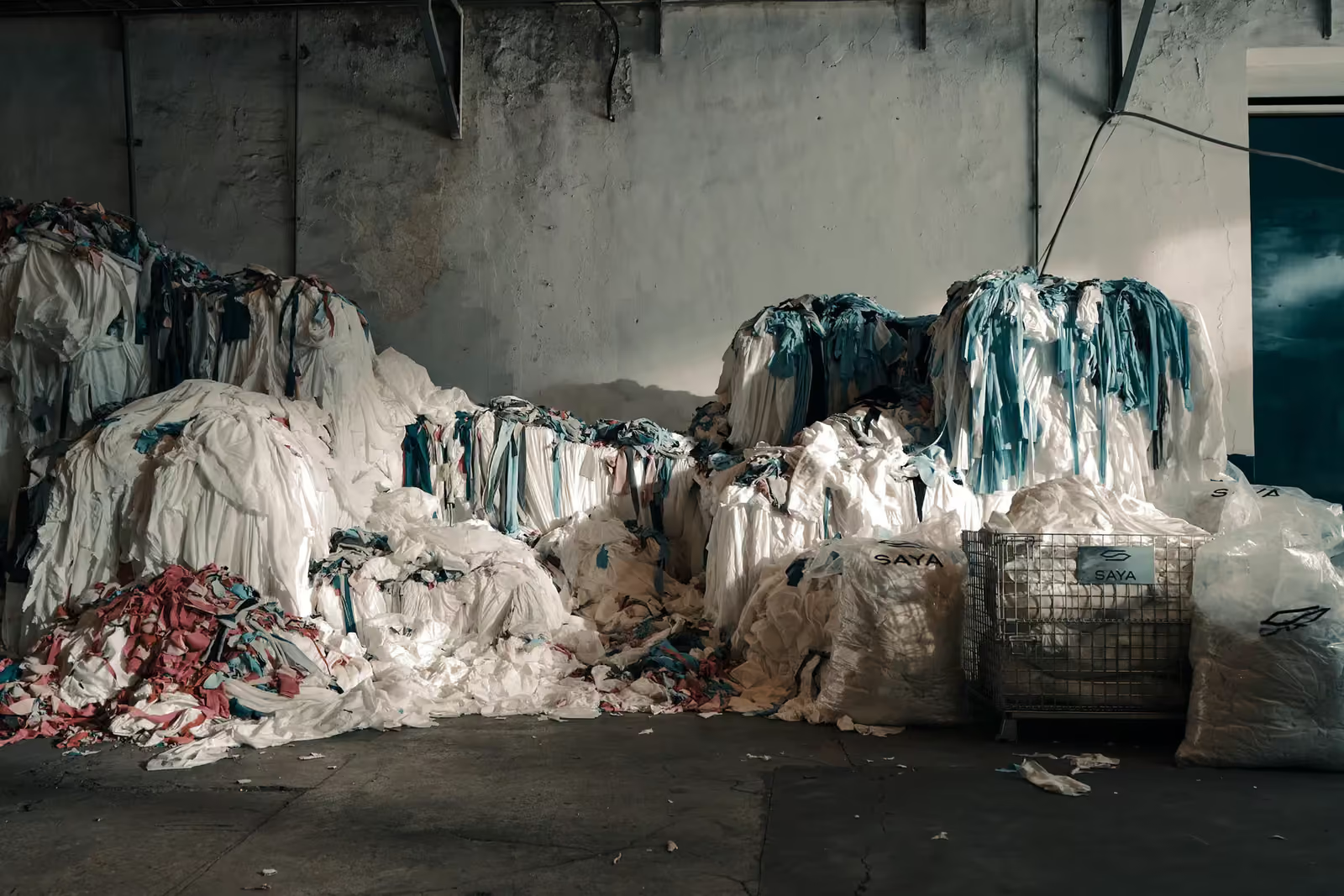
The scale of discarded garments illustrates the urgency of the problem. Discarded consumer garments generate more than 11 million tons of textile waste in landfills or incinerators each year, while the average American discards approximately 81 pounds of clothing annually, according to the paper.1 While donation systems divert a small fraction of wearable garments, Boriskina stated that there is currently no widely adopted industrial technology that recycles post-consumer textiles back into virgin-grade textiles.1
Traditional elastic threads achieve their balance of flexibility and strength by combining two distinct polymer classes.1 Polyurethane gives elastane its rubbery recovery, while polyamide nylon or polyester shields the core against abrasion. While chemical solvent technologies exist to dissolve and isolate these individual materials, Boriskina noted that such methods add prohibitive industrial expenses, introduce operational complexity, and typically demand hazardous chemical baths.1 Consequently, commercial textile recyclers discard composite stretch garments rather than attempting to untangle their component plastics.1
How can one plastic provide both stretch and structure?
One polymer family can supply both elastic bounce and rigid defense because the physical properties of polyethylene depend entirely on how its constituent carbon chains are assembled.1 SeongHyeon Kim, the first author of the MIT study, explained that polyethylene can produce an expansive spectrum of physical properties depending on specific chemical formulation and manufacturing methods.1
The molecular skeleton of polyethylene resembles a repetitive chain of carbon atoms flanked by hydrogen. In flexible formulations, branches along the polymer chain prevent tight crystallization, giving the material a relaxed, rubbery consistency that elongates and retracts under tension. In denser, linear formulations, the polymer strands pack tightly together into crystalline structures, yielding high tensile strength and rigid structural support. Boriskina compared the underlying chemical backbone of polyethylene to a Christmas garland made of repeated carbon links, whose external macro-properties shift as individual strands are packed or looped.1
The researchers capitalized on this versatility by pairing two tailored polyethylene resins within a single thread.1 For the springy internal core, the group selected a highly elastic polyethylene formulation.1 For the protective surrounding sheath, they selected a stiffer, high-tenacity polyethylene resin.1 Because both components share identical base chemistry, they melt at compatible temperatures and fuse cleanly together without delamination. Boriskina noted that this chemical harmony allows the two elements to interact smoothly during processing, making the composite fiber exceptionally amenable to closed-loop recycling.1
How did the engineers fabricate and test the thread?
The engineers fabricated the yarn through thermal extrusion and spool winding before subjecting the finished fibers to ten consecutive cycles of melting and respinning.1 Kim likened the mechanical extrusion sequence to a home pasta machine, noting that raw plastic pellets are liquefied in a heated chamber before being pressed through fine dies.1
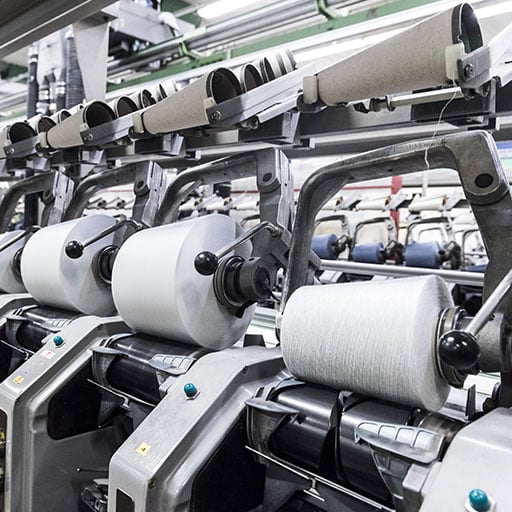
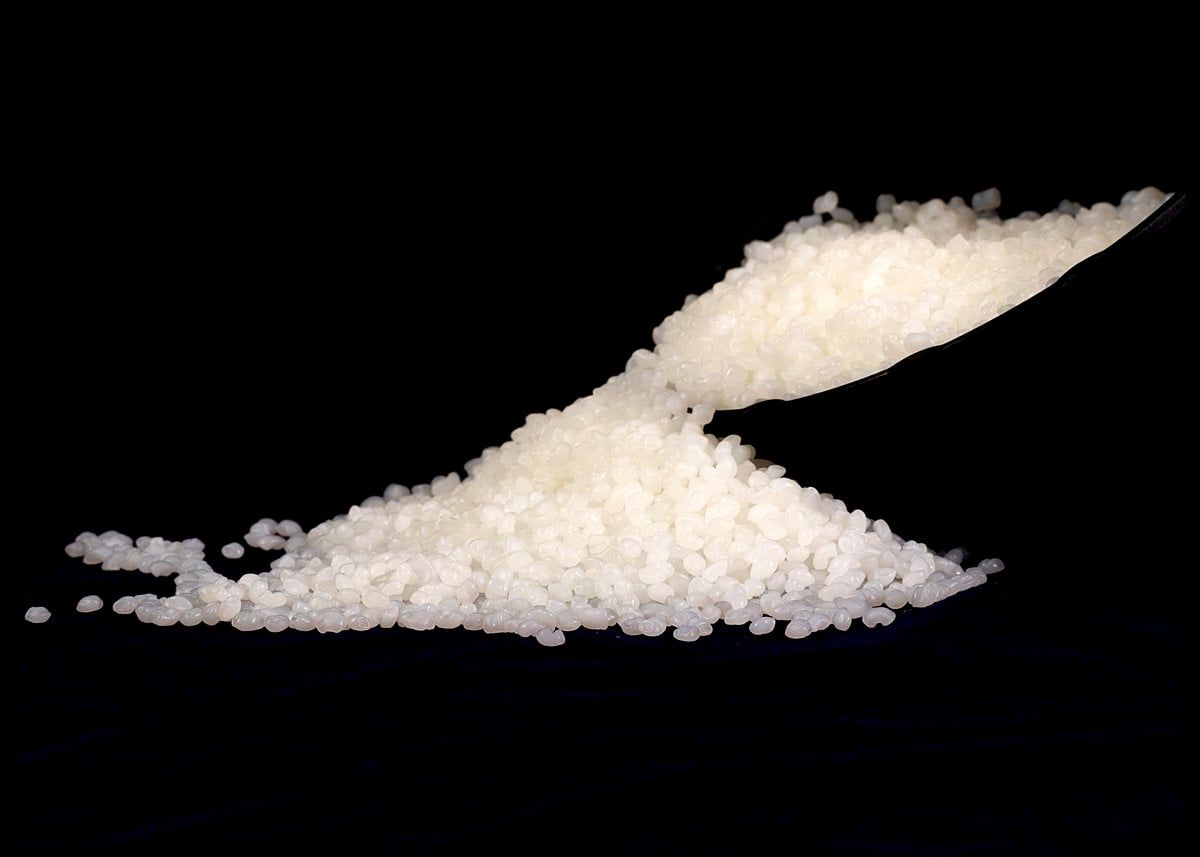
During fabrication, raw polyethylene pellets are heated to roughly 350 degrees Fahrenheit, pushing the material past its melting threshold.1 The molten polymer is drawn through micro-scale extruders to generate fine, hair-thin filaments.1 An industrial textile spinner then winds the stiffer sheath filaments around the flexible polyethylene core.1 The finished yarn exhibits the tactile hand and appearance of standard commercial sewing thread, which the researchers successfully wove into lightweight, flexible fabric swatches.1
To evaluate whether the yarn could endure genuine closed-loop processing, the MIT team ran a rigorous mechanical recycling trial.1 The researchers spun the composite yarn, chopped and melted it down, and extruded fresh yarn across ten successive iterations. Following each thermal cycle, the engineers placed the re-spun threads into mechanical testing equipment to measure breaking force and elastic recovery.1 Throughout all ten cycles, the recycled polyethylene yarn retained its baseline tensile strength and flexibility, matching the performance of original sheath yarn and demonstrating that the material avoids thermal degradation or downcycling into low-grade industrial filler.1
The study builds on earlier research from Boriskina's laboratory.1 In a study published in Nature Sustainability, Boriskina and colleagues demonstrated that polyethylene plastic bags could be extruded into self-cooling woven textiles.2 That earlier work established that mechanical extrusion slightly oxidizes the surface of polyethylene fibers, introducing weak water-attracting properties that allow capillary spaces between filaments to passively wick moisture and sweat away from human skin.2 The current work in ACS Materials Letters extends those material principles from flat cooling fabrics to stretchable composite yarns.1
What hurdles remain before garments reach consumers?
The experimental yarn demonstrates that all-polyethylene elastic fibers can survive repeated recycling, but the laboratory findings do not guarantee immediate commercial adoption. The study's results represent controlled benchtop demonstrations and mechanical durability tests, which cannot account for the wear, mixed dyes, dirt, and mechanical stresses accumulated over years of consumer laundering and body wear.1
Widespread adoption also depends on municipal infrastructure that does not currently exist.1 Clothing recycling requires organized collection pipelines capable of sorting pure polyethylene garments away from legacy polyester, cotton, and nylon blends.1 If consumers discard garments that contain traditional metal zippers, sewing thread, elastic waistbands, or decorative embellishments made of competing polymers, the purity of the recycling melt would be compromised. Furthermore, while polyethylene is readily recyclable, it remains a fossil-fuel derivative, meaning circular recovery reduces landfill mass but does not decouple the textile sector from petroleum extraction.1
The MIT researchers are now investigating methods to produce the yarn on high-speed industrial spools capable of supplying commercial looms.1 Weaving an individual textile piece requires kilometers of continuous yarn, making high-volume output the next engineering benchmark.1 If manufacturing scales effectively, the team envisions circular supply chains where worn athletic apparel is gathered, melted, and respun into fresh garments, buttons, or accessories without generating downcycled waste.1
What this rests on
44 sentences trace to 2 sources.
-
1
S
scientificinquirer Document · scientificinquirer.com · 12 Oct 2026 Melt It, Spin It, Wear It Again: MIT Engineers Make Stretchy Yarn From Milk-Jug Plastic See the source
-
2
N
news.mit.edu Third-party reporting · news.mit.edu Could we recycle plastic bags into fabrics of the future? See the source