China's expanding power grid vents a greenhouse gas far more potent than carbon dioxide
Recycling shortfalls among state-owned electric utilities allow thousands of metric tons of sulfur hexafluoride to escape into the atmosphere every year.
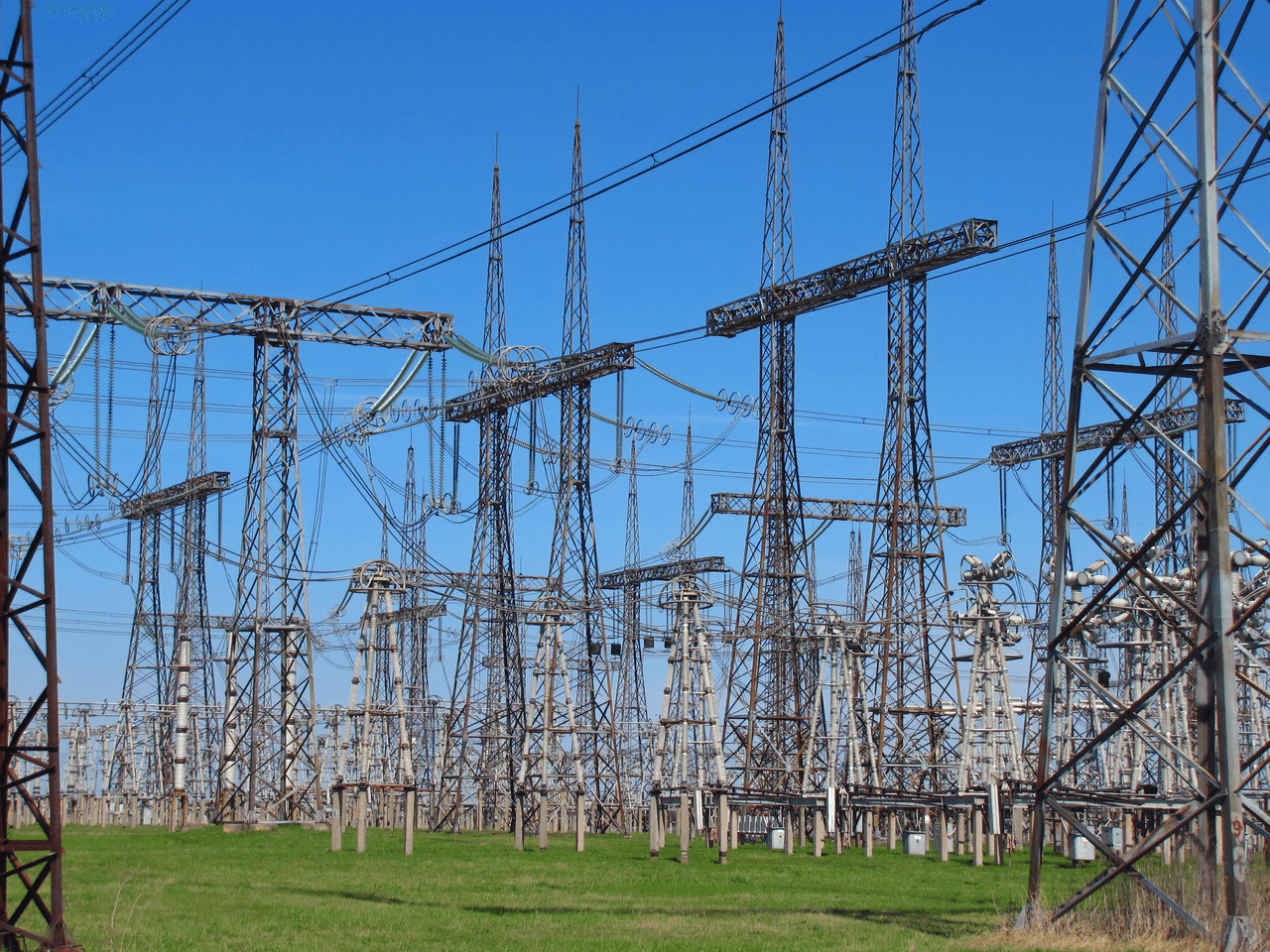
High-voltage electric grids face a constant physical hazard whenever heavy currents move across long distances.1 When a circuit breaker opens to isolate a transmission fault, electrical current tries to jump the widening gap, forming an ionized plasma arc that can vaporize metal and trigger explosive equipment failures. To suppress these arcs instantly, power utilities around the world seal their switchgear inside chambers pressurized with sulfur hexafluoride, an artificial gas whose dense, electronegative molecules absorb free electrons and snuff out electrical sparks in fractions of a second.
The gas performs that protective role better than almost any other known substance, but its chemical stability makes it an environmental hazard. Sulfur hexafluoride is odorless, nontoxic, and nonflammable, yet pound for pound it traps 24,300 times more heat in the atmosphere than carbon dioxide over a century-long horizon.12 Once a volume of the gas escapes from an electrical substation, its bonds resist atmospheric breakdown, leaving it to circulate and trap heat for roughly 1,000 years.12
As China constructed the world's largest network of high-voltage lines, wind farms, and solar installations, its consumption of this insulating chemical expanded alongside the hardware.12 Now, atmospheric measurements and industry disclosures show that the country's electrical grid has become the dominant global source of sulfur hexafluoride emissions.12 Over the past decade, emissions of the gas from China nearly doubled, reaching levels that cancel out a meaningful portion of the climate gains achieved by replacing coal power plants with clean energy.12
Why does a renewable power grid rely on a potent greenhouse gas?
Modern electrical transmission networks require sulfur hexafluoride to safely manage voltages reaching hundreds of thousands of volts.12 As utility operators link massive remote wind complexes and desert solar arrays to urban population centers, they install switchgear, transformers, and circuit breakers that must operate reliably under immense electrical loads. Sulfur hexafluoride allows manufacturers to build compact substations because its dielectric strength allows components to sit inches apart without sparking, whereas air-insulated equipment would require sprawling outdoor installations hundreds of feet wide.
The problem arises when this equipment ages, leaks, or undergoes routine servicing. For an electric network to keep sulfur hexafluoride out of the sky, technicians must pump the gas into sealed storage cylinders during maintenance, filter out degradation products, and reinject the purified gas into active switchgear. If utility crews vent the gas to save time or lack the specialized hardware needed to recover it at remote sites, the chemical discharges directly into the air.1
The scale of that leakage has grown rapidly across the Chinese mainland. In a 2024 study published in the journal Nature Communications, an atmospheric research team led by Minde An and Matthew Rigby analyzed long-term air samples collected across nine monitoring stations.21 The authors reported that national emissions of sulfur hexafluoride rose from 2.6 gigagrams per year in 2011 to 5.1 gigagrams in 2021, an increase of roughly 100 percent.1 The researchers calculated that China's 2021 release of 5,100 metric tons of the compound was climate-equivalent to 125 million metric tons of carbon dioxide, matching the annual carbon emissions of midsize industrial nations such as the Netherlands.21

Atmospheric scientist Matthew Rigby, an atmospheric chemistry professor at the University of Bristol and a co-author of the Nature Communications paper, pointed out that the gas creates a permanent warming legacy.12 Rigby noted that once the compound reaches the open atmosphere, it persists for thousands of years, meaning emissions from today's grid buildout will affect global temperatures far beyond human timescales.1
Where do the unaccounted emissions escape?
Regional air measurements indicate that the highest concentrations of sulfur hexafluoride originate in China's heavily industrialized eastern provinces, where high-voltage substations operate in dense commercial clusters.2 Yet the atmospheric data gathered by Minde An and colleagues revealed that less-populated western regions also contribute substantially to national totals.2 The team found that the northern, northwestern, central, southern, and southwestern subregions accounted for 18 percent, 14 percent, 11 percent, 9 percent, and 8 percent of national emissions, respectively.2
Those western emissions align with massive infrastructure investments designed to move electricity across the country. Western provinces generate vast surpluses of electrical power from solar farms, wind corridors, and hydropower dams, sending that electricity east through ultra-high-voltage transmission corridors that require extensive switchgear at every substation.2 The study demonstrated that annual provincial emissions correlate tightly with power generation and consumption, registering a Pearson correlation coefficient of 0.83, while showing no significant correlation with other industrial uses such as magnesium smelting.2
Official reports have often presented a far smaller accounting of these losses. In submissions to the United Nations Framework Convention on Climate Change, early national inventories placed China's 2018 emissions at approximately 3 gigagrams, whereas bottom-up models and atmospheric monitoring registered between 4 and 5 gigagrams. Furthermore, while the Ministry of Ecology and Environment recently stated that electric utilities recycle or maintain the capacity to recycle 90 percent of their waste gas, technical surveys and utility filings reveal an operational recovery rate closer to 30 percent.1
An analysis of utility disclosures indicates that in 2020, the country's power industry maintained specialized capacity to process 727 metric tons of waste gas out of roughly 2,518 metric tons generated.1 In operational practice, China's two primary state-owned utilities, State Grid Corporation of China and China Southern Power Grid, reported recovering less than 300 metric tons of sulfur hexafluoride combined that year.1 Although their combined recovery increased to 635 metric tons in 2024, the volume of retiring equipment requiring treatment expanded at the same time, leaving large quantities unaccounted for and likely vented during field decommissioning.1
What prevents utilities from recovering the waste gas?
Logistical and economic trade-offs in how recycling centers are built explain why so much gas escapes recovery. Rather than equipping local maintenance crews with mobile, on-site purification trailers, China's grid operators concentrated their recovery operations in roughly 30 centralized regional processing facilities, primarily located in provincial capitals. Moving heavy pressurized cylinders across vast rural distances from remote substations to these central hubs imposes transport delays and administrative burdens that encourage local maintenance crews to release the chemical into the air.
A 2023 study published in the Proceedings of the Chinese Society for Electrical Engineering highlighted that high capital costs for central facilities created severe geographical bottlenecks, leaving vast interior regions without accessible recovery services.1 Deborah Ottinger, a former fluorinated greenhouse gas emissions analyst for the U.S. Environmental Protection Agency, noted that failing to recover the gas during equipment maintenance or replacement creates an immense and unnecessary climate hazard, emphasizing that proven reclamation procedures can be applied immediately with existing technology.1

Closing this recycling gap would require modest financial resources relative to China's total energy capital budget. Utility data indicates that capturing and purifying an additional 1,400 metric tons of sulfur hexafluoride annually across transmission and distribution networks would raise national recycling rates to approximately 90 percent, preventing emissions equivalent to nearly one-third of the country's total output across all sectors.1 Economic assessments calculate that achieving these reductions would cost approximately $6 million per year, representing less than 0.01 percent of the estimated $70 billion invested annually in China's electric grid.
On an efficiency basis, preventing sulfur hexafluoride releases is one of the cheapest carbon mitigation measures available. An analysis by the U.S. Environmental Protection Agency calculated the cost of recovering the chemical from China's electrical sector at roughly 18 cents per metric ton of carbon dioxide equivalent.1 By contrast, a 2025 study in the journal Environmental Science and Technology calculated that avoiding a metric ton of carbon dioxide through new wind turbine construction costs $11, while solar panel deployment costs $31 per metric ton of carbon dioxide equivalent.1
How can the power sector eliminate the release of sulfur hexafluoride?
Regulatory authorities in Beijing have begun testing policy incentives to encourage utilities to modernize their handling of insulating gases. In late 2024, the Ministry of Ecology and Environment authorized grid operators to generate and sell carbon credits if their documented recovery rates exceed 90 percent of decommissioned gas.1 Jin Yana, an assistant professor of environmental economics at Peking University, noted that setting the threshold at 90 percent ensures carbon markets reward exceptional, above-and-beyond efforts rather than standard industrial practices.1
In July 2024, 19 Chinese government departments jointly issued the National Climate Change Response Plan, establishing an official goal to curb emissions of non-carbon greenhouse gases, including sulfur hexafluoride, hydrofluorocarbons, and nitrous oxide, by 30 million metric tons of carbon dioxide equivalent by 2030.1 Industry policy analysts from the Institute for Global Decarbonization Progress observed that this directive marks the central government's first formal call for a dedicated management program targeting insulating gases.
International initiatives are also attempting to standardize best practices for gas recovery across emerging economies. Philippe Lempp, who oversees an international sulfur hexafluoride mitigation initiative at Germany's international development agency GIZ, held technical workshops with Chinese industry executives and ministry officials to promote recovery protocols established in Europe. In Germany, where chemical manufacturer Solvay pioneered closed-loop recycling partnerships with electric utilities in the 1990s, emissions from electrical equipment dropped by more than two-thirds between 1995 and 2015.
The findings from atmospheric inversion models come with structural limitations that caution against treating them as direct tallies of utility behavior. Top-down measurements observe gas concentrations across large air masses and calculate aggregate regional emissions using computational wind simulations, which cannot pinpoint individual substations or separate operating line leaks from end-of-life venting. The atmospheric data also carries an observational margin of error, spanning a 68 percent confidence interval between 4.8 and 5.4 gigagrams for the 2021 national estimate, and cannot capture localized stockpiling practices where utilities store waste gas in pressurized tanks without purifying or venting it.21
Eliminating the chemical entirely remains a long-term engineering challenge for high-voltage power transmission. While State Grid and China Southern Power Grid have introduced alternative gas mixtures, such as sulfur hexafluoride blended with nitrogen, for low- and medium-voltage switchgear, chemical substitutes capable of handling ultra-high voltages will require 10 to 20 years to mature.1 Until those chemical replacements are certified and deployed across tens of thousands of substations, the world's most powerful climate pollutant will continue to accumulate in the atmosphere unless grid operators capture the gas they already possess.
What this rests on
34 sentences trace to 2 sources.
-
1
PM
Phil McKenna, Inside Climate News Document · zmescience.com · 12 Oct 2026 China’s Power Grid Has a Dirty Secret That’s 24,300 Times Worse Than CO2 and Is Cooking the Planet See the source
-
2
N
nature.com Paper · nature.com Sustained growth of sulfur hexafluoride emissions in China inferred from atmospheric observations - Nature Communications Journal article See the source