Dietary sugar deepens gut bacterial loss during broad-spectrum antibiotic treatment
High-sugar foods and drinks consumed during antibiotic treatment were linked to a steeper loss of intestinal microbial diversity in cancer patients, challenging routine hospital feeding practices.
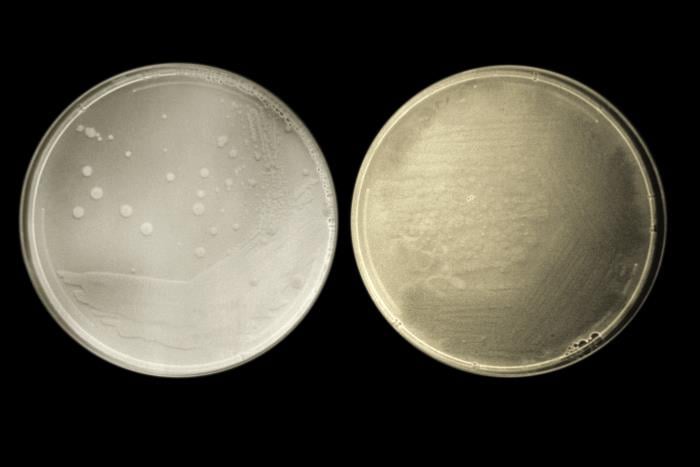
A healthy human digestive tract houses trillions of microorganisms that live in a dense, competitive equilibrium. These resident microbes break down fibrous foods, produce essential vitamins, and physically crowd out opportunistic pathogens that might otherwise multiply and cause life-threatening illness. When a patient receives intensive medical treatment, that protective barrier often collapses. Broad-spectrum antibiotics, designed to eliminate dangerous bacterial infections, kill beneficial and harmful organisms alike, stripping the gut of its usual ecological variety.
For people receiving donor stem cell transplants to treat blood cancers, preserving those intestinal microbes can mean the difference between survival and fatal complications. When broad-spectrum antibiotics clear large portions of the intestinal ecosystem, antibiotic-resistant bacteria such as Enterococcus often surge into the empty space.1 Once these opportunistic organisms dominate the gut, they can slip through damaged intestinal walls and enter the bloodstream, triggering severe infections in patients whose immune systems have already been weakened by chemotherapy.1
The sequence that allows this ecological collapse follows a predictable biological cascade. In a balanced gut, diverse bacterial species consume available nutrients quickly, leaving very little spare fuel for fast-growing pathogens. Broad-spectrum antibiotics dismantle that competition by wiping out sensitive bacterial populations all at once. If unabsorbed simple sugars then flood the digestive tract while those competitors are absent, the few surviving resistant organisms can feast on the leftover energy, multiplying rapidly and preventing beneficial species from returning.
A study published on September 30 in the journal Nature found that consuming sugar-rich foods while taking broad-spectrum antibiotics is linked to a sharp additional decline in gut bacterial variety among hospital patients.1 The work was led by co-first authors Anqi Dai and Annamaria Ballweg alongside 42 colleagues, with co-senior authors Jonathan Peled and Marcel van den Brink of Memorial Sloan Kettering Cancer Center and Jonas Schluter of NYU Langone Health.1 Their findings suggest that common dietary items offered to support malnourished patients may inadvertently worsen the ecological damage caused by essential antibiotic therapies.
How does dietary sugar alter the gut during antibiotic treatment?
Dietary sugars appear to accelerate the loss of microbial diversity by providing fuel that helps opportunistic bacteria outcompete recovering organisms after antibiotic exposure. In a statistical model developed by the research team, patients taking broad-spectrum antibiotics experienced an additional 24.1 percent reduction in gut bacterial diversity for every extra 100 grams of dehydrated sugary foods consumed daily, measured as a dry weight averaged over the two days preceding a stool sample.1 Diversity in this analysis was quantified using the inverse Simpson index, an ecological metric that increases both when more distinct bacterial types are present and when their relative abundances are evenly distributed across the community.1
The mathematical projection carries notable variation, reflecting the complex biological differences among severely ill patients. The model calculated a 95 percent credible interval ranging from a 7.7 percent drop to a 38.1 percent drop in diversity per 100 grams of dry-weight sugary food consumed daily during broad-spectrum antibiotic courses.1 By contrast, when the researchers analyzed stool samples collected during periods when patients were not receiving broad-spectrum antibiotics, consumption of that same sugary food group showed no statistically significant link to changes in bacterial diversity.1
The 100-gram unit used in the primary calculation reflects the dry weight of food items after subtracting their water content.1 This category encompassed sweet snacks, sodas, and formulated nutritional beverages such as meal-replacement shakes, sports drinks, and tube-feeding formulas.1 Because water weight was excluded, 100 grams of dry weight does not correspond to 100 grams of food on a plate or 100 grams of pure dissolved sucrose. In a separate statistical model that calculated nutrient intake directly, the researchers found a 20.6 percent drop in bacterial diversity for every 100 grams of pure sugar consumed daily during broad-spectrum antibiotic therapy, with an estimated credible interval between 2.0 percent and 35.6 percent.1
The finding directly intersects with standard oncological supportive care, where sugar-sweetened drinks are routinely provided to patients who struggle to maintain their weight. Transplant physician Jonathan Peled noted that clinicians frequently encourage individuals undergoing cancer therapy to drink smoothies, sports beverages, or nutritional shakes when nausea reduces food intake, aiming to ensure they receive adequate fluids, electrolytes, and calories.1 When the investigators divided the sugary food category into narrower classifications, formulated nutritional drinks and added sugars emerged as primary contributors associated with the sharpest declines in microbial variety.1
How did researchers track patient diets inside the hospital?
The research team tracked patient food intake by linking hospital kitchen production records directly to bedside meal trays across thousands of individual meals. Between 2017 and 2022 at Memorial Sloan Kettering Cancer Center, investigators recorded 9,419 hospital meals consumed by 173 adults admitted for allogeneic stem cell transplants, while collecting 1,009 stool samples from 158 of those patients.1 Unlike traditional nutritional studies that depend on retrospective dietary recall surveys, every tray sent to a patient included an itemized checklist where the individual recorded whether they had eaten none, a quarter, half, three-quarters, or all of each dish.1
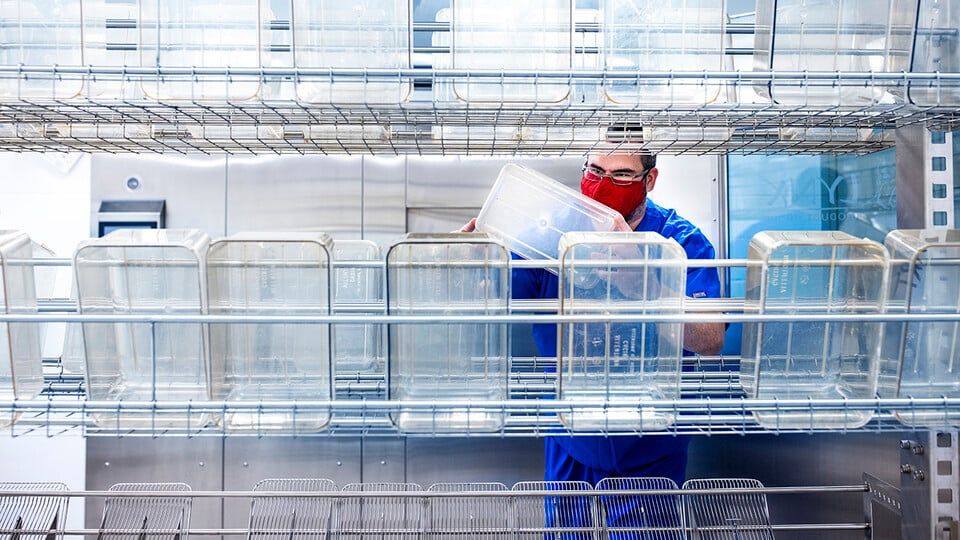
Kitchen dietary software converted those bedside marks into precise gram measurements based on standardized recipes, capturing specific details such as 142 grams of prepared chicken breast consumed on the day before a stool collection.1 The team then mapped 622 distinct food items into nine broad nutritional categories established by the United States Department of Agriculture database, isolating grains, vegetables, fruits, meats, and the sugars, sweets, and beverages group.1 Because stem cell transplant recipients stay in protective hospital wards for several consecutive weeks while undergoing intensive chemotherapy, their daily nutritional intake could be monitored with unusual precision.1
Because sicker patients might naturally turn to liquid supplements when unable to swallow solid food, the researchers conducted sensitivity analyses to determine whether illness severity drove the observed association. Lead author Anqi Dai noted that the team initially suspected sicker patients were simply consuming more sweet items, but adjusting the mathematical models for underlying cancer diagnoses, treatment intensity, concurrent illnesses, and high doses of pain medication did not eliminate the relationship.1 The statistical correlation also persisted when the investigators excluded stool samples collected during confirmed systemic infections or removed 139 samples collected during periods of intravenous or tube feeding.1
In unadjusted baseline observations, the relationship between sugary foods and microbial diversity emerged before any complex statistical adjustments were applied. Among stool samples collected following broad-spectrum antibiotic administration, higher consumption of sugary items correlated with lower microbial diversity at a correlation coefficient of approximately negative 0.2.1 In stool samples collected when patients had not recently received broad-spectrum antibiotics, that correlation remained close to zero.1
What did animal experiments reveal about the underlying biology?
Controlled experiments in laboratory mice demonstrated that dietary sugar directly accelerates the expansion of opportunistic bacteria following antibiotic therapy. Researchers gave female mice a single injection of the broad-spectrum antibiotic biapenem, which reproducibly triggered a moderate expansion of resident Enterococcus bacteria that grew between one hundredfold and one thousandfold, reaching a peak on day three before largely receding by day six.1 When investigators added sucrose to the drinking water of mice receiving biapenem, the Enterococcus population expanded 16.3-fold higher at day three and 33.4-fold higher at day six compared to animals given biapenem alone across pooled experiments using groups of seven to 17 mice.1
The mouse experiments showed that sugar required the presence of broad-spectrum antibiotics to induce bacterial overgrowth. When mice received dietary sucrose without any antibiotic injection, their levels of Enterococcus remained stable and showed no statistically significant difference from control animals on regular water.1 Subsequent laboratory tests confirmed that this biological effect did not stem from reduced consumption of regular rodent chow, and the bloom persisted even when mice were fed a diet completely devoid of dietary fiber.1
Supplying mice with commercial fruit purée smoothies similarly exacerbated the Enterococcus expansion six days after antibiotic administration.1 However, when the researchers tested the same sugar exposure in germ-free mice that had been colonized exclusively with Enterococcus faecalis, adding sucrose caused no significant shift in bacterial abundance.1 The authors concluded from this difference that sugar does not act on the pathogen in isolation, but instead requires an intact, diverse bacterial community that has been freshly destabilized by antimicrobial drugs.1
The animal findings also connected to an observed clinical signal regarding patient survival. In human transplant recipients whose daily sugar consumption exceeded the study median, each additional day of broad-spectrum antibiotic therapy was associated with an estimated 12 percent higher hazard of death, calculated over an observation window extending from seven days before transplantation to 12 days afterward, with a 95 percent confidence interval spanning 1 percent to 23 percent.1 In patients whose sugar intake fell below the median, that survival association was not statistically significant, though the difference between the two patient groups did not reach statistical significance and patients consuming higher sugar diets also received broad-spectrum antibiotics for a median of 10 days compared to four days in the lower-sugar group.1
What questions remain before clinical dietary guidelines can change?
The observational design of the human study means the recorded associations cannot definitively establish whether altering patient diets during antibiotic treatment will improve clinical recovery. The patient findings represent statistical correlations derived from clinical records at a single specialized cancer hospital between 2017 and 2022, where participants were undergoing intense chemotherapy, total-body irradiation, and multiple supportive medications that alter intestinal biology.1 Furthermore, broad-spectrum antibiotics were initiated in response to clinical developments such as sudden fevers, meaning the timing of drug administration remained inherently intertwined with acute patient sickness.1
Hospital feeding records also lacked complete tracking of snacks or beverages brought in by visiting family members, and nearly all participating patients were already taking prophylactic, narrow-spectrum antibiotics throughout their hospitalization.1 As a result, the authors emphasized that their findings reflect the specific ecological disruption that occurs when patients transition to powerful broad-spectrum antibiotics, rather than the effects of routine antibiotic courses taken by healthy individuals outside a hospital. Senior authors Jonathan Peled, Jonas Schluter, and Marcel van den Brink also disclosed commercial relationships and research funding from microbiome therapeutics companies, including Seres Therapeutics and Postbiotics Plus Research, with Memorial Sloan Kettering Cancer Center holding financial interests in Seres Therapeutics.1
Prospective randomized clinical trials will be necessary to test whether restricting dietary sugar intake during antibiotic administration protects microbial diversity and improves clinical outcomes. Co-senior author Jonas Schluter explained that as science uncovers how antimicrobial medications damage intestinal ecology, clinical trials must evaluate whether reducing sugar consumption can actively limit that disruption and lead to measurable health benefits.1 Co-senior author Jonathan Peled noted that while an individual deciding to avoid sugary foods during a brief course of antibiotics is unlikely to experience harm, rigorous clinical trials enrolling several hundred patients will be required before hospitals can safely overhaul established supportive nutrition practices.1
The record
37 sentences trace to 1 source.
-
1
CJ
Chris Jeremia Document · scienceblog.com · 13 Oct 2026 Sugar-rich foods eaten while on broad-spectrum antibiotics were linked to a further 24% loss of gut bacterial diversity for every extra 100 grams a day, by dry weight, in Memorial Sloan Kettering transplant patients See the source