NASA space telescope tracks 37 cooling brown dwarfs
Spectra across 102 infrared bands expose sharp modeling errors in the atmospheres of wandering substellar bodies.
Atmospheric surveys of isolated worlds
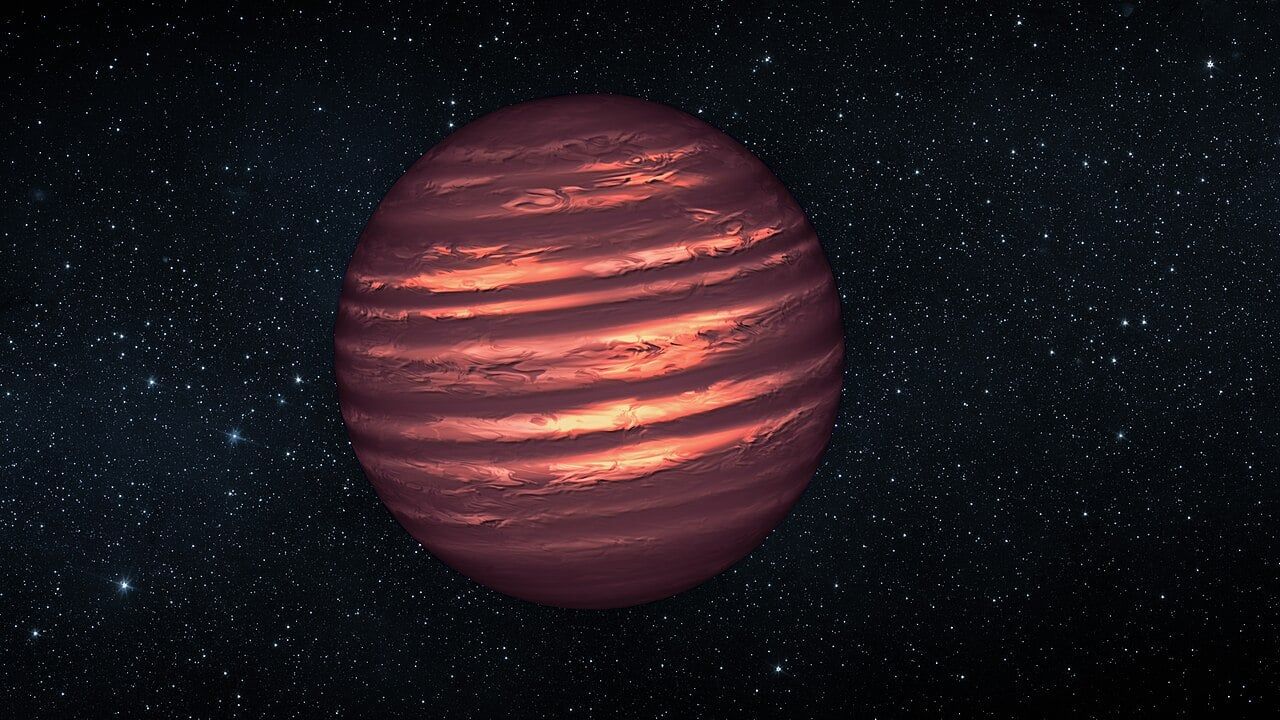
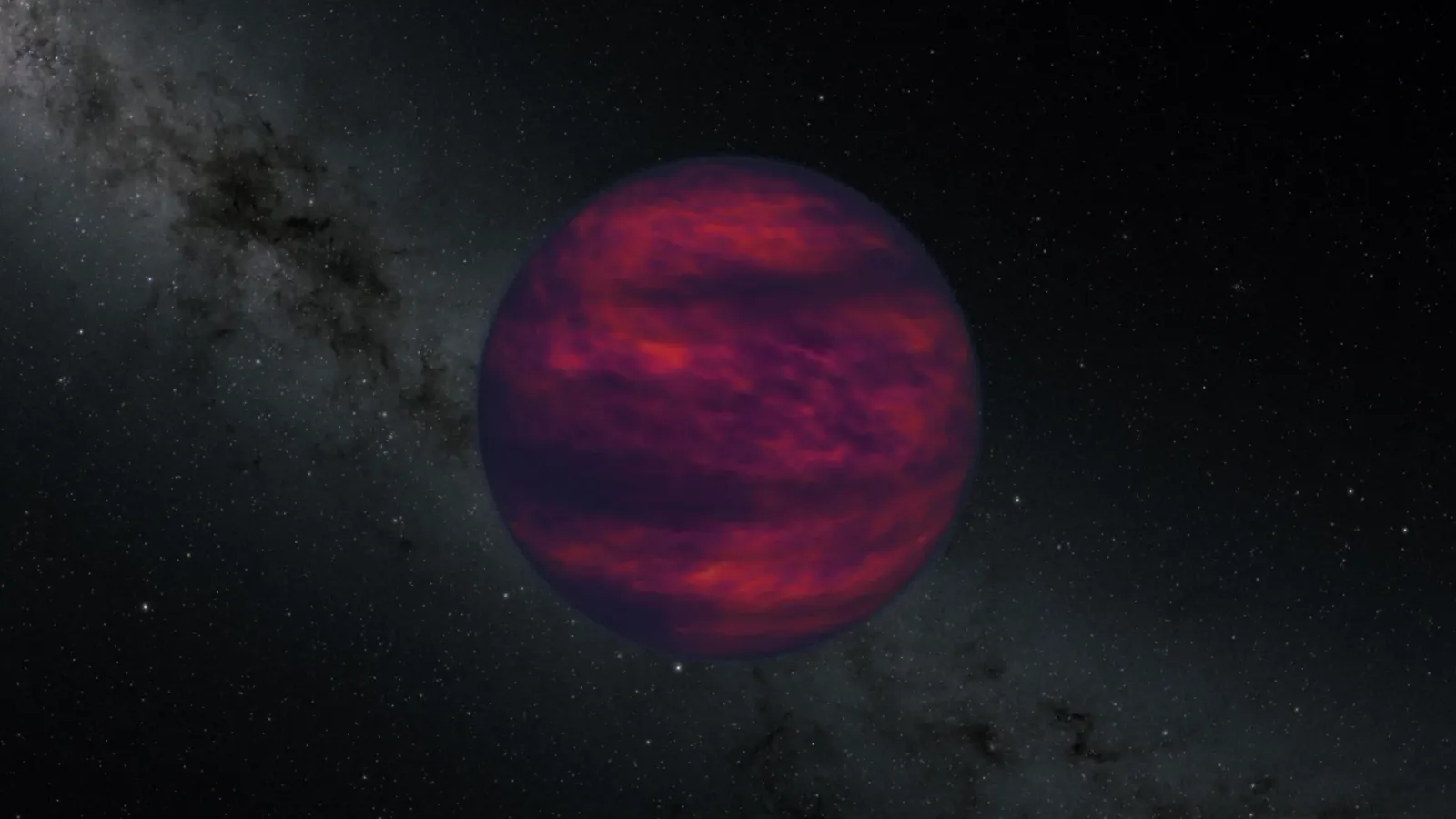
Astronomers tracking substellar objects have obtained comprehensive infrared spectra for 37 nearby brown dwarfs, revealing atmospheric chemistries that diverge significantly from standard computer simulations.1 The observations, recorded by NASA's SPHEREx space telescope and published in The Astrophysical Journal, trace how these unattached bodies cool from incandescent temperatures down to subfreezing conditions.12 Brown dwarfs form out of collapsing gas clouds in the same manner as stars, yet they never acquire sufficient mass to trigger sustained hydrogen fusion.23 Lacking parent stars to illuminate or warm them, the objects wander alone through space, cooling continuously across billions of years as their internal heat radiates into the void.23
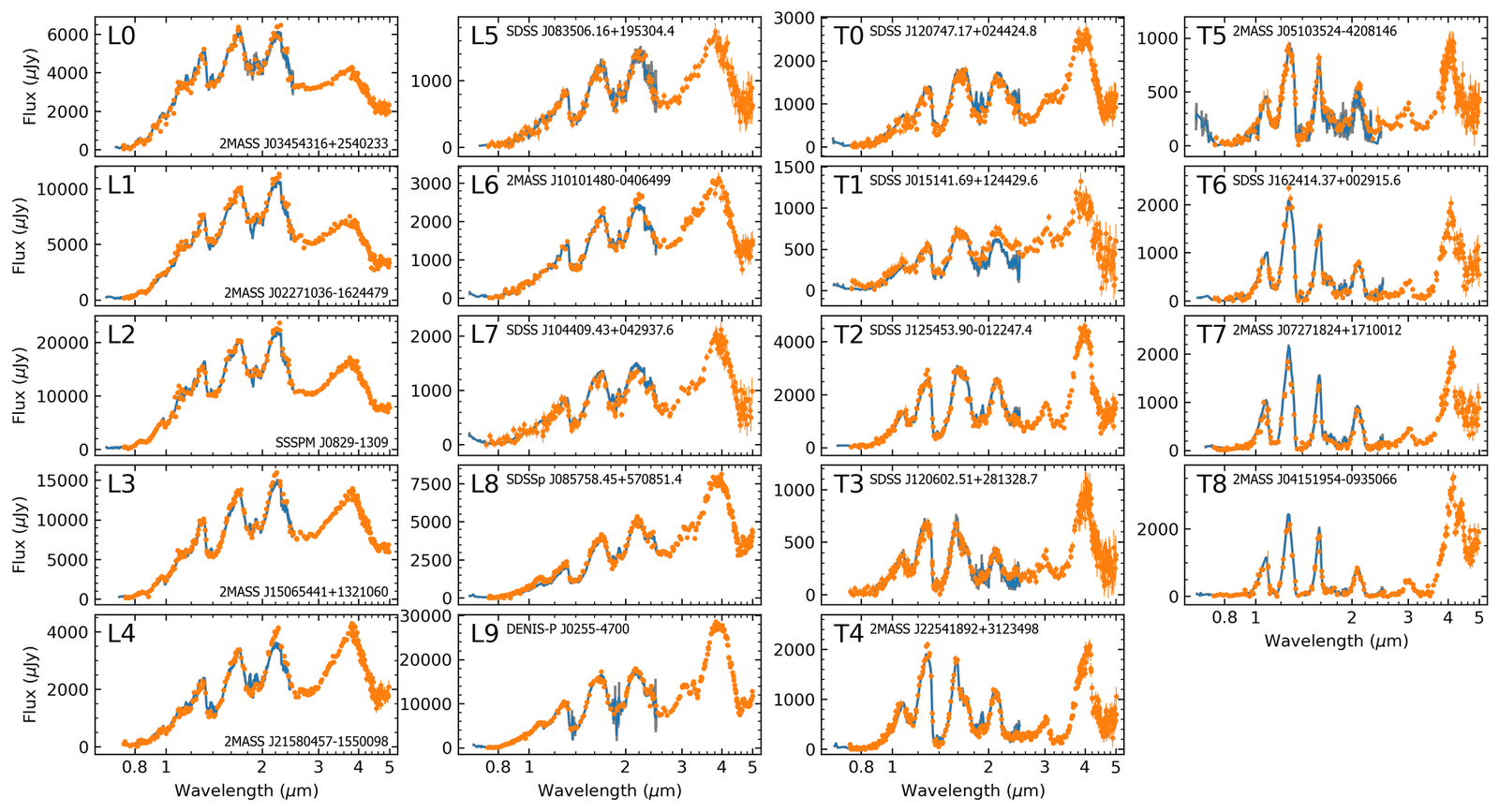
The surveyed sample spans a wide temperature baseline, extending from 2,200 degrees Celsius down to minus 20 degrees Celsius.12 In astronomical classifications, this sequence runs from spectral type L0 through Y4, capturing objects across several evolutionary phases. Spectral analysis showed atmospheres laden with water, methane, carbon monoxide, and carbon dioxide.12 However, when the researchers tested five leading theoretical models against the gathered data, the simulations struggled to reproduce the finer atmospheric structures, particularly where cloud decks form and dissolve.1
“They’re kind of goth,” said Zafar Rustamkulov, the study’s lead author and a researcher at Caltech’s IPAC.12 “Unlike exoplanets, free-floating brown dwarfs are completely independent celestial objects that will fade into eternity alone. We’re still learning how complex they are.”12
Infrared observations above Earth's atmosphere
The SPHEREx observatory, formally known as the Spectro-Photometer for the History of the Universe, Epoch of Reionization, and Ices Explorer, launched into orbit in March 2025.12 Although designed primarily to map the cosmic distribution of distant galaxies and inspect interstellar ices, the satellite conducts an all-sky survey with capabilities tailored to substellar astronomy.12 The instrument splits incoming light into 102 contiguous spectral bands spanning from 0.75 to 5 micrometers.1 Ground-based observatories cannot reliably view several of these infrared bands because water vapor in Earth's atmosphere absorbs the radiation before it reaches the surface.12
“From orbit, SPHEREx sees wavelengths of light that are basically impossible to see with telescopes on the ground because water in Earth’s atmosphere absorbs them,” Zafar Rustamkulov said.2 “We are picking up light from the deep, red clouds of brown dwarfs all over the sky.”2
Previous large-scale surveys of brown dwarfs relied heavily on broadband photometry from instruments such as the Two Micron All Sky Survey and the Wide-field Infrared Survey Explorer.4 Those combined filters sampled brown dwarf light at an effective resolving power of R roughly 5 to 8, which blended distinct molecular signatures together into coarse color bins.4 By contrast, SPHEREx delivers a resolving power between R 40 and 120 across its wavelength grasp. This allows astronomers to capture more than 80 percent of the total radiant output for most brown dwarfs while clearly distinguishing discrete absorption bands.
Cloud transitions across the cooling sequence
The spectra chart distinct chemical and physical transformations as the brown dwarfs lose thermal energy.1 At temperatures near 2,200 degrees Celsius, the atmosphere supports airborne clouds formed of liquid iron and silicate mineral grains akin to terrestrial rocks.1 As an object cools below roughly 1,100 degrees Celsius, these mineral clouds sink into deeper layers beneath the observable photosphere.1 Meanwhile, methane signatures strengthen, altering how thermal radiation escapes into space.1
Across the transition between 727 and 427 degrees Celsius, corresponding to roughly 1,000 to 700 kelvin, SPHEREx captured a rapid decline in the absorption signatures of carbon monoxide and carbon dioxide.1 Over this same temperature range, methane absorption altered far more gradually.14 Standard thermochemical equilibrium dictates that cooling gas mixtures should favor methane over carbon oxides, but the exact pace of that conversion depends on vertical atmospheric mixing.14
In the coldest brown dwarfs studied, which fall below zero degrees Celsius, atmospheric compositions approach those observed on giant planets like Jupiter and Saturn.13 Sulfide and chloride clouds condense, and ammonia bands begin to develop. Because these objects possess no external source of radiation, their entire thermal structure is governed by heat rising from their contracting interiors.13
Discrepancies in theoretical modeling
To interpret the physical parameters of brown dwarfs, astronomers rely on numerical atmosphere models.13 The research team evaluated the measured spectra against five prominent model grids: Sonora Diamondback, Sonora Elf Owl, BT-Settl, ATMO2020, and ATMO2020++.34 While the models replicated the broad shift toward methane at lower temperatures, they exhibited substantial systematic errors when matching detailed spectral peaks.14
In particular, the models failed to reconcile flux levels in the near-infrared J, H, and K bands simultaneously with the transmission window near 4 micrometers.4 The discrepancies became especially pronounced for objects undergoing the transition between spectral classes L and T, where silicate clouds submerge.31 Across this threshold, the observed data aligned far better with Sonora Elf Owl models configured with weak vertical atmospheric mixing, characterized by a diffusion coefficient of 10,000 square centimeters per second, compared to models assuming stronger mixing rates.4
“The state-of-the-art models are capturing the general chemical trend, but when it comes to these cloudy transitions, the models are struggling to match the data,” Zafar Rustamkulov said.12 “No two brown dwarfs are alike. Even at the same temperature, their spectra look quite distinct.”12
These modeling mismatches carry consequences for broader astronomical measurements.13 Because astronomers cannot measure the physical dimensions of isolated field dwarfs directly, they derive mass, radius, and age by fitting synthetic spectra to observed data.31 When model atmospheres fail to simulate cloud clearing accurately, the resulting physical parameters become unreliable.14 For WISE 0855, the coldest known brown dwarf in the sky, differing model grids produced radius estimates that varied by factors of three to four.1
Expanding the catalog of dark worlds
Atmospheric weather on brown dwarfs has presented puzzles in earlier specialized observations.13 A 2024 study using the James Webb Space Telescope identified anomalous infrared emission from methane at 3.3 micrometers on a cold brown dwarf.1 That spectral feature indicated unexpected heating in the upper atmosphere, potentially driven by auroral currents.1 While targeted observatories can inspect individual candidates with high resolution, SPHEREx provides an extensive survey capable of establishing population-level statistics.12
“Our paper concentrated on just three dozen, but we have thousands more that we are in the process of analyzing,” said study co-author J. Kirkpatrick of Caltech's IPAC.1 “I really want to see what bounds the universe places on the variety of brown dwarfs.”1
The study also included separate comparisons for brown dwarfs exhibiting low surface gravity, which indicates younger ages prior to gravitational contraction, and low metallicity, representing ancient objects poor in heavy elements.3 In both groups, spectral patterns diverged systematically from standard field dwarfs of identical temperature classification.13 The SPHEREx science team, which includes project scientist Olivier Dore and researcher Michael W Werner at the Jet Propulsion Laboratory along with Matthew Ashby, Tzu-Ching Chang, Shuang-Shuang Chen, Asantha Cooray, Brendan Crill, and Rachel Akeson, is continuing to catalog thousands of additional brown dwarf candidates across the sky.42
“This journey has turned many of us into accidental meteorologists,” J. Kirkpatrick said.1 “We know how hard it is to predict weather on our own planet, and we realize it’s going to be just as challenging to explain the phenomena we see in these bizarre, cold objects.”1
The record
51 sentences trace to 4 sources.
-
1
TP
Tibi Puiu Document · zmescience.com · 12 Oct 2026 Countless Brown Dwarfs Drift Through Space Alone. Now, NASA Is Discovering Just How Strange the Atmospheres of These Failed Stars Can Get See the source
-
2
N
nasa.gov Official record · nasa.gov · 8 Oct 2026 NASA’s SPHEREx Telescope Sees Menagerie of Brown Dwarfs - NASA See the source
-
3
A
arxiv.org Paper · arxiv.org SPHEREx 0.75 to 5 𝜇m Spectra for a Sequence of Nearby Brown Dwarfs Preprint · may not have been peer reviewed See the source
-
4
A
arXiv Third-party reporting · alphaxiv.org · 1 Jul 2026 SPHEREx 0.75 to 5 $μ$m Spectra for a Sequence of Nearby Brown Dwarfs See the source