Coastal dinosaurs ate seaweed washed onto prehistoric beaches
Ancient plant-eating dinosaurs, crocodilians, and fish incorporated marine nutrients into their skeletons along Cretaceous shorelines, leaving a chemical trail in fossil tooth enamel.
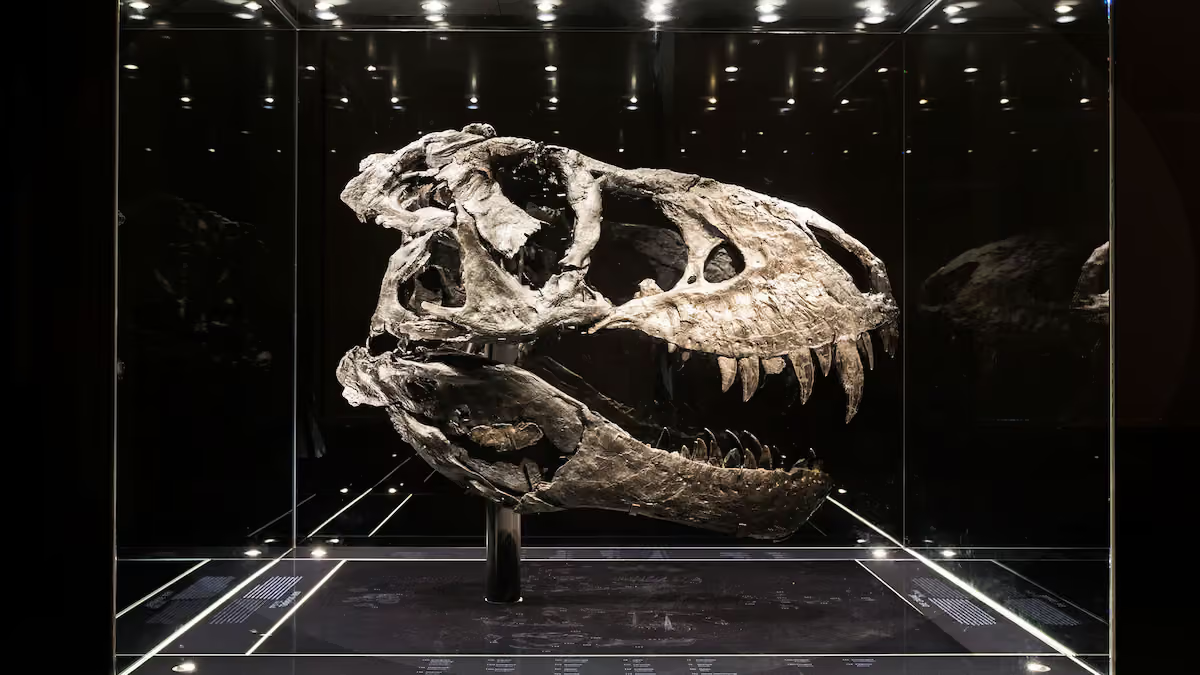
A severe coastal storm always deposits a feast along the high tide line.12 Dense mats of kelp, torn sea grass, stranded fish, and marine invertebrates wash ashore in tangled heaps, providing an immediate influx of energy for shore creatures.12 Modern ecologists call this movement of nutrients across the shoreline marine subsidization.12 When droughts or seasonal changes make terrestrial forage scarce, animals on modern coasts regularly walk down to the surf to browse on beach wrack or hunt the invertebrates sheltering beneath it.12 The habit sustains local food webs, yet paleontologists long regarded it as a modern ecological pattern rather than a deep feature of prehistoric life.
Evidence locked inside fossil teeth indicates that the same shoreline subsidy was feeding land animals 100 million years ago.12 A study published in the journal Frontiers in Ecology and Evolution by a research team led by geologist Clayton W. Forster of the University of Arkansas shows that dinosaurs, ancient crocodilians, turtles, and fish living along Cretaceous coastlines gathered nutrients from the sea.1 The findings establish the earliest known evidence of land animals drawing substantial dietary sustenance from marine drift, revealing that ancient terrestrial and oceanic ecosystems were closely intertwined.1
Every living plant incorporates carbon atoms from its environment into its tissues, and that carbon carries an indelible chemical signature based on the proportion of two stable forms, lighter carbon-12 and heavier carbon-13.12 Terrestrial plants that rely on standard photosynthesis absorb less heavy carbon, establishing a distinct baseline ratio in their leaves and stems.2 When an herbivorous animal grazes on those plants, its digestive system digests the plant matter and directs the carbon into the mineral crystal structure of growing tooth enamel.12 As carnivores hunt those herbivores, the same chemical ratio moves upward through each tier of the food chain, recording the original dietary source in fossilized teeth for millions of years.2
Before this discovery, paleontologists struggled to explain a persistent anomaly in Mesozoic fossils: the teeth of dinosaurs preserved near ancient waterways repeatedly registered higher concentrations of heavy carbon than standard terrestrial plants could explain.12 Many researchers assumed that dinosaurs possessed unique digestive physiology, or that local soils harbored unusual microbes.2 In contrast, Clayton W. Forster and colleagues hypothesized that the animals simply consumed food originating in the ocean, where marine algae and seaweeds naturally accumulate higher proportions of heavy carbon through modified photosynthetic processes.12
How did ocean nutrients reach inland dinosaurs?
Marine drift washed ashore along ancient shorelines provided an accessible food source that plant-eating dinosaurs consumed directly at the surf line.12 When ocean storms tore marine macroalgae from offshore beds, the resulting wrack lines formed dense piles of edible organic matter across the tide line.12 Herbivorous dinosaurs that grazed along the beaches ingested the seaweeds, absorbing marine carbon into their bloodstreams and incorporating it directly into their growing tooth enamel.12
Predators and scavengers then spread that oceanic carbon across terrestrial food webs.12 A meat-eating dinosaur hunting near the beach ingested the elevated carbon levels by preying upon plant-eaters that had grazed on marine vegetation, or by scavenging carcasses along the sand.12 Fish and crocodilians swimming in estuarine waters similarly fed on marine organisms or smaller animals that ate seaweed, passing the distinct chemical mark through both aquatic and terrestrial species across the coastal plain.12
Clayton W. Forster explained the chemical transfer in a public statement describing the findings: “We can identify that marine resources are passed along the food chain and incorporated in the minerals of bones and teeth of dinosaurs, crocodiles, turtles, and fish.”1 He noted that the phenomenon mirrored modern shoreline ecology, remarking, “We show that coastal terrestrial organisms in the greenhouse climates of the Cretaceous relied on marine resources to supplement their diets in a similar way that modern organisms do.”1
What did the fossil teeth reveal?
Fossil tooth enamel from coastal deposits across prehistoric North America consistently exhibited elevated heavy carbon ratios that were absent in fossils from inland environments.12 The researchers examined fossil assemblages dating to two specific geologic stages: the early Albian stage, roughly 113 to 107 million years ago, and the early Cenomanian stage, roughly 100 to 96 million years ago.1 During these intervals, the Western Interior Seaway split North America into eastern and western landmasses, creating thousands of miles of subtropical coastlines alongside the ancient Gulf of Mexico.1
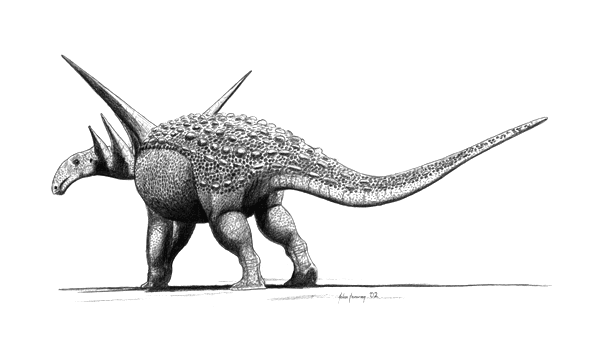
To establish a rigorous baseline, the scientists sampled tooth enamel from animals preserved in the Cloverly Formation of Wyoming and Montana, an inland deposit where marine influence was geologically absent.12 They compared those interior baseline values against fossil teeth gathered from multiple ancient coastal settings.12 These coastal deposits included the Dunvegan Formation of British Columbia and Alberta in Canada, the Wayan Formation and Draney Limestone of Idaho, the Antlers Formation of Oklahoma and Texas, the Woodbine Formation and Lewisville Formation of Texas, and the Mussentuchit Member of the Cedar Mountain Formation in Utah.2
Across all coastal formations, fossil tooth enamel displayed heavy carbon values running up to more than 5.5 parts per thousand above the expected values predicted for animals dining purely on terrestrial plants.2 In contrast, the inland Cloverly Formation specimens maintained standard terrestrial isotopic values.12 Furthermore, the elevated coastal signature held constant across different latitudes and throughout both time windows, proving that the chemical shift was not a localized accident of climate or geography.1
The ecological breadth of the signature proved decisive. Teeth from the predatory dinosaur Deinonychus antirrhopus, the armored herbivore Sauropelta edwardsi, diverse crocodilians, and aquatic turtles all carried the elevated carbon marker at the coast.1 Because the isotopic enrichment appeared in both aquatic predators and enormous terrestrial herbivores, the primary source of the carbon had to reside at the very base of the food web.1 Marine macroalgae and seaweeds represent the only widespread food source matching those ecological and chemical criteria.12
Why did one plant eater lack the marine signal?
One large herbivorous dinosaur, Tenontosaurus tilletti, exhibited normal terrestrial carbon ratios even when preserved in coastal deposits.1 The teeth of Tenontosaurus tilletti displayed carbon values matching modern animals feeding exclusively on land-based vegetation.1 Rather than weakening the team's conclusion, this solitary exception provided a critical scientific control for the investigation.1
Fossils buried beneath rock strata can sometimes absorb minerals from surrounding groundwater, a post-burial alteration known as diagenesis. If geochemical contamination from groundwater had artificially elevated the carbon values in coastal teeth, Tenontosaurus teeth buried in those same sediments would have absorbed the same minerals and exhibited the same enrichment.1 Because Tenontosaurus preserved purely terrestrial values side by side with enriched fossils, the researchers concluded that the elevated numbers reflected real dietary choices made while the animals were alive.1
The variation suggests that different dinosaur species occupied distinct feeding niches along the ancient coast. While armored herbivores and opportunistic carnivores took advantage of marine drift on the beach, Tenontosaurus apparently restricted its grazing to inland vegetation growing beyond the reach of the tides. Modern herbivores demonstrate identical divisions, with some coastal deer and sheep regularly foraging on kelp while others in the same habitat avoid the shore entirely.
What does the discovery leave unanswered?
The fossil dataset cannot reveal whether marine subsidization occurred on every prehistoric shoreline or remained restricted to North American ecosystems.1 The researchers lacked fossil material from equatorial and polar latitudes for the two time intervals studied, leaving open the question of whether global sea temperature influenced beach foraging.1 The findings represent a geochemical reconstruction based on stable isotope ratios, which identify broad dietary sources rather than specific plant species or feeding behaviors.12
In addition, the current evidence covers two temporal snapshots during the Cretaceous period.1 The data cannot determine whether dinosaurs began beachcombing during the earlier Jurassic period or whether other vertebrate groups maintained the practice across the mass extinction that followed.1 Clayton W. Forster, working alongside coauthors Celina A. Suarez, Thomas M. Cullen, Lindsay E. Zanno, and Ethan G. Hyland, highlighted that future excavations must sample a wider geographical distribution to trace how marine subsidies varied across different prehistoric climates.1
The study also alters how paleontologists reconstruct ancient environments. Previous research calculated prehistoric atmospheric carbon levels and plant diets by assuming dinosaur teeth reflected terrestrial vegetation alone.2 Recognizing that marine drift entered terrestrial food webs will require researchers to adjust their ecological models.2 More broadly, the discovery illustrates that the biological lifeline linking the open ocean to dry land has operated across deep time, feeding the largest land animals in Earth's history along the edge of the sea.
The record
47 sentences trace to 2 sources.
-
1
S
scientificinquirer Document · scientificinquirer.com · 14 Oct 2026 Dinosaurs Went Beachcombing for Seaweed, Fossil Chemistry Suggests See the source
-
2
F
Frontiers Third-party reporting · frontiersin.org · 30 Sep 2026 Frontiers | Marine subsidization of dinosaurian ecosystems See the source