A buried Oklahoma meteor crater is 100 million years younger than assumed
A redated collision aligns the fourth-largest impact structure in the United States with a severe Late Devonian biological crisis.
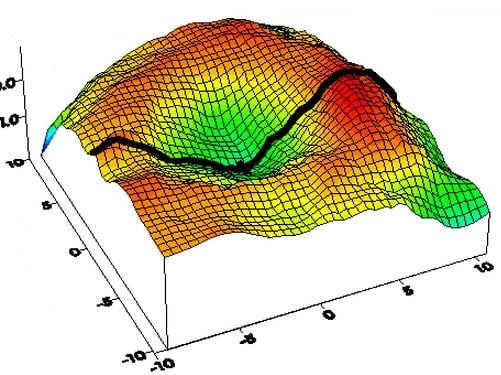
An ancient scar hidden thousands of feet beneath the surface of the Earth can quietly deceive geologists for decades. When a massive extraterrestrial object strikes the planet, the violent excavation alters the crust, yet surface weather and subsequent marine sedimentation can swiftly conceal the physical depression. The surrounding rocks and trapped fossils often supply the initial clues about the timing of the strike, but subsequent geological events can leave deceptive markers that point to the wrong epoch entirely.
That chronological dislocation recently dissolved beneath the plains of northern Oklahoma. A new investigation has revealed that the subterranean Ames crater formed roughly 100 million years later than long assumed.1 Rather than belonging to an ancient spike in Ordovician collisions, the impact occurred approximately 370 million years ago, placing the event squarely alongside the Frasnian-Famennian mass extinction, a planetary biological crisis that decimated ancient marine life.1
To understand how an impact date shifts by nearly 100 million years, it helps to follow the physical journey of a crater across deep time. When a massive space rock hits the surface, the kinetic energy compresses the targeted rock, vaporising near-surface material and shattering the underlying crust. If the strike occurs in a marine basin, ocean currents and settling sediment immediately begin drifting into the hollow, laying down strata of mud, sand, and the shells of whatever marine creatures inhabit the waters above. Over millions of years, those sediments lithify into solid rock, burying the original excavation beneath younger layers.
Geologists evaluating such a buried structure originally relied on the fossils recovered from the surrounding strata to deduce its age. If the rocks inside or adjacent to the hollow contain fossilised animals from a known period, researchers historically inferred that the depression formed during that same window. However, fossils can drift into a pre-existing depression or survive in bedrock shattered by a much later event, leading to significant dating errors.
How did an ancient meteor crater remain hidden beneath Oklahoma?
An ancient meteor crater stayed hidden beneath Oklahoma because a shallow ocean covered the excavation site shortly after impact, burying the depression under thick layers of marine sediment.1 At the surface today, no visible topographic rim or circular depression hints that a massive celestial body struck the area.1 The subterranean structure measures approximately 10 miles, or 16 kilometers, in diameter, making it the fourth-largest impact crater in the United States.1
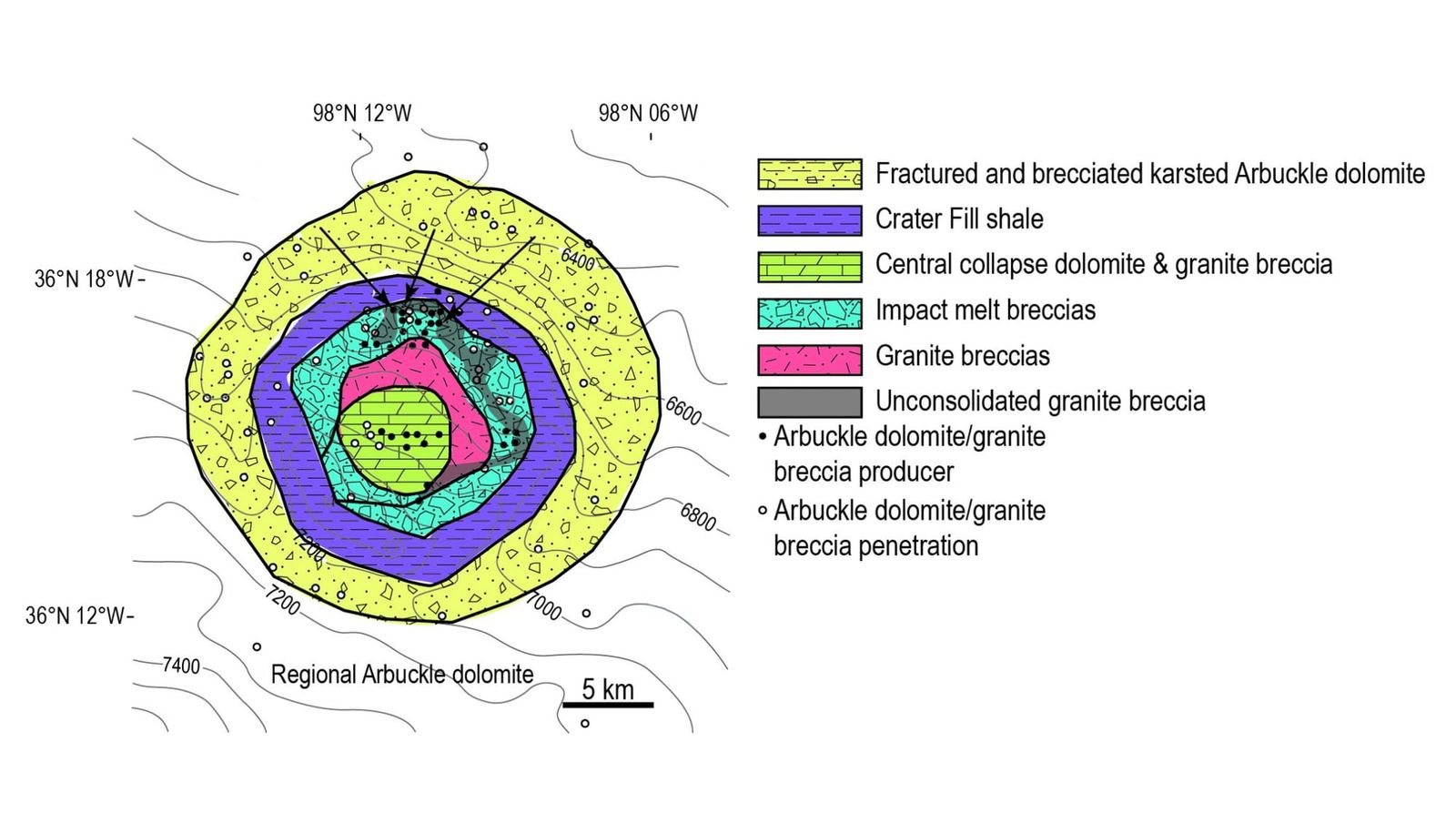
The structure formed when an asteroid roughly the size of the Eiffel Tower slammed into the planet at a velocity exceeding 70,000 miles per hour, or roughly 110,000 kilometers per hour.1 The force of the strike blasted through the seabed, carving a deep basin that was gradually covered by subsequent seafloor deposits. Because the geological scar sat completely entombed beneath hundreds of feet of younger rock, surface surveys showed no trace of the cataclysm.
The feature came to light only in 1991, when commercial oil exploration crews inadvertently drilled into the structural rim while prospecting for petroleum reserves.1 The formation was subsequently named after the small town of Ames, which sits directly above the buried site.1 In later years, geophysicists deployed ground-penetrating radar, an imaging technique that uses reflected electromagnetic pulses to map subterranean interfaces, to chart the hidden boundary and geometry of the impact zone.1
Early assessments of the drill cores linked the depression to the Ordovician meteor event around 467 million years ago.1 That interval saw an exceptionally high frequency of large extraterrestrial bodies striking Earth, an influx attributed to the catastrophic breakup of a single parent asteroid in space.1 Because paleontologists discovered fossilised marine organisms from the Ordovician period within and around the Ames formation, scientists concluded for more than three decades that the crater originated during that ancient wave of cosmic debris.1
What makes microscopic crystals reliable clocks for cosmic collisions?
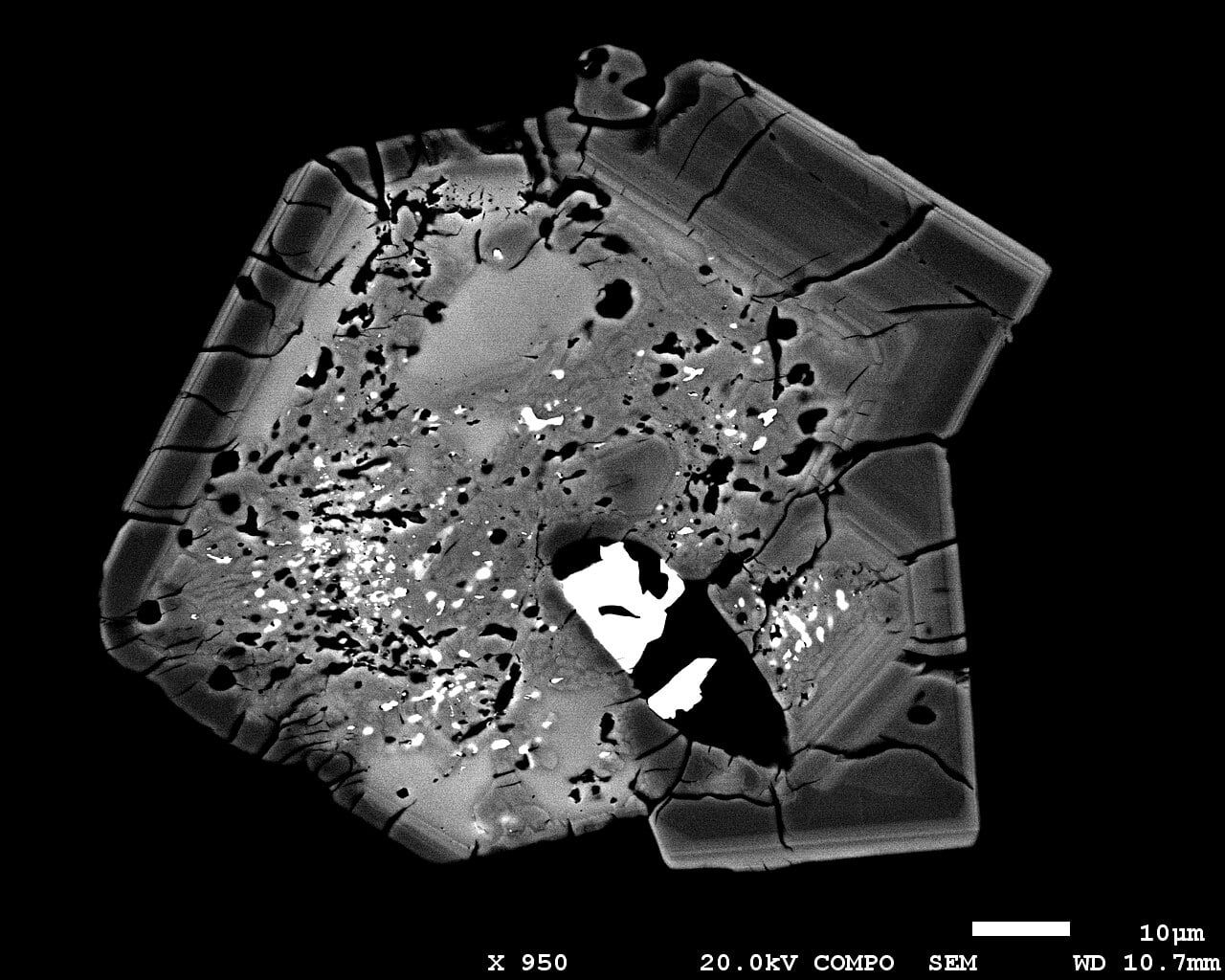
Microscopic zircon crystals serve as dependable geologic clocks because their crystalline lattice of zirconium silicate withstands weathering while preserving structural fractures caused by intense heat and pressure. These mineral grains occur in minute quantities throughout most terrestrial rock systems, including many of the oldest known formations on Earth.1 Because the mineral is exceptionally durable, the exterior of a grain can survive repeated cycles of erosion, yet its interior crystal structure records the extreme physical shock delivered by an asteroid strike.
In a study published on July 7, 2026, in the journal Meteoritics and Planetary Science, researchers turned to these microstructures to reassess the subsurface rocks of the Oklahoma site.1 Elizabeth Catlos, a geologist and planetary scientist at the University of Texas at Austin Jackson School of Geosciences and the lead author of the study, collaborated with colleagues to extract zircon fragments trapped within the crater materials.1 The team examined microscopic deformation patterns within the mineral grains to determine precisely when the shockwave fractured the mineral lattice.
The microscopic analysis yielded an age of 370 million years ago, indicating that the impact took place roughly 97 million years later than the Ordovician window previously accepted by geologists.1 The structural evidence within the crystals consistently pointed to the younger timeframe across multiple tests. "No matter what technique we used, it was coming back to this younger signal," Catlos said in a statement accompanying the research.1
Danny Stockli, a study co-author, geologist, and dean of the Jackson School of Geosciences at the University of Texas at Austin, highlighted the broader utility of these mineral grains in reading early terrestrial history.1 "These small crystals allow us to go back in time and learn about the major changes to Earth's ancient landscapes," Stockli said in the statement.1 "It would be great to do this for more of the meteor impact sites across the continent so we could get a more accurate timeline for these major events."1
How does the revised impact date connect to a mass extinction?
The revised impact date connects the collision to a mass extinction by placing the strike directly within the timeline of the Frasnian-Famennian biotic crisis roughly 370 million years ago.1 Also designated as the Kellwasser event or the Late Devonian mass extinction, this episode ranks as one of the five major extinction events documented in Earth history. The die-off began approximately 372 million years ago and persisted across several million years, ultimately wiping out as much as 50 percent of all marine species as oceanic waters lost vital dissolved oxygen.1
The new timeframe severs the Ames crater from the Ordovician meteor event and seats it directly inside this prolonged evolutionary crisis. "With this research, we're basically taking a major pawn out of the Ordovician Meteor Event and dumping it into the Frasnian-Famennian event, and saying, 'This is where this impact belongs,'" Catlos said.1 The reclassification demonstrates that relying solely on fossil evidence from surrounding sediment layers can anchor an impact to the wrong geological period.
The findings do not indicate that the Ames impact served as the primary trigger for the Frasnian-Famennian extinction.1 Geoscientists generally attribute the broader Devonian crisis to protracted global cooling driven by sustained volcanic activity and subsequent ocean stagnation.1 The authors noted that the blast from an Eiffel Tower-size projectile would have hurled dense clouds of dust and particulate matter high into the atmosphere, potentially magnifying regional climatic cooling and adding environmental stress to ecosystems that were already collapsing.1
The revised age of the Ames structure reflects a growing trend in impact geology, where refined zircon analysis has repeatedly overturned historical timelines. In July, scientists examining the North Pole Dome crater in Australia established that the structure formed roughly 500 million years later than initial surveys suggested.1 Similarly, research conducted in 2025 on the Stac Fada Member impact formation in Scotland revealed that the strike occurred roughly 200 million years later than earlier models had calculated.1
The study was dedicated to co-authors Andrew Parisi and Michael Brookfield, who passed away before the paper reached publication.1 Their collective findings underline that mapping the true chronology of cosmic strikes across North America requires direct microscopic testing of shock-bearing minerals, ensuring that ancient impacts are evaluated alongside the exact environmental epochs they helped shape.
The record
29 sentences trace to 1 source.
-
1
HB
Harry Baker Document · livescience.com · 14 Oct 2026 One of America's biggest meteor craters is 100 million years younger than we thought — and coincided with a global extinction event See the source