Young hammerhead sharks gather in large numbers along crowded Australian surf beaches
Drone surveys reveal dozens of juvenile scalloped hammerheads schooling in shallow surf zones, indicating that heavily developed resort coastlines provide seasonal refuge for a critically endangered marine predator.
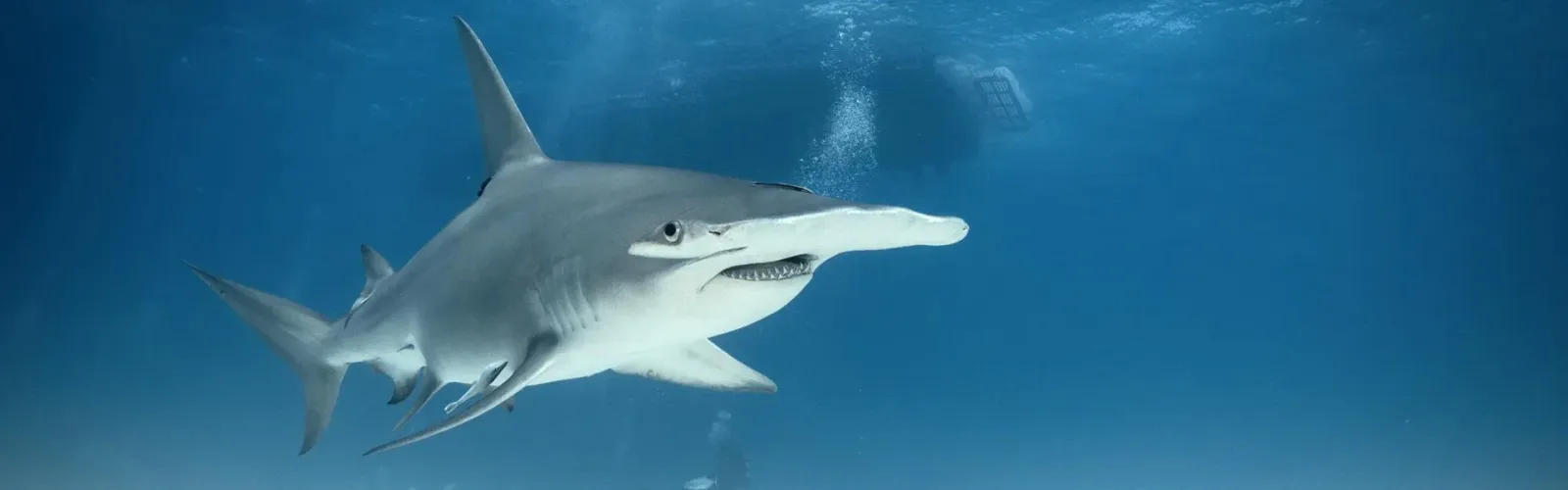
Swimmers and surfers sharing shallow coastal breaks with schools of apex predators sounds like an improbable encounter. Along dynamic stretches of shoreline where human recreation concentrates, large marine animals are usually assumed to stay farther out to sea, passing through only by accident. Yet along some of the most frequented beaches in subtropical Australia, dozens of young hammerhead sharks gather just behind the breaking waves, swimming together in warm, sunlit shallows within sight of crowded sandbars.
Why do young hammerheads gather in the surf?
Young scalloped hammerheads seek shallow coastal waters to find reliable food and avoid larger predators that hunt in deeper offshore channels. For a newborn or juvenile shark measuring roughly one metre in length, survival depends on balancing nutrition against predation. Large predatory sharks often avoid extremely shallow surf zones and turbulent waters near breaking waves, creating a protective buffer for smaller animals.1 At the same time, near-shore rocky headlands, reefs, and sandbars attract schooling baitfish, crustaceans, and smaller bottom dwellers, offering a steady food supply.1 When seasonal water conditions align, young sharks travel into these near-shore pockets, forming groups that take advantage of sheltered conditions before returning to deeper waters as they mature.
Scalloped hammerheads, known scientifically as Sphyrna lewini, face severe global pressures that make every aggregation site vital for conservation. The International Union for Conservation of Nature lists the species as critically endangered, following worldwide population declines exceeding 80 percent across three generation lengths.21 Heavy commercial fishing, targeted capture for shark fins, and accidental catch in coastal nets have depleted breeding stocks across tropical and temperate oceans.12 Because scalloped hammerheads reproduce slowly and produce modest litter sizes, local populations struggle to rebuild after sustained fishing pressure.12 In Australia, the species holds a conservation dependent listing under national environmental law, and Queensland authorities classified it as a completely protected no-take animal in 2024.2
What did the Queensland drone flights reveal?
Surveys conducted across southeast Queensland recorded aggregations of up to 100 scalloped hammerheads swimming together in shallow coastal waters.12 A study published in the journal Marine Biology analysed archived video collected by the Queensland SharkSmart drone program between September 2020 and December 2024 across nine coastal beaches.21 The research effort, led by Maddison C. Cross alongside colleagues from the Queensland Department of Primary Industries and regional universities, catalogued 84 distinct scalloped hammerhead sighting events.1 Across those encounters, observers logged a total of 2,696 individual shark observations within 200 metres of the sand.12
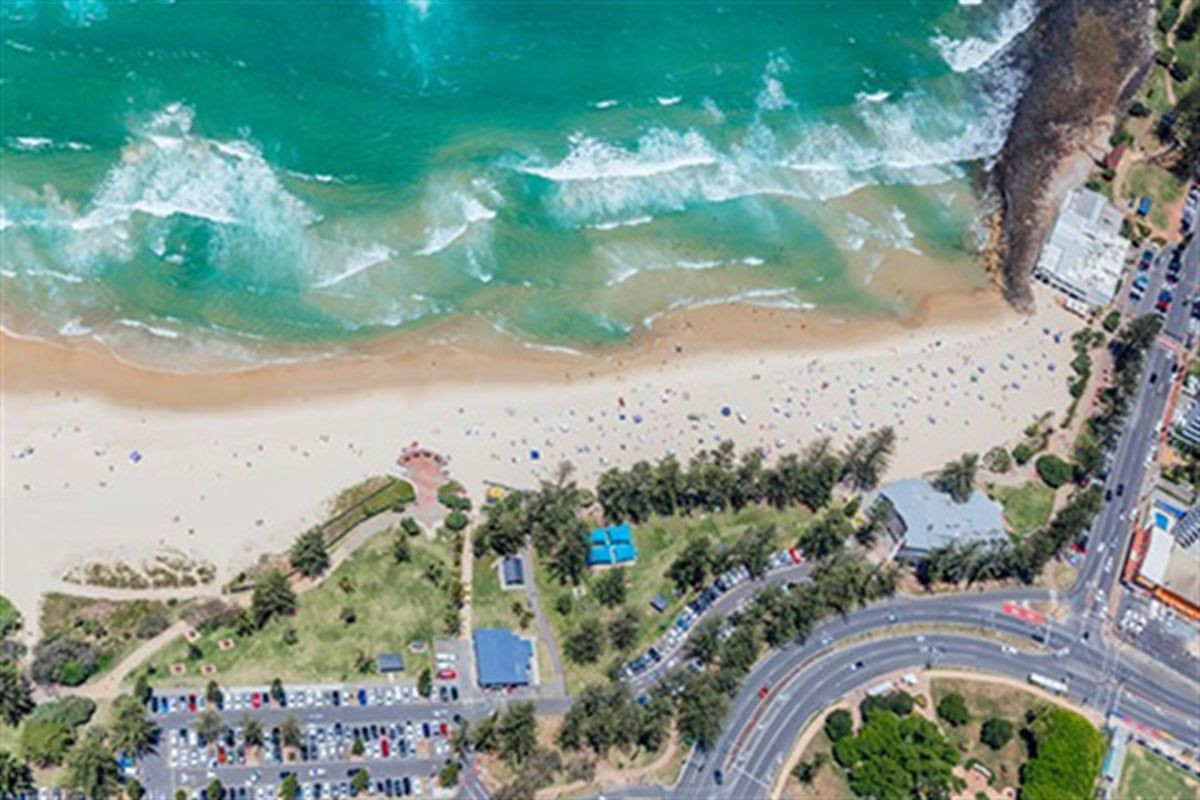
The largest gatherings took place along heavily visited shorelines, including Burleigh Beach on the Gold Coast and Noosa Main Beach on the Sunshine Coast.12 At Burleigh Beach, drone pilots documented groups containing up to 80 juvenile sharks swimming in tight formation near the rocky headland.21 At Noosa Main Beach, researchers estimated the largest single gathering at approximately 100 sharks.1 Most of the animals observed were juveniles, with an average total length of 109 centimetres and a standard deviation of 25 centimetres, or roughly 1.1 metres long.21
These observations concentrated heavily during specific months of the year, pointing to a predictable seasonal rhythm. The vast majority of sightings occurred between April and June, corresponding to the southern autumn and early winter.21 At Burleigh Beach, juvenile hammerheads repeatedly used the same sections of water adjacent to the headland in 2023 and 2024.31 At Noosa, researchers recorded localized aggregations during 2023, although similar gatherings were not detected in drone video over the same seasonal window in 2024.1
How did researchers spot and measure the sharks?
Researchers analysed ultra-high-definition video recorded by drones patrolling standardized transects behind the surf line. Surf Life Saving Queensland pilots operated drone surveys during mornings between 07:00 and 12:00 on weekends, public holidays, and school vacation periods.2 Each flight followed a 400-metre path roughly 200 metres offshore, behind the surf break, recording four-kilowatt resolution aerial footage designed originally to monitor coastal waters for public safety.21 Maddison C. Cross and the research team reviewed thousands of archived flight hours, identifying shark species through diagnostic morphological characteristics visible from above.23
To confirm that observed animals were scalloped hammerheads rather than related species, the authors examined high-resolution still frames of sharks swimming near the surface.2 The team looked for the species' characteristic scalloped cephalofoil, the broad hammer-shaped head, and its distinctive central indentation, which separates Sphyrna lewini from smooth hammerheads and great hammerheads.2 Body lengths were estimated by comparing shark outlines against reference objects of known size in the same visual frame, including surfboards, swimmers, and standard stand-up paddleboards averaging 3.15 metres in length.2
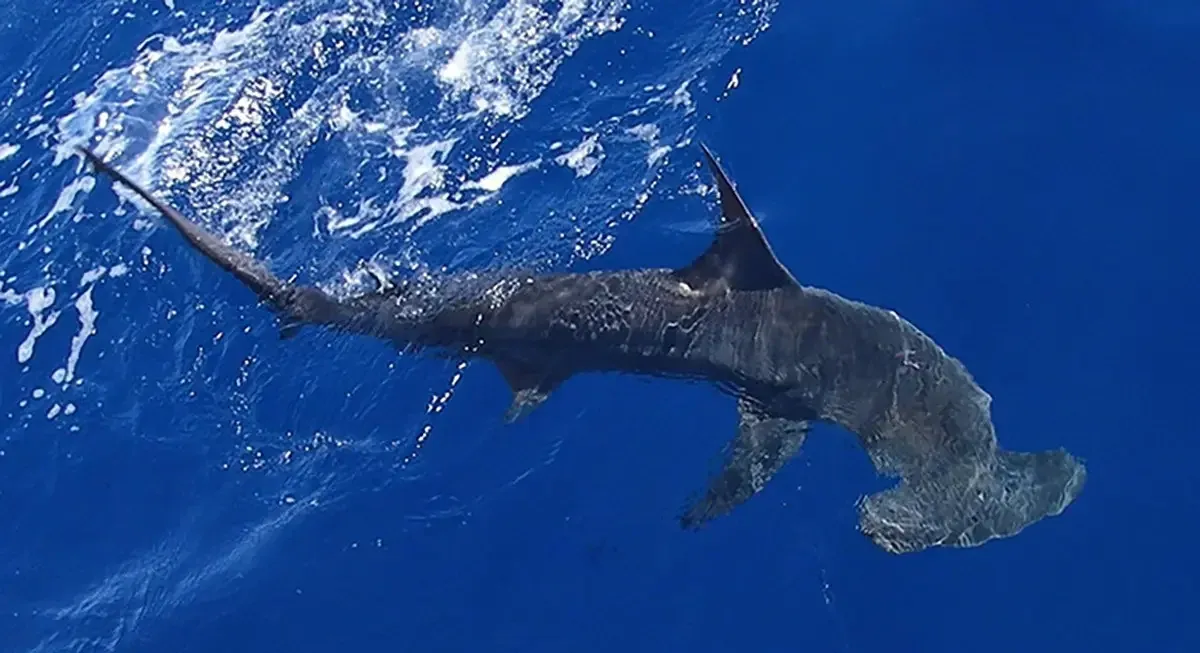
To understand the environmental drivers behind these sightings, the researchers constructed a generalized additive model to test how water clarity, time of day, season, and nearby animals influenced detection.23 The analysis revealed that water turbidity significantly reduced the probability of spotting a shark from the air, while clear surface conditions, morning flight times, and the presence of other marine life correlated with higher detection rates.21 Sighting frequencies varied substantially across the nine monitored beaches, with Burleigh Beach showing the most consistent recurring activity.23
What can these aerial surveys not confirm?
These aerial observations cannot determine how long individual sharks remain in the surf or confirm that the beaches function as true nursery grounds. In elasmobranch biology, designating an area as a nursery requires proving that young sharks use the site repeatedly over multiple seasons, reside there for extended periods, and occur in higher concentrations than in surrounding coastal waters.1 Because drones flying overhead cannot identify unique individual sharks, the total count of 2,696 observations includes repeat sightings of the same animals recorded during multiple flyovers.12
The absence of sharks in aerial video also does not demonstrate that hammerheads departed the area. Drones can only see through clear water, so increased turbidity, rough sea states, wind chop, and glare can conceal sharks swimming beneath the surface. For example, the lack of recorded hammerheads at Noosa Main Beach during the autumn of 2024 could reflect poor visual conditions or subtle changes in shark distribution rather than an abandonment of the bay.1 The footage captures surface behaviour within narrow morning flight windows, leaving movements during afternoons, nights, and offshore journeys unrecorded.
What happens next for hammerhead conservation?
Identifying that juvenile hammerheads repeatedly use urbanized surf beaches provides marine park planners with spatial evidence to design targeted protection measures. Traditional vessel-based surveys and netting programs often miss small sharks swimming in shallow surf zones due to gear hazards and limited water depth.12 Drones provide a non-invasive way to track habitat use without capturing or disturbing endangered animals.21 Scientists plan to combine ongoing aerial monitoring with acoustic tracking tags to assess residency times and identify migratory corridors connecting these beach aggregations with deeper offshore nursery areas.
The record
31 sentences trace to 3 sources.
-
1
JS
Jordan Strickler Document · zmescience.com · 16 Oct 2026 Huge Groups of Hammerhead Sharks Spotted Gathering Off Australia’s Popular Beaches See the source
-
2
L
link.springer.com Paper · link.springer.com Drone monitoring of endangered scalloped hammerhead shark Sphyrna lewini movements and habitat use on a dynamic urbanised coastline in Australia - Marine Biology Journal article See the source
-
3
E
era.dpi.qld.gov.au Official record · era.dpi.qld.gov.au Unveiling the secrets: scalloped hammerhead sharks (Sphyrna lewini) in Southeast Queensland, Australia - DPI eResearch Archive (eRA) See the source