Urban lot greening reduces neighborhood gun violence in impoverished city blocks
Tidying overgrown ground and putting up low fences removes physical concealment, encouraging outdoor community presence and cutting shootings by nearly a third.
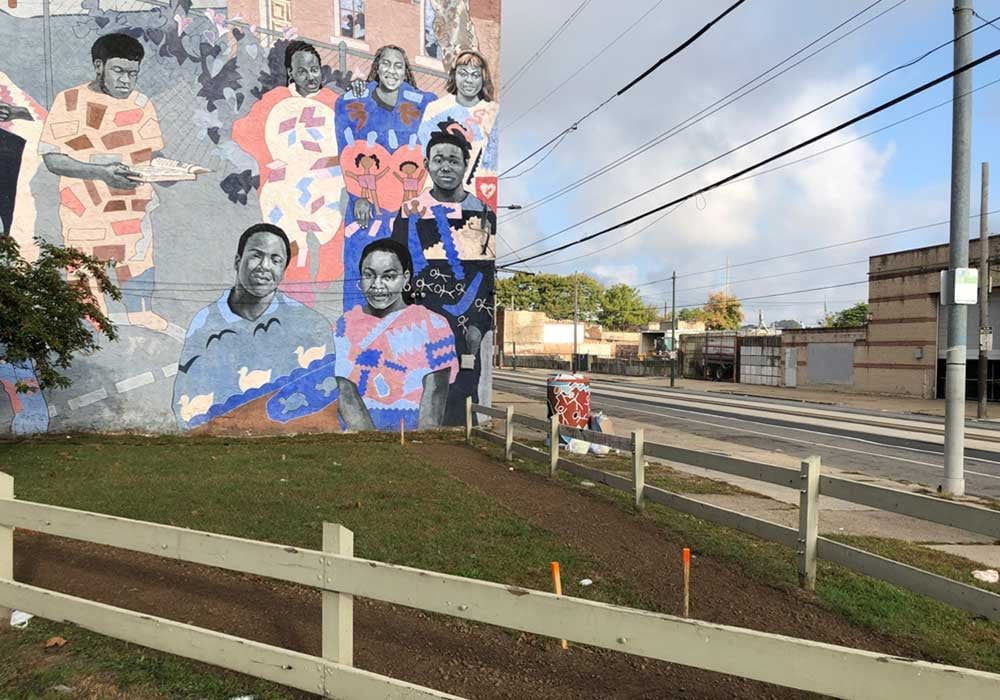
Across many American cities, abandoned terrain often shapes daily life long before anyone builds on it. Stripped of buildings and left untended, empty urban parcels gather waist-high weeds, accumulated trash, discarded tires, and cracked masonry. For the families living on adjoining streets, these neglected plots frequently register as persistent hazards rather than neutral open spaces.
When a vacant lot sits overgrown, it creates an environment where illegal items can be stashed away and illicit transactions can take place out of sight from neighboring windows. Residents who feel unsettled by the activity in front of their homes often withdraw indoors, keeping their doors shut and staying off the sidewalks. As normal street life fades, fewer people are outside to watch the block, creating even more seclusion for criminal activity. In neighborhoods where poverty leaves few public resources, that quiet retreat allows small spots of disorder to encourage violent conflicts.
A citywide field trial in Philadelphia demonstrated that intervening directly in these physical spaces can reverse that dynamic. Writing in the Proceedings of the National Academy of Sciences in 2018, a research team led by epidemiologist Charles Branas, with investigators from the University of Pennsylvania, Columbia University, and the United States Forest Service, reported the outcomes of randomly assigning hundreds of empty city parcels to landscaping cleanups, trash clearing, or complete neglect. In the poorest parts of the city, gun assaults fell by as much as 29 percent around parcels converted into clean grass lawns.1
How does tidying an empty lot deter shootings?
Tidying an empty plot and installing a low perimeter fence removes physical concealment for illegal behavior while drawing neighbors back outside onto the sidewalk. In an initial study of why property maintenance affects crime, ethnographers spent time observing daily routines in two Philadelphia neighborhoods, tracking where people gathered and where conflicts erupted.1 Their observations revealed that drug dealers regularly selected spaces in front of overgrown, empty parcels to operate, avoiding occupied homes where owners might call the police.1
Whenever homeowners chased dealers away from their front steps, those individuals simply moved down the block to set up near an unmonitored plot.1 The high weeds and accumulated rubbish provided quick escape routes during police raids and allowed people to hide illicit items from view.1 Local police officers and residents regularly described neglected parcels as storage lockers for unregistered firearms, though young neighborhood residents noted a more deliberate habit.1 Because a firearm was too valuable to abandon loosely in wet weeds where a stranger might seize it, individuals hid weapons inside parked cars positioned directly in front of vacant lots, keeping them within eye line without angering residential tenants.1
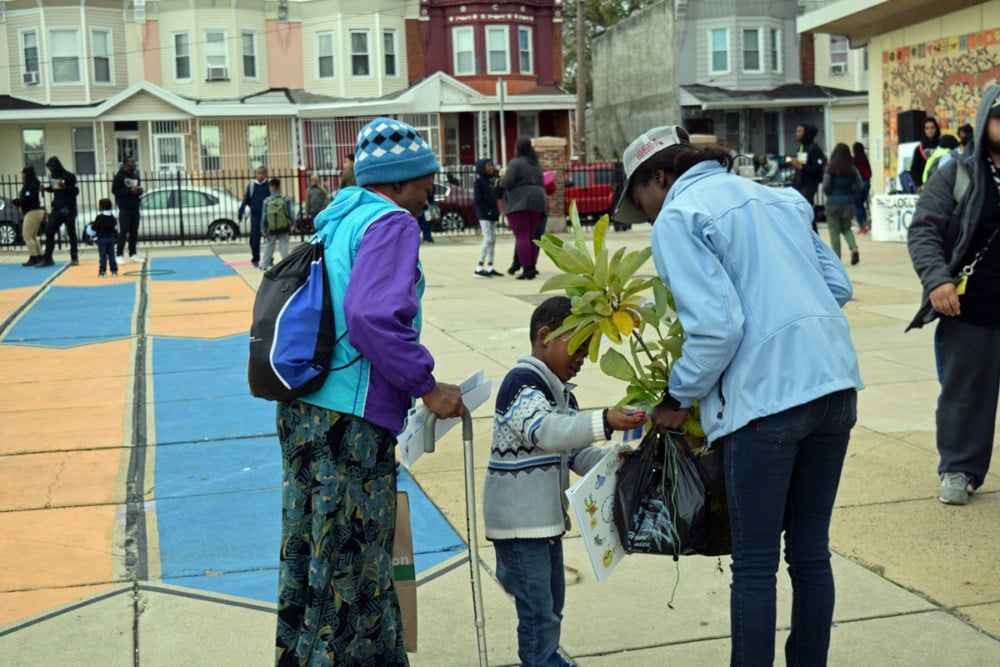
Clearing away the brush and putting up an open wooden fence stripped that functional utility away from the lots. The change also shifted community routines, as researchers found that neighbors living near greened lots were 58 percent less likely to say they avoided going outside due to safety concerns.1 Outdoor socializing, relaxing, and gathering increased by 76 percent among residents near the newly tended ground.1 With more adults sitting on their porches and talking along the sidewalk, casual surveillance rose, making it substantially harder to conduct illicit transactions or stage weapons unnoticed.
What did the randomized Philadelphia field trial uncover?
The randomized Philadelphia field experiment showed that targeted landscaping interventions led to a significant drop in gun assaults specifically within neighborhoods situated below the federal poverty line. Across the United States, roughly 15 percent of urban land is vacant or abandoned, representing a collective area roughly comparable in size to the nation of Switzerland.1 To evaluate whether physical restoration reduced violent crime, the research team randomly selected 541 vacant parcels across Philadelphia, grouped them into 110 distinct geographical clusters, and distributed those clusters across three study arms.1
The first experimental group received a complete physical transformation, in which contractors hauled away accumulated trash, graded the soil, planted grass seed, added several young trees, and erected a low wooden fence measuring roughly one meter tall with open gaps for pedestrian entry.1 The second experimental group underwent regular trash cleanup and mowing without new plantings or fencing, and both intervention groups received routine municipal maintenance.1 The third experimental group received no physical work and remained untouched as an observational control.1
The investigators analyzed official municipal crime records across the 18 months prior to the physical work and compared them against records from the 18 months following installation.1 Across the entire city, crime reductions near the treated parcels were modest, but the effects concentrated sharply in neighborhoods below the poverty line.1 In those lower-income tracts, gun assaults near treated lots fell by an adjusted 29 percent, alongside measurable drops in burglaries and disorderly conduct complaints.1
The headline 29 percent drop represents an adjusted figure that accounted for study deviations, such as treated lots that deteriorated or control lots that neighbors cleaned independently.1 When evaluating the lots purely on an intention-to-treat basis according to their original assignment, the recorded decline in gun assaults was roughly 10 percent.1 Other categories of police reports, including robberies and drug offenses, remained essentially unchanged.1 Furthermore, the drop in gun violence was not simply displaced around the corner, as crime did not rise in the adjacent blocks surrounding the treated parcels.1

What limits does the evidence reveal about urban greening?
The evidence is subject to several practical limitations, including a follow-up duration limited to 18 months and mixed findings across different municipal settings. Because the primary trial evaluated community outcomes over an 18-month window, the data cannot establish whether the reduction in violent crime endures over multiple decades without ongoing maintenance.1 However, earlier observational studies tracking the same urban greening approach recorded suppressed gun violence lasting past three years.1
Financial returns also depend on local crime baselines and the density of vacant land. A 2016 study by the same research group estimated that cleaning and greening a single Philadelphia lot cost roughly $1,600 to install, with about $180 in annual maintenance fees, generating an estimated $26 in taxpayer savings on gun violence costs for every dollar spent.1 By contrast, a 2022 pooled analysis evaluating eight different studies found that greening reduced gun violence by roughly 6 percent, with mowing alone producing no clear effect, and calculated that violence-related savings in typical lower-violence cities would offset only 8 to 21 percent of the total program costs.1
Neighborhood gentrification presents another documented complication for residents living near rehabilitated properties. During the Philadelphia study, ethnographers recorded emerging neighborhood friction and resentment regarding greening efforts in one rapidly developing district, whereas residents in deeply impoverished blocks almost uniformly welcomed the clean parcels.1 Although the investigators noted that fewer than 5 percent of the study parcels transitioned into commercial developments or new housing, housing cost pressures remain a common community concern.1
What happens next as cities adopt the greening strategy?
Municipalities and community organizations are expanding vacant land maintenance programs as a standard neighborhood investment rather than an academic experiment. In Philadelphia, the Pennsylvania Horticultural Society manages roughly 12,000 vacant parcels through its LandCare program, encompassing approximately one-third of the city's abandoned inventory at an annual operating budget of about $7 million.1 In 2025, Mayor Cherelle Parker included $8.5 million across a five-year budget framework to support continued municipal lot remediation by the organization.1
The operational framework has also begun expanding beyond its original municipal boundaries. In June, the program commenced work outside Philadelphia by undertaking greening across approximately 100,000 square feet of vacant land in Chester, Pennsylvania.1 In August, the Pew Charitable Trusts awarded a $1.15 million grant over four years to fund greening projects in the North Philadelphia neighborhoods of Nicetown and Tioga, pairing the installations with ongoing assessment from University of Pennsylvania researchers.1 The initiative demonstrates how cities can address neighborhood safety by sending landscaping crews with lawnmowers to restore neglected terrain.
The record
31 sentences trace to 1 source.
-
1
SC
Sanchana Charles Document · scienceblog.com · 16 Oct 2026 541 vacant Philadelphia lots were randomly assigned to greening, trash cleanup or nothing. In neighbourhoods below the poverty line, gun assaults fell by as much as 29 percent near treated lots. See the source