Giving up the plow can raise cash grain returns without organic premiums
Decades of Midwest field trials show dropping tillage cuts fuel and machinery expenses enough to lift crop margins, while companion cover crops struggle to break even on standard markets.
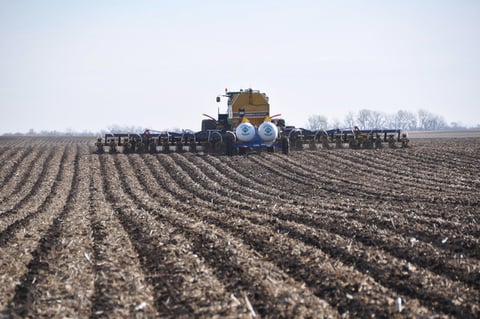
A grain farmer standing beside a field in late autumn usually faces an immediate financial calculation before deciding how to prepare the soil. Running heavy steel implements through the dirt requires substantial diesel fuel, equipment maintenance, and tractor operating hours. Leaving the earth undisturbed saves those immediate expenses, yet growers often worry that untilled ground could delay springtime planting, fail to warm up, or foster stubborn weeds that depress harvest yields. For standard commercial operations that deliver corn and soybeans to local grain elevators at prevailing commodity prices, every extra pass across a field chips away at narrow operating margins.
The economic stakes across the American Corn Belt are enormous because the vast majority of row-crop acreage still receives some mechanical tillage each season. Many growers assume that adopting regenerative practices such as eliminating tillage or sowing autumn cover crops requires organic certification and special retail premiums to cover the transition expenses. Because conventional grain elevators pay identical market prices regardless of how sustainably a field was managed, conservation practices must demonstrate direct economic viability through reduced operational expenses or sustained grain yields.
Understanding farm profitability requires walking through a simple balance sheet. A grower incurs direct operating expenses for diesel fuel, equipment wear, commercial fertilizer, seed, and chemical weed controls. Revenue is determined solely by the number of bushels harvested multiplied by the elevator commodity price per bushel. When a producer eliminates plowing, tractor hours drop immediately, reducing equipment maintenance and fuel bills. If crop yields hold steady while those machine operating expenses decline, the net money remaining after paying bills necessarily increases. Conversely, planting autumn cover crops introduces new expenses for purchased seeds, planting machinery, and springtime chemical termination, creating a cost burden that subsequent cash crop yields do not automatically repay.
How much money does eliminating tillage save on commercial grain acres?
Dropping the plow increased net returns by $34 to $93 an acre for corn and $30 to $86 an acre for soybeans across three decades of randomized trials in Ohio and Michigan, according to a study published on July 24, 2026, in the Journal of Agricultural and Applied Economics.1 Senior research economist Yifei Zhang of North Dakota State University and agricultural economist Roderick Rejesus of North Carolina State University evaluated long-term agronomic plots comparing continuous no-till management against conventional tillage performed with a chisel plow, a tractor-drawn implement that drags metal shanks through the soil profile to fracture compacted earth.1 Across all tested locations, the financial gains from no-till were primarily driven by lower tractor operating expenses rather than larger grain harvests.1
The long-term trials evaluated by the research team operated from 1982 to 2012 at Wooster and Hoytville in Ohio, and from 1989 to 2020 at the Kellogg Biological Station in Michigan.1 Across these 30-year spans, operating costs fell at every single experimental site when plowing ceased.1 Zhang explained that one consistent finding across all three study sites was the reduction in field-operation costs.1 The economic models in the paper calculated machine operations using custom farming rates, which reflect the commercial market price charged for hiring custom equipment operators to perform field tasks.1
Commercial farm monitoring networks in Illinois show a similar financial pattern across thousands of production acres. The Precision Conservation Management program, an initiative organized by the Illinois Corn Growers Association, analyzed a decade of field-level accounting records encompassing 7,445 commercial fields in 2024 alone.1 In its 2025 data book, the program reported that corn grown under continuous no-till left an average net return of $347 an acre for the farmer and landowner after accounting for operating expenses, compared with $315 an acre on fields tilled two or more times.1 The accounting records showed that 1,534 surveyed no-till corn fields incurred zero field-tillage costs, whereas the most heavily tilled fields averaged $43 an acre in mechanical tillage expenses.1

The Illinois records also revealed that fields given a single light tillage pass averaged $352 an acre, leading program analysts to describe light tillage passes as consistently the most profitable option while identifying no-till as a rising star.1 The program data book noted that no-till becomes a clear financial best bet whenever government conservation incentive programs provide payments of at least $5 an acre.1 Because the Illinois program records reflect working commercial farms that selected their own agronomic strategies, the figures document observed financial outcomes rather than experimental proof of direct causation.1
Why do cover crops often fail to generate positive cash returns?
Cover crops frequently reduce short-term net returns because the cost of purchasing seed, planting the stand, and terminating the vegetation in spring regularly exceeds the value of any immediate agronomic response. Unlike eliminating tillage, which subtracts machinery costs from farm ledgers, adding autumn cover crops introduces brand-new budget outlays. The farmer must purchase seeds such as cereal rye, operate machinery to drill the seeds into stubble after the autumn cash crop harvest, and apply herbicides in the spring to terminate the cover crop before corn or soybean planting begins. Although keeping the soil covered through winter helps suppress erosion and build organic matter, commercial grain buyers offer no premium price for grain produced on cover-cropped fields.
Enterprise budgets compiled in 2018 at Iowa State University’s Center for Agricultural and Rural Development demonstrated that cover crops commonly lose money in standard row-crop rotations.1 Agricultural economist Alejandro Plastina and colleagues surveyed growers across 11 states, analyzing 79 usable farm budgets from producers who had grown cover crops for an average of 3.94 years, primarily in Iowa, Illinois, and Minnesota.1 In those farm budgets, corn following a herbicide-terminated cover crop lost an average of $46.09 an acre when grown without conservation subsidy payments, and still lost $20.76 an acre even after incorporating government cost-share assistance.1 Soybeans performed better, capturing a net gain of $25.13 an acre when supported by cost-share payments.1
When averaged across a complete two-year corn and soybean rotation, the Iowa State budget models calculated an overall net loss of $42.92 an acre without cost-share subsidies and a net loss of $11.78 an acre when cost-share funds were included.1 A companion statewide survey of Iowa growers by the same researchers found that financial returns were consistently negative among operations that did not graze livestock on the cover crop or harvest it for livestock forage.1 The financial returns turned positive primarily for operations that both grazed the cover crops and received external cost-share payments.1
Satellite observations indicate that cover crops can also depress subsequent grain harvests in the near term. Ecologist Jillian Deines and colleagues analyzed satellite vegetation measurements across more than 90,000 agricultural fields in the Midwestern Corn Belt during 2019 and 2020 in a study published in Global Change Biology.1 Their remote-sensing analysis revealed that fields planted with cover crops for three or more consecutive years experienced an average yield decline of 5.5% in corn and 3.5% in soybeans, with only 0.6% of observed corn fields displaying a yield increase.1
On-farm trials managed by the Soil Health Partnership, a collaboration between the National Corn Growers Association and the Environmental Defense Fund, observed comparable margin pressures across working operations. In a 2021 financial report analyzing seven commercial operations, fields managed with conservation tillage alone returned $377 an acre.1 When cover crops were introduced alongside conservation tillage, net returns declined to an average of $307 an acre, with newer cover crop adopters averaging $267 an acre and experienced adopters achieving $363 an acre.1 The authors noted that conservation practices do not pay for themselves across all farm environments.1
What management strategies allow conservation practices to break even?
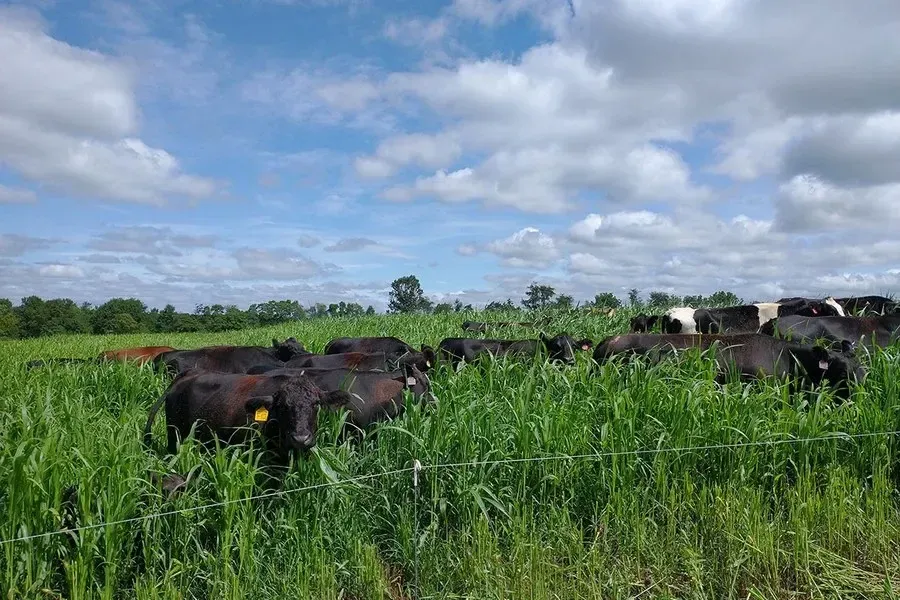
Integrating grazing livestock into cropping systems represents the most reliable management strategy for transforming cover crops into an immediate financial asset. When beef cattle graze autumn and spring cover crops, the animals convert vegetative biomass directly into salable meat gains or reduce the amount of stored winter hay a farmer must purchase. A 2019 technical bulletin from the Sustainable Agriculture Research and Education program estimated that grazing cover crops provides an annual forage return of $49.23 an acre.21 Under those grazing assumptions, net returns for corn averaged $17.87 an acre in the first year of cover cropping and rose to $67.13 an acre by year five, while soybean returns averaged $25.68 an acre in year one and reached $59.41 an acre by year five.21
Washington State University Extension agronomist Andrew McGuire noted that grazing remains the single cover crop practice that pays most reliably under current commodity market conditions.1 McGuire pointed out that calculating positive economic balances for ungrazed cover crops is exceptionally difficult and may take many years to materialize, especially when growers purchase diverse, expensive seed mixtures.1 He stressed that reducing synthetic fertilizer applications is not a standalone management practice, but rather an outcome that depends on successful soil biological processes.1 McGuire cautioned that the intensive management and specialized skills required to implement complex conservation systems require a clear economic incentive beyond merely matching baseline conventional returns.1
Expanding traditional two-year crop rotations to include small grains, forage legumes, and animal manure can also balance profitability while sharply curbing chemical expenditures. Agronomist Adam Davis of the US Department of Agriculture Agricultural Research Service and colleagues reported in PLOS One on an eight-year field study conducted from 2003 to 2011 at Iowa State University’s Marsden Farm.31 The researchers compared a conventional two-year corn and soybean sequence against three-year and four-year rotations that incorporated triticale or oat, red clover, and alfalfa alongside cattle manure.31 Across the established phase from 2006 to 2011, the four-year rotation delivered net returns of $913 a hectare, the conventional two-year rotation returned $953 a hectare, and the three-year rotation returned $965 a hectare, showing no statistically significant differences in profit among the systems.1
The extended rotations in the Marsden Farm trial achieved these comparable financial returns while reducing synthetic nitrogen fertilizer applications by up to 88% and cutting total herbicide application rates by 88% relative to the standard two-year rotation.31 The diverse rotations kept weed populations firmly in check, maintaining equal rates of weed seedbank decline over time.3 However, farm labor requirements increased by more than 33% in the longer rotations, and the entire economic system depended on maintaining local livestock to consume harvested alfalfa hay and supply manure nutrients.31
What do the field trial findings leave unresolved for commercial farms?
The long-term research figures reflect experimental plots and specialized farm budgets that do not capture every operational reality encountered on commercial acreage. The three-decade experimental plots examined by Zhang and Rejesus maintained input management protocols closer to agronomic optimums than typical working farms.1 In addition, the experimental calculations did not directly measure the financial losses or capital purchases that occur during the initial multi-year transition away from conventional tillage.1 The research models also applied custom machinery rates to value fieldwork savings, an accounting approach that can overstate practical dollar gains for growers who already own and house depreciated tillage equipment.1
National agricultural surveys confirm that most American commodity cropland remains subject to regular mechanical tillage despite documented operating efficiencies. Zhang noted that 2022 Census of Agriculture data showed no-till practices were used on 27.5% of total cropland, representing 105.2 million of 382.4 million acres.1 That proportion increased to 34.9% when considering harvested cropland alone, and reached 38.2% on cropland where producers explicitly reported their tillage practices.1 For corn acreage specifically, Department of Agriculture survey data indicated that approximately 36% of planted acres were managed under no-till systems in 2021.1
Zhang emphasized that no-till systems cannot be expected to generate identical financial benefits across every commercial field because physical outcomes depend heavily on local soil drainage, climate conditions, and historical management.1 Growers shifting away from conventional tillage encounter meaningful upfront equipment expenses, modified weed pressures, and variable spring soil temperatures.1 While skipping tillage operations offers immediate fuel and equipment savings, combining multiple conservation practices into a profitable commercial enterprise requires carefully balancing seed expenses, field operations, and livestock integration against the rigid realities of commodity markets.
The record
45 sentences trace to 3 sources.
-
1
JB
Justin Brown Document · scienceblog.com · 18 Oct 2026 Does regenerative farming pay a grower who never goes organic? Giving up the plow raised net returns by $34 to $93 an acre for corn and $30 to $86 for soybean across three decades of randomized trials in Ohio and Michigan. See the source
-
2
S
sare.org Third-party reporting · sare.org · 6 Jun 2019 When Cover Crops are Grazed - SARE See the source
-
3
J
journals.plos.org Third-party reporting · journals.plos.org Increasing Cropping System Diversity Balances Productivity, Profitability and Environmental Health See the source