Extreme heat threatens global rice harvests far more than models predicted
Short spikes above 30 degrees Celsius during flowering can leave grain husks empty, doubling projected harvest losses across Asia under modest global warming.
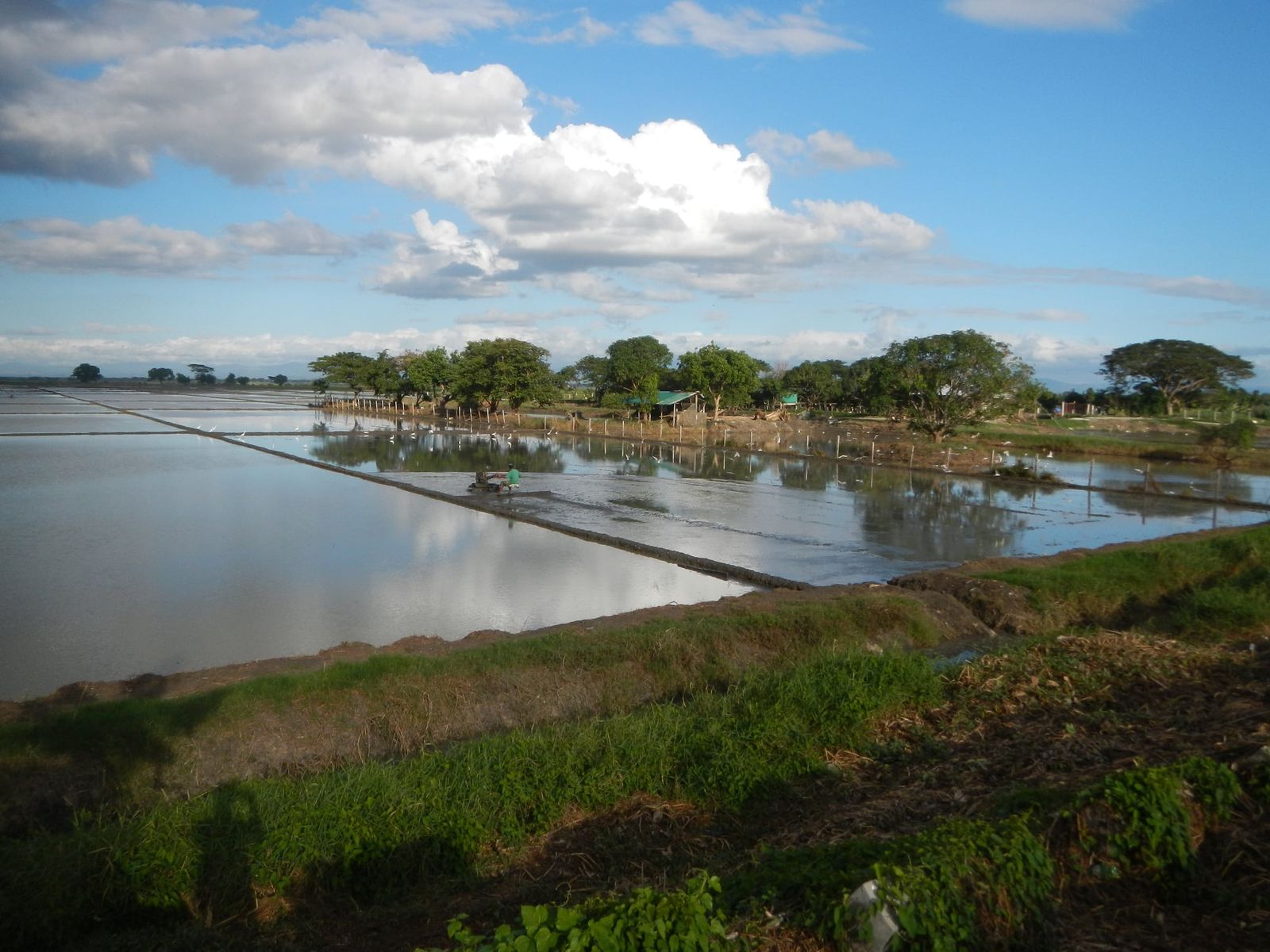
A rice paddy can look lush, green and completely healthy right up to harvest while concealing an invisible failure. The stems grow tall, the leaves spread wide and the heads emerge on schedule. Only when the husks are stripped away does the damage appear: inside the protective hulls, the grains never formed, leaving brittle shells where nourishing food should have developed. The crop produced abundant foliage, yet produced almost nothing to eat.
Rice provides the daily staple diet for more than half of the world's population.123 In large parts of Asia, where farming communities depend on stable harvests for subsistence and income, even a modest drop in supply can reverberate rapidly across regional markets and national economies. When international food prices spike, the burden falls hardest on lower-income households who rely on rice as their primary source of daily calories. How rising temperatures will alter future harvests is therefore one of the most pressing questions in agricultural research.
To understand why hot weather can cause such disproportionate damage, one must look at how rice develops. The plant passes through two broad phases: an initial vegetative stage when roots, stems and leaves develop, and a subsequent reproductive stage when panicles emerge, flowers open and kernels fill. Rice flowers open only briefly, often for just a few hours during the late morning.1 If ambient heat crosses a critical threshold during that narrow window, the pollen loses viability, fertilization fails and the plant cannot set grain.14 If scorching heat strikes during the subsequent weeks of grain filling, it disrupts the movement of nitrogen and carbohydrates into the kernel, producing cracked or shrivelled rice.14
Why did earlier climate forecasts miss this acute heat damage?
Computer simulations commonly used to project agricultural yields failed to register the catastrophic impact of short heatwaves because they evaluated warming primarily as a gradual change in seasonal average temperatures. A season that is one degree warmer on average sounds manageable, and in standard simulations it simply caused plants to mature slightly faster with marginally less vegetative biomass. But real weather does not deliver heat as a smooth, uniform increase. A small increase in average temperature typically arrives with a sharp increase in the frequency and intensity of severe heat spikes.
Existing crop models, which simulate plant growth in response to weather, soil conditions and management choices, largely overlooked the distinct biological vulnerability of rice during flowering. When a collaborative team led by Yiwei Jian of the Helmholtz Centre for Environmental Research and researchers at Peking University, the Potsdam Institute for Climate Impact Research and the International Rice Research Institute compared the output of seven prominent crop models against real-world observations, they discovered that existing simulations were essentially blind to brief episodes of high heat.345 Most of the models showed almost no decline in yield as the count of scorching days climbed, predicting harvest drops of just 0.1 to 0.4 percent per day of high heat.45
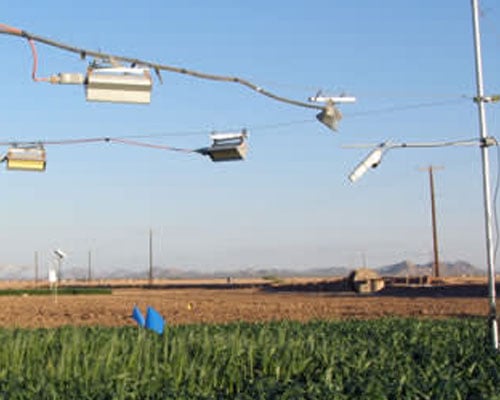
The physical reality captured in field experiments told a very different story. Researchers gathered and evaluated 214 observations from field-warming experiments across the globe, including 128 observations compiled from published literature across 17 sites and 86 observations from field trials at 12 major rice-growing locations in China.41 In these experiments, scientists placed infrared heaters or open-top chambers over growing rice to raise field temperatures while maintaining natural outdoor growing conditions.1 The empirical data showed that every additional day temperatures rose above 30 degrees Celsius during the reproductive phase reduced rice yields by 1.1 to 1.8 percent.54
How much harvest yield will the world lose under modest warming?
Accounting for the true damage caused by extreme heat spikes roughly doubles the global harvest losses anticipated from a single degree of warming. Under a scenario of 1 degree Celsius of global warming, the uncorrected crop models projected a worldwide rice yield reduction of 3.8 percent, with an uncertainty range of plus or minus 1.7 percent.1 Once the researchers corrected the models to reflect the observed sensitivity from the field-warming trials, the projected global loss jumped to 8.1 percent, with a revised uncertainty range of plus or minus 2.3 percent.15
Lead author Yiwei Jian noted that the discrepancy between the observations and the models appears to arise mainly because many current crop models do not yet capture heat damage in the reproductive stages of rice.36 Observations in the study indicate that this is exactly when the crop is particularly vulnerable, as panicles and grains develop.36
The revision alters the agricultural outlook unevenly across the globe, landing with exceptional force on South and Southeast Asia. In Pakistan, India and Bangladesh, projected yield losses increased more than threefold, rising from 2.1 percent in the unadjusted models to 6.6 percent under the corrected calculations.123 In Thailand, the Philippines and Myanmar, projected harvest declines grew from 3.7 percent to 7.7 percent, driven by the fact that these tropical regions already experience frequent temperatures crossing the 30-degree threshold during the growing season.43 In contrast, temperate growing areas in East Asian nations such as China and Japan saw model adjustments of less than two percentage points.4
Christoph Müller, a study co-author and researcher at the Potsdam Institute for Climate Impact Research, observed that the jump in projected losses emphasises the dominant role of heat extremes rather than average temperatures.36 Müller pointed out that when people consult a summer weather forecast to prepare for heat, they look for the daily high temperature rather than the daily average.36
What can these experimental results tell agricultural planners?
The findings come from controlled field experiments that isolate temperature from other environmental factors, which means they serve as an analysis of thermal vulnerability rather than a comprehensive forecast of future harvest volumes. The field experiments were conducted in irrigated paddy fields where water was managed deliberately to vary only temperature.4 In real agricultural landscapes, irrigated water provides an evaporative cooling effect that can keep temperatures immediately surrounding the plants somewhat lower than the regional air.4 Conversely, rain-fed rice paddies that depend entirely on precipitation could suffer far worse damage, as water scarcity and extreme heat compound each other.4
The projections also do not account for shifts in seasonal rainfall patterns or the fertilising influence of elevated atmospheric carbon dioxide concentrations, both of which will influence future plant growth in complex ways.13 Furthermore, the analysis applied adjustments derived from 214 field observations across seven specific crop models, which may not capture every regional microclimate or farming method practiced around the world.
Despite those caveats, the research demonstrates where agricultural adaptation efforts need to focus to prevent severe regional deficits. When the research team evaluated what shielded certain fields from the worst heat damage, soil characteristics emerged as a decisive factor.4 Fields with higher organic matter and rich clay content retained resilience against temperature spikes, whereas differences in local climate baselines and chemical fertiliser use offered little protection.4
Adapting global rice production will require targeted interventions before regional heat spikes become regular occurrences. Agronomists can adjust seasonal planting schedules so that the sensitive morning flowering window falls outside the hottest weeks of midsummer. Developing and distributing heat-tolerant rice varieties that maintain pollen viability during high heat, alongside improved water management and soil organic enrichment, provides farmers with practical mechanisms to protect crop yields as extreme weather becomes more frequent.13
The record
25 sentences trace to 6 sources.
-
1
S
scientificinquirer Document · scientificinquirer.com · 19 Oct 2026 Crop Models Have Underestimated How Badly Extreme Heat Will Hit Rice, Study Finds See the source
-
2
E
eurekalert.org Third-party reporting · eurekalert.org Global crop models underestimate rice vulnerability to extreme heat See the source
-
3
P
pik-potsdam.de Third-party reporting · pik-potsdam.de Global crop models underestimate how rice responds to extreme heat See the source
-
4
TH
The Herald Business Third-party reporting · biz.heraldcorp.com · 30 Jul 2026 Each extra day above 30°C cuts rice yields by 1%, study finds — double what climate models predicted See the source
-
5
P
publications.pik-potsdam.de Third-party reporting · publications.pik-potsdam.de Vulnerability to high temperature shapes global warming impacts on rice yield :: PIKpublic See the source
-
6
P