Stellar flares leave distinctive colour signatures across sparse telescope observations
A new algorithm identifies brief magnetic outbursts in isolated satellite snapshots by tracking simultaneous brightening and blueing across multiple optical bands.
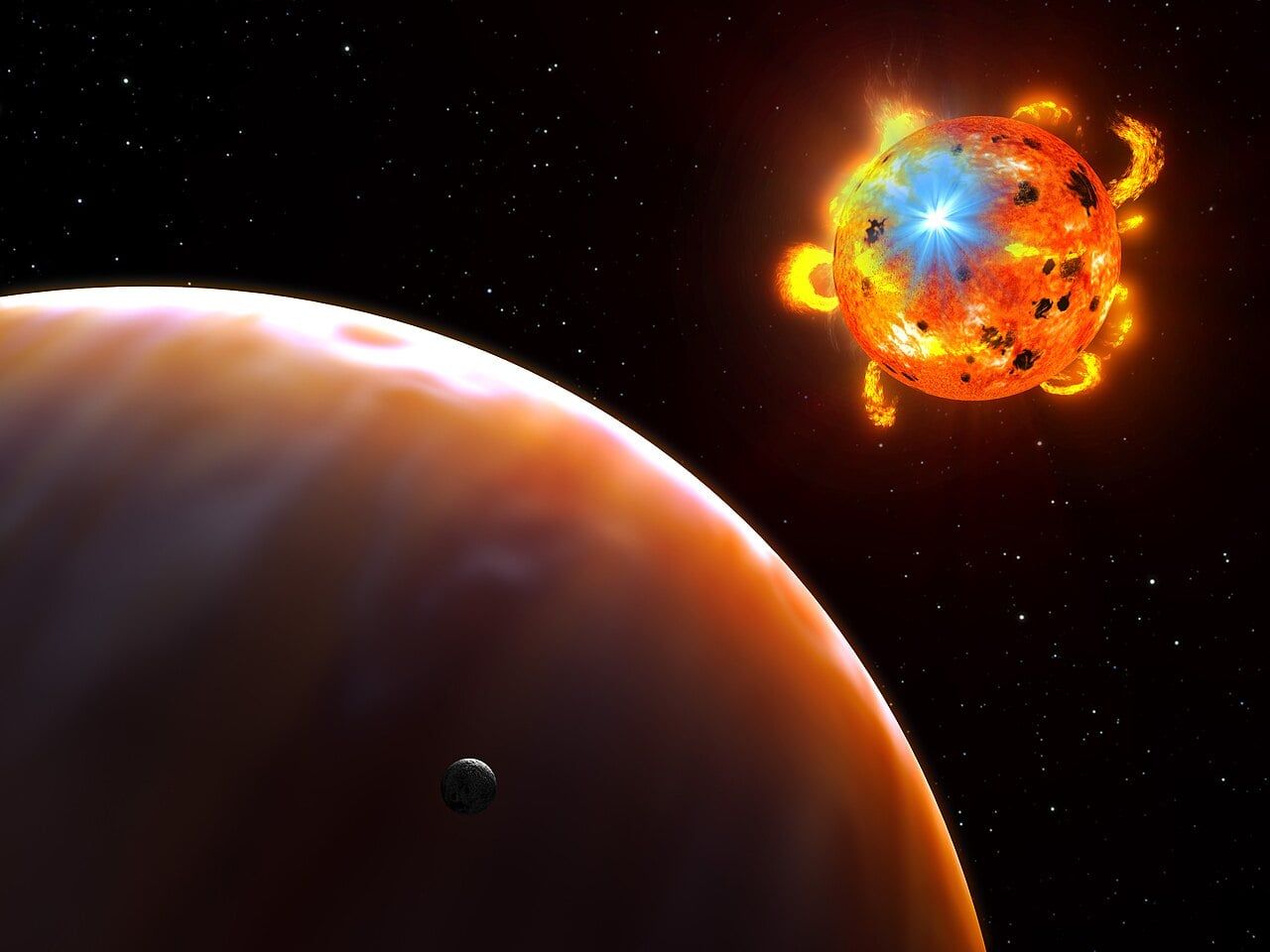
Stellar flares are among the most violent magnetic outbursts in the cosmos, unleashing intense bursts of radiation across planetary systems within minutes.1 On magnetically active stars, these energetic explosions occur when tangled magnetic field lines suddenly snap and reconnect, heating stellar plasma to millions of degrees and hurling charged particles into space.1 For orbiting rocky planets, these eruptions represent both a chemical catalyst and a destructive hazard. Intense ultraviolet flux from a flare can initiate photochemical reactions necessary to assemble the molecular precursors of life, yet repeated bombardment can gradually strip away protective planetary atmospheres and degrade ozone layers.1
To understand how these outbursts shape the environments around distant worlds, astronomers study the frequency and energy of flares across different types of stars. In the Sun and other stellar bodies, eruptions that produce continuum emission across the visible spectrum are known as white-light flares, which appear as sudden brightenings that temporarily exceed normal quiescent levels.1 Researchers have traditionally observed these phenomena using space telescopes that monitor fixed celestial patches continuously, recording measurements every few minutes to track each flare from its sudden onset to its gradual fading.1 However, that continuous monitoring covers only narrow slices of the sky, leaving the broader distribution of flaring stars across the Milky Way largely unexamined.
Tracking these magnetic eruptions requires understanding the physical sequence that produces a white-light flare. Inside a rotating star, boiling convective motions twist internal magnetic fields, generating concentrated flux tubes that rise toward the stellar surface. These emerging magnetic fields form dark spots and bright faculae across the stellar photosphere.1 When tangled field lines twist into complex geometries, they abruptly break and reconnect into simpler alignments.1 That sudden reconnection converts stored magnetic energy into thermal heat, driving an impulsive burst of radiation that superheats the surrounding gas and causes the star to brighten while shifting toward hotter, bluer wavelengths.1 Over subsequent minutes or hours, the energised plasma cools, and the stellar surface gradually returns to its quiet baseline.1
In a study posted to the arXiv preprint server on September 18, 2026, Elisa Distefano of the INAF - Osservatorio Astrofisico di Catania and colleagues across Europe demonstrated that this flaring signature can be reliably detected without continuous staring. Working within the European Space Agency's Gaia mission consortium, the researchers designed an algorithm to detect flares in the sparse, multi-epoch observations collected by the Gaia observatory.12 By applying their detection pipeline to 474,026 variable stars catalogued in Gaia's third data release for rotational modulation, Distefano and colleagues identified 3,217 genuine stellar flares occurring across 2,818 individual stars.1
How do astronomers catch a brief stellar flare without continuous monitoring?
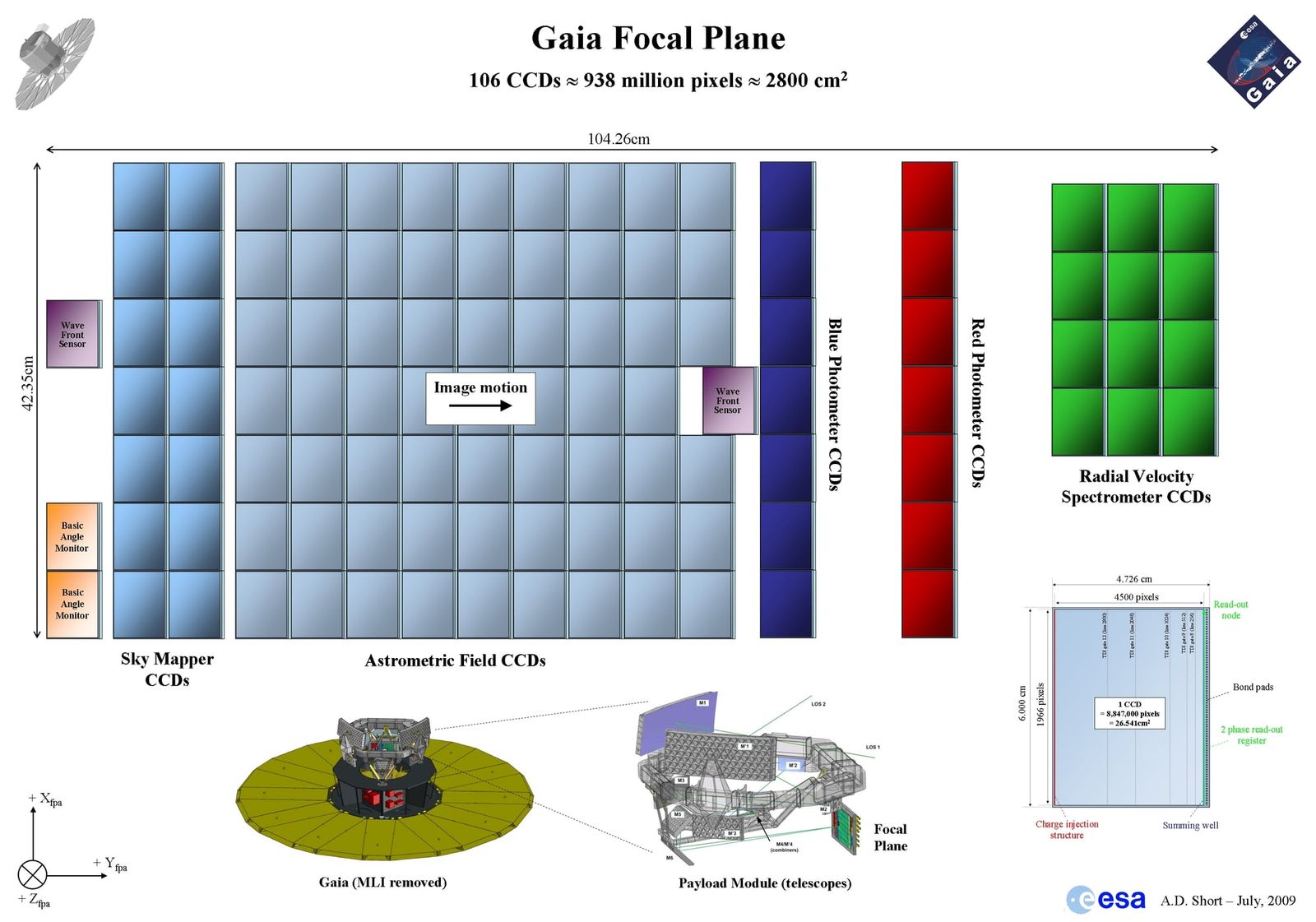
Astronomers can identify brief stellar flares in sparse time-series observations by screening for rare visits where a star simultaneously brightens and shifts toward bluer wavelengths compared with its normal quiet state.1 The European Space Agency's Gaia spacecraft scans the entire sky periodically instead of monitoring a single field continuously.1 Each time a celestial target drifts across Gaia's wide focal plane during a transit, the satellite collects quasi-simultaneous photometric measurements through three broad optical filters, consisting of the primary broad-band G passband, the blue photometer band designated as GBP, and the red photometer band designated as GRP.2
Because a typical stellar flare lasts from several minutes to a few hours, a single transit across the satellite's focal plane captures only an isolated snapshot of stellar activity.1 While dedicated planet-hunting missions such as Kepler, K2, and the Transiting Exoplanet Survey Satellite provide continuous high-cadence monitoring that traces complete flare light curves, Gaia revisits individual stars only once every few weeks or months.1 Despite this sparse temporal sampling, Distefano and colleagues showed that an authentic flare leaves an unmistakable multi-colour footprint in that single observation.1 When an explosive reconnection event occurs, the impulsive thermal radiation emitted by superheated plasma produces an excess of blue continuum light, altering both the total brightness in the G band and the relative colour index between the blue and red detectors.1
Elisa Distefano explained in response to questions from Primary that this colour shift reflects how energetic outbursts redistribute radiation across the optical spectrum. Magnetic reconnection rapidly heats plasma in the stellar atmosphere, driving energy downward into denser atmospheric layers where it produces an intense continuum enhancement far hotter and bluer than the quiet stellar photosphere. During the initial impulsive phase of an outburst, this surplus emission elevates flux at shorter optical wavelengths proportionally more than at longer red wavelengths. Gaia measures its three optical passbands almost simultaneously during a transit, so a sufficiently powerful flare leaves an observable shift toward bluer colours preserved in a single snapshot without requiring an observer to track the flare's entire rise and fall.
To identify candidate flare events, the automated pipeline divided each star's multi-year observation history into overlapping computational segments spanning no more than 120 days.1 Within each 120-day segment, the algorithm performed statistical linear regressions between stellar magnitude and colour, flagging transits that deviated by more than three standard deviations from the expected model or from the segment's mean colour.1 This initial automated sweep identified 3,314,869 outlier transits across 472,963 stars.1 The authors explained that this preliminary selection was deliberately inclusive, capturing genuine flares alongside calibration glitches, cosmic rays, and uncharacteristic stellar dimming events that required subsequent validation.1
Elisa told Primary that setting the computational window to 120 days represented a necessary trade-off imposed by Gaia's irregular observation timetable. Active stars vary continuously in brightness as magnetic spots rotate across their surfaces, meaning shorter time windows would provide a superior local baseline for measuring flaring excursions. However, because Gaia's scanning cadence leaves long gaps between visits, narrower time windows would contain too few data points to calculate reliable quiet baselines. The 120-day interval provided an average of about 12 observations per segment, offering sufficient data to characterise quiet brightness while aligning with empirical timescales of stellar variability documented in Kepler observations.
The researchers then applied consistency filters to eliminate spurious anomalies caused by instrumental artifacts or telescope calibration errors. The algorithm evaluated each candidate against a per-transit corrected excess factor parameter, which tests the mutual consistency of fluxes measured across the G, GBP, and GRP passbands. Authentic flares exhibit physical consistency across all three optical bands, while instrumental noise typically yields incompatible flux readings.1 Applying this excess factor criterion with a three standard deviation threshold pruned an intermediate pool of 5,172 colour-brightened candidate events down to the final verified catalogue of 3,217 flares across 2,818 stars, demonstrating the effectiveness of multi-band validation.
Elisa noted that spurious non-flare contaminants frequently mimic brightness spikes, particularly when stray light from neighbouring stars enters the instruments. Gaia achieves sharp spatial resolution in its primary broad-band G detector, allowing astronomers to isolate light from the target star with high confidence. The blue and red photometers operate at lower spatial resolution, where light from nearby celestial neighbours can blend into the measurement and distort observed colours. The pipeline rejected ambiguous detections rather than attempting to classify uncertain signals, ensuring that only events with verified photometric coherence across all three passbands remained in the final catalogue.
Why must flare searches account for rotating stellar spots?
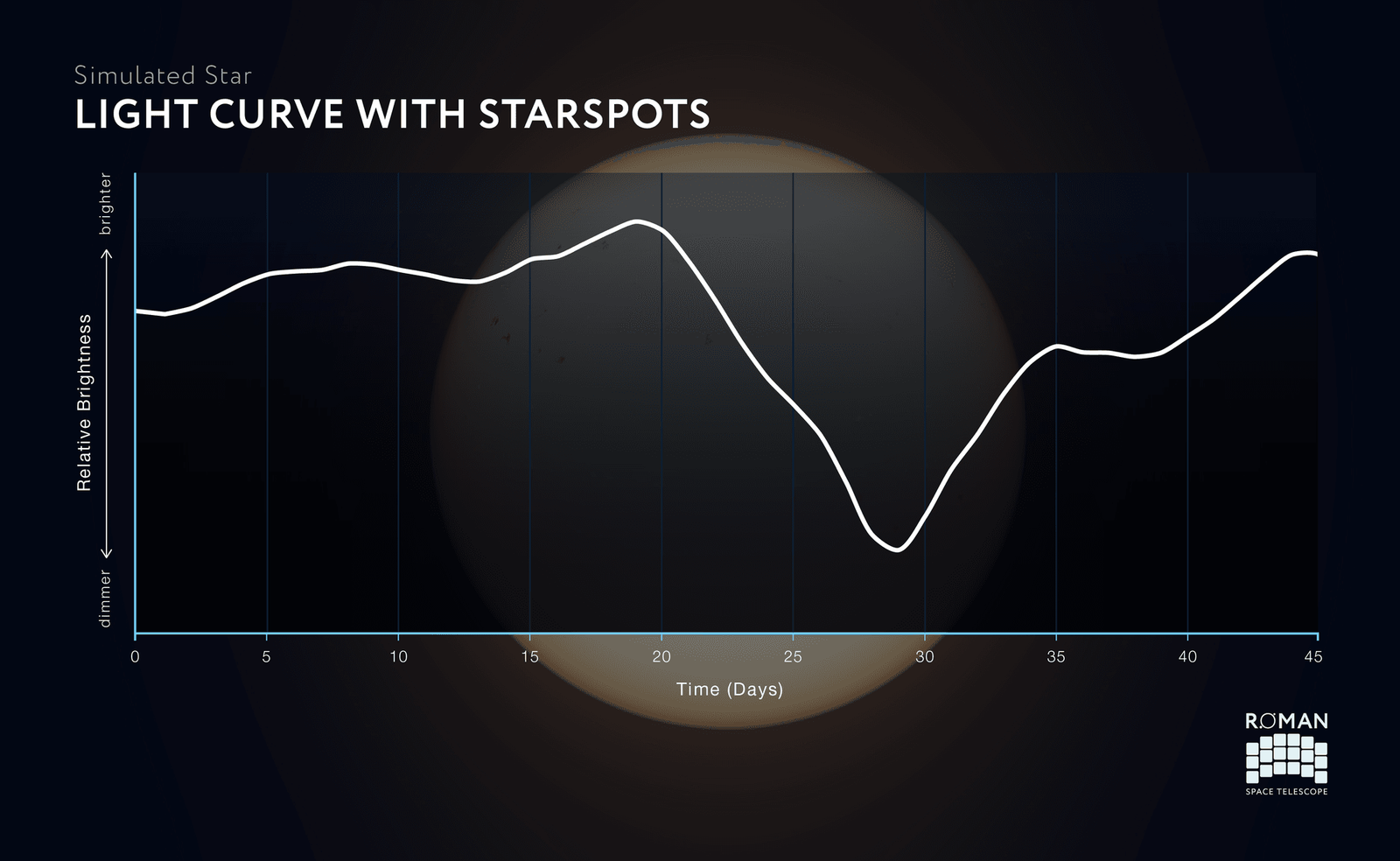
Flare searches must account for rotating stellar spots because dark spots and bright faculae cause a star's baseline brightness to fluctuate rhythmically over days and weeks.1 Magnetically active stars develop uneven distributions of surface starspots, reflecting internal magnetic dynamos.1 As a star rotates on its axis, these surface features rotate into and out of view, modulating total brightness and colour in a regular wave. If an automated algorithm simply compared every observation against a static long-term average, rotational dimming or brightening could obscure small real flares or generate false positive detections.
To establish an accurate quiet baseline, Distefano and colleagues modelled the expected unperturbed state of each star at the exact moment of every observation.1 In time-series segments displaying a clear periodic rotation signal, the researchers fitted the photometric data with a harmonic mathematical model combining fundamental sine and cosine wave functions.1 This harmonic curve calculated the expected quiet-state magnitude in the G band and the quiet-state colour in the GBP and GRP bands for each transit epoch.1 A transit was confirmed as a flare candidate only when its brightening and blueing exceeded three times the combined statistical uncertainty of the harmonic model and the individual observation.1
For time-series segments where irregular spot evolution prevented harmonic fitting, the algorithm adopted a statistical fallback by clipping candidate outliers and computing the mean brightness and colour of the remaining unperturbed observations.1 This clipped mean provided a local baseline, ensuring that long-term magnetic changes across different observing seasons did not distort flare thresholds. The authors demonstrated this approach using the active star Gaia DR3 2925085041699059712, whose G-band light curve showed multi-year baseline shifts of approximately 0.15 magnitude alongside a 6-day rotational modulation with an amplitude of about 0.05 magnitude. Subtracting the rotation model allowed the pipeline to detect three candidate flares, including one subtle event hidden beneath the rotation wave.
What can sparse flare detections tell astronomers about planetary habitability?
Sparse flare detections reveal how frequently energetic ultraviolet bursts erupt from host stars, clarifying whether orbiting rocky worlds can retain protective atmospheres or support prebiotic chemistry. High-energy flare radiation directly influences the environmental conditions of exoplanets. As Distefano and colleagues explained, moderate ultraviolet flux from flares can trigger photochemical reactions that synthesise ribonucleotides, which serve as foundational molecules for prebiotic chemistry.1 However, excessive flaring can erode planetary atmospheres and strip away ozone layers, exposing surface environments to sterilising high-energy radiation.1
Assessing the biological impact of stellar flares depends on determining their emission temperatures. Astronomers have often estimated ultraviolet outputs by modelling flare continuum emissions using a simplified black-body curve at assumed temperatures between 9,000 and 10,000 Kelvin.1 However, the authors noted that recent observational studies challenge that uniform assumption. The paper cited work by Ward Howard and colleagues that evaluated 44 flares across 27 cool dwarf stars, finding flare temperatures ranging between 6,600 and 43,000 Kelvin.1 Furthermore, a study by Rabello Soares and colleagues analysing 209 white-light flares across 69 stars observed with the CoRoT satellite determined an average black-body temperature of 6,400 Kelvin, accompanied by a standard deviation of 2,800 Kelvin.1
Using Gaia's multi-band photometry, Distefano and colleagues estimated black-body effective temperatures for a subset of 348 flares from their confirmed catalogue, providing broader empirical constraints across diverse stellar types.1 Elisa explained to Primary that calculating a reliable flare temperature requires precise measurements of excess flux in each individual passband. Because rotating starspots continuously alter background brightness, the authors restricted temperature modelling to stars whose underlying rotational variation could be traced cleanly and subtracted from the observations. Isolating the net flare light in all three bands ensured that the resulting thermal estimates remained robust.
The researchers also identified 29 hyper-flares among the confirmed events, defined as extreme outbursts with brightness amplitudes of at least 0.75 magnitude in the G band.1 These hyper-flares occurred preferentially on cool M dwarf stars, which represent the most common stellar hosts of rocky exoplanets in the galaxy.1 Because M dwarfs possess deep convective envelopes that generate potent magnetic fields, their tendency to produce severe hyper-flares underscores the volatile radiation environments surrounding their planets.
The results entail clear limitations regarding what this observational method can establish about individual events. The catalogue does not provide continuous chronological light curves, so researchers cannot measure the total radiated energy or temporal decay duration for individual flares from isolated transit snapshots.1 The effective temperatures calculated for 348 flares rely on a simplified black-body model that treats visible continuum emission as an ideal thermal radiator, which may overlook non-thermal spectral lines.1 Additionally, the analysis was limited to 474,026 stars already identified as exhibiting rotational modulation, excluding flaring stars without prominent starspots.1 The findings also originate from a preprint posted on arXiv that has not yet undergone formal peer review.1
Elisa highlighted to Primary that conditioning the search on pre-existing rotational modulation introduces a significant demographic selection effect. Because Gaia's sparse scanning schedule detects rotational cycles most easily in rapidly rotating stars with periods under five days, the analysed catalogue is inherently weighted toward younger, highly active stars. Older stars that have spun down over billions of years flare less often and carry smaller spots, meaning they are largely excluded from this sample even though they continue to produce magnetic eruptions. The catalogue provides an essential framework for identifying flares across all-sky surveys, yet its occurrence rates cannot be treated as a direct reflection of flaring frequencies across the entire Milky Way.
Despite these constraints, the methodology established by Distefano and colleagues provides a foundation for systematic flare searches across large astronomical surveys. Demonstrating that sparse multi-colour photometry can reliably identify magnetic reconnection events allows astronomers to exploit Gaia's all-sky coverage to construct expansive stellar activity catalogues.1 As upcoming data releases expand the volume of analysed stellar time series, combining Gaia's broad spatial reach with high-cadence light curves from missions such as Kepler and the Transiting Exoplanet Survey Satellite will deliver a more comprehensive understanding of stellar magnetic activity throughout the galaxy.1
The record
62 sentences trace to 2 sources and 1 contributor.
-
1
ED
E. Distefano (INAF - Osservatorio Astrofisico di Catania), A. C. Lanzafame (INAF - Osservatorio Astrofisico di Catania, University of Catania, Astrophysics Section, Dept. of Physics and Astronomy), A. Paper · arxiv.org · 18 Sep 2026 Gaia method paper: an algorithm to detect flare events in Gaia time-series Preprint · may not have been peer reviewed See the source
-
2
A
ar5iv.labs.arxiv.org Paper · ar5iv.labs.arxiv.org Gaia Data Release 1 Preprint · may not have been peer reviewed See the source
- 3 Contribution — Elisa Distefano 26 statements added to this article
gea.esac.esa.int1 page
Article history
-
Published 21 Oct 2026, 18:59Assembled by the Primary desk from 2 sources · 1 contributor · 62 cited sentences
-
Elisa Distefano
- Go to the sentence: Despite this sparse temporal sampling, Distefano and colleagues showed that an authentic flare leaves an unmistakable multi-colour footprint in that single observation.
- Go to the sentence: When an explosive reconnection event occurs, the impulsive thermal radiation emitted by superheated plasma produces an excess of blue continuum light, altering both the total brightness in the G band and the relative colour index between the blue and red detectors.
- Go to the sentence: Elisa Distefano explained in response to questions from Primary that this colour shift reflects how energetic outbursts redistribute radiation across the optical spectrum.
- Go to the sentence: Magnetic reconnection rapidly heats plasma in the stellar atmosphere, driving energy downward into denser atmospheric layers where it produces an intense continuum enhancement far hotter and bluer than the quiet stellar photosphere.
- Go to the sentence: During the initial impulsive phase of an outburst, this surplus emission elevates flux at shorter optical wavelengths proportionally more than at longer red wavelengths.
- Go to the sentence: Gaia measures its three optical passbands almost simultaneously during a transit, so a sufficiently powerful flare leaves an observable shift toward bluer colours preserved in a single snapshot without requiring an observer to track the flare's entire rise and fall.
- Go to the sentence: To identify candidate flare events, the automated pipeline divided each star's multi-year observation history into overlapping computational segments spanning no more than 120 days.
- Go to the sentence: The authors explained that this preliminary selection was deliberately inclusive, capturing genuine flares alongside calibration glitches, cosmic rays, and uncharacteristic stellar dimming events that required subsequent validation.
- Go to the sentence: Elisa told Primary that setting the computational window to 120 days represented a necessary trade-off imposed by Gaia's irregular observation timetable.
- Go to the sentence: Active stars vary continuously in brightness as magnetic spots rotate across their surfaces, meaning shorter time windows would provide a superior local baseline for measuring flaring excursions.
- Go to the sentence: The 120-day interval provided an average of about 12 observations per segment, offering sufficient data to characterise quiet brightness while aligning with empirical timescales of stellar variability documented in Kepler observations.
- Go to the sentence: Authentic flares exhibit physical consistency across all three optical bands, while instrumental noise typically yields incompatible flux readings.
- Go to the sentence: Elisa noted that spurious non-flare contaminants frequently mimic brightness spikes, particularly when stray light from neighbouring stars enters the instruments.
- Go to the sentence: Gaia achieves sharp spatial resolution in its primary broad-band G detector, allowing astronomers to isolate light from the target star with high confidence.
- Go to the sentence: The blue and red photometers operate at lower spatial resolution, where light from nearby celestial neighbours can blend into the measurement and distort observed colours.
- Go to the sentence: The pipeline rejected ambiguous detections rather than attempting to classify uncertain signals, ensuring that only events with verified photometric coherence across all three passbands remained in the final catalogue.
- Go to the sentence: Flare searches must account for rotating stellar spots because dark spots and bright faculae cause a star's baseline brightness to fluctuate rhythmically over days and weeks.
- Go to the sentence: Using Gaia's multi-band photometry, Distefano and colleagues estimated black-body effective temperatures for a subset of 348 flares from their confirmed catalogue, providing broader empirical constraints across diverse stellar types.
- Go to the sentence: Elisa explained to Primary that calculating a reliable flare temperature requires precise measurements of excess flux in each individual passband.
- Go to the sentence: Because rotating starspots continuously alter background brightness, the authors restricted temperature modelling to stars whose underlying rotational variation could be traced cleanly and subtracted from the observations.
- Go to the sentence: Isolating the net flare light in all three bands ensured that the resulting thermal estimates remained robust.
- Go to the sentence: Additionally, the analysis was limited to 474,026 stars already identified as exhibiting rotational modulation, excluding flaring stars without prominent starspots.
- Go to the sentence: Elisa highlighted to Primary that conditioning the search on pre-existing rotational modulation introduces a significant demographic selection effect.
- Go to the sentence: Because Gaia's sparse scanning schedule detects rotational cycles most easily in rapidly rotating stars with periods under five days, the analysed catalogue is inherently weighted toward younger, highly active stars.
- Go to the sentence: Older stars that have spun down over billions of years flare less often and carry smaller spots, meaning they are largely excluded from this sample even though they continue to produce magnetic eruptions.
- Go to the sentence: The catalogue provides an essential framework for identifying flares across all-sky surveys, yet its occurrence rates cannot be treated as a direct reflection of flaring frequencies across the entire Milky Way.