Every living person carries DNA from an unidentified human ancestor
A statistical technique mapped genetic material from an unknown African lineage in modern genomes without relying on fossil bones, revealing that ancient mixing touched all living people.
Every person alive today carries small fragments of genetic material inherited from human cousins whose bones have never yielded readable DNA. For decades, the story of human origins resembled an orderly branching bush, where isolated populations parted ways and developed on their own. That view began to dissolve when geneticists extracted DNA from fossilised Neanderthal and Denisovan bones, proving that modern human ancestors mingled with both groups as they expanded across Eurasia. Yet ancient skeletons decompose rapidly in warm and damp environments, leaving vast stretches of human prehistory without a single preserved genome.12
The biological legacy of those unrecorded encounters still circulates inside living cells. When two related populations meet and produce offspring, their chromosomes pair up and exchange segments during the creation of reproductive cells. Each generation reshuffles these genetic cards through recombination. Over thousands of years, chromosomes from an ancestral interbreeding event get cut into progressively shorter fragments, scattered across the chromosomes of later generations. Because lineages from deeply separated groups parted ways in the distant past, their genetic sequences accumulate mutations that distinguish them from modern lines. If scientists can map the genealogy of every piece of DNA back through time, those ancient contributions stand out as unusually deep branches, even if no fossil skeleton survived to be placed under a sequencing machine.
Geneticists at the University of California, Berkeley, Sarah Johnson of the university's Center for Computational Biology, Arjun Biddanda of Johns Hopkins University, and Colm O'Dushlaine of the genomics firm 54gene built a method to read those ancient signatures directly from living people.13 In a paper published in Science, the authors report that an unidentified archaic lineage interbred with human ancestors in Africa tens of thousands of years ago, leaving genetic markers that survive today in every human population on Earth.12
How can modern DNA reveal ancestors who left no fossils?
Researchers can identify ancient interbreeding without fossil comparisons by tracing the genealogical history of each chromosome segment back to its common ancestors.12 The Berkeley team designed an analytical technique called TRACE, short for Tracking Archaic Contributions via ARG Estimation, which reconstructs ancestral recombination graphs across complete human genomes.34 An ancestral recombination graph serves as a detailed map of how chromosomes have fractured and recombined over thousands of generations. Rather than searching for shared mutations against an ancient reference specimen, the method identifies specific segments whose family trees extend unusually far into the past.
"Genealogies preserve a record of our evolutionary past," Priya Moorjani, an associate professor of molecular and cell biology at the University of California, Berkeley, and the senior author of the study, said in a statement released by the university.34 "TRACE reconstructs those histories across the genome. By identifying regions whose ancestry extends unusually far back in time, we can uncover genetic contributions from extinct human populations, even in the absence of ancient DNA."34
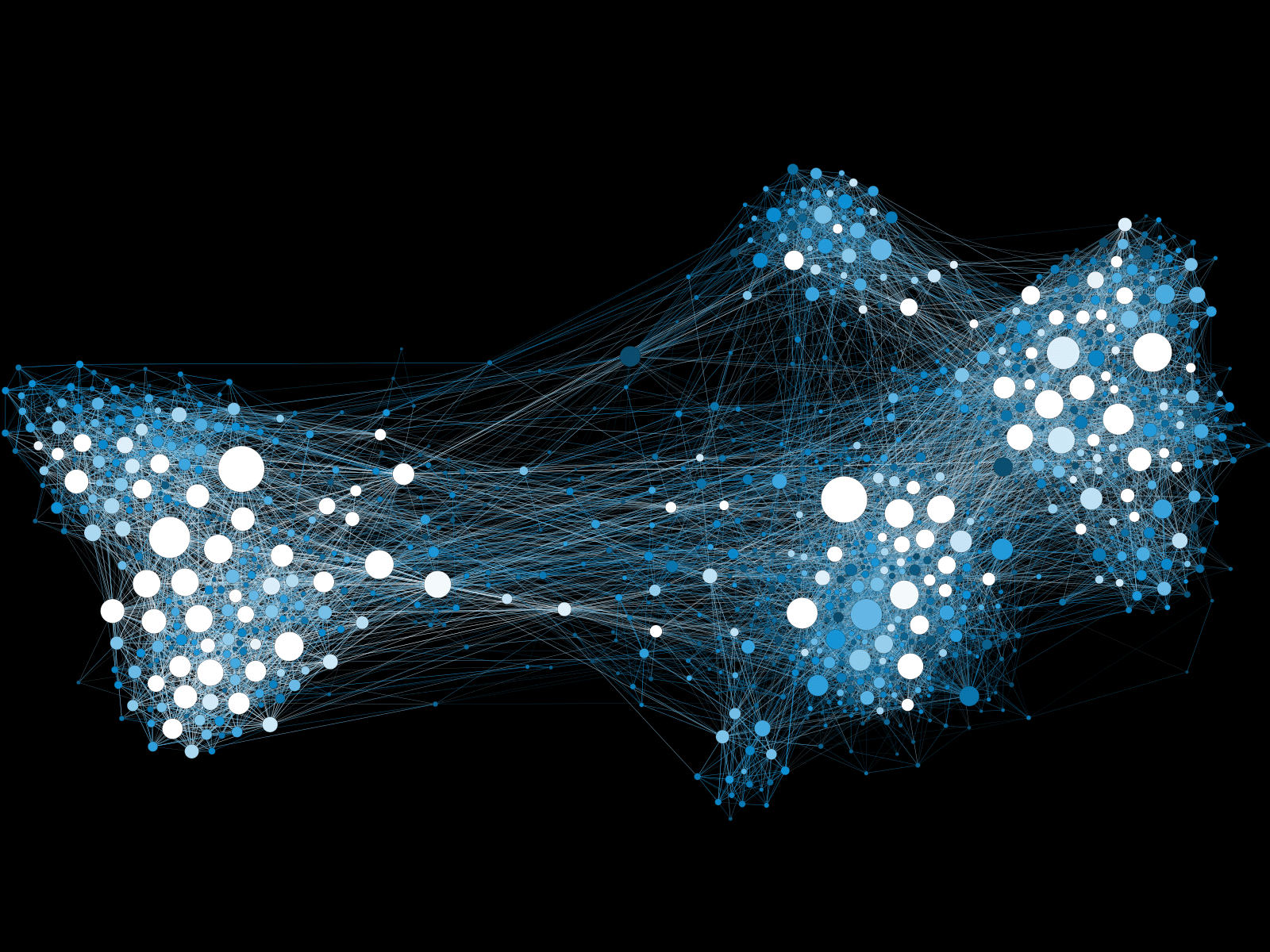
To test whether the statistical tool worked as intended, the researchers applied it to high-coverage human genomes from global collections, including the 1000 Genomes Project dataset.2 The system readily identified known stretches of Neanderthal DNA, which make up roughly 1 percent of modern genomes outside Africa.34 It also flagged recognized sections of Denisovan DNA in people from Asia and Oceania, where Denisovan ancestry persists.34 Alongside those expected signatures, however, the graphs illuminated long-diverged sequences that matched neither known group.
What did the African ghost population leave behind?
An unidentified ghost lineage contributed between 0.5 percent and 1 percent of the genome of every living person, regardless of their geographic background.13 The analysis indicated that this ghost population separated from the ancestors of modern humans roughly 800,000 years ago, around the time when the common ancestors of Neanderthals and Denisovans diverged from the modern lineage.34 The two groups lived apart for hundreds of thousands of years before interbreeding in Africa prior to 50,000 years ago.13
That timing explains why the signature appears everywhere. Because the encounter occurred before Homo sapiens carried out their final major migration out of Africa, the ghost lineage was incorporated into the ancestral gene pool that populated the entire world.14 Across all sources, including Neanderthals and Denisovans, archaic hominins contributed about 2 percent of the modern human genome, according to the study.13
"We were actually able to find and map genomic locations in modern humans that are from this ghost lineage and show that this ghost ancestry is in all modern humans, not only in Africans," Yulin Zhang, a graduate student at the University of California, Berkeley, and a co-first author of the paper, said in a university announcement.3
The inherited fragments were not scattered across human chromosomes at random. Instead, the researchers found that these archaic sequences appeared frequently within genes governing metabolism and immune responses.13 Modern humans entering new environments faced unfamiliar pathogens and dietary stresses. Siphoning tested genetic variants from relatives who had survived in those climates for hundreds of millennia gave our ancestors an immediate biological advantage, allowing natural selection to preserve those beneficial sequences.
"Adaptation to new pathogens and food sources has been one of the strongest selective pressures in human evolution," Moorjani said.1 The team also observed that segments from the African ghost lineage landed within genomic regions previously thought to be completely intolerant of archaic DNA, suggesting that those genomic zones specifically rejected Neanderthal and Denisovan variants rather than archaic code in general.23
How did an even older lineage reach living people?
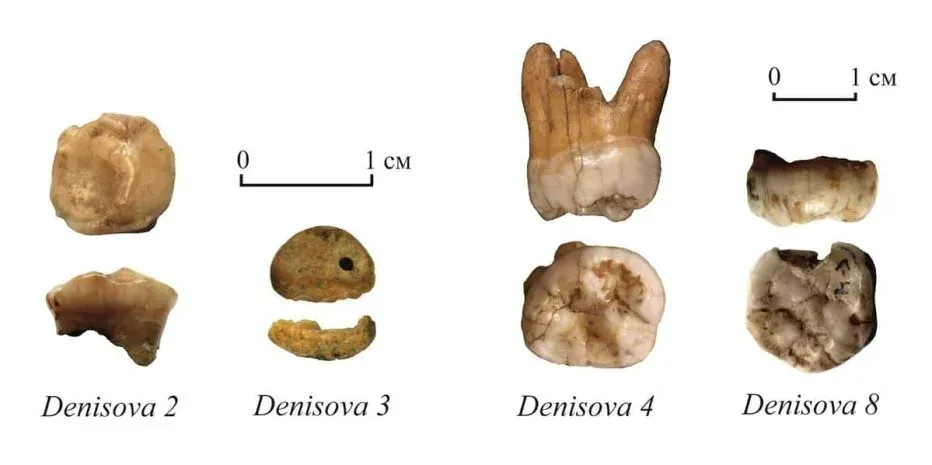
Modern populations in Oceania carry fragments of a 1.8-million-year-old super-archaic human relative passed down secondhand through Denisovans.12 When the authors analyzed genomes from island nations in the Pacific Ocean, where modern people carry as much as 4 percent Denisovan ancestry, they detected an even deeper ancestral signature embedded directly inside the Denisovan segments.34 That archaic group had split from the human tree around 1.8 million years ago, a divergence horizon that roughly matches the appearance of Homo erectus across Eurasia.4
According to the paper, Denisovans acquired between 3 percent and 5 percent of their genetic material by interbreeding with that super-archaic lineage in Eurasia, likely more than 200,000 years ago.13 When Denisovans subsequently mated with modern humans, a small portion of that million-year-old DNA flowed into the modern human lineage. "The super-archaic finding is particularly exciting because it reveals genetic contributions from a human lineage that lived over a million years ago, despite the absence of any sequenced DNA from that population," Biddanda said.34
These recursive layers of hybridization demonstrate that ancient hominins repeatedly encountered and mated with one another over hundreds of millennia. "We often think of human evolution as a branching tree, but new genomic data and analytical methods reveal a much more interconnected history, more like a complex web of populations connected by repeated episodes of migration and mixing," Moorjani said.
What are the limits of reconstructing ancient genealogies?
The dates, divergence horizons, and ancestry proportions calculated by ancestral recombination graphs represent statistical inferences rather than direct historical observations.1 Mathematical reconstructions of evolutionary branching carry inherent ranges of error, and alternative population models might explain similar genetic patterns. Some geneticists have previously proposed that long-standing geographic structure inside ancestral African populations, where isolated bands maintained distinct traits without forming a fully separate archaic species, could generate comparable genetic divergences.1
Furthermore, genetic code isolated from living people cannot tell researchers what an extinct human relative looked like, what tools they crafted, or where they walked. In hot and humid regions of Africa, ancient bones rarely preserve fragile DNA, leaving no physical skeleton that can be definitively matched to this 800,000-year-old lineage.13 Africa supported a mosaic of distinct hominins across the Middle Pleistocene, including Homo naledi in southern Africa around 300,000 years ago, but resolving which fossil group contributed this living legacy will require additional fossil discoveries or surviving biomolecules.1
Broader global genome sequencing and ancient protein analysis from Eurasian fossils could help clarify these mysterious ancestors in coming years.34 While only one high-quality Denisovan genome has been published, recovered peptide chains from Homo erectus remains offer an alternative window into deeply divergent hominins.34 For evolutionary biologists, reading genealogies without needing reference fossils provides a practical template for investigating ancient hybridization, not only across the human past, but throughout the wider animal kingdom.34
The record
32 sentences trace to 4 sources.
-
1
S
scientificinquirer Document · scientificinquirer.com · 21 Oct 2026 New Method Maps DNA Inherited From a ‘Ghost’ Human Lineage in Every Living Person See the source
-
2
E
eurekalert.org Third-party reporting · eurekalert.org “TRACEing” archaic hominin ancestry in modern humans without archaic genomes See the source
-
3
S
sciencedaily.com Third-party reporting · sciencedaily.com Scientists found two mysterious ‘ghost’ ancestors hiding in our DNA See the source
-
4
E