Suburban mosquito traps cut egg counts and signal Buruli ulcer decline
Suppressing backyard mosquitoes with fungus and larvicide reduced insect eggs by 70 percent across Melbourne neighborhoods, offering early evidence that targeted vector control could interrupt a debilitating bacterial disease.

Buruli ulcer typically begins without pain, appearing as a minor swelling beneath the skin before gradually breaking open into a destructive sore that eats away soft tissue.1 The infection stems from slow-growing bacteria that linger in suburban wildlife, creating an indirect transmission route into residential households.1 Native possums harbor the microbes, developing ulcers and shedding the pathogen in their droppings.1 Backyard mosquitoes that feed on the animals or encounter their droppings pick up the bacteria and subsequently bite people.1 Once introduced beneath human skin, the bacteria multiply quietly over several months before visible damage surfaces.1
Preventing that progression depends on disrupting the insects that ferry the pathogen between trees and suburban homes. If mosquitoes cannot mature or survive long enough to bite multiple hosts, the chain between infected wildlife and residential gardens breaks down. A field experiment conducted in the residential suburbs of Melbourne tested that premise by deploying backyard traps designed to kill adult mosquitoes and sterilize their breeding pools.1
The research was conducted by scientists at the University of Melbourne and the Peter Doherty Institute for Infection and Immunity, who reported their findings in the journal Nature Microbiology.1 By deploying hundreds of specialized mosquito stations across residential neighborhoods, the investigators sought to establish whether targeted insect control could depress mosquito reproduction and lower the incidence of flesh-eating ulcers.1
Why is a bush infection appearing in residential gardens?
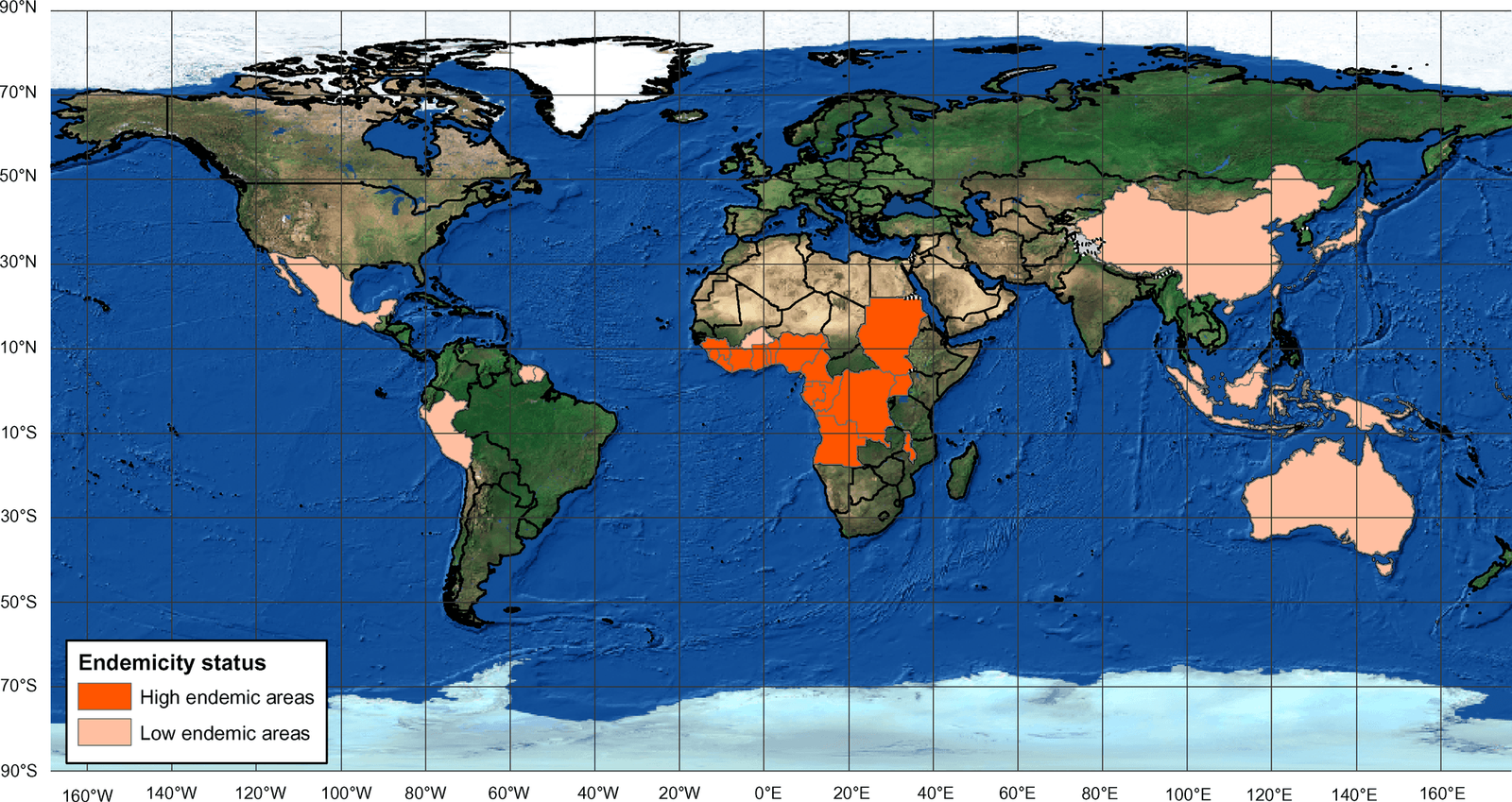
Buruli ulcer is expanding into residential areas because native possums and common backyard mosquitoes maintain a thriving transmission cycle inside suburban garden environments.1 The disease is caused by Mycobacterium ulcerans, a bacterial species closely related to the microbes responsible for tuberculosis and leprosy.1 The World Health Organization has documented Buruli ulcer in at least 33 countries across Africa, South America and the Western Pacific, but the Australian state of Victoria has experienced a pronounced regional surge.1
Victoria recorded 5.8 cases per 100,000 people in 2024 and now routinely logs more than 350 diagnoses each year.1 In one coastal Victorian town, the annual rate reached 770 cases per 100,000 residents, representing roughly one infected person in every 130 inhabitants.1 While historical transmission pathways long puzzled health officials, a 2024 genetic investigation on the Mornington Peninsula identified matching bacterial genomes in mosquitoes, possum droppings and human patients.1 The University of Melbourne researchers concluded that Aedes notoscriptus, a mosquito species common in urban gardens, carries the infection from arboreal possums to human residents.1
How do the backyard traps turn mosquitoes against their own breeding sites?
The backyard traps exploit the natural egg-laying behavior of mosquitoes by dusting visiting females with a slow-acting fungus and an insect growth regulator that the insects inadvertently transport to other water containers.1 The field trial took place across a 50 square kilometre area of Melbourne's inner north-western suburbs, including Brunswick West, Essendon and Moonee Ponds.1 Researchers identified 12 comparable suburban zones containing roughly 80 homes each, using a random number generator to allocate six zones to the intervention and six zones as untreated controls.1
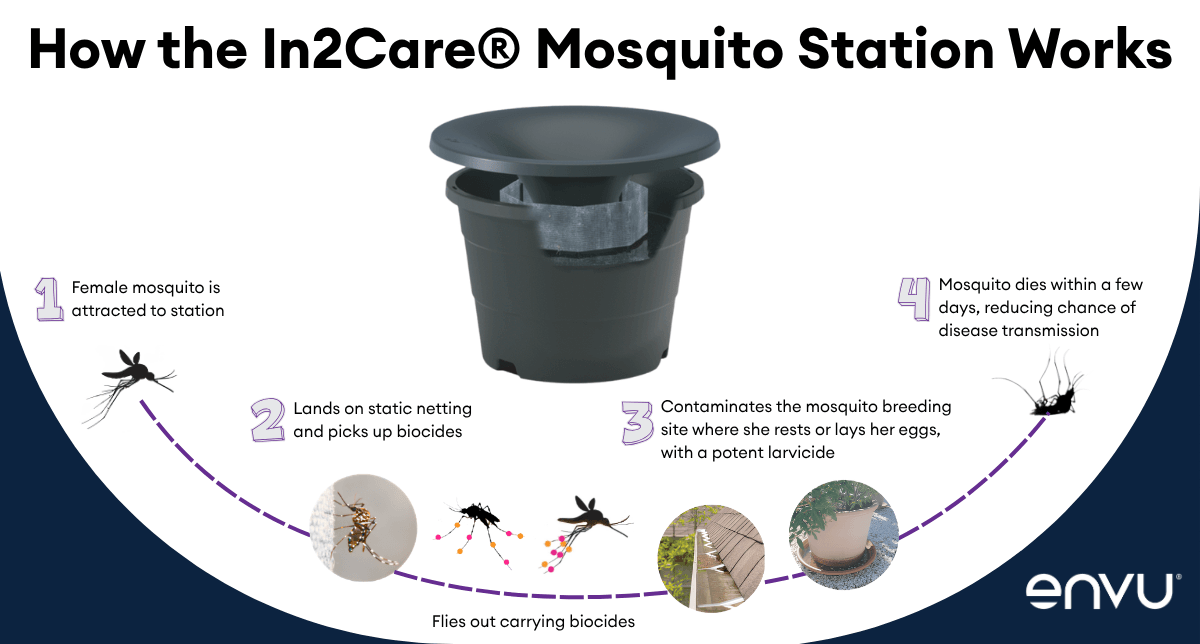
Between January 25 and March 21, 2024, the research team installed 593 In2Care stations across the six treatment zones.1 That deployment provided approximately 100 stations per neighborhood, creating an operating density of roughly one trap for every 400 square metres.1 Technicians placed the units in shaded corners of private gardens, on roadside nature strips and on accessible public land.1
Each station consists of a compact tub of water designed to entice female mosquitoes searching for stagnant pools to deposit eggs.1 Inside the chamber, a treated gauze band delivers two active agents.1 The first is pyriproxyfen, an insect growth regulator that stops larvae from developing into adult mosquitoes.1 The second is Beauveria bassiana, a fungus that infects insects and kills adult mosquitoes within roughly 8 to 10 days.1
Because the fungus acts slowly, the contaminated insect flies away to visit additional breeding sites, such as flowerpot saucers and discarded buckets.1 As the mosquito lands in those secondary pools, it deposits lethal traces of pyriproxyfen, effectively turning the insect into an unwitting vector of pest control in unmanaged garden crevices.1
To evaluate insect numbers, the researchers deployed 480 monitoring traps baited with alfalfa pellets before and after the trial period.1 During the three weeks immediately following the removal of the stations, treatment zones recorded roughly 70 percent fewer mosquito eggs than the untreated control zones, a difference that met statistical significance with a P value of 0.0076.1 That suppression remained measurable two weeks after the hardware had been taken away.1
Unusually dry weather lowered mosquito reproduction across all 12 experimental areas during the trial window, as conditions shifted from very hot and wet to very hot and dry.1 In the 10 monitoring traps that recorded the highest baseline activity, egg tallies dropped from an average of 672 to 21 in treated zones, and from 491 to 34 in control areas.1 Véronique Paris, a medical entomologist at the University of Melbourne and the Doherty Institute and joint first author of the study, noted that while climatic shifts reduced egg numbers throughout the entire trial region, the intervention neighborhoods sustained a significantly larger reduction than the control zones.1
Can killing backyard mosquitoes stop human infections?
A trial in Melbourne detected an initial signal that mosquito suppression might reduce human Buruli ulcer cases, but the small number of infections leaves substantial uncertainty about whether the traps truly prevented disease.1 Evaluating clinical transmission was complicated by the biology of Mycobacterium ulcerans, which requires an average incubation period of 4.8 months between an infective bite and noticeable skin damage.1 Because of that latency, researchers had to estimate transmission dates by calculating backwards from the day patients first noticed symptoms.1
The trial was originally designed to assess mosquito suppression rather than human epidemiological endpoints, meaning clinical case analyses were conducted retrospectively.1 Across the complete eight-week operating window, investigators found no overall difference in infection rates between treated and untreated sectors.1 An expanded tracking period extending from January to mid-May 2024 recorded seven cases in treated areas and nine cases in untreated controls, a distribution the authors described as not different.1
The notable divergence appeared on March 21, 2024, the final day of the eight-week deployment, when trap effectiveness was projected to peak.1 Among patient infections back-calculated to that specific date, treated zones recorded one case while untreated control zones logged six, representing an 83 percent reduction.1 A related analysis identified zero infections in treated areas compared to six in control areas when traced back to March 8, 2024.1
However, a total of seven cases provides fragile statistical ground.1 The daily comparison barely cleared the conventional threshold for statistical significance with a P value of 0.047, and the 95 percent confidence interval for the true effect spanned from a 97 percent drop to a slight increase, leaving open the possibility that the hardware had no measurable clinical benefit.1 Baseline records showed that identical divergence patterns did not appear during the same calendar weeks in 2023 or 2025, when no stations were present.1
What risks might widespread trap use pose to other insects?
Deploying thousands of insecticide-laced stations across urban neighborhoods introduces the possibility that bioactive compounds could harm beneficial garden wildlife, particularly pollinating insects.1 Paris explained that housing the bioactives within closed containers provides substantial targeting, as the tubs do not attract many creatures other than egg-laying mosquitoes.1 Furthermore, because individual mosquitoes carry minute chemical volumes, the larvicide is unlikely to contaminate larger aquatic habitats such as garden ponds, instead settling in small, isolated containers that do not host complex aquatic communities.1
The fungal component poses more complex ecological questions because Beauveria bassiana attacks a wide spectrum of insect species.1 The fungus is widely used in commercial agriculture, but experimental evidence indicates it can transfer between different insects visiting the same flowers to feed on nectar.1 Paris emphasized that extensive research into non-target wildlife impacts is necessary before municipal authorities could consider rolling out the traps on a citywide scale.1 Previous international trials also urge caution, as identical traps failed to suppress mosquito populations in Florida due to inadequate trap density, and failed in Hawaii because natural breeding sites were excessively abundant.1
Until broader and longer trials establish whether the stations consistently interrupt human disease without harming urban pollinators, health authorities emphasize that personal defense remains essential.1 Finn Romanes, director of Victoria's Western Public Health Unit, advises residents in vulnerable suburbs to apply insect repellent, maintain physical window screens and eliminate small pools of standing water around their properties.1
The record
54 sentences trace to 1 source.
-
1
SC
Sanchana Charles Document · scienceblog.com · 21 Oct 2026 Six hundred backyard traps laced with larvicide and fungus cut mosquito eggs by 70% in Melbourne suburbs, and the treated zones later logged 1 case of flesh-eating Buruli ulcer to 6 in control zones among infections traced to the trial’s final day See the source