Rotating black holes reveal precise quantum corrections to thermodynamic entropy
Calculations across multiple dimensions demonstrate how low-energy quantum fluctuations alter black hole entropy as rotation approaches the theoretical maximum.
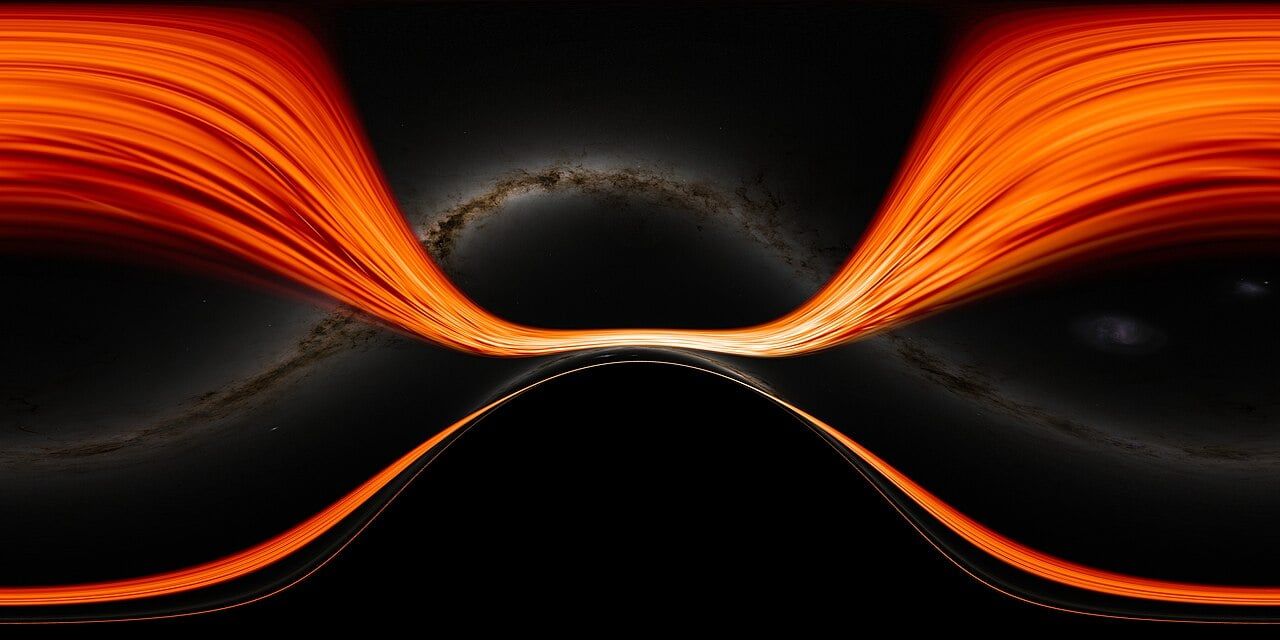
When matter collapses to form a black hole, classical general relativity suggests that all details of the collapsed material vanish behind an event horizon, leaving an object described entirely by its mass, charge, and spin.12 In the early 1970s, theoretical work revealed that black holes are thermodynamic objects with a well-defined temperature and an entropy proportional to the surface area of their horizon.12 Yet this classical area formula represents only the leading term in a broader physical expansion. In a full theory of quantum gravity, microscopic quantum fluctuations modify this area law, introducing subtle corrections that test our understanding of spacetime at the smallest scales.
The leading quantum correction to black hole entropy appears as a logarithmic term proportional to the logarithm of the horizon area or temperature.1 Because the coefficient multiplying this logarithm depends solely on low-energy massless fields rather than unknown high-energy physics, it serves as an exact infrared benchmark.1 Any microscopic candidate for quantum gravity, such as string theory, must reproduce this coefficient when counting microscopic quantum states.13 In a preprint posted to the arXiv server in September 2026, Nabamita Banerjee and Koustubh Guha from the Indian Institute of Science Education and Research Bhopal, alongside Muktajyoti Saha from the International Centre for Theoretical Sciences in Bengaluru, examined how rotation influences these logarithmic corrections in near-extremal black holes across three, four, and five spacetime dimensions.12
Why do black holes require quantum corrections to their entropy?
Classical thermodynamics explains that black hole entropy grows in direct proportion to the area of the event horizon divided by four times Newton's gravitational constant. For a black hole to store entropy, it must possess underlying microscopic quantum states whose total count matches the macroscopic thermodynamic value.12 In statistical mechanics, the entropy equals the natural logarithm of the number of microstates accessible to the system.1 When physicists count these quantum microstates in candidate theories of quantum gravity, the total state count generates the classical area law as its leading exponential term, accompanied by a power-law prefactor that produces a subleading logarithmic correction.1
The causal chain that generates these corrections begins with the quantum fields that exist throughout spacetime. Virtual particles continuously fluctuate into and out of existence in the surrounding geometry, including near the event horizon. When integrated over the entire spacetime path integral, the quantum fluctuations of massless fields modify the gravitational effective action at one loop.12 These one-loop quantum fluctuations alter the thermodynamic partition function, adding a term proportional to the logarithm of the black hole's geometric scale.14 By matching the coefficient of this macroscopic logarithmic term against microscopic state counting, physicists can verify whether a proposed microscopic model correctly captures quantum gravitational behavior beyond the classical approximation.12
For black holes that are extremal, meaning they possess the maximum possible charge or spin for a given mass, the Hawking temperature drops to zero.12 A near-extremal black hole sits just above this threshold, possessing a tiny non-zero temperature. In this near-extremal regime, the geometry outside the horizon splits into a distant asymptotic region and an isolated near-horizon throat geometry.1 Low-energy fluctuations in this throat produce quantum corrections that scale with the logarithm of temperature rather than just the logarithm of horizon area.1
Explaining this physical mechanism, Nabamita told Primary, "Black holes are intrinsically quantum objects. Thus, their entropy must come from the full quantum theory. For a black hole with temperature, it has an additional scale, as compared to the horizon (mass, charge etc). Now the low energy fluctuations produce log corrections to black hole entropy for every independent scale. Hence, a small nonzero temperature black hole entropy will have both, log area as well as log temperature correction."
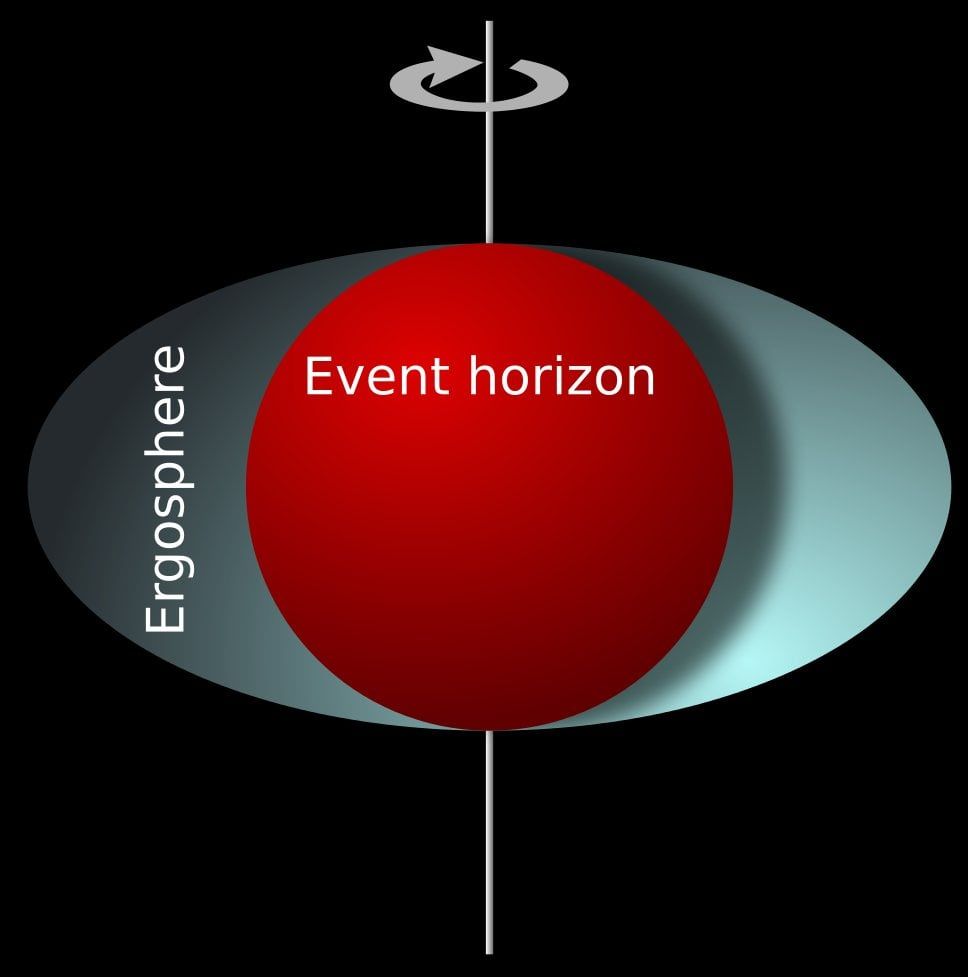
How does rapid rotation modify quantum fluctuations in three and four dimensions?
Rotation complicates the quantum analysis of black holes by breaking spherical symmetry and introducing complex geometry into the Euclidean path integral used to compute thermodynamic quantities.2 In three spacetime dimensions, the standard rotating solution is the Banados-Teitelboim-Zanelli black hole residing in an anti-de Sitter spacetime with a negative cosmological constant.2 Prior studies showed that extremal three-dimensional black holes receive a microcanonical correction equal to negative three-halves times the logarithm of the leading entropy, while near-extremal versions acquire a correction proportional to positive three-halves times the logarithm of temperature.
Banerjee, Guha, and Saha analyzed these three-dimensional solutions from a near-horizon perspective and confirmed the positive three-halves temperature coefficient.126 In addition, by treating the cosmological constant scale, or anti-de Sitter radius, as an independent parameter distinct from the horizon radius, the authors identified an additional logarithmic correction proportional to the logarithm of that length scale at extremality.16 Nabamita said in response to questions from Primary that "For an AdS black hole, the AdS radius or physically the cosmological constant in an independent parameter specifying the corresponding black holes. Thus, the entropy must get a log (ads radius) correction."
Their calculations matched predictions derived from the dual two-dimensional conformal field theory describing the microscopic boundary states.12 When asked about potential mismatches, Nabamita said, "One can compute the full quantum corrected partition function from the microscopic state counting. That result must reproduce the log corrections that one obtains by the near-horizon analysis. For asymptotically flat black holes, it is already proven that they do match. For other asymptotes, one has to cross check the results."
The researchers also evaluated how rotational zero modes behave in four-dimensional spacetime, focusing on the Kerr metric that describes rotating uncharged black holes.12 In pure four-dimensional Einstein gravity, extremal Kerr black holes possess an entropy correction equal to sixteen forty-fifths times the logarithm of the horizon area.1 For near-extremal Kerr black holes, boundary-time reparametrization modes in the near-horizon throat generate a correction of three-halves times the logarithm of temperature.1 However, the rotational zero modes in four dimensions present technical subtleties because candidate modes must maintain Ricci-flatness in vacuum general relativity, preventing a naive addition of an extra one-half logarithmic temperature factor.1
Nabamita clarified that "The zero-mode intuition does not break down. But the standard harmonic gauge choice breaks down in pure four-dimensional Kerr gravity. This is because the gauge condition is not invertible and hence it is not a good gauge in this case."
What changes when five-dimensional supersymmetric black holes rotate?
Five-dimensional supergravity allows for rotating supersymmetric black holes with three distinct charges, known as Breckenridge-Myers-Peet-Vafa black holes. In string theory compactifications, these five-dimensional black holes carry D1-brane charge, D5-brane charge, momentum, and angular momentum.1 At strict extremality, previous work by Ashoke Sen established that one-loop quantum corrections generate a logarithmic term proportional to negative one-fourth times the quantity of total vector fields minus three, multiplied by the logarithm of the charge scale when angular momentum scales non-trivially with charge.
Banerjee, Guha, and Saha extended this analysis to the near-extremal regime where the five-dimensional rotating black hole acquires a small non-zero temperature.26 By evaluating the quadratic fluctuation operator on the near-horizon geometry, the authors isolated the zero modes of the extremal background that shift slightly away from zero when temperature increases above zero.1 These modes include boundary reparametrizations described by a Schwarzian action, rotational zero modes, and SU(2) symmetry modes associated with the spatial sphere.12
Combining these contributions, the researchers derived a total near-extremal entropy correction for the minimal five-dimensional solution.2 Their result contains three distinct logarithmic contributions: three-halves times the logarithm of temperature scaled by a Schwarzian temperature scale, one-half times the logarithm of temperature scaled by a rotational scale, and three-halves times the logarithm of temperature scaled by an SU(2) scale.2 Explaining the origin of these specific numerical prefactors, Nabamita said, "Every zero mode contributes one-half log T. For the rotational symmetry, there is just one zero mode while for SU(2), there are three. Hence, we get the numbers mentioned above."
Every logarithmic argument scales as the product of the extremal horizon radius and the near-extremal temperature, operating in the regime where this dimensionless product remains much smaller than one.
What are the physical limits of these thermodynamic corrections?
The calculations in the preprint are low-energy effective field theory evaluations and do not replace a complete microscopic ultraviolet derivation.12 The results provide macroscopic constraints that candidate quantum theories must satisfy in the infrared limit, but they do not reveal the precise microscopic constituents of the black hole interior.12 The mathematical method relies on a perturbative expansion around the extremal near-horizon background, assuming that the temperature scale remains far below the inverse horizon size. Furthermore, the findings are posted on a preprint server and have not yet completed formal peer review.12
Regarding the regime of validity, Nabamita said, "Our results are only valid for a small window of temperature. This window is determined by the other scales present in the black holes. For any temperature higher than the window higher cut off would necessarily require a full non-extremal computation."
The study of near-extremal rotating black holes highlights how low-energy quantum fluctuations can probe the boundary between classical general relativity and quantum mechanics. By determining exact logarithmic coefficients across different spacetime dimensions, theoretical physicists establish quantitative consistency checks that any viable theory of quantum gravity must satisfy. As researchers extend these perturbative methods to non-zero modes and more general black hole configurations, these thermodynamic corrections will continue to guide the search for a consistent quantum description of spacetime.
This piece was prepared from the arXiv preprint and public records together with answers from Nabamita to 6 questions from the Primary news team, completed September 2026.
The record
52 sentences trace to 5 sources and 1 contributor.
-
1
NB
Nabamita Banerjee, Koustubh Guha, Muktajyoti Saha Paper · arxiv.org · 2 Sep 2026 Logarithmic corrections to the entropy for near-extremal rotating black holes Preprint · may not have been peer reviewed See the source
-
2
A
-
3
A
-
4
A
- 5 Contribution — Nabamita Banerjee 6 statements added to this article
-
6
P
papers.cool Third-party reporting · papers.cool Logarithmic corrections to the entropy for near-extremal rotating black holes | Cool Papers - Immersive Paper Discovery See the source
Other consulted pages1 page
Article history
-
Published 21 Oct 2026, 00:09Assembled by the Primary desk from 5 sources · 1 contributor · 52 cited sentences
-
Nabamita Banerjee
- Go to the sentence: Explaining this physical mechanism, Nabamita told Primary, "Black holes are intrinsically quantum objects. Thus, their entropy must come from the full quantum theory. For a black hole with temperature, it has an additional scale, as compared to the horizon (mass, charge etc). Now the low energy fluctuations produce log corrections to black hole entropy for every independent scale. Hence, a small nonzero temperature black hole entropy will have both, log area as well as log temperature correction."
- Go to the sentence: Nabamita said in response to questions from Primary that "For an AdS black hole, the AdS radius or physically the cosmological constant in an independent parameter specifying the corresponding black holes. Thus, the entropy must get a log (ads radius) correction."
- Go to the sentence: When asked about potential mismatches, Nabamita said, "One can compute the full quantum corrected partition function from the microscopic state counting. That result must reproduce the log corrections that one obtains by the near-horizon analysis. For asymptotically flat black holes, it is already proven that they do match. For other asymptotes, one has to cross check the results."
- Go to the sentence: Nabamita clarified that "The zero-mode intuition does not break down. But the standard harmonic gauge choice breaks down in pure four-dimensional Kerr gravity. This is because the gauge condition is not invertible and hence it is not a good gauge in this case."
- Go to the sentence: Explaining the origin of these specific numerical prefactors, Nabamita said, "Every zero mode contributes one-half log T. For the rotational symmetry, there is just one zero mode while for SU(2), there are three. Hence, we get the numbers mentioned above."
- Go to the sentence: Regarding the regime of validity, Nabamita said, "Our results are only valid for a small window of temperature. This window is determined by the other scales present in the black holes. For any temperature higher than the window higher cut off would necessarily require a full non-extremal computation."