Ancient DNA shows Ice Age hunters preferentially harvested female mammoths
Genetic analysis of hundreds of woolly mammoths shows human encampments were packed with females, resolving a longstanding debate over whether vast prehistoric bone heaps were hunted or scavenged from nature.
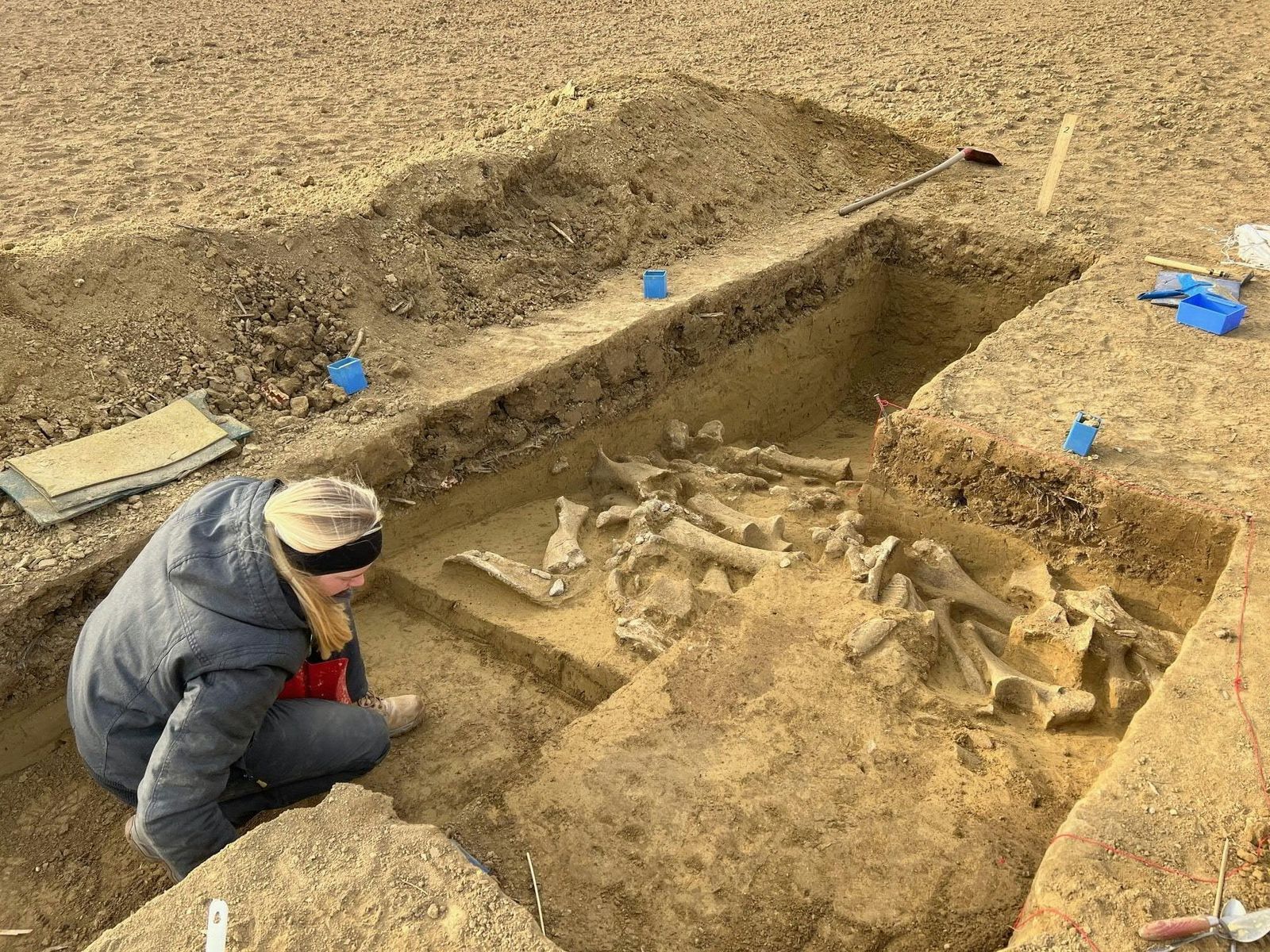
Across the frozen grasslands of Ice Age Eurasia, woolly mammoths were the undisputed giants of the steppe, yet their massive skeletons frequently ended up stacked in enormous heaps around ancient human settlements.12 For generations, excavators uncovering Upper Palaeolithic campsites across Central and Eastern Europe have unearthed remarkable concentrations of mammoth bones, including dozens of skulls, tusks, and ribs deliberately arranged into circular barriers that once served as shelters against the glacial wind.13 For decades, archaeologists argued over how these vast bone beds formed.14 Some saw them as proof of coordinated hunting by brave bands of people armed with stone-tipped spears, while others maintained that ancient foragers were mostly opportunistic scavengers collecting skeletal remnants from riverbeds and natural die-offs.12
The answer matters because it dictates how prehistorians view the ecology and ingenuity of early modern humans. If people systematically hunted mammoths, they possessed hunting strategies and social organisation capable of felling multiton megafauna on a regular schedule. If they simply collected weathered bones from natural graveyards, their daily lives were dictated by the passive discovery of carcasses rather than active ecological mastery.
The living relatives of mammoths provide the biological logic behind how these animals moved and died. In modern elephants, adult bulls leave their natal families to wander alone or in loose bachelor coalitions, roaming widely and taking greater risks across unfamiliar terrain. Female elephants remain together in matriarchal herds, raising calves and following fixed seasonal routes between water sources and feeding grounds. Lone males frequently venture into hazardous landscape features such as bogs, sinkholes, and crumbling riverbanks, where an accidental fall leads to death and rapid burial in sediment. Matriarchal herds travel along predictable corridors, defending their calves through coordinated vigilance and mutual protection. For human hunters looking across an open tundra, solitary wanderers were unpredictable targets, whereas a matriarchal herd presented a reliable, recurring presence along established migration trails.
Why did prehistoric bone beds hold so many females?
Bone accumulations at Ice Age human campsites are dominated by female mammoths, presenting a biological pattern that directly contradicts the sex ratio found in natural fossil deposits.43 When an international research team analyzed ancient genetic material from hundreds of woolly mammoths, the human-associated bone heaps revealed a heavy concentration of female animals, pointing to human selection rather than random natural mortality as the primary cause of the bone beds.14

The study, published in the journal Current Biology, was led by researchers at the Centre for Palaeogenetics in Stockholm, working with archaeologists and geneticists across Europe.13 By determining the chromosomal sex of 521 woolly mammoths from across Eurasia and North America, the researchers uncovered an unmistakable divergence between archaeological sites and natural death traps.43
Among 421 mammoths recovered from natural settings such as permafrost deposits, where animals perished without human involvement, only 34 percent of the individuals were female, while males accounted for 66.5 percent.123 That male bias matches expectations based on the reckless behaviour of solitary young bulls that fall into natural traps.14 In stark contrast, among 100 mammoths recovered from 11 human-associated archaeological sites dating from about 30,000 to 20,000 years ago, approximately 70 percent of the animals were female.
David Díez-del-Molino, a researcher at the Centre for Palaeogenetics and co-senior author of the study, explained that genetic comparisons finally settled the origin of these massive deposits.1 “Whether these massive mammoth bone accumulations were formed naturally or by human hunting has been debated for decades,” Díez-del-Molino said.1 “By comparing the genetic sex ratios of hundreds of mammoths from natural settings with those found in these archaeological contexts, we can now infer that human activity was the primary driver behind these bone accumulations.”13
Did early hunters seek easier targets or predictable herds?
Prehistoric hunters may have focused on female mammoths because herds moved along predictable migration routes across the open landscape, even if confronting groups of adult females carried significant physical danger.12 While an adult female mammoth was smaller than a mature bull, taking down a mother surrounded by protective herd mates was hardly an easy task.1
Hannah M. Moots, a postdoctoral researcher at the Centre for Palaeogenetics and lead author of the study, noted that elephant social structure complicates simple assumptions about hunting preferences.31 “If mammoths behaved like modern elephants, females living in matriarchal herds may have had group defences that would have made encounters with herds equally or even more risky,” Moots said.1 “Another possibility is that female-led herds moved across the landscape in more predictable ways than solitary males, meaning Upper Palaeolithic hunter-gatherers may simply have encountered them more frequently, whether for hunting or scavenging.”13
Direct weapon trauma confirms that human bands killed mammoths on occasion.13 Jarosław Wilczyński, an archaeologist at the Institute of Systematics and Evolution of Animals of the Polish Academy of Sciences, pointed out that physical evidence documents both direct hunting and resource salvage.31 “We know that Upper Palaeolithic hunter-gatherers sometimes hunted mammoths directly, as evidenced by projectile points embedded in mammoth bones, and they may also have scavenged material from carcasses,” Wilczyński said.13 “While it is tempting to assume that hunters would have targeted females because they were smaller than adult males, the reality may have been more complex.”13
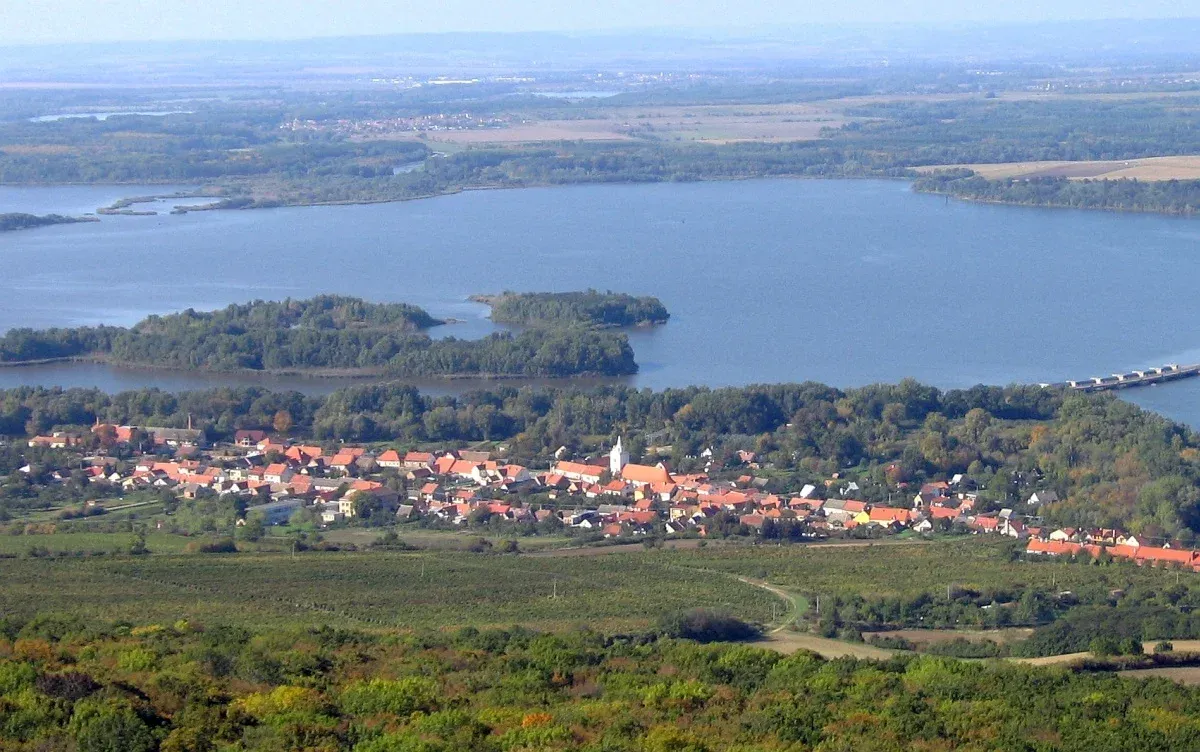
Mammoths served as an all-encompassing resource for Upper Palaeolithic communities, yielding meat, fat, hides, ivory for artistic carving and projectile points, and heavy bones that substituted for scarce timber on the treeless steppe.31 Sites in Moravia, including Dolní Věstonice I, Milovice I, and Předmostí I in the modern Czech Republic, contributed critical material to the investigation through the international MAMBA project.4 Martin Novák, head of the Centre for Paleolithic Archaeology at the Institute of Archaeology of the Czech Academy of Sciences in Brno, noted that connecting long-curated field documentation with paleogenomic tools allows researchers to reconstruct the interactions of people and megafauna some 30,000 years ago.24
What can mammoth genetics leave unexplained?
The genetic sex ratios confirm that human activity collected these bones, but the DNA alone cannot prove whether every animal was speared in a hunt or collected from a recent carcass.12 Paleogenomics identifies biological sex by calculating the ratio of X to Y chromosomes in preserved tissue, yet it cannot establish the exact cause of death for an individual whose bones bear no weapon marks.12 The 11 human-associated assemblages included in the investigation span roughly 10,000 years and thousands of kilometres of Eurasia, meaning that hunting strategies and scavenging habits likely varied across different human groups and regional environments.13 The study provides population-scale evidence of human selection, but it remains an interpretation of surviving bone fragments rather than a complete reconstruction of daily Ice Age foraging.42
The genomic analysis also revealed an unexpected biological finding from the final days of the species.13 Among the 521 examined specimens, a mammoth tooth from Wrangel Island, off the coast of northeastern Siberia, displayed an abnormal chromosomal profile known as X0/XX mosaicism, in which some cells carry one X chromosome and others carry two.31 In humans, this condition is known as Turner syndrome, and its discovery on Wrangel Island marks the first documented case of such a chromosomal variation in an extinct animal species.31 Wrangel Island served as the final isolated refuge for woolly mammoths until roughly 4,000 years ago, long after mainland populations had disappeared.13
Love Dalén, a professor of evolutionary genomics at Stockholm University and co-senior author of the research, emphasized that large-scale sequencing can resolve longstanding archaeological disputes.1 “By scaling up sample sizes, ancient DNA can go beyond evolutionary history to teach us about animal behaviour and human culture tens of thousands of years ago,” Dalén said.13 With newly reopened excavation trenches at classic European sites yielding fresh bone samples, researchers are now applying these genetic sexing techniques to refine how our ancestors navigated the living herds of the mammoth steppe.21
The record
36 sentences trace to 4 sources.
-
1
S
scientificinquirer Document · scientificinquirer.com · 21 Oct 2026 Ancient DNA Shows Ice Age Humans Targeted Female Mammoths See the source
-
2
A
avcr.cz Third-party reporting · avcr.cz Mamutí kosti z Moravy pomáhají řešit desítky let starou otázku - Akademie věd České republiky See the source
-
3
E
eurekalert.org Third-party reporting · eurekalert.org Ancient DNA reveals Ice Age humans preferred female mammoths See the source
-
4
R
repository.naturalis.nl Third-party reporting · repository.naturalis.nl Naturalis Institutional Repository: Paleogenomic sex inference of mammoth remains sheds light on the anthropogenic nature of bone accumulations See the source