Rotational cattle grazing may not build soil carbon
A systematic review of 70 grazing studies found no measurable carbon accumulation in its most rigorous trials, challenging assumptions about regenerative ranching.
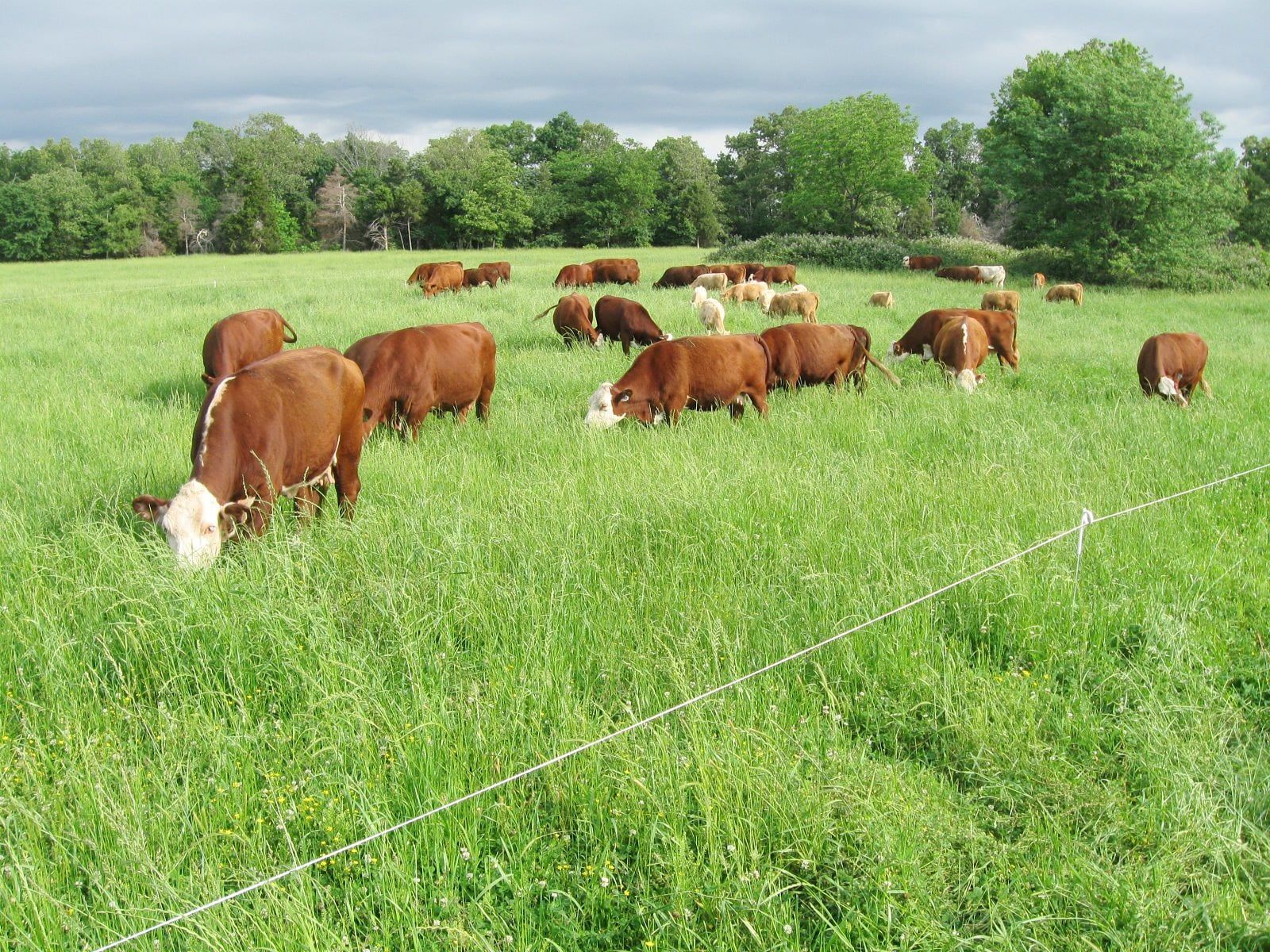
Across the semi-arid grasslands of North America, the surface of grazed pasture often seems to mirror the decisions of the rancher managing it. Where livestock remain in a single pasture for months at a time, forage plants can be grazed down repeatedly until patches of exposed dirt appear between tufts of stubble. By contrast, ranches that gather cattle into tight herds and move them frequently across dozens of fenced paddocks often display a thick mat of tall grasses and dark topsoil. For decades, advocates of rotational grazing have pointed to those visibly lush pastures as living proof that livestock can help pull carbon out of the atmosphere and lock it safely underground.
The idea matters because soil organic carbon forms the foundation of rangeland health and features prominently in voluntary climate mitigation strategies. Grasslands cover vast swathes of the planet, meaning even tiny gains in the amount of organic material stored in their soils could theoretically offset industrial greenhouse gas emissions. Agricultural carbon programs and sustainable beef initiatives have increasingly encouraged producers to divide their holdings into smaller parcels, resting each parcel between short pulses of grazing to promote vegetative recovery.
The biological pathway that governs underground carbon storage requires a coordinated sequence of plant growth and decomposition. First, perennial grasses must develop deep root networks, capturing atmospheric carbon dioxide through photosynthesis and converting it into sugars and structural plant tissue. Next, when livestock eat the top leaves lightly and move away, the grasses must survive and pump excess carbon compounds into the root zone to nourish surrounding microbial networks. Then, dead roots and trampled plant litter must break down slowly enough for subterranean fungi and bacteria to transform them into stable organic complexes rather than releasing the carbon straight back into the air as respiration gas. If grazing intensity removes too much foliage, or if livestock numbers increase to match greater forage volume, the plants cannot sustain that subterranean supply line.
A 2026 systematic review led by Jonathan Sanderman, vice president of science at the Woodwell Climate Research Center, reported that the most rigorous scientific trials show no clear evidence that rapid rotation actually accelerates that carbon transfer. The study, published on July 9, 2026, in the journal Communications Earth & Environment, evaluated 70 grazing studies with direct soil carbon measurements comparing continuous grazing with alternative rotational practices.12 Across the 10 studies that met all of the review's quality criteria, representing 27 distinct experimental observations, the average measured carbon accumulation rate was 0.03 tonnes of carbon per hectare per year.1 That figure carried a p value of 0.90, indicating that the slight gain was statistically indistinguishable from zero.1

Why did earlier ranch comparisons show large soil gains?
Past evidence supporting multi-paddock rotational systems came largely from comparative snapshots of working ranches rather than long-term controlled trials. In a 2011 study led by Richard Teague, a professor emeritus at the Texas A&M AgriLife Research and Extension Center at Vernon, researchers examined commercial operations across Cooke, Parker, and Jack counties in north Texas.13 That study, published in Agriculture, Ecosystems & Environment, evaluated neighbouring ranches where management regimes had remained constant for at least nine years.31 It found that ranches employing adaptive multi-paddock grazing held an average of 3.61 percent soil organic matter across the sampled soil profile, compared to approximately 2.4 percent on ranches subject to heavy continuous grazing.1 Both systems operated at an identical stocking rate of 27 animal units per 100 hectares.1
Teague and his colleagues recorded marked ecological differences on those north Texas properties. Multi-paddock ranches had 1 percent bare ground, whereas heavily continuously grazed ranches had 30 percent bare ground.1 Tall grasses constituted 45 percent of plant biomass on the rotational ranches compared to 7 percent under heavy continuous grazing.1 Standing crop reached 4,680 kilograms per hectare on multi-paddock land against 2,696 kilograms on heavy continuous pastures, and sediment loss dropped to four grams per square metre compared to 18 grams under continuous grazing.1 The ratio of fungi to bacteria in the soil ran at 3.1 on the rotational properties against 1.2 under continuous stocking.13 However, the study evaluated soil organic matter through loss on ignition, an analytical technique that burns away organic compounds to calculate mass loss rather than measuring elemental organic carbon directly.1
How do scientists assess whether grazing practices cause soil changes?
Researchers test for true cause and effect by setting up baseline measurements before a change begins or by matching experimental plots so that no confounding history exists. In his 2026 review, Sanderman evaluated 70 studies from around the globe and discovered that 47 of them failed more than one basic quality standard.1 The primary deficiency among rejected or downgraded papers was an inability to confirm whether a control site accurately mirrored the initial condition of the rotated pasture before management changed.12 When the review examined Teague's 2011 study, it graded the paper as secondary because adjacent commercial ranches may have possessed different historical cultivation, vegetation, or soil textures prior to the nine-year evaluation window.1
Historical management differences frequently distort conclusions about soil carbon dynamics. In one study analysed in Sanderman's review, an alternative grazing parcel had been retired from cropland 29 years before soil sampling took place, while the continuous grazing control parcel had been retired only 17 years prior.1 The observed difference in soil carbon stocks could have stemmed entirely from the 12 extra years the first site had spent under perennial pasture cover.1 When the review pooled all 23 primary and secondary studies representing 52 observations, the calculated accumulation rate averaged 0.29 tonnes of carbon per hectare per year with a p value of 0.08, showing a modest statistical trend that disappeared when restricted to the strictest trials.1
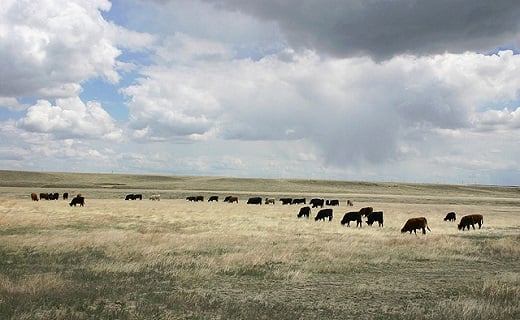
Controlled landscape-scale field experiments have also struggled to detect the benefits observed on working ranches. At the Central Plains Experimental Range in northeastern Colorado, ecologist David Augustine of the USDA Agricultural Research Service and his colleagues conducted a five-year randomized trial from 2014 to 2018.1 The researchers paired 20 pastures measuring 130 hectares each into 10 matched blocks based on soil types, terrain, and past vegetation.1 One pasture in each pair was assigned at random to adaptive multi-paddock rotation, while the other remained under season-long continuous grazing.1 As reported in Rangeland Ecology & Management in 2020, the team detected little evidence of an effect on the production of perennial cool-season grasses, while cattle under rotational management gained 12 to 16 percent less total weight each year compared to animals in continuous pastures.1
What can the current experimental records tell land managers?
The available literature provides an incomplete assessment of real-world ranching dynamics and cannot settle whether rotational grazing works when practiced under specific regional circumstances. Sanderman's systematic review assessed published papers captured through June 2023, meaning it excludes any research completed after that point.1 Its primary dataset contained only 27 observations across 10 studies, a small sample that revealed no clear geographical patterns when sorted by aridity, grassland type, or rotational style.1 Furthermore, the Colorado randomized trial did not collect soil carbon samples, while Teague's observational ranch comparisons lacked initial baseline measurements and omitted cattle weight gains and operating profits.1
Addressing the absence of a detectable carbon signal in the 10 highest-quality studies, Sanderman noted that the finding does not mean carbon storage never occurs under regenerative management.1 The broader challenge is that the wider scientific community has struggled to conduct rigorous experiments across commercial operations.1 Sanderman said in response to questions from Primary: “One thing I am confident about is the amount of sequestration that ranchers can expect is likely lower than many people are saying or hoping.”1 He added: “It is really hard to do research at the scale of commercial grazing enterprises.”1
Sanderman also observed that visible surface restoration does not automatically translate into deep soil carbon accumulation. When ranchers implement rotational systems, higher forage productivity often prompts them to expand herd sizes, which subsequently consumes the extra biomass before plant material can enter subterranean carbon reservoirs.1 For rangeland scientists and agricultural policymakers, future evaluations will require decade-long field trials that combine rigorous pre-treatment baselines with direct measurements of soil organic carbon, livestock productivity, and commercial ranch economics.
The record
30 sentences trace to 3 sources.
-
1
JB
Justin Brown Document · scienceblog.com · 22 Oct 2026 Soil organic matter ran 3.61 percent on north Texas multi-paddock ranches against about 2.4 percent under heavy continuous grazing, but a 2026 review found no carbon gain in its 10 best studies. See the source
-
2
S
Scienmag Third-party reporting · scienmag.com · 10 Jul 2026 Review Finds Soil Carbon Gains from Alternative Grazing Vary by Study See the source
-
3
H
hero.epa.gov Official record · hero.epa.gov Grazing management impacts on vegetation, soil biota and soil chemical, physical and hydrological properties in tall grass prairie See the source