A detached honey bee stinger operates as an autonomous double-piston pump
High-speed video reveals that paired internal valves alternate to drive the stinger deeper while pumping venom continuously without the insect.
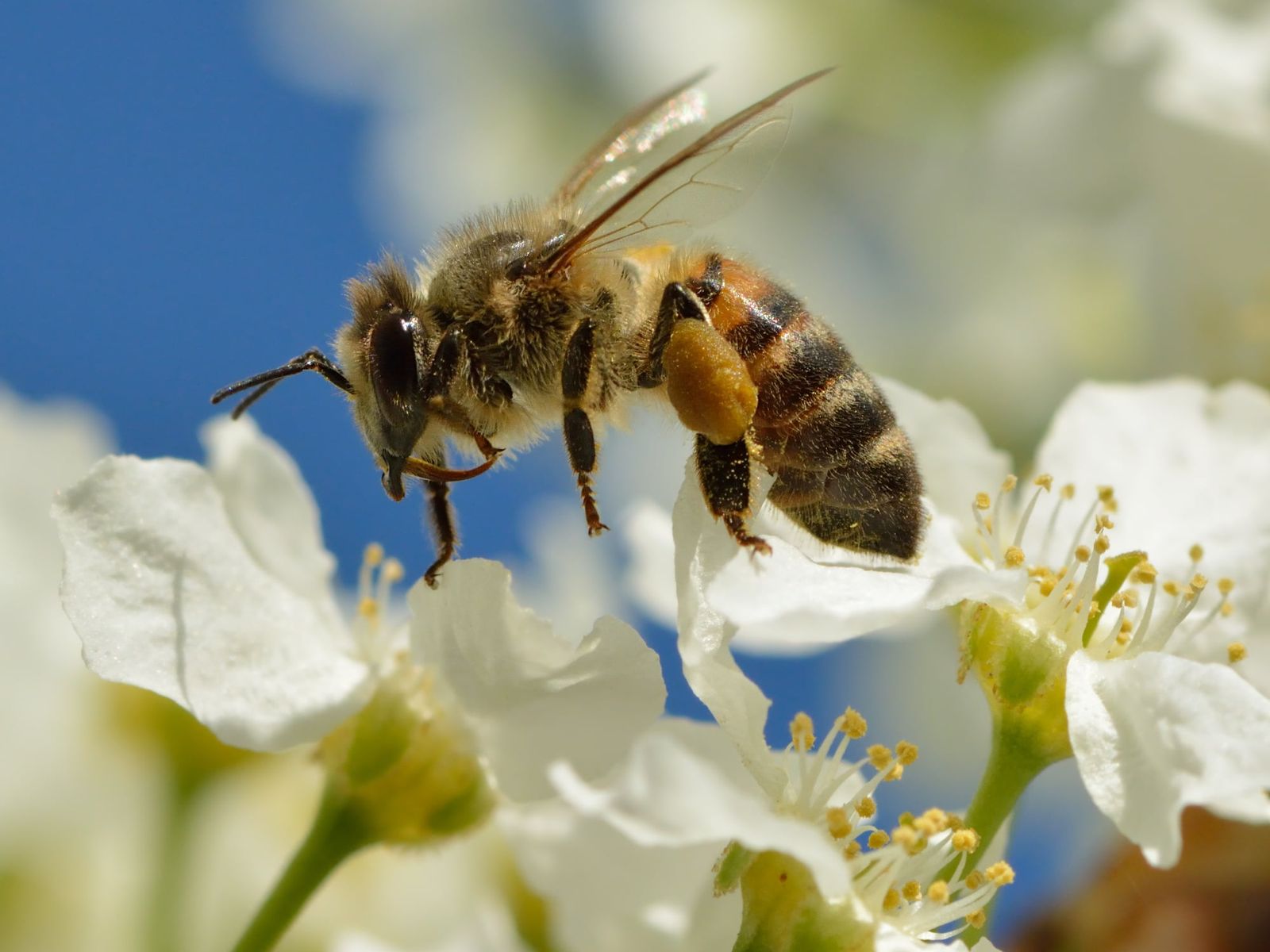
When a western honey bee stings an animal, the confrontation rarely ends when the insect is brushed away.12 The worker bee leaves behind its entire stinging apparatus, a sacrifice that tears its abdomen and soon kills the insect.21 Left embedded in flesh, the disembodied needle does not simply sit in place.34 It continues to dig deeper on its own, contracting rhythmically and injecting venom long after the bee has departed.35
This persistent assault serves as a colony defence mechanism known as autotomy.15 Worker honey bees are sterile females that do not reproduce, meaning an individual life can be lost to defend the larger hive and its queen.1 Because an intruder might swat the attacking insect instantly, a defensive weapon that continues working independently multiplies the deterrent effect of a single sting.21 To accomplish that feat without the central nervous system or muscles of the bee, the stinger contains an autonomous engine powered by local nerves, miniature muscles, and its own fluid supply.35
For a detached stinger to drive venom into a target, a strict mechanical sequence must unfold.3 The venom begins inside a storage sac, suspended like a small liquid reservoir.21 When the stinger penetrates skin, venom must flow from that sac into an enlarged bulb chamber.32 To push the liquid through the narrow tip into the wound, the chamber must build internal pressure.53 If a single plunger simply pressed forward and pulled back, the retreating stroke would suck injected fluid backwards.31 To deliver a steady supply of venom, the system must generate forward pressure with one stroke while simultaneously drawing fresh fluid from the reservoir, keeping liquid moving in one direction through alternating movements.32
Researchers have now demonstrated that the stinger accomplishes this through a pair of flexible valves that behave like a double-piston pump.34 In a study published on October 12, 2026, in the Proceedings of the National Academy of Sciences, Fiorella Ramirez Esquivel and colleagues at Macquarie University and the University of New South Wales Canberra showed that two internal valves operate in opposing phases.31 As one valve pushes forward to expel venom, the other collapses and retreats to let the chamber refill, keeping venom flowing smoothly into the wound while reciprocating saw-like shafts pull the barbed tip deeper.53
How does a detached stinger keep delivering venom?
The stinger maintains fluid flow by coordinating two independent lancets that slide along microscopic interlocking rails.35 The entire organ measures about 2 millimetres in length.5 Each of the two sharp lancets carries a flexible valve that sits inside the bulb chamber.35 When the muscles attached to the stinger fire, the lancets move backwards and forwards against one another.5 The same mechanical stroke that ratchets the stinger deeper into tissue also powers the internal fluid pump.31
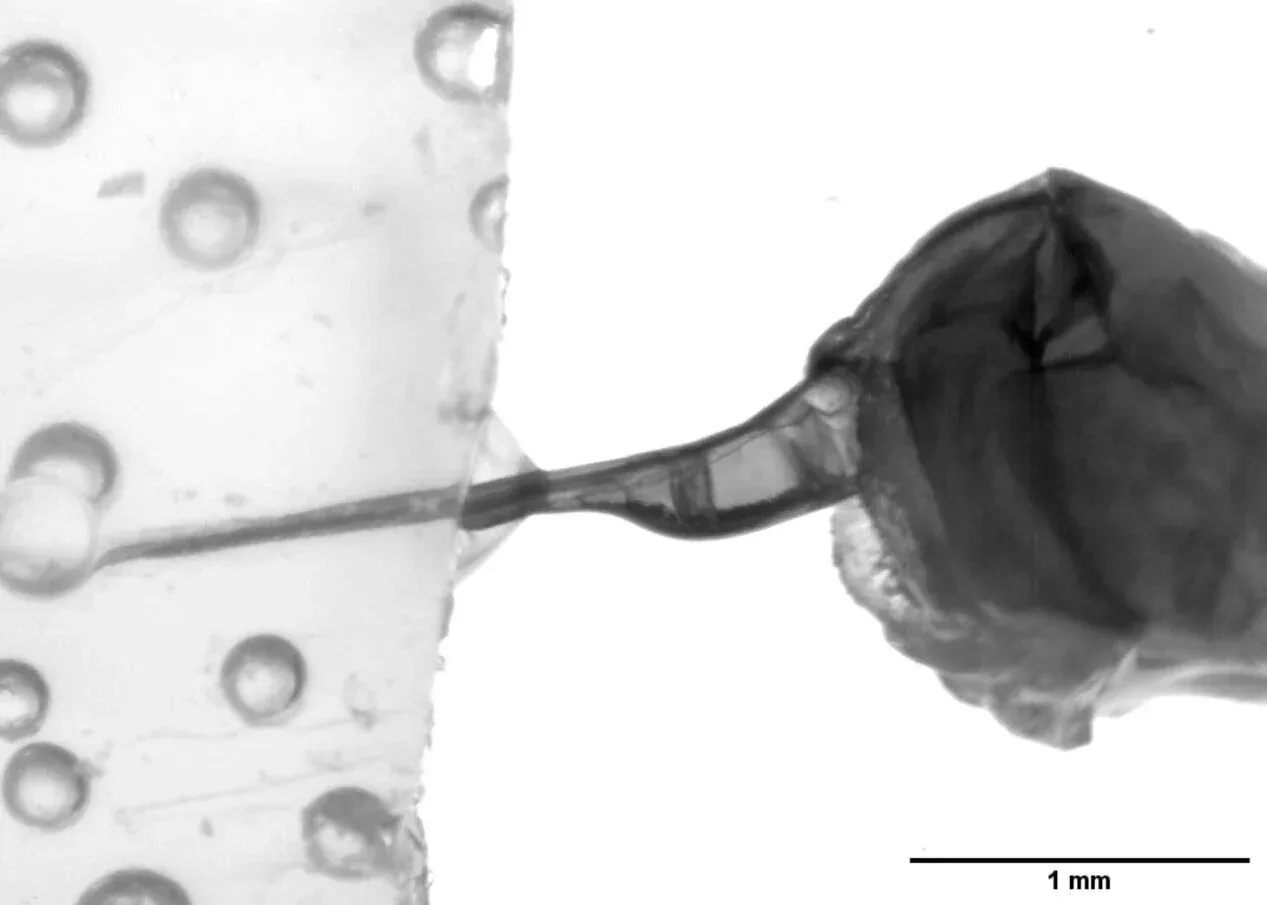
During the downstroke toward the wound, the active valve expands across the diameter of the bulb chamber like an opening parachute.23 This flare creates a tight seal against the chamber wall, driving the trapped pool of venom ahead of it toward the exit.25 At the same time, the opposite lancet pulls the second valve backwards in an upstroke toward the venom reservoir.32 As it retreats, this second valve deflates like an umbrella, allowing fresh liquid to refill the chamber with minimal backward suction.25
The central mechanical hurdle occurs when the two valves pass each other mid-stroke inside the shared chamber. To prevent a collision that would jam the mechanism, the flexible structures deform as they cross, slipping past one another while preserving the pressure seal.35 Ramirez Esquivel noted that the unique geometry of the valves allows them to act as collapsible pistons, pumping in opposite directions to deliver continuous venom flow.4
This opposed motion sets the honey bee apart from many other stinging insects.3 While social wasps generally expel venom by contracting circular muscles wrapped around the venom sac, honey bees rely on the mechanical strokes of their lancets.32 Because the pistons work in antiphase, the pump avoids the start-and-stop rhythm of a conventional medical syringe.13 Instead of a single plunger discharging once, two opposing plungers maintain an unbroken stream.1
How did researchers capture the internal motion?
The research team visualized the pump by mounting active stingers in a transparent skin substitute and filming them under high-speed video cameras.32 Entomologists have documented the presence of valves inside the stinger bulb since Robert E. Snodgrass illustrated them in 1910, but observing the rapid movement of the living tissues had remained technically unfeasible.123 To record the motion, the researchers pulled stingers from live worker bees and placed them into a clear gel within seconds of separation.31
Detached stingers remain fully active for only about two minutes at room temperature, requiring precise placement within an experimental window of about 4 millimetres.1 The researchers filmed the active stingers at 100 and 300 frames per second inside the gel, and recorded detached stingers at 500 frames per second without the substrate.3 Because the venom sac and stinger casing are naturally translucent, strong directional lighting allowed the team to track both valves across complete pumping sequences across six distinct stingers from different worker bees.31
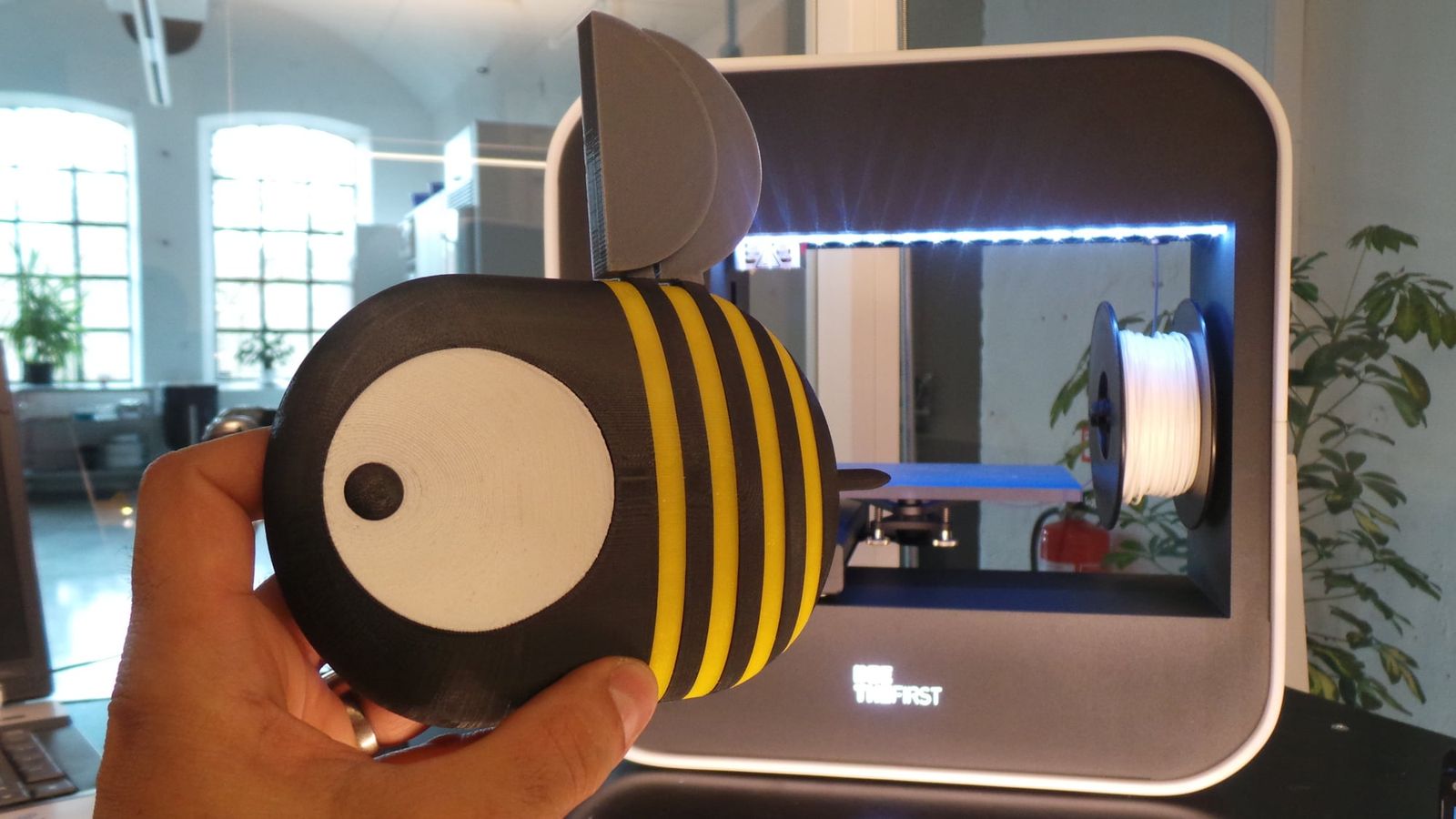
To verify the physical behaviour observed in the video footage, the researchers mapped the stinger anatomy using three-dimensional micro-computed tomography scans.35 From these volumetric reconstructions, the team constructed a scaled-up physical prototype using three-dimensional printing.32 By manufacturing the bulb chamber and internal valves out of combined rigid and flexible plastics, the researchers confirmed that the opposing piston motion successfully drives continuous fluid flow through a shared chamber.25
What remains unresolved about the mechanism?
The experimental observations document how the double-piston pump functions once active stinging is established, but they do not capture the very first instant of penetration.3 When the researchers mounted the stingers in the transparent gel, the lancets were already positioned inside the substrate.3 Research in the Journal of Morphology examining the ant Diacamma nr. indicum found that stingers fixed at the earliest stage of stinging showed both valves moving forward in step, suggesting that an initial in-phase stroke might precede the alternating cycle.3 Live high-speed recordings of that opening fraction of a second in bees have not yet been made.3
The study also evaluated mechanical motions rather than quantitative chemical delivery.3 The researchers recorded strong, regular pumping for 15 to 70 seconds after detachment, with minor twitches continuing for as long as 15 minutes.31 However, the optical measurements could not calculate the exact volume of venom transferred into the substrate across that duration.3 For medical guidance, a 2020 review in the journal Cureus noted that embedded stingers should simply be removed as quickly as possible, since delay allows more venom to enter regardless of whether the stinger is scraped or pinched.3
Questions also remain regarding the precise material properties of the living valves.3 In the three-dimensional printed physical model, the artificial valves replicated the observed biological deformations only when fabricated from highly elastic polymers with very low surface friction.3 Further work is required to determine the exact mechanical stiffness and surface lubrication of the natural tissues inside the insect.34
Understanding how a 2-millimetre biological organ pumps fluid continuously could offer useful templates for microfluidics and miniature medical devices.25 Engineers designing compact drug delivery tools, such as miniature insulin delivery patches, frequently face challenges moving precise volumes through narrow conduits without bulky motorized parts.34 A pump that uses opposing collapsible pistons inside a single chamber demonstrates that fluid can be pushed continuously without relying on a rigid external cylinder.52
The record
56 sentences trace to 5 sources.
-
1
C
CBC Third-party reporting · cbc.ca · 12 Oct 2026 The collapsible 'double piston’ that makes honey bee stings drive into your skin | CBC News See the source
-
2
T
theconversation.com Third-party reporting · theconversation.com How does a honeybee stinger actually pump venom? First-ever video shows it in action See the source
-
3
JO
Jenny Olalo Document · scienceblog.com · 23 Oct 2026 A honey bee stinger removed from the bee keeps pumping venom on its own as a double-piston pump, high-speed video of stingers in a clear skin-like gel shows See the source
-
4
G
ground.news Third-party reporting · ground.news Still Stinging? Bee’s Stinger Pumps Venom After Bee Long Gone See the source
-
5
P
popsci.com Third-party reporting · popsci.com · 12 Oct 2026 Bee stingers work like saws to pump venom See the source