A dead star appears to be consuming a newborn planet made from its own ashes
Unusual metals detected in the atmosphere of a white dwarf suggest gas expelled during the star's death coalesced into a second-generation giant planet that is now evaporating.
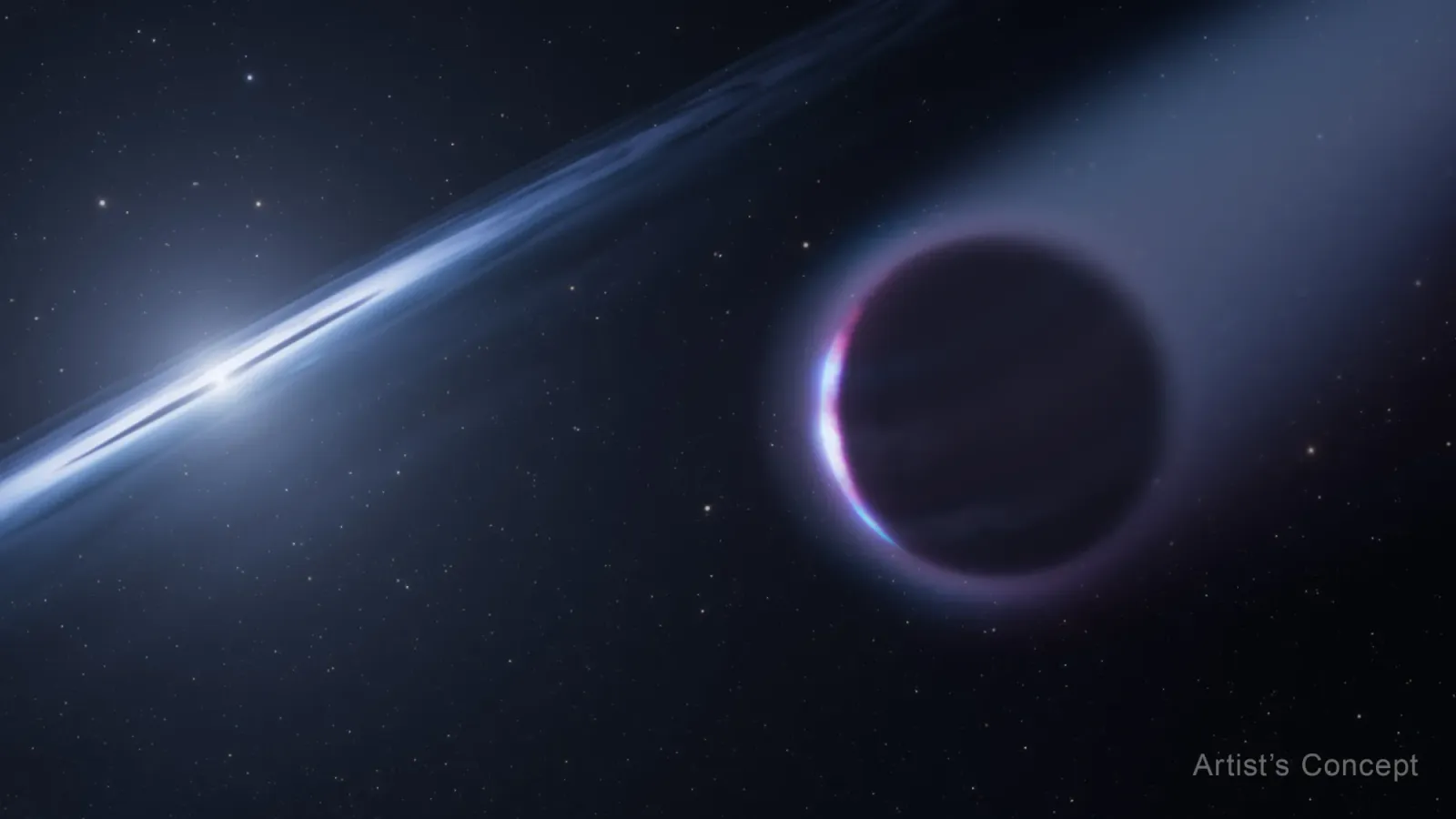
When a star like the Sun reaches the end of its life, it casts its outer gas into the surrounding space and leaves behind a dense, Earth-sized core known as a white dwarf.12 The conventional picture of planetary systems assumes that this violent transition marks the end of world building. Any planet orbiting nearby is swallowed during the star's giant phase, while distant survivors drift through an increasingly cold and quiet graveyard. Yet under rare circumstances, the material ejected during stellar death may gather together to start the process over again, assembling a brand new world from the wreckage of the old one.
Understanding whether stars can build planets after dying changes how astronomers interpret the ultimate fate of solar systems. If debris shed by a dying star can condense into a functioning world, planetary formation is not restricted to the early gas clouds that accompany stellar birth. The afterlife of a planetary system could span billions of years, hosting entirely new worlds that orbit stellar remnants across the cosmos.
For a second-generation planet to assemble, several physical events must unfold in a strict sequence. First, as a dying red giant expands, it must expel its outer atmosphere into an orbiting disc rather than scattering the gas into interstellar space. Next, that surrounding disc of cast-off material must cool, concentrate, and fragment under gravity, pulling clumps of gas and dust together until a planetary core forms. Finally, the newly born planet must settle into an orbit close enough to interact with the white dwarf left behind at the center of the system. In this arrangement, intense radiation from the stellar remnant heats the planet's outer layers, boiling atmospheric gas away into a stream that rains down onto the dead star.
A team of astronomers led by Jamie Williams, a doctoral researcher in the Department of Physics at the University of Warwick, reports evidence that this exact rebirth sequence has taken place.3 In a study published in Nature Astronomy, the researchers identify a candidate gas giant orbiting the white dwarf HS 0209+0832, located roughly 270 light-years from Earth.34 The star appears to be actively devouring the upper atmosphere of a planet that condensed out of the gas expelled during the star's own death throes.14
Why does the white dwarf contain unusual metals?
The atmosphere of HS 0209+0832 contains substantial concentrations of niobium, copper, and zinc that cannot be explained by standard stellar debris.14 Because white dwarfs possess intense surface gravity, heavy chemical elements sink below the visible surface into the interior within days or weeks, leaving only light elements like hydrogen or helium floating on top.3 Any heavy elements observed in a white dwarf atmosphere must have fallen onto the stellar surface recently from an external reservoir.34
When astronomers examine white dwarfs that have accreted rocky fragments, they typically detect silicon, iron, and magnesium, which reflect the composition of ordinary terrestrial asteroids.43 HS 0209+0832 presents the opposite profile: silicon and iron are depleted, while elements forged during the final stages of stellar life are strongly elevated.3 Most notably, the abundance of niobium in the white dwarf atmosphere is more than 1,000 times higher than the abundance measured in the Sun, marking the first time niobium has ever been detected on a white dwarf.4
Heavy elements such as niobium are synthesized through the slow neutron-capture process, or s-process, a nuclear reaction that operates inside dying stars during their bloated red giant phase.3 Nicholas Stone, an astrophysicist at the University of Wisconsin-Madison and co-author of the study, noted that these heavy elements can only be synthesized in the exotic conditions that briefly emerge inside dying stars.2 Because the observed mixture mirrors the expelled innards of an evolved star rather than primitive planetary rock, the falling gas points to a world assembled directly from the dying star's ejecta.42
How did astronomers detect the candidate planet?
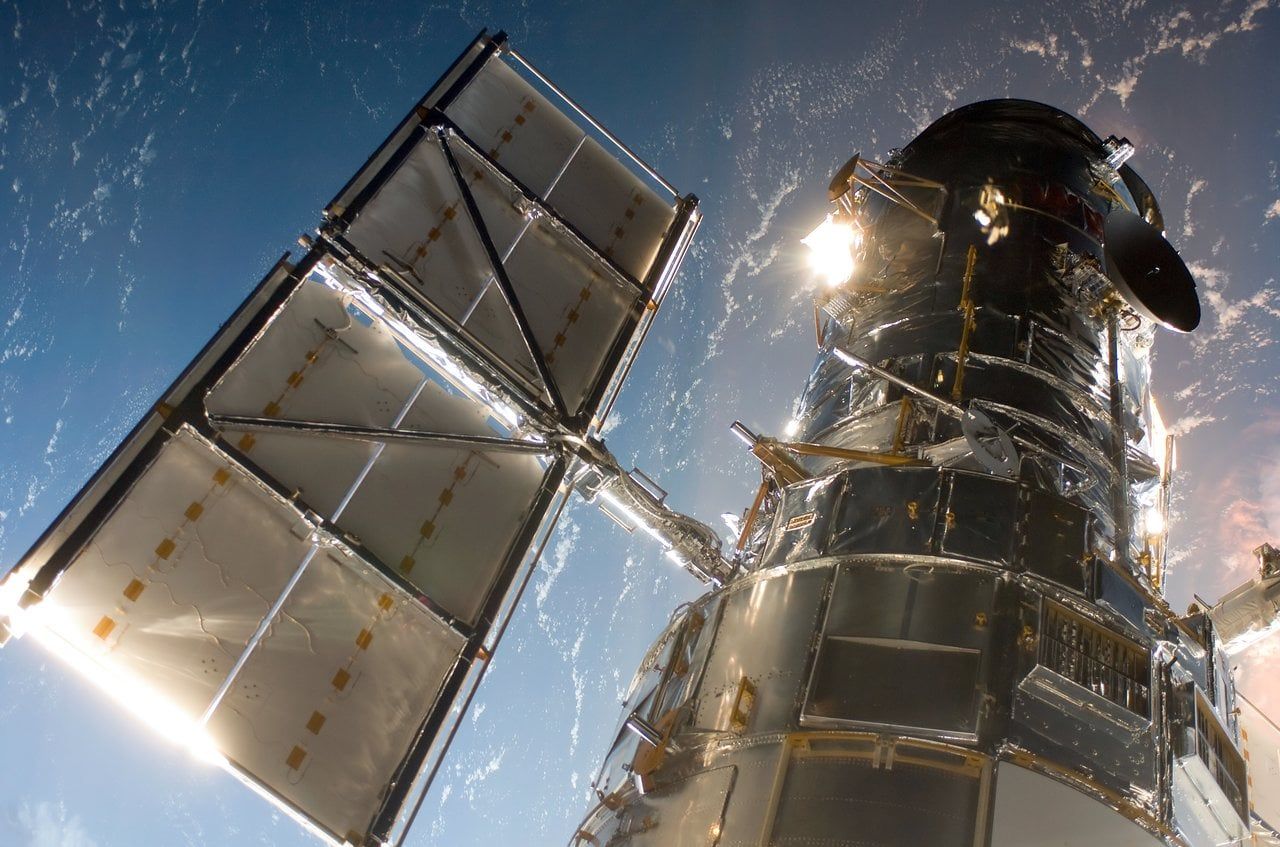
Astronomers detected the candidate planet by combining ultraviolet archival spectroscopy from space telescopes with periodic visible-light brightness variations.12 When the Hubble Space Telescope examined HS 0209+0832 in 1999, astronomers observed an excess of helium and roughly 100 absorption features in the ultraviolet spectrum that could not be matched to known patterns.12 Williams re-examined those archival records with modern atomic databases, discovering that niobium accounted for many of the unidentified spectral dips.2 The team corroborated the finding using observations from NASA's Far Ultraviolet Spectroscopic Explorer, which registered the same chemical signatures.2
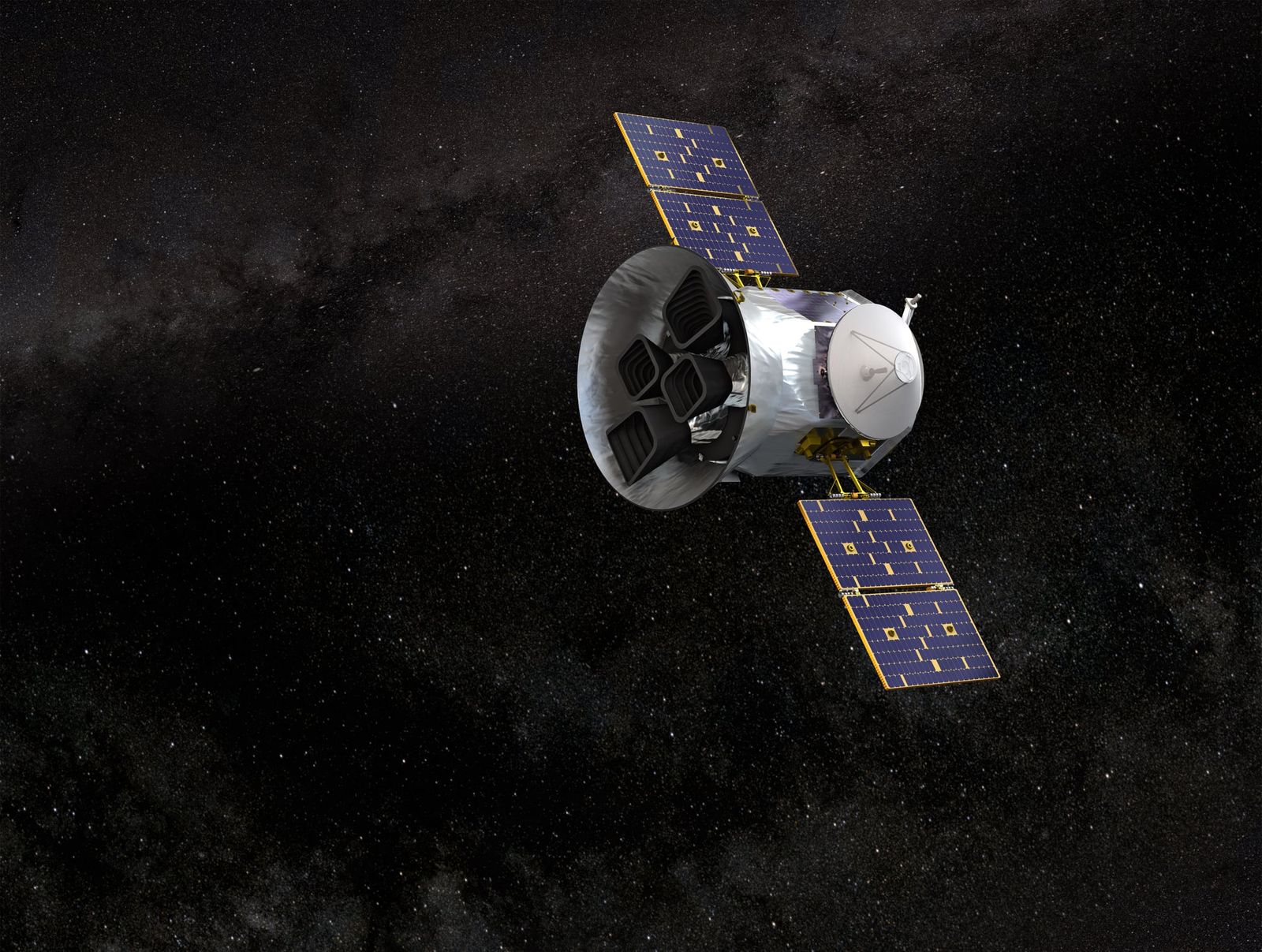
Photometric measurements collected over four months by NASA's Transiting Exoplanet Survey Satellite revealed that the light output of the system fluctuates on a regular 4.4-day cycle.24 That periodic variation matches what astronomers expect from a Jupiter-sized gas giant tidally locked in a tight orbit roughly 3.7 million miles (6 million kilometers) from the white dwarf, a distance much closer than Mercury orbits the Sun.24 The variation in brightness arises as the planet presents its alternating day and night sides toward Earth, or from a comet-like tail of gas trailing behind the evaporating world.31
The white dwarf is relatively young and exceptionally hot, maintaining an effective surface temperature of approximately 35,000 kelvin (roughly 63,000 degrees Fahrenheit), compared with 5,800 kelvin (10,000 degrees Fahrenheit) for the Sun.1 Blistering ultraviolet radiation from the stellar core heats the planet's upper atmosphere, causing it to boil away into space.34 Part of that escaping gas forms a disc around the white dwarf and falls onto its surface, providing a continuous supply of heavy elements that explains the star's contaminated spectrum.24
What are the limits of the current evidence?
The detected object remains a candidate planet rather than a verified discovery.3 The available data provide an indirect chemical detection and an orbital light curve, but direct imaging or independent radial velocity confirmation has not yet been achieved. Williams emphasized that the planet is not confirmed, describing it as a candidate that requires follow-up verification before its mass and structure can be settled definitively.3
The physical mechanism that allowed a protoplanetary disc to gather around the dying star also relies on theoretical modeling that has not been directly observed. An isolated dying star sheds its outer envelope outward in a roughly symmetrical manner, which disperses gas rather than trapping it in orbit.43 To assemble a dense disc capable of birthing a planet, the researchers hypothesize that HS 0209+0832 originally possessed a close companion, such as a low-mass star with 20% of the Sun's mass or a brown dwarf, that pulled expelled gas back into orbit before plunging into the stellar core.34
The researchers plan to observe the system using the Hubble Space Telescope and the Chandra X-ray Observatory, while requesting observation time on the James Webb Space Telescope.3 Because the candidate planet is hot, it should glow in infrared light, which could allow the James Webb Space Telescope to confirm its existence through direct atmospheric spectroscopy.1
What does a reborn world mean for planetary systems?
If confirmed, the discovery shows that planetary formation can occur around white dwarfs, the most common stellar remnants in the universe.4 While astronomers previously found second-generation worlds orbiting pulsars, those systems formed around the remnants of massive supernova explosions.31 White dwarfs represent the eventual fate of more than 95 percent of all stars, including the Sun, meaning that debris discs and second-generation worlds could be widespread throughout the Milky Way.3
Such planets may also experience remarkable long-term stability once their host stars cool down. Although HS 0209+0832 currently blasts its candidate planet with extreme radiation, white dwarfs do not generate new nuclear energy and gradually decrease in temperature over billions of years.2 As the white dwarf cools, its habitable zone migrates inward and stabilizes, potentially leaving a surviving world in a steady environment for tens of billions of years.
The discovery suggests that the death of a star does not necessarily extinguish all world-building potential. As Boris Gänsicke, a professor of physics at the University of Warwick and study co-author, concluded, this system has given birth to a new world using the foundations of the old one, raising the prospect that similar rebirths could occur throughout the galaxy, including the distant future of our own solar system.4
The record
34 sentences trace to 4 sources.
-
1
MR
Matthew R. Francis Document · zmescience.com · 22 Oct 2026 Dead Star Devours a Newborn Planet That Formed From Its Own Remains See the source
-
2
NS
NASA Science Official record · science.nasa.gov · 5 Oct 2026 Suspected Second-generation Planet Solves NASA Hubble Cold Case - NASA Science See the source
-
3
N
news.ssbcrack.com Third-party reporting · news.ssbcrack.com · 5 Oct 2026 Hubble Finds Chemical Clues to a Giant Planet Reborn From a Dead Star's Debris - SSBCrack News See the source
-
4
W
warwick.ac.uk Third-party reporting · warwick.ac.uk Astronomers find a world reborn from its star's ashes See the source