A real summer dawn may have shaped Vincent van Gogh's Starry Night
Astronomical alignments point to a late July dawn over Provence rather than the mid-June night long assumed by art historians.
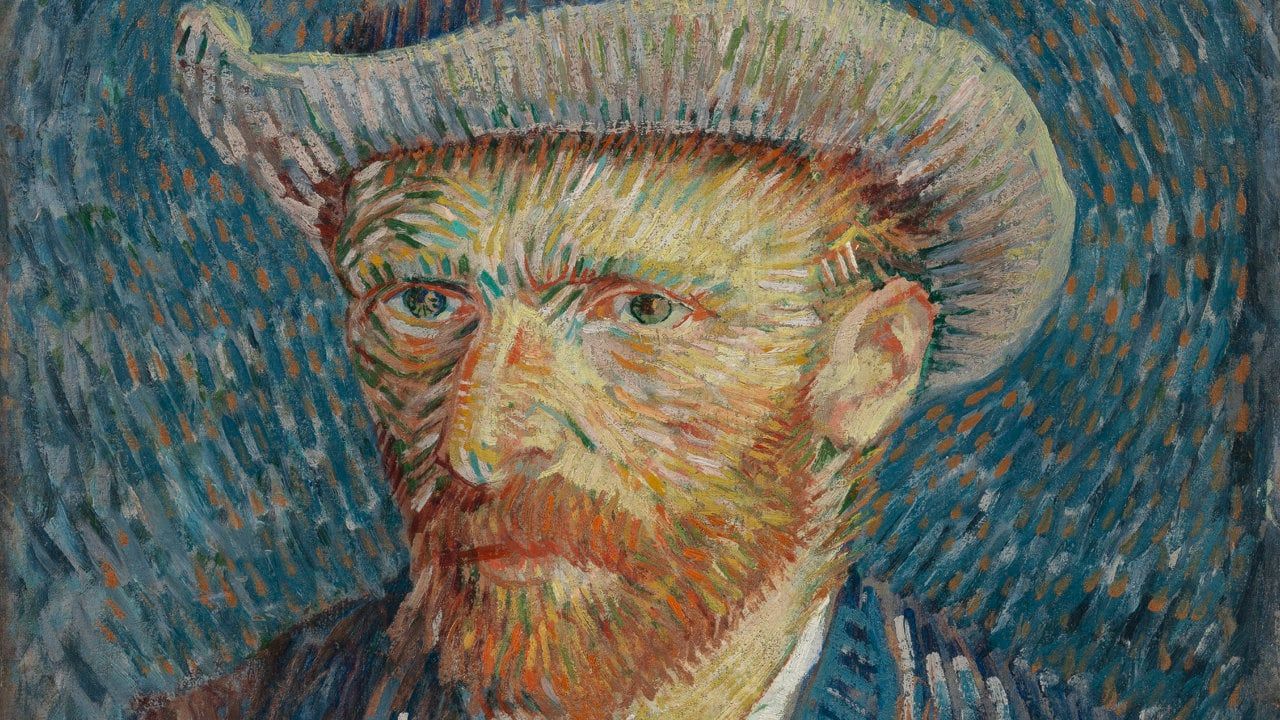
A dark cypress climbs toward a swirling sky where luminous yellow globes float inside wide halos of light and cool currents drift across the canvas. For more than a century, Vincent van Gogh's 1889 masterwork, The Starry Night, has stood as one of the most celebrated depictions of the heavens in Western art.12 Most observers have viewed those churning celestial spirals as pure expression, a turbulent projection of an artist working inside the Saint-Paul-de-Mausole asylum in Saint-Rémy-de-Provence.13 Yet human perception rarely invents a complex arrangement of brilliant lights out of nothing. When an observer watches the predawn horizon over rolling hills, real celestial bodies rise in steady, predictable mechanical orders that leave an impression on the human eye.
Understanding whether those painted celestial shapes reflect an imagined fantasy or a recorded reality alters how scholars interpret the painter's relationship with the natural world. If the arrangement of the luminous bodies in Saint-Rémy was drawn from direct sight, the painting ceases to be an isolated vision of internal distress. It becomes instead a deliberate synthesis of acute celestial observation, filtered through an intense personal technique. That distinction matters for art history, because van Gogh often insisted on working from tangible subjects rather than detached fantasy, regularly debating peers who favored pure imagination.12
To understand how an astronomer can test a painted sky against reality, consider the physical mechanics of the dawn. Earth rotates steadily toward the east, bringing distinct constellations, wandering planets, and changing lunar phases into view along the morning horizon. For any specific morning of the year, viewed from an exact geographic latitude, the celestial bodies present a unique geometric fingerprint. The moon cycles through predictable phases every month, growing thinner or thicker as its orientation relative to the Sun shifts across days. A planet such as Venus follows an independent orbital path, appearing at varying angular distances from background star clusters. If an artist sits by an east-facing window before dawn, those separate celestial objects align in a singular pattern that holds for only a brief window of calendar time.
In a study published in the journal Scientific Reports, a research team led by Elijah Jeong-hyun Kim, an astronomer and the chief executive of South Korean telescope company SLLAB, reports that the heavenly arrangement in The Starry Night matches the predawn sky above Saint-Rémy on July 22, 1889.143 The finding challenges more than four decades of academic consensus that dated the canvas to mid-June of that year.51 By analyzing historical celestial positions, regional meteorological records, and the painter's letters, the authors concluded that the glowing celestial bodies on the canvas reflect the V-shaped Hyades star cluster in the constellation Taurus rising beside the planet Venus under a slender crescent moon.13
Why did the traditional June date fail to explain the painted sky?
The traditional dating of The Starry Night to mid-June 1889 conflicts directly with the phase of the moon visible on the canvas.21 For decades, institutions including the Museum of Modern Art in New York, which holds the painting in its permanent collection, linked the canvas to a letter van Gogh wrote to his brother Theo around June 18, 1889, in which he mentioned having a new study of a starry sky.14 That documentary note led early researchers to assume the painting depicted the night sky of mid-June. However, astronomical calculations show that on June 19, 1889, the moon was in a waning gibbous phase, appearing 63 percent illuminated as a lopsided oval.14 The canvas in New York shows a sharp, slender crescent moon, an anatomical mismatch that earlier studies struggled to reconcile with the June sky.15
Earlier astronomical investigations in the 1980s by art historian Albert Boime and astrophysicist Charles Whitney produced contradictory interpretations, leaving the observational question unsettled.16 Those earlier studies proposed that the painted constellation was Aries, a constellation whose constituent stars are relatively faint.14 Elijah Jeong-hyun Kim, who has spent more than 25 years aligning large optical telescopes and memorizing stellar positions, recognized a different grouping when examining the canvas.13 To his trained eye, the prominent V-shaped formation in the center of the painting resembled the Hyades cluster in the constellation Taurus, a far more luminous grouping located near the reddish giant star Aldebaran.4
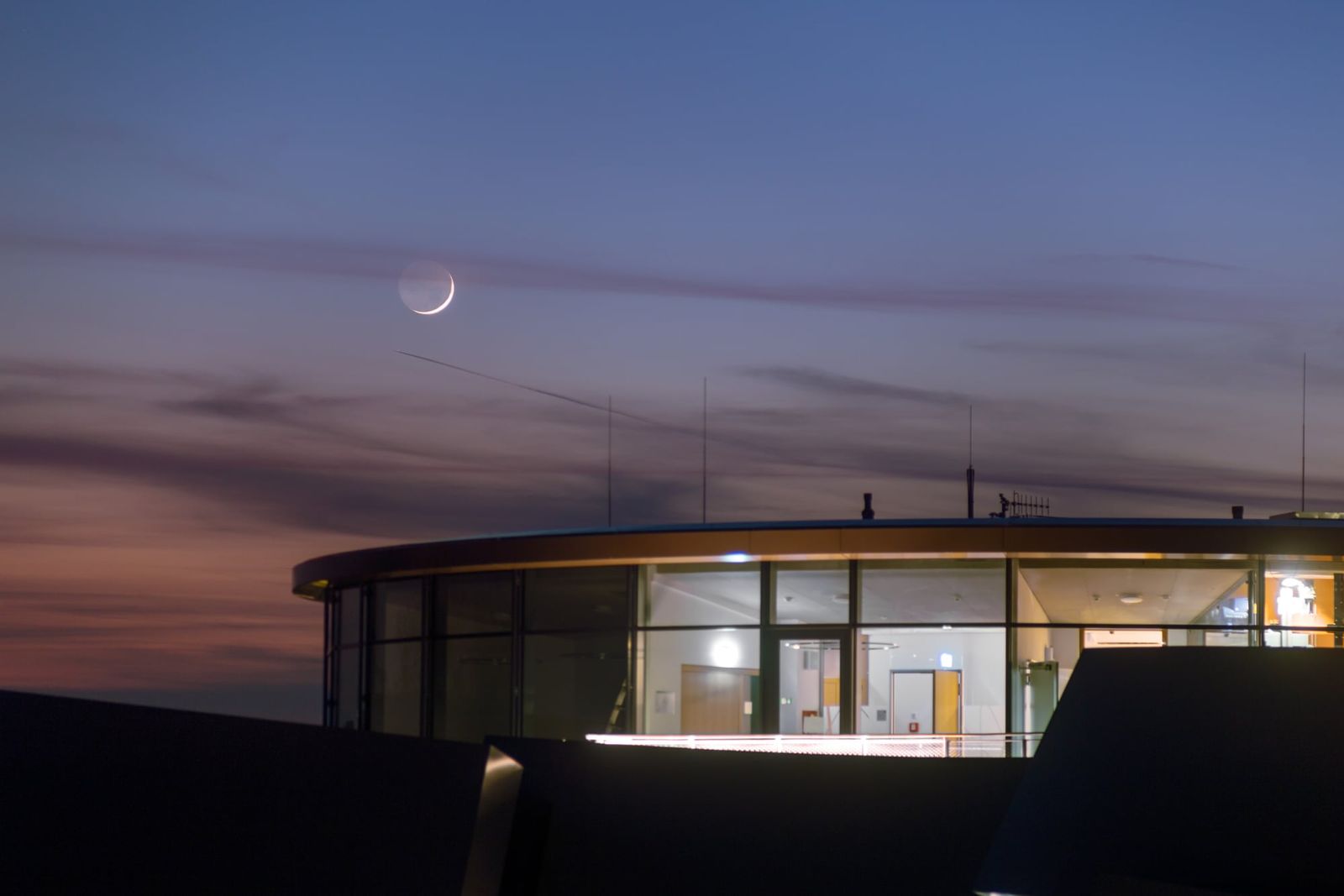
When Kim calculated the celestial mechanics over Saint-Paul-de-Mausole for the summer of 1889, the configuration of July 22 resolved the lunar contradiction.16 On the morning of July 22, 1889, the moon's illuminated fraction had dropped to 28 percent, presenting the slender crescent that van Gogh placed in the upper right quadrant of the composition.14 Astronomical simulations placed that crescent moon directly above Venus in the eastern sky, with the V-shaped Hyades cluster positioned between them.12 On July 21, the moon sat further from Venus, while in the days immediately following, the two bodies drew noticeably closer together, making July 22 the central geometric match for the painted arrangement.12
How did researchers verify the painted constellation?
Researchers verified the painted stellar pattern by applying a statistical shape analysis technique that compared the relative distances between five key painted stars with actual celestial coordinates.14 The team used Procrustes analysis, an analytical framework that rotates, scales, and translates geometric configurations to measure how closely two independent sets of points conform to one another without being distorted by canvas scale or brushstroke size.45 This method evaluated the relative geometry between the points rather than their absolute sizes or vivid yellow colors, allowing the researchers to quantify how closely van Gogh's brushmarks mirrored actual star catalogs.14
Before evaluating The Starry Night, the investigators validated their geometric framework against paintings with known celestial representations.13 They examined Starry Night Over the Rhône, which van Gogh painted in 1888, where the seven stars of the Big Dipper are clearly recognizable, confirming that the painter reproduced real stellar geometry with measurable fidelity despite his expressive brushwork.1 They also examined historical canvases with identifiable depictions of Orion and another painting containing an impossible celestial arrangement.1 When applied to the five prominent stars in the central cluster of The Starry Night, the Procrustes method demonstrated that the Hyades cluster in Taurus provided the strongest statistical fit among all candidate constellations, easily outperforming Aries.41
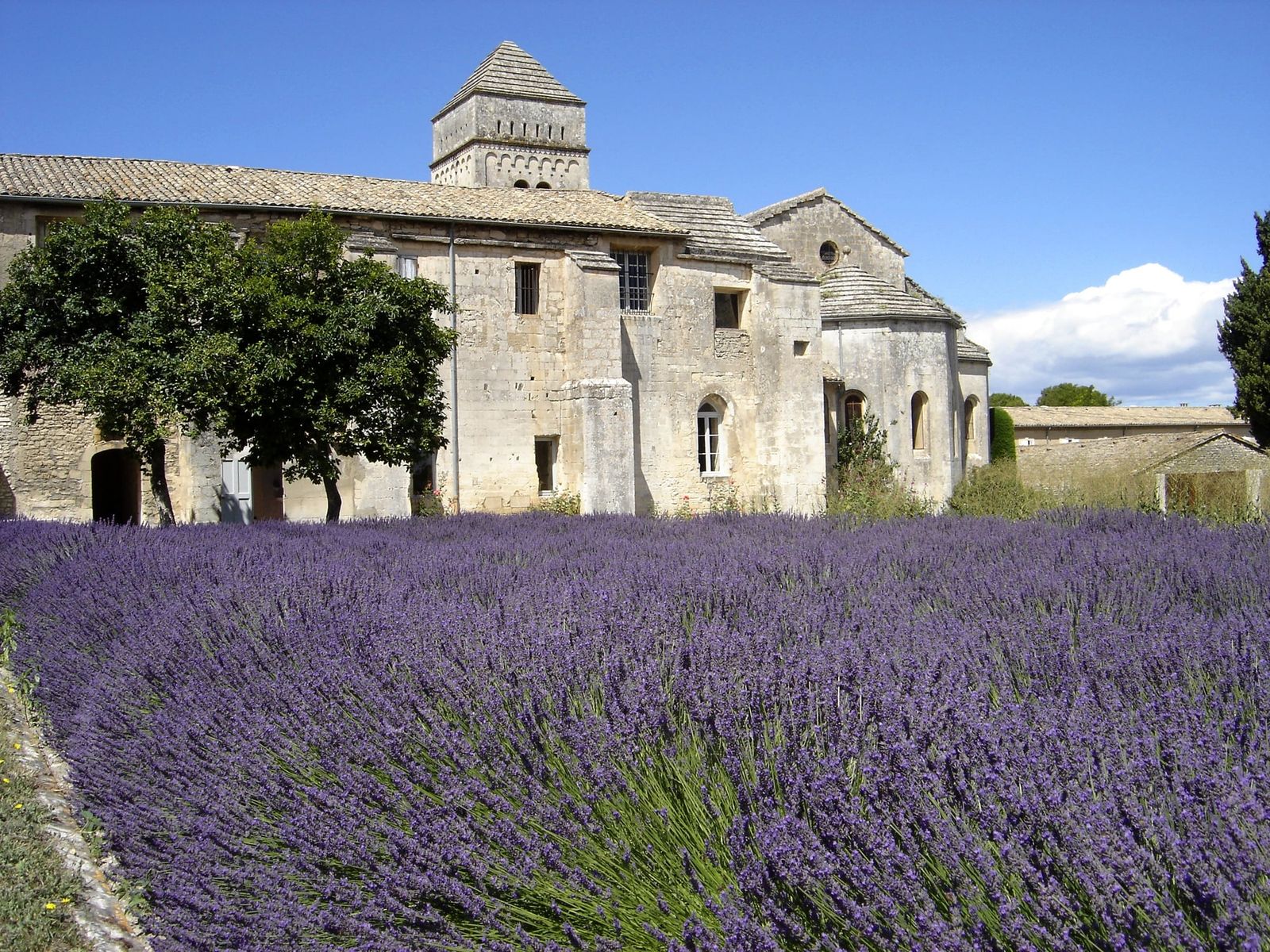
To test whether the painter could actually view this grouping, Kim visited Saint-Rémy-de-Provence in June and July 2019 to evaluate the physical vantage point.2 The researchers combined on-site observations with an earlier landscape sketch by van Gogh to reconstruct the narrow field of view from the east-facing window of the asylum.16 Their reconstruction established that the crescent moon, the planet Venus, and the Hyades cluster all fell within the artist's natural field of view above the Provençal hills in the predawn hours of late July.53 The team discovered that when van Gogh later created a black-and-white pen drawing of the scene, the five stars aligned with the Hyades even more precisely than in the oil painting.15
What does the historical record reveal about van Gogh's summer?
Historical weather logs and regional letters indicate that Vincent van Gogh was capable of observing the dawn sky in late July before suffering a severe health crisis.13 Biographers have traditionally recorded that the painter suffered a debilitating mental crisis in mid-July 1889, falling silent in his correspondence after July 16 and remaining incapacitated for several weeks.13 If that traditional timeline were immovable, van Gogh would have been unable to stand at his window before dawn on July 22 to observe the heavens.1 Kim and his colleagues examined 19th-century meteorological observations recorded across three monitoring stations in southern France to re-evaluate the painter's written words.16
In an August 22 letter to Theo, van Gogh wrote that his mid-summer crisis had overtaken him in the fields while painting during a day of strong wind.1 The researchers cross-referenced that description with regional weather archives, discovering that a powerful mistral, the fierce northerly wind typical of southern France, blew across the region between July 27 and July 29, 1889.1 Furthermore, in a letter sent in September, the painter described having been confined for six weeks following the episode, a count that points backward to an onset around July 25 or 26.1 The frequent mention of cicadas in van Gogh's summer correspondence also aligns with the hotter regional temperatures recorded in late July 1889 rather than the milder conditions of mid-June.62
The study cautions that these findings represent an astronomical reconstruction rather than definitive proof of a single painting session.32 Like any forensic investigation of historical art, the conclusions depend on the completeness of 19th-century weather logs, surviving correspondence, and assumptions regarding how an artist works.31 Van Gogh painted indoors in a ground-floor studio at the asylum using preliminary sketches, memory, and personal letters, meaning the final canvas is almost certainly a composite of multiple dawn observations made over several days rather than an instantaneous snapshot.21 A mathematical shape match cannot rule out that an artist introduced deliberate artistic modifications to improve compositional balance.16
What changes if The Starry Night reflects a real July dawn?
Establishing an astronomical basis for The Starry Night demonstrates that Vincent van Gogh's most visionary works remained deeply anchored in physical observation.21 The artist famously argued with Paul Gauguin, who urged him to paint purely from imagination, insisting that his own work required a grounding model in nature.1 In a letter written to Theo in the spring of 1889, van Gogh noted seeing the countryside long before sunrise with nothing but the morning star, which looked very large.1 The realization that the celestial objects on the canvas reproduce the dawn of July 22 suggests that the swirling sky was not an arbitrary hallucination, but an amplified celebration of an actual cosmic alignment.31
The findings also open new avenues for interdisciplinary research between astronomers and art historians. Independent scholars have noted that while the position of Venus relative to the Hyades remains subject to debate among specialists, the July alignment offers a plausible astronomical hypothesis that resolves the long-standing mystery of the crescent moon.42 The research team plans to extend their geometric framework to other works in van Gogh's catalog, including Café Terrace at Night, which their preliminary analysis suggests may depict the stars of the Summer Triangle.65 By looking up at the predawn sky in late July, modern observers can still see the exact celestial alignment that caught the painter's eye through an asylum window 137 years ago.42
The record
48 sentences trace to 6 sources.
-
1
TP
Tibi Puiu Document · zmescience.com · 22 Oct 2026 Van Gogh’s Starry Night May Have Been Based on a Real Night Sky and Astronomers Found an Astonishing Match See the source
-
2
AN
ABC News Third-party reporting · abcnews.com · 22 Oct 2026 New study traces van Gogh's famed 'Starry Night' to an actual night sky from 1889 See the source
-
3
G
gizmodo.com Third-party reporting · gizmodo.com · 22 Oct 2026 Astronomers Matched van Gogh's Starry Night to a Real Sky—and a Weirdly Specific Date See the source
-
4
SA
Scientific American Third-party reporting · scientificamerican.com · 22 Oct 2026 Astronomers unlock a mystery hidden in van Gogh’s The Starry Night See the source
-
5
T
talker.news Third-party reporting · talker.news Study finds Van Gogh’s ‘Starry Night’ matches July 1889 sky See the source
-
6
YN
Yahoo News Third-party reporting · popsci.com · 22 Oct 2026 What night is van Gogh’s ‘The Starry Night’? New analysis says it’s in July. See the source