Incompatible mosquito eggs curb dengue transmission in urban neighbourhoods
Releasing sterile males cut dengue cases by roughly seventy percent across eight housing clusters, offering a scalable template for cities struggling to control the disease.
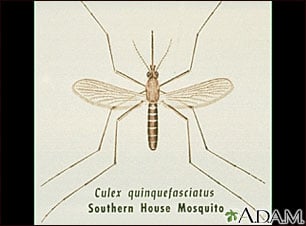
Controlling a mosquito-borne illness usually means killing insects with chemical fogging, draining stagnant water, or putting screens on open windows. When an outbreak gathers pace, public health agencies typically scramble to clear the air of flying pests before more people fall sick. Swarming high-density apartment blocks with thousands of additional mosquitoes looks like the opposite of a sensible defence. Yet deliberate releases of laboratory-reared male insects have emerged as an effective method to suppress dengue in crowded urban areas.
Dengue remains a stubborn public health threat across tropical cities, where dense human populations live alongside breeding habitats. The virus spreads through a familiar chain of transmission: a female mosquito must bite an infected person, survive for days while the virus replicates within its salivary glands, and then bite a healthy person to pass the pathogen along. Because male mosquitoes feed on plant nectar and never bite humans, they cannot transmit the virus directly. If male mosquitoes can disrupt reproduction among the biting females, the overall insect population shrinks, fewer bites occur, and the chain of transmission breaks down.
The biological intervention relies on a natural bacterial infection that disrupts reproduction between male and female insects. When a wild female mates with an incompatible male, her fertilized eggs fail to develop and never hatch. Over successive reproductive cycles, repeating these releases causes local mosquito numbers to crash. A multi-year housing trial has demonstrated how that ecological collapse directly reduces human infections, avertable dengue illness, and hospital admissions across residential neighbourhoods.
How does releasing mosquitoes stop the disease from spreading?
Releasing millions of specialized male mosquitoes halts dengue by preventing wild females from producing viable offspring. In a healthy ecosystem, a female mosquito mates, feeds on human blood to nourish her eggs, and deposits them in stagnant water pools where they hatch into larvae. When male mosquitoes carry the intracellular bacterium Wolbachia, their sperm undergoes a cellular modification that causes cytoplasmic incompatibility. The bacterium lives naturally in more than 60 percent of insect species, according to Singapore's National Environment Agency.1 If an infected male mates with a wild female lacking that exact bacterial strain, the genetic material inside the fertilized egg fails to divide properly.
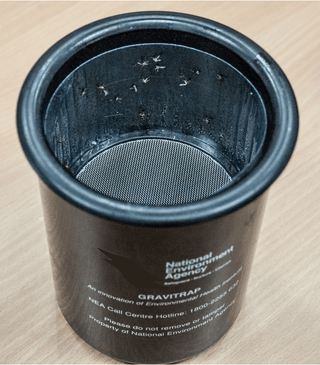
Zhiyong Xi, a researcher at Michigan State University whose laboratory supplied the initial mosquito stock for the trials, noted that eggs produced from these unions die or will not hatch.1 Because male insects do not feed on human blood, releasing them poses no direct biting nuisance to residents. As wild females exhaust their reproductive cycles on sterile matings, adult insect abundance drops steeply. Over months of consistent releases, the local density of biting females becomes too thin to sustain widespread viral transmission from person to person.
What did the multi-year residential trials in Singapore find?
The field trial demonstrated that sustained male releases reduced dengue incidence by roughly 70 percent across eight targeted housing clusters compared with untreated comparison neighbourhoods.1 Researchers examined 15 comparable high-rise public housing clusters, allocating eight sites by chance to receive insect releases while leaving seven adjacent clusters under routine vector control alone.1 For approximately two years, field teams dispersed male mosquitoes twice weekly across the ground, middle, and upper floors of the residential buildings to ensure coverage across all vertical living zones.1
The suppression disrupted the insect population before showing up in clinical case records. Adult female mosquito traps in the release clusters captured about one-seventh as many female insects as traps in the untreated areas.1 Clinical health registries tracked a parallel collapse: the release neighbourhoods reported roughly one-third as many dengue cases as the control areas over the full study period, according to findings published in eBioMedicine.1 Before the trial started, the two housing groups had recorded nearly identical baseline disease rates.1
Applying the observed incidence gap across the population living in the release sectors yielded an estimated 2,351 dengue cases averted over the two-year period, according to the paper in eBioMedicine.1 The release clusters recorded 1,037 actual dengue cases during that span, establishing a net reduction in disease incidence of approximately 70 percent.1 A companion evaluation published in the New England Journal of Medicine examined clinical testing outcomes and determined that individual resident protection ranged between 71 percent and 72 percent within the intervention areas.1 Hannah Clapham, an infectious disease researcher at the National University of Singapore, noted that the trial confirmed Wolbachia provides large benefits on top of routine vector control in an urban setting with strict existing sanitation programs.1
What are the limits of the trial data?
The calculated tally of 2,351 averted cases represents a statistical model of expected infections rather than a physical census of treated patients. Because public health surveillance cannot physically count illnesses that never materialized, researchers derived the figure by projecting infection rates from the untreated control areas onto the populations living in the release zones. Approximately 420 of those estimated averted cases were assigned to the first six months of the study, a period when researchers observed that the statistical benefit of the releases was not yet clear.1 The geographic scale of the trial remained modest, spanning 15 total residential clusters, which leaves open the possibility that local demographic variations or seasonal chance influenced the raw case counts.1
Community disease counts also depend on residents seeking clinical testing and registering their residential addresses accurately. Protection rates fluctuated during periods of very low baseline dengue transmission: during a quiet spell in 2023, the measured cut in cases dipped to around 25 percent, an estimate too uncertain to distinguish from zero effect, before rebounding above 80 percent in subsequent high-transmission stretches.1 Clapham noted that while the dip during low-transmission months merits further study, mosquito numbers remained vastly different between the two groups and protective benefits re-emerged once infection pressure resumed.1 Furthermore, the intervention targets only Aedes aegypti, leaving secondary transmission vectors unaffected.1
How can cities expand and afford mosquito release programs?
Scaling up the suppression technique requires automated sex-sorting equipment that allows production facilities to separate hundreds of millions of harmless males from biting females. The National Environment Agency plans to expand the suppression program to cover more than 800,000 households by the end of 2026, encompassing roughly half of Singapore's total population.1 To prevent accidental releases of fertile females, batches of mosquitoes receive low-dose irradiation to sterilize any female pupae that escape mechanical sorting, Xi noted, which stops the bacterium from establishing a permanent self-sustaining population in the wild.1
Sorting pupae by sex has historically served as a major manufacturing bottleneck for sterile insect programs. A 2024 study in Science Robotics co-authored by Xi described an automated pupa sorting machine capable of allowing a single operator to separate at least 16 million male mosquitoes per week.12 While that technological development demonstrated feasibility for mass rearing in Guangzhou, China, deploying the system against dengue in other developing metropolitan areas requires financial commitments that published trial papers have not yet budgeted.1 Clapham emphasized that while the findings establish Wolbachia as an effective control measure globally, international adoption will require adapting deployment strategies to local infrastructure and pairing biological suppression with emerging dengue vaccines.1
The record
22 sentences trace to 2 sources.
-
1
SC
Sanchana Charles Document · scienceblog.com · 22 Oct 2026 Singapore fought dengue by releasing more mosquitoes, Wolbachia-carrying males whose mates lay eggs that never hatch, and a trial across eight clusters averted an estimated 2,351 cases See the source
-
2
X
x.com Third-party reporting · x.com Zhiyong Xi (@zhiyongxi) on X See the source