Wild elephants use deliberate gestures to settle disputes without fighting
By checking whether herd mates are watching and repeating signals when ignored, wild elephants deploy dozens of purposeful body movements that mirror the conflict tactics of great apes.
When two multi-tonne animals disagree over a waterhole or a stand of fresh reeds, an outright brawl can break bones, tear tusks, and disrupt the herd. In wild groups, physical combat carries severe physical costs that individuals avoid whenever possible.1 For species that live in close-knit groups, survival depends on having reliable ways to tell a neighbour to back off before a standoff turns violent.1
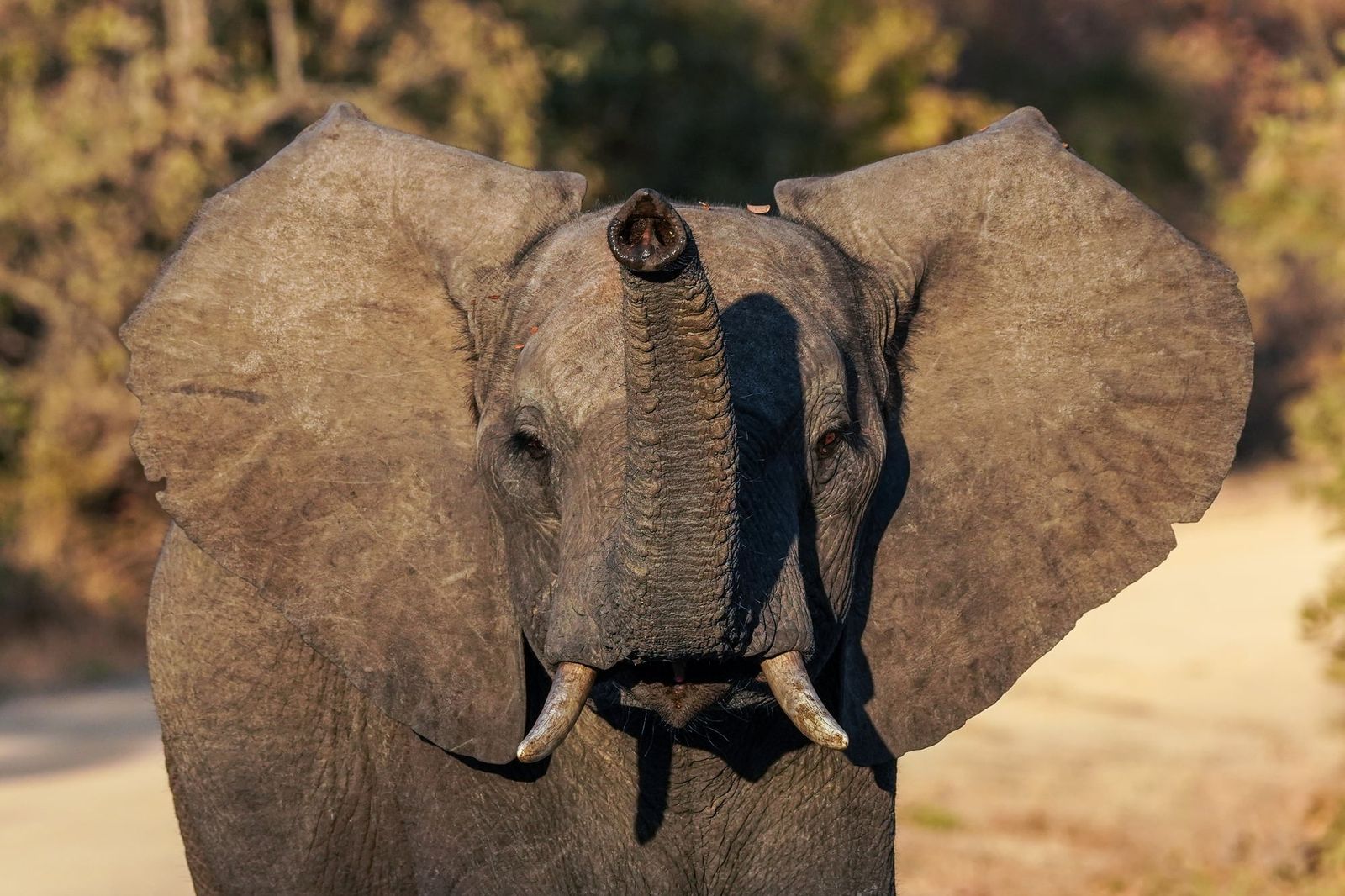
Field biologists have long observed wild African savannah elephants, known scientifically as Loxodonta africana, waving their trunks, spreading their ears, or lunging during tense moments.23 Yet whether those displays are purposeful messages aimed at a peer or simply involuntary twitches of irritation has remained an open scientific question.45 Without systematic testing, an observer cannot tell whether an ear spread is meant as a signal or is merely a startle reflex.5
Now, a field study led by Vesta Eleuteri and Angela Stoeger of the University of Vienna indicates that wild elephants communicate intentionally through an extensive repertoire of body gestures.41 Published in the journal Animal Cognition, the research shows that elephants look at their rivals before signaling, wait for a reaction, and modify their movements if their first attempt fails to resolve the dispute.54
How do wild elephants communicate without fighting?
Wild elephants prevent physical violence by using physical movements of their trunks, ears, and bodies to signal their boundaries during disputes over food and water.1 For an animal to communicate with purpose, several behavioral steps must occur in order. An elephant must first identify a concrete social goal, such as claiming space at a drinking hole or halting an unwelcome approach.4 Next, the animal must check whether its target is paying attention, positioning itself before releasing a signal.6 The signaller then chooses an action suited to what the recipient can perceive, using a visual display in plain sight or a movement that generates sound or touch if the other animal faces away.65 Once the signal is delivered, the signaller pauses to observe the outcome.65 If the competitor yields, the standoff ends; if the competitor ignores the demand, the signaller persists by repeating the movement or switching tactics until the goal is met.65
Across more than 90 hours of video footage from South Africa, researchers documented that wild elephants follow this exact chain during competitive encounters.65 The study catalogued 844 separate gestures across 261 conflicts over resources.5 Where the recipient yielded, the team identified two main goals behind the signals: directing the other animal to move away, which accounted for 134 out of 168 resolved exchanges, or demanding that an ongoing action stop, which accounted for the other 34 resolved exchanges.5
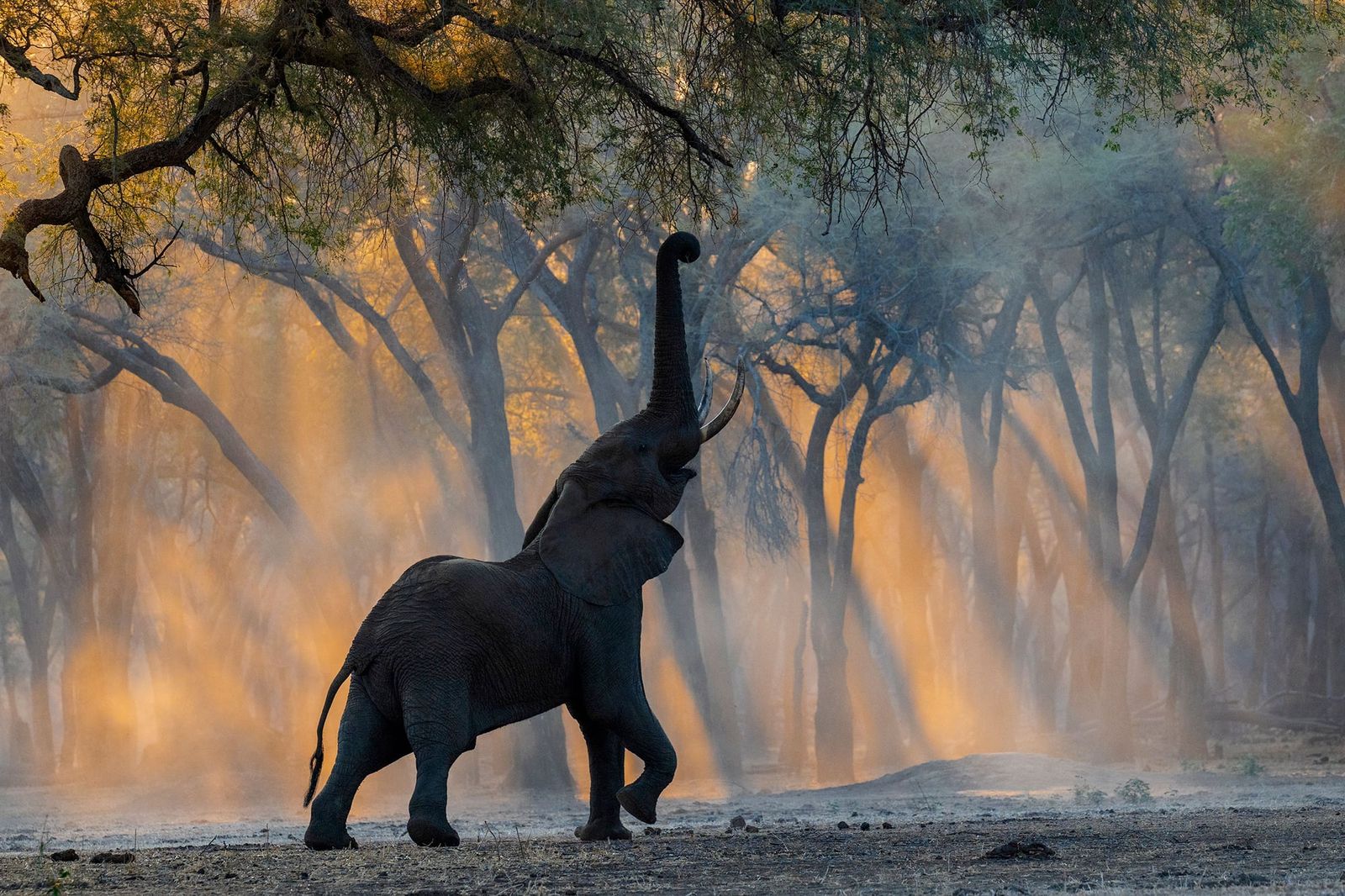
To convey these demands, the elephants drew upon 41 distinct gesture types constructed from 32 basic movements, after the researchers excluded rare actions and movements that produced no reaction.54 The trunk and ears performed the bulk of the communication.5 Trunk movements accounted for 47 percent of all recorded gestures, while ear displays made up 37 percent.53 Within the catalogued encounters, observers logged 127 ear flaps, 84 trunk flings, and 56 trunk pushes.5
What proves that an elephant gestures on purpose?
Researchers determine that an elephant signals deliberately by testing whether the animal checks for an audience, pauses to monitor the outcome, and persists or adjusts its actions when ignored.63 These criteria, developed in great ape research, separate purposeful communication from involuntary emotional reactions.5 A reflex occurs regardless of who is watching, whereas an intentional signal depends directly on an audience.5
The wild elephants met these cognitive benchmarks with high consistency. In 522 out of 539 recorded instances, representing 97 percent of cases, elephants looked at their rival before gesturing, and they watched their recipient during 98 percent of gestures.53 After signaling, elephants paused for at least one second to monitor for a response in 477 out of 531 cases, or 90 percent of interactions.53 When the target failed to respond, signallers persisted in 334 out of 404 cases, an 83 percent rate that included both repeating the gesture and switching to a different movement.53
Signallers also altered their choice of movement depending on whether their target was looking.6 When an opponent faced away, elephants leaned toward gestures that produced sound or touch, such as ear flaps or trunk pushes, moving away from silent visual signals.53 While this pattern held across the complete dataset of encounters, it proved less certain when researchers examined only individually identified elephants.53
This behavioral flexibility mirrors findings from an earlier controlled experiment. In a July 2025 study published in Royal Society Open Science, a research team including Eleuteri, Lucy Bates of the University of Portsmouth, Yvonne Nyaradzo Masarira, Joshua M Plotnik, Catherine Hobaiter of the University of St Andrews, and Stoeger studied 17 semi-captive savannah elephants in Zimbabwe.3 In that earlier test, elephants used 38 gesture types almost exclusively when an experimenter was visually attentive, persisted when a requested food goal was only partly met, and used novel gestures when their attempt failed entirely.23
Why do elephants share a signaling playbook with primates?
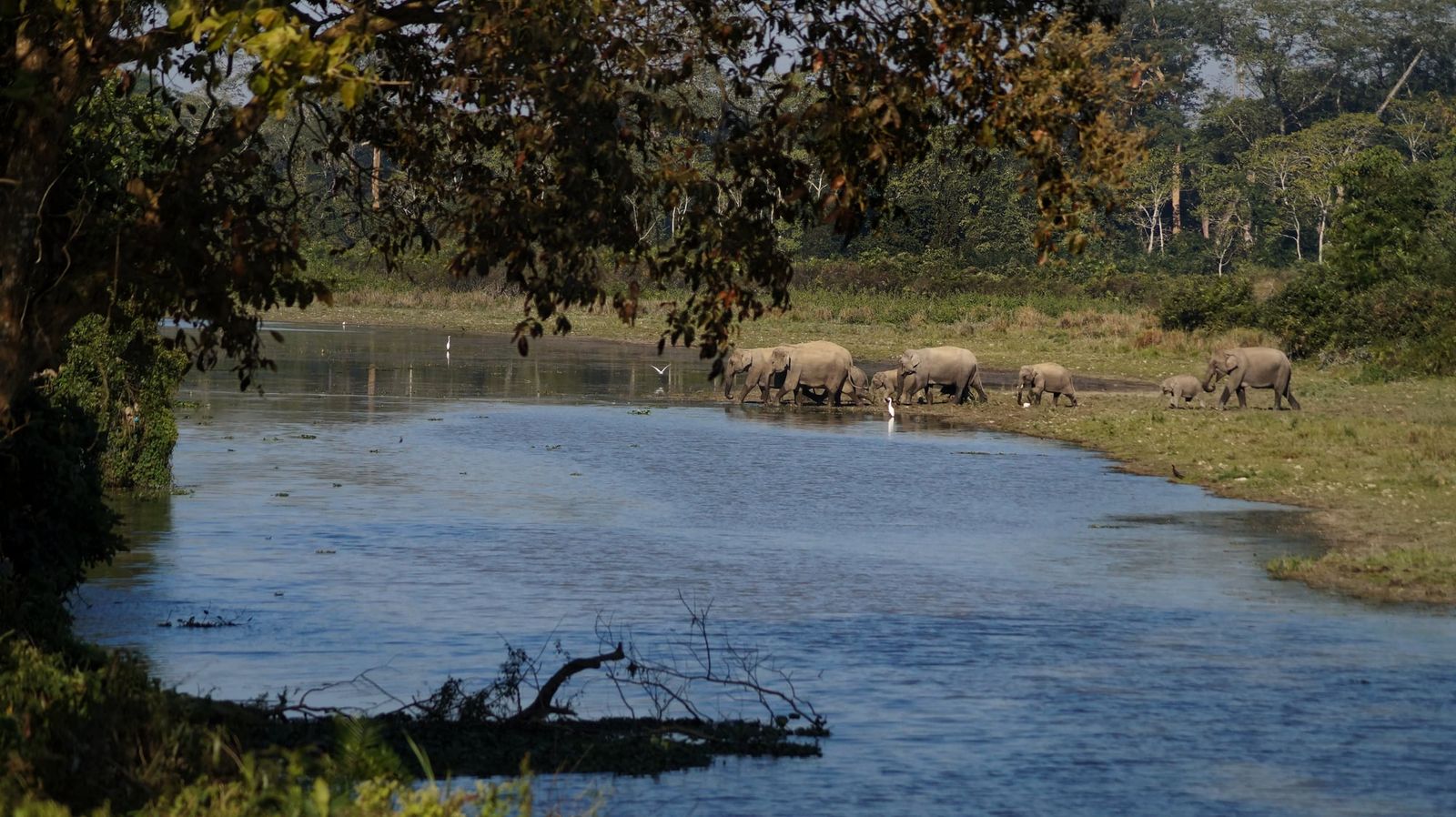
Elephants and primates developed similar communication strategies because both lineages navigate long-lived, complex social systems where physical fighting carries severe costs.1 African savannah elephants and great apes last shared a common ancestor roughly 100 million years ago, indicating that their shared communicative habits stem from convergent evolution instead of common anatomy.15 Both groups face comparable social demands in multi-level societies where individuals regularly separate and reunite.21
In an earlier 2014 study of wild chimpanzees by Hobaiter and Richard Byrne, chimpanzees used 66 distinct gestures to express 19 communicative meanings, but only two of those meanings served to push others away: moving away and stopping an ongoing action.5 The South African study found that wild elephants rely on the same two negative messages during conflicts, suggesting that distantly related species hit upon the same functional solutions when managing social friction.54
Field observations took place in two South African reserves: Addo Elephant National Park, an area of roughly 162,000 hectares with about 700 elephants, and Marakele National Park, covering roughly 67,000 hectares with about 400 elephants.35 The two populations shared 26 of their 41 gesture types, representing a 63 percent overlap in their gestural vocabulary.53 Local ecology influenced the disputes: Addo has no natural year-round water, and conflict appeared in 321 out of 993 video clips, or 32.3 percent, primarily around waterholes.4 In Marakele, where a river flows year-round, competition focused on reed beds, with conflict appearing in 101 out of 1,476 video clips, or 6.8 percent.
The findings describe a structured signaling system, but they carry important limitations. The research examined only competitive encounters, meaning it does not document gestures used during greetings, play, or maternal care.53 Furthermore, observing that an animal continues gesturing until a rival leaves establishes goal-directed action while leaving unaddressed whether an elephant holds internal mental beliefs about what another animal thinks.5 Because filming locations and resources differed between the two parks, the study also cannot confirm whether water scarcity alone caused Addo's higher conflict rate.53
Understanding the signals wild elephants use to manage conflict provides practical guidance for human communities living alongside them.16 As agricultural lands and human settlements expand into elephant ranges, people and elephants increasingly cross paths around shared water points.61 Learning to interpret the ear spreads, trunk flings, and postural shifts that signal a demand to move away could give rangers and local residents the warning needed to step back before an encounter becomes dangerous.65
The record
45 sentences trace to 6 sources.
-
1
B
BIOENGINEER.ORG Third-party reporting · bioengineer.org · 25 Sep 2026 Wild Elephants Use Dozens of Deliberate Gestures to Defuse Conflict, Study See the source
-
2
P
pmc.ncbi.nlm.nih.gov Official record · pmc.ncbi.nlm.nih.gov Investigating intentionality in elephant gestural communication - PMC See the source
-
3
M
morningoverview.com Third-party reporting · morningoverview.com Wild elephants use 41 kinds of deliberate gestures to tell each other what to do – Morning Overview See the source
-
4
R
researchportal.port.ac.uk Third-party reporting · researchportal.port.ac.uk Elephant gestural communication during agonistic interactions: repertoire, intentionality, and goals See the source
-
5
SC
Sanchana Charles Document · scienceblog.com · 23 Oct 2026 Wild elephants gesture on purpose, checking whether another elephant is watching and gesturing again or switching gestures if the goal is not met, across more than 90 hours of University of Vienna-led observation in two South African parks See the source
-
6
P
port.ac.uk Third-party reporting · port.ac.uk · 8 Oct 2026 ‘Move away’ and ‘stop that!’ Wild elephants use a rich gestural repertoire intentionally to “mean business” See the source