Deep ocean animal populations collapsed across the Gulf of Mexico
A vast survey of the deep water column found animal abundance fell by more than half after an offshore drilling disaster, with no sign of recovery a decade later.
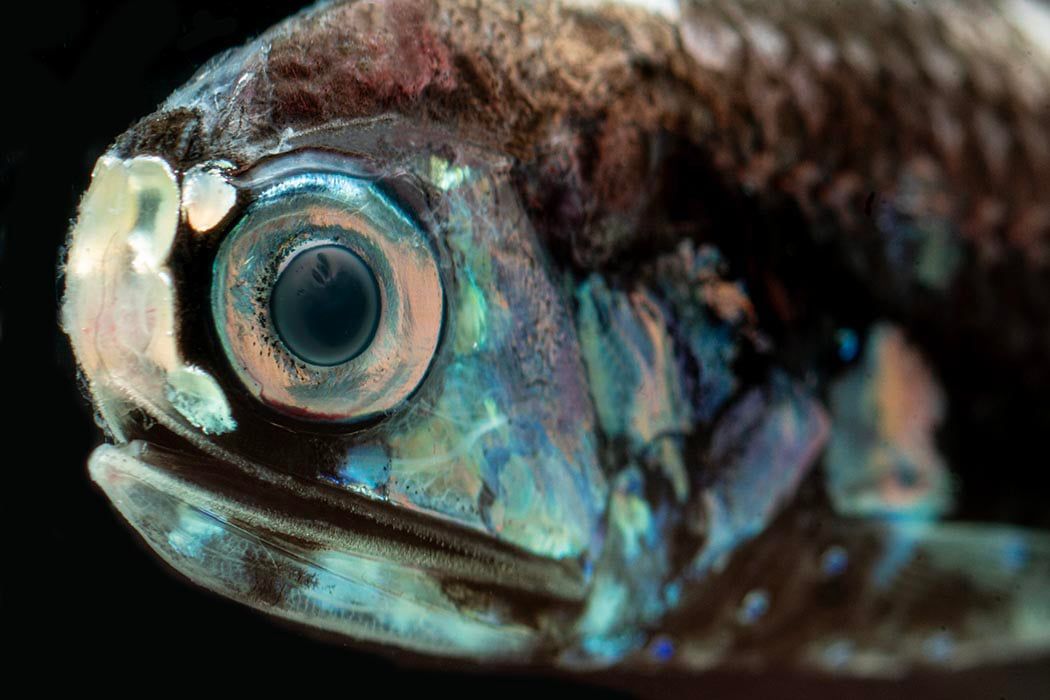
A mile beneath the ocean surface, darkness is near absolute, water stays just above freezing, and life moves at a deliberate pace. For thousands of years, animals in this realm have adapted to an environment shielded from surface storms, relying on a steady cycle of biological movement to survive. Small creatures feed at twilight depths or ascend toward the surface under the cover of night, drawing energy downward and supporting larger open-ocean predators. Because these deep waters are so vast and remote, human activity long appeared too distant to disturb their stability.
That assumption ended when industrial oil extraction pushed into water thousands of feet deep. When an offshore well fails at extreme depth, escaping hydrocarbons do not simply rise to the surface to form slicks. Chemical compounds dissolve and linger across the water column, creating underwater plumes that disperse through the dark zones where midwater animals feed and reproduce. If those populations experience severe poisoning, the failure cascades throughout the open sea. Animals higher in the food chain lose their primary prey, and the daily downward transfer of biological carbon slows down.
The biological conveyor belt connecting the ocean surface to the deep sea requires three synchronized steps to function. First, microscopic plants and surface animals convert sunlight and nutrients into organic tissue near the sunlit surface. Next, small midwater organisms such as krill, shrimp, and lanternfish ascend hundreds of meters each night to consume that surface life before retreating back to deeper water at dawn. Finally, deep-dwelling fishes and larger predators consume these midwater foragers, locking carbon and nutrients into the deep ocean. Any persistent chemical disruption in the midwater zone interrupts that conveyor belt at its central link.
Now, long-term oceanic monitoring reveals that this deep ecosystem suffered an unprecedented collapse following the 2010 Deepwater Horizon blowout.12 A multi-institutional research team led by biological oceanographer Tracey T. Sutton at Nova Southeastern University found that animal numbers across the northern Gulf of Mexico deep-pelagic zone plummeted in the years following the disaster.34 Across more than a decade of repeated surveys, these animal communities showed virtually no recovery, pointing to a persistent shift in open-ocean ecology.32
How much marine life vanished from the deep water column?
Animal populations in the deep water column declined by 60 to 85 percent following the disaster, according to research published in the Proceedings of the National Academy of Sciences.15 Across all fish species surveyed, the researchers measured a 63.5 percent decrease in abundance between the post-spill baseline and subsequent survey periods.54 Crustacean populations, including deepwater shrimp and krill, dropped by 62 percent, while cephalopods such as squid and octopuses declined by 59.7 percent over the same timeline.54 Specific foundational species sustained even steeper losses: lanternfish numbers fell by 62.9 percent, bristlemouth fishes decreased by 69 percent, and krill populations plummeted by 72.8 percent.532
These sharp reductions removed dense patches of prey that open-ocean predators require to survive.31 Large marine mammals, billfish, and tuna rely on concentrated schools of midwater fish and crustaceans to make the energy spent hunting worthwhile.35 Parallel studies in the northern Gulf of Mexico observed population declines of up to 80 percent among deep-diving toothed whales, including sperm whales and beaked whales, over the decade following the blowout.51 Genetic analysis of three dominant lanternfish species also revealed a substantial loss of genetic diversity, creating population bottlenecks that diminish the species' evolutionary capacity to adapt to future environmental shocks.53
How did scientists detect the loss of deep-sea animals?
Researchers detected the drop in deep-pelagic life by combining trawl net surveys, acoustic sonar backscatter, and molecular genetics across an extensive monitoring grid.13 The effort was organized through the Deep-Pelagic Nekton Dynamics of the Gulf Consortium, known as DEEPEND, alongside earlier assessment work conducted through the Offshore Nekton Sampling and Analysis Program.56 Beginning in 2011, scientists established a numerical baseline using nine months of near-continuous sampling.51 They returned to the same station grid for six surveys between 2015 and 2018, followed by three additional expeditions conducted between 2021 and 2023, compiling more than 2,000 discrete net samples over twelve years.53
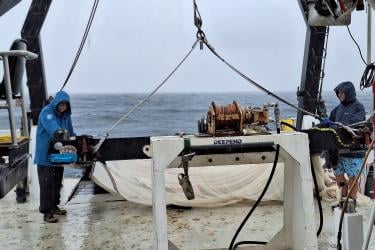
Field crews deployed specialized sampling nets known as a Multiple Opening and Closing Net and Environmental Sensing System from research vessels.56 The equipment used three-millimeter mesh to capture free-swimming organisms at targeted depth intervals between the surface and 1,500 meters down.54 Sampling ran during midday and midnight to account for animals undertaking daily vertical migration.16 Concurrently, shipboard echosounders measured acoustic sound waves reflected by marine organisms throughout the water column, confirming an independent 40 percent decline in night-time backscatter in upper waters.51
What can these ocean survey results tell us about recovery?
These survey findings represent empirical measurements of animal density rather than predictive forecasts of future ecological trajectories. The repeated net hauls and acoustic signals document a prolonged low-abundance state across a large region, but they cannot isolate every biochemical pathway that caused the initial mortality. The research team evaluated alternative natural drivers, examining water temperature records, dissolved oxygen levels, and surface food supply measurements across the sampling grid, finding that none of those variables fluctuated in tandem with the sharp faunal drop.43 The authors identified the oil spill and response activities as the most parsimonious explanation for the collapse, although the data describe population presence and genetic variation rather than continuous physiological tracking.12
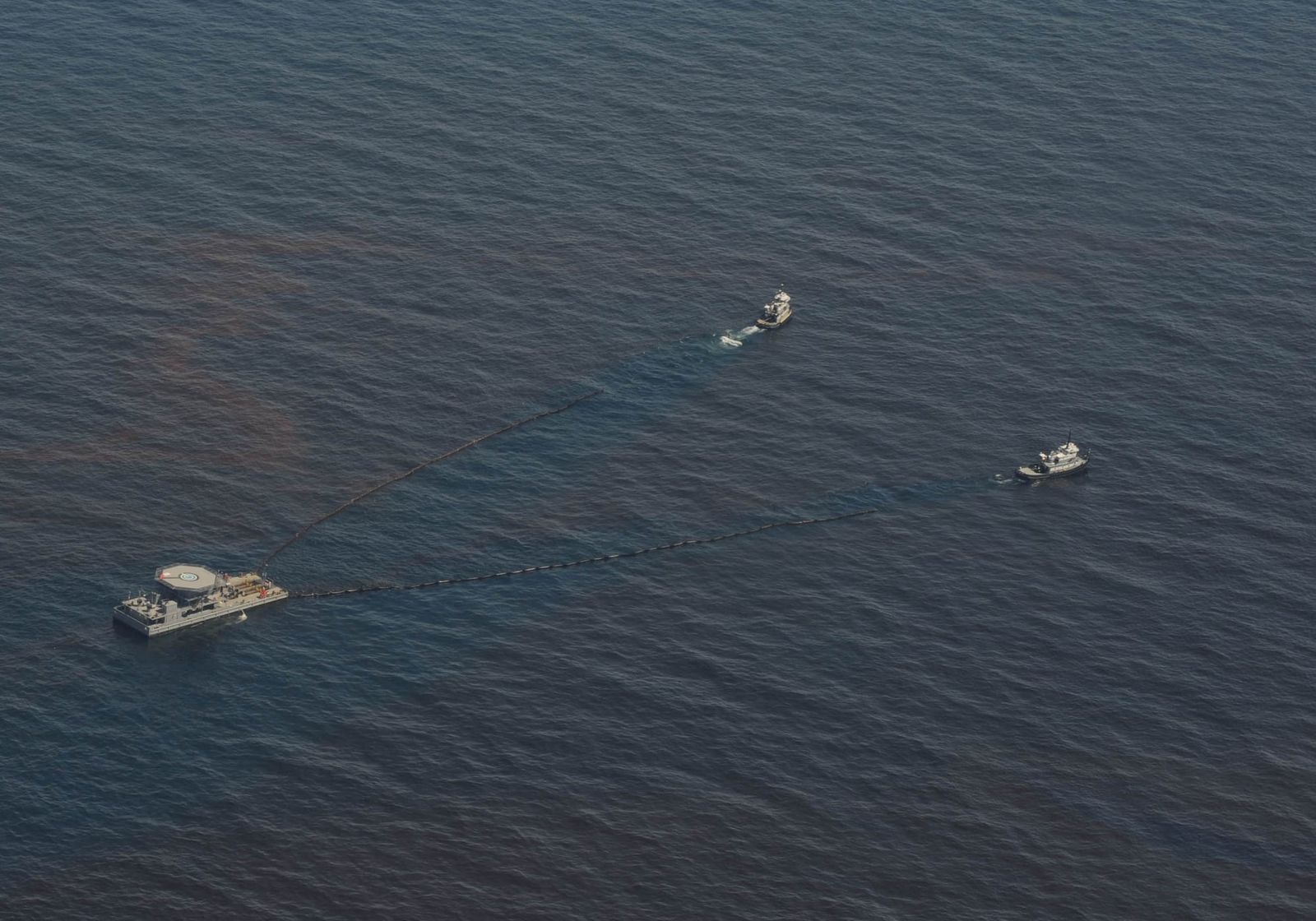
The timing and magnitude of the impact align with the release of approximately 134 million gallons of crude oil and 7.7 billion cubic feet of natural gas over 87 days from the damaged wellhead at 1,500 meters depth.21 During response operations, emergency teams also applied 1.84 million gallons of chemical dispersants, including roughly 770,000 gallons injected near the seafloor to break oil into micro-droplets.13 While dispersants reduced surface slick formation, they kept petroleum hydrocarbons suspended throughout the deep water column. Subsequent tissue analyses detected petroleum-related compounds in deep-water fish eggs and cephalopod tissues, where chemical exposure causes developmental failure and impairs olfactory senses required to locate mates in the pitch-black ocean.31
What do the deep losses mean for broader ocean health?
The persistent depletion of midwater animals weakens both the oceanic food web and the ocean's capacity to transport carbon dioxide into deep ocean reservoirs.31 The midwater organisms of the deep scattering layer act as a biological pump, consuming surface carbon at night and excreting it hundreds of meters below, where it remains isolated from the atmosphere for centuries.23 When those populations contract by more than half, the total volume of organic carbon transported into the deep ocean diminishes accordingly.
These enduring consequences also offer a cautionary baseline for emerging industrial proposals such as commercial deep-sea mining. The authors observed that deep-pelagic ecosystems possess limited ecological resilience, having evolved over millennia in relatively stable, disturbance-free conditions.15 Discharging wastewater, heavy metals, or particulate plumes from industrial mining operations into midwater zones could trigger similar long-term ecological regime shifts.14 For the northern Gulf of Mexico, open questions center on whether midwater animal abundance can ever return to pre-disaster levels, and whether regional marine reserves can protect remaining populations from cumulative industrial stress.
The record
28 sentences trace to 6 sources.
-
1
W
WIRED Document · wired.com · 25 Oct 2026 Oil Spills Wreak Havoc on the Bottom of the Ocean, Even a Decade Later See the source
-
2
S
sciencealert.com Third-party reporting · sciencealert.com · 23 Oct 2026 16 Years After Deepwater Horizon Spill, Deep Sea Life in The Gulf of Mexico Shows No Sign of Recovery See the source
-
3
E
eurekalert.org Third-party reporting · eurekalert.org Life in the deep Gulf plummeted after Deepwater Horizon See the source
-
4
P
pbs.org Third-party reporting · pbs.org Marine life dramatically declined in Gulf of Mexico in years after BP oil spill, study finds See the source
-
5
F
fisheries.noaa.gov Official record · fisheries.noaa.gov Decade of Data Shows Rapid Decline in Pelagic Fish and Invertebrates in Deep Gulf See the source
-
6
F
Frontiers Third-party reporting · frontiersin.org · 29 Dec 2020 Frontiers | A Multidisciplinary Approach to Investigate Deep-Pelagic Ecosystem Dynamics in the Gulf of Mexico Following Deepwater Horizon See the source