Early European print culture shaped macabre remedies against the undead
Seventeenth-century travel writing and early modern medical theories transformed local corpse panics into published recipes for ingesting human blood, according to research by historian John Blair.
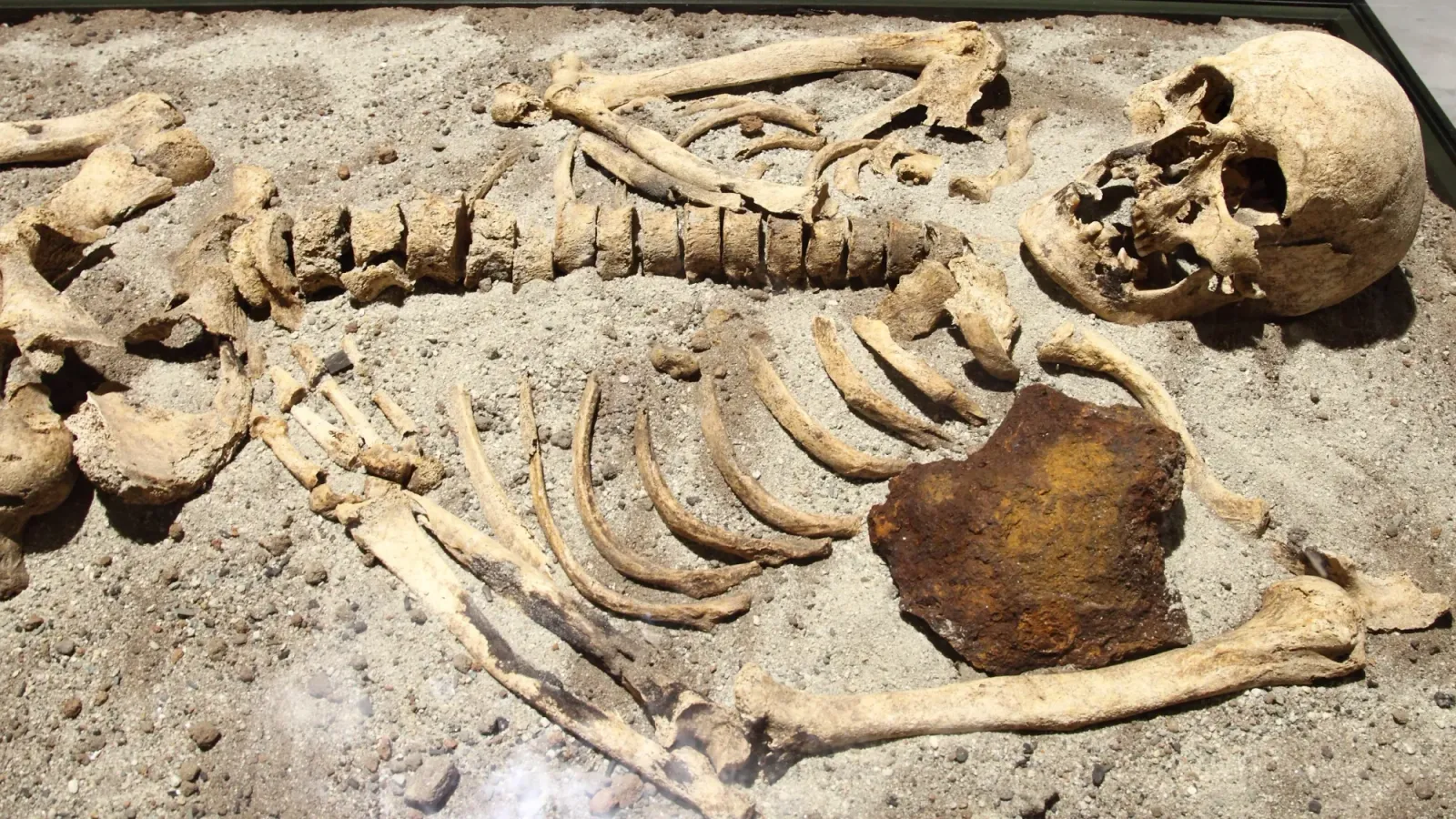
Across central and eastern Europe during the seventeenth and eighteenth centuries, communities seized by sudden outbreaks of illness turned their fears toward the cemetery.1 When successive deaths struck a single village, residents often suspected that a recently deceased neighbour had risen from the grave, walking by night to torment family members and spread lethal pestilence.1 To halt the destruction, villagers took physical action against the suspected dead: they exhumed the bodies, severed their heads, drove stakes through their torsos, or weighed them down with stones and iron padlocks.1 Yet alongside these well-known defensive rites, a far more unsettling countermeasure emerged in the historical record: accounts of the living actually consuming the blood and organs of exhumed corpses to cure themselves of the deadly afflictions the dead were thought to inflict.1
Understanding how such bizarre practices entered the European imagination requires looking past sensational folklore to examine how information travelled through early modern societies. When fear and contagious disease swept through an isolated community, people sought remedies rooted in the prevailing medical logic of their day. Before printing presses transformed communication, supernatural fears were primarily transmitted by spoken word within local communities. As print culture expanded, travellers, magistrates, and scholars began transcribing, altering, and amplifying these accounts, turning scattered local crises into an intellectual sensation that gripped universities and salons across the continent.
How did printing transform localized corpse panics into continent-wide lore?
The spread of vampire beliefs accelerated dramatically because newly commercialized print networks turned local cemetery rituals into permanent, widely circulated academic debate.1 According to historian John Blair in his book, Killing the Dead: Vampire Epidemics from Mesopotamia to the New World, early mentions of restless corpses gave way to theological and philosophical discussions between roughly 1580 and 1610.12 From the 1670s onward, Blair documented a steadily rising volume of academic treatises, culminating in a major wave of public fascination in 1732.1 That year, British newspapers published sensational dispatches describing Serbian villagers exhuming bloated, blood-filled bodies and burning them, a spectacle that captured urban reading publics who had never witnessed an exhumation firsthand.2
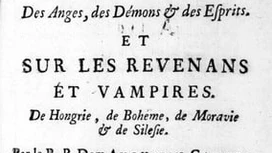
The appetite for structured explanations created a ready market for comprehensive scholarly surveys. In 1746, Dom Augustin Calmet, a Benedictine scholar, published a landmark treatise examining apparitions, revenants, and vampires across Hungary, Bohemia, Moravia, and Silesia.13 Blair noted that Calmet's study became the most influential academic work ever produced on the phenomenon, quickly going through multiple editions and appearing in English translation in 1759.1 By gathering disparate anecdotes into an organized, evidence-based format, Calmet provided an anxious reading public with what Blair described as an indispensable textbook on the supernatural, inspiring later popularizers and fixing transient oral rumours into standardized print for generations of readers.1
Why did early modern medical beliefs justify ingesting human blood?
The ingestion of corpse matter gained intellectual credibility because early modern medical science explicitly endorsed the curative properties of the human body.1 As Blair explained, the Swiss physician, philosopher, and alchemist Theophrastus von Hohenheim, known as Paracelsus, had argued in the early sixteenth century that substances healed through occult influences, with the most potent remedies derived directly from the human frame.1 Across pre-modern Europe, physicians and laypeople regarded remedies prepared from Egyptian mummies or the fresh blood of executed criminals as rational therapies.1 In Vienna in 1668 or 1669, for example, a man suffering from epilepsy reportedly ran to the scaffold at a public beheading to catch the spouting blood in a desperate attempt to cure his condition.1
When communities confronted the terrifying prospect of the undead, these mainstream medical theories blended seamlessly with folk magic. In one strand of belief, consuming blood or vital organs taken from an alleged vampire corpse was thought to provide an infallible antidote to the supernatural sickness the creature supposedly caused.1 Blair pointed out that although eleventh-century English sources recorded the practice of inhaling smoke rising from burned vampire organs, the early modern practice of ingesting raw fluids and flesh represented an exceptionally intense physical remedy.1
Where did the earliest written accounts of vampire blood-bread originate?
The specific story of kneading a corpse's blood into bread appears to have originated in an account of Central African mortuary customs, rather than in Slavic folk tradition.1 In 1687, the Capuchin missionary Giovanni Antonio Cavazzi published a detailed ethnographic study in Bologna describing the medical practices of the Mbundu people in Angola.1 Cavazzi reported that when uncorrupted corpses were unearthed, locals cut off their heads, collected the blood that flowed out, and mixed it into food or poultices to restore health and prevent the dead person from tormenting the living.1
Six years later, in May 1693, a suspiciously similar narrative appeared in Paris in the society journal Mercure Galant, written by the courtier Pierre des Noyers.1 Des Noyers had previously observed Polish folklore while serving in the royal court of Queen Louise-Marie, writing in 1639 about the beings known as the upior or striga, creatures said to chew their own shrouds and hands within the grave.1 In his 1693 account, however, des Noyers claimed that demons filled corpses with stolen blood, and asserted that Polish villagers exhumed these swollen bodies, severed their heads, drained the blood from their hearts, and kneaded it into flour to bake bread that guaranteed recovery from vampiric torment.1 Blair identified des Noyers's narrative as an unprincipled borrowing of Cavazzi's African report, disguised as Polish ethnography and subsequently repeated uncritically by later commentators, including Calmet himself.
Did historical villagers actually bake bread with corpse blood?
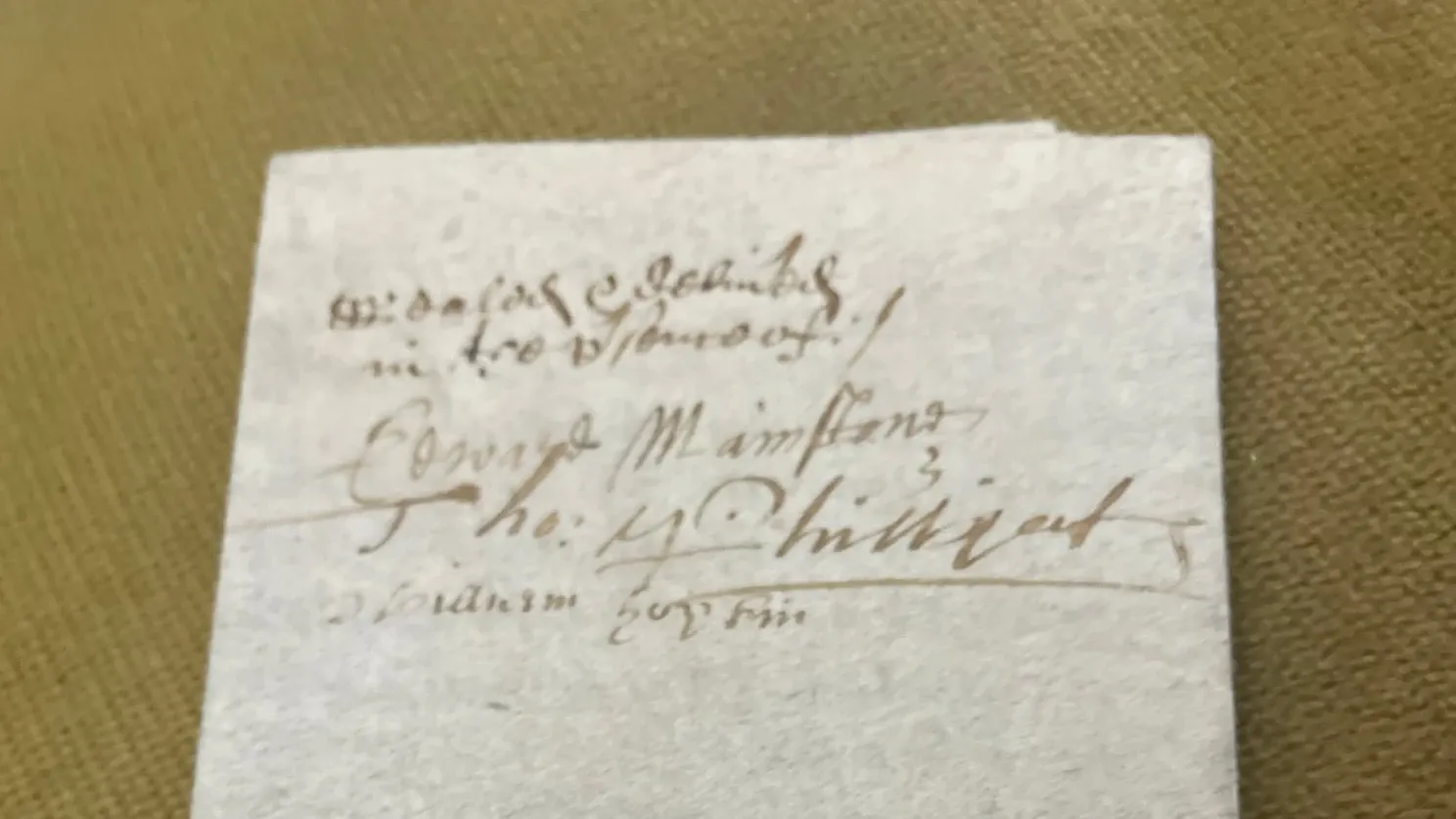
Official legal records demonstrate that while villagers admitted to exhuming suspected vampires and drinking their blood, claims of baking bread from corpse fluids were likely introduced by the interrogating judges themselves. In 1713, in the village of Dąbrówka in what is now western Ukraine, several peasants were brought before a Uniate episcopal court on charges of exhuming and mutilating a woman's body.1 The villagers openly confessed to the exhumation, testifying that the deceased woman had been wandering through the village and attacking residents, and admitted to drinking her blood mixed with vodka.1 However, the accused firmly denied that they had cut out her heart, mixed the blood into flour, or baked cakes, agreeing to swear an oath confirming their denial before sceptical magistrates.1
Blair observed that this judicial interrogation mirrored the dynamics of early modern witchcraft trials, in which educated inquisitors systematically imposed literate, published tropes onto rural defendants.1 The judges at Dąbrówka were almost certainly familiar with des Noyers's widely disseminated 1693 account, leading them to pressure frightened peasants into confirming a bizarre ritual invented in print twenty years earlier.1 The reality of European corpse-killing rituals was deeply unsettling, but the most lurid recipes for consuming the undead owed their existence to the circular distortions of the printing press.
What limits remain in the historical evidence?
These historical reconstructions rely on surviving printed texts, clerical polemics, and official judicial transcripts, which do not necessarily reflect the unvarnished beliefs of ordinary peasants. Court records from the eighteenth century were recorded by educated magistrates whose leading questions and procedural assumptions often shaped the confessions of illiterate villagers. Furthermore, because researchers cannot interview the deceased participants or observe the original burials directly, determining whether specific blood-drinking practices occurred independently or were suggested by interrogators remains a matter of historical interpretation. Blair also noted that the possibility of an earlier, unrecorded common source connecting African and European accounts cannot be completely ruled out by surviving documents.1
How do corpse rituals reshape our understanding of mass fear?
Looking at these episodes through the combined lenses of archaeology, anthropology, and psychology suggests that exhumations functioned as collective coping mechanisms during crises. In his study, Blair argued that ritual corpse-killing was not simply an irrational pathology, but served as a therapeutic outlet for intense panic, grief, and mutual suspicion that might otherwise have erupted into violence against living neighbours.24 In ancient Mesopotamia, classical Rome, imperial China, and across the Americas, societies facing inexplicable mortality frequently created supernatural entities to embody their fears.21 By recognizing how print culture amplified these local responses into international panics, historians gain clearer insight into how human communities manage collective trauma and how easily literary invention can reshape popular belief.
The record
31 sentences trace to 4 sources.
-
1
JB
John Blair Document · livescience.com · 25 Oct 2026 How purported tales of consuming vampire blood and organs spread in the 18th century See the source
-
2
H
history.ox.ac.uk Third-party reporting · history.ox.ac.uk · 9 Sep 2025 Killing the Dead: Vampire Epidemics from Mesopotamia to the New World See the source
-
3
A
archive.org Third-party reporting · archive.org Dissertations sur les apparitions des anges, des démons & des esprits, et sur les revenans et vampires de Hongrie, de Boheme, de Moravie & de Silesie. 1746: Iss 187 : Calmet, Augustin. : Free Download, Borrow, and Streaming : Internet Archive See the source
-
4
C
cambridge.org Third-party reporting · cambridge.org Encountering the dead in the past and the present | Antiquity | Cambridge Core See the source