Prime editing enters the human body for the first time
An experimental therapy delivered into the bloodstream seeks to repair the faulty liver gene responsible for toxic copper accumulation in Wilson disease.
Copper is an essential trace element that keeps nerves functioning and cells producing energy, but the human body possesses no mechanism to destroy it once it enters tissue. Every milligram absorbed from food must eventually be collected by liver cells, packaged into specialized transport proteins, and excreted into bile. When the genetic instructions for that cellular disposal pump carry a critical spelling mistake, the metal cannot escape. It builds up steadily in liver tissue, overflows into the bloodstream, and eventually deposits in the brain, kidneys, and eyes, causing progressive organ failure and severe neurological disability.
For people born with Wilson disease, a rare inherited disorder affecting roughly one in 30,000 individuals, survival has long depended on a rigid regimen of daily medications.1 Patients take chemical chelating agents like penicillamine or trientine to bind excess copper so kidneys can flush it out, or zinc salts to block its absorption in the gut.12 These treatments prevent fatal poisoning, but they do not repair the broken transport system.1 If patients miss doses or experience intolerable side effects, toxic copper begins accumulating again, leaving liver transplantation as the only remaining alternative.1
Now, a clinical trial sponsored by Massachusetts biotechnology company Prime Medicine has attempted to resolve the underlying genetic defect directly inside a patient. On October 5, 2026, doctors administered an experimental infusion called PM577a, marking the first time that prime editing, an advanced form of genetic engineering, has been deployed inside a living human body rather than in isolated cells in a laboratory dish.12
How does copper poisoning develop in the body?
Normal metabolism relies on a cellular protein called ATP7B to export excess copper out of liver cells and into the digestive tract for excretion. When a child inherits two defective copies of the ATP7B gene, liver cells produce malfunctioning transport proteins that fail to push copper across cell membranes into the bile ducts.12 The trapped metal gradually saturates cellular storage compartments, generating reactive chemical compounds that kill healthy liver tissue. Once the liver can no longer hold the surplus, unbound copper spills into circulating blood and crosses into the central nervous system, where it damages basal ganglia structures and produces tremors, psychiatric disturbances, and movement impairment.1
Standard treatments alter how copper behaves outside the liver cell rather than restoring the damaged protein itself. Chelating drugs circulate through the vascular system, capture loose copper ions, and permit their excretion through urine. Zinc therapy stimulates intestinal cells to produce metallothionein, a protein that traps copper before it enters circulation. Because neither class of medication repairs the underlying genetic mutation in the ATP7B gene, patients must maintain precise medical regimens every day of their lives to prevent toxic rebound.
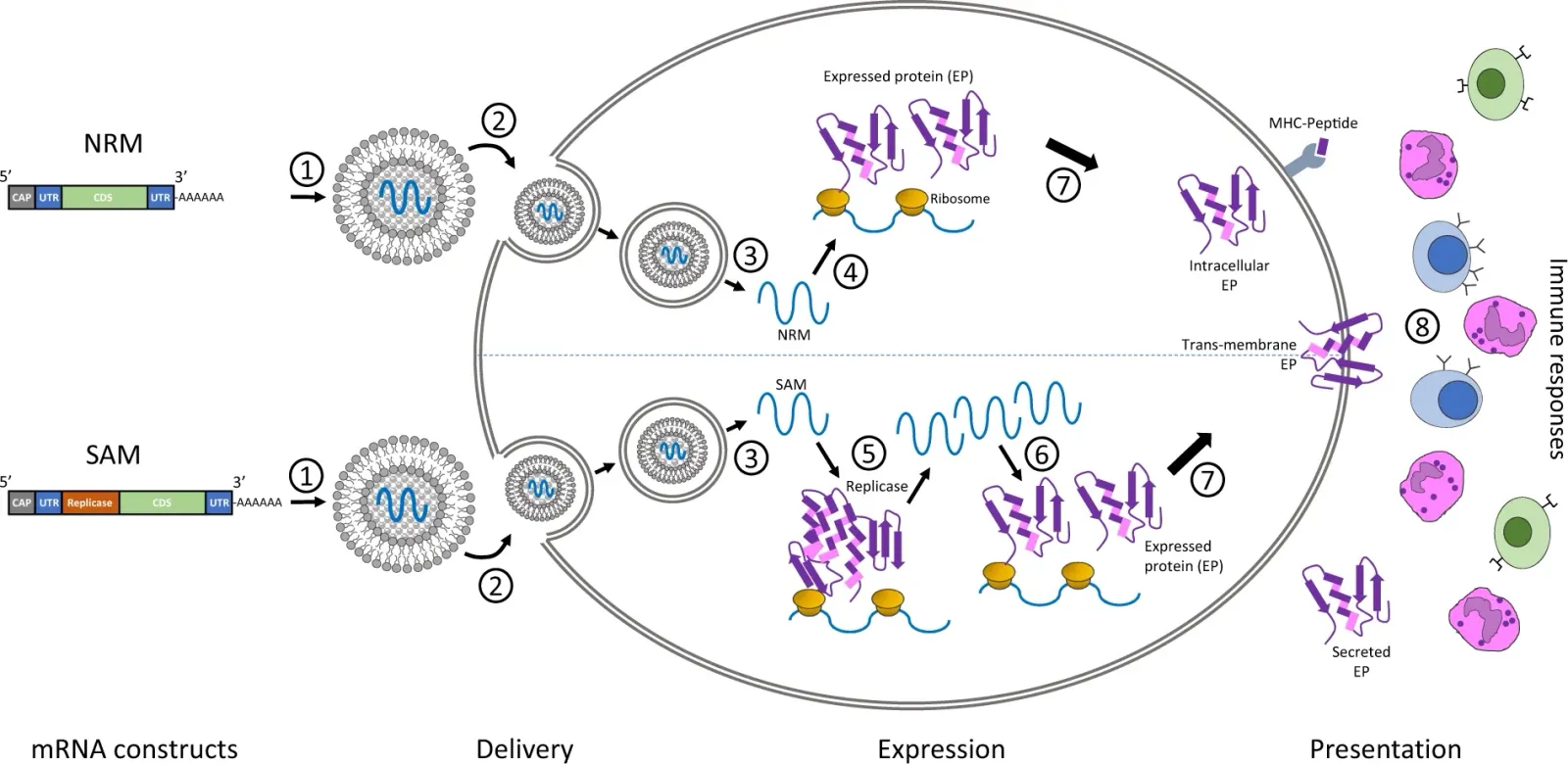
Repairing the faulty gene inside hepatocytes, the primary functional cells of the liver, represents an entirely different biological approach. If a therapeutic tool can correct the inherited genetic code in a sufficient percentage of liver cells, those cells can manufacture functional ATP7B pumps on their own. Restoring endogenous excretion would allow the liver to process dietary copper normally, potentially eliminating the requirement for lifelong chelation.
How does prime editing repair living cells?
Prime editing operates as a search-and-replace mechanism for genetic sequences without severing both strands of the cellular double helix. Traditional gene-editing platforms like CRISPR-Cas9 act like molecular shears, cutting through both strands of DNA at a designated target site.1 While double-strand breaks trigger cellular repair mechanisms, they can also cause accidental deletions, insertions, or unpredictable chromosomal rearrangements when the cell attempts to stitch the broken ends together.
The prime-editing machinery combines an engineered Cas protein that cuts only a single DNA strand with a reverse transcriptase enzyme capable of generating new genetic sequences.1 A custom-designed guide RNA locates the exact mutated sequence in the ATP7B gene, directs the protein to nick one strand, and supplies the correct genetic template. The attached reverse transcriptase enzyme then directly copies the corrected sequence into the target site, replacing the genetic defect while keeping the complementary strand intact.
To transport these molecular machines into human liver tissue, the therapy packages the genetic instructions inside microscopic spheres of fat called lipid nanoparticles.12 After intravenous administration into the bloodstream, these fatty capsules naturally gravitate toward the liver, where hepatocytes absorb them. Prime Medicine reported that in preclinical experiments using genetically altered mice carrying human ATP7B mutations, the therapy corrected the target genetic defect in up to 80 percent of liver cells and significantly lowered copper concentrations in tissue.1
What are doctors measuring in the human trial?
The Phase 1/2 clinical study, cataloged under registry identifier NCT07748403, evaluates the safety, tolerability, biological activity, and therapeutic impact of PM577a in up to 42 adolescents and adults.21 Initial enrollment requires participants aged 12 years and older who possess confirmed Wilson disease caused by ATP7B mutations, specifically requiring at least one copy of the p.H1069Q mutation.21 This particular genetic variant represents one of the most widespread mutations among Wilson disease patients in North America and Europe, while Prime Medicine is developing a parallel version to target the R778L mutation more prevalent in East Asian populations.1
Participating clinical sites include Yale New Haven Hospital in Connecticut and New Zealand Clinical Research in Auckland, alongside planned centers at Northwestern University in Chicago and the Texas Liver Institute in San Antonio. To minimize risk, trial protocols restrict initial entry to patients whose copper levels have remained stable on standard chelation or zinc therapy for at least six months.21 Investigators exclude individuals with severe hepatic impairment, uncontrolled psychiatric or neurological disease, previous liver transplantation, or past exposure to lipid nanoparticle gene therapies.
Evaluating whether the genetic edit succeeded requires tracking metabolic changes across multiple organs over 48 weeks. Beyond recording adverse side effects, investigators measure levels of ceruloplasmin, a copper-carrying blood protein synthesized in the liver, as well as non-ceruloplasmin bound copper. The trial also deploys specialized positron emission tomography imaging using copper-64, a radioactive isotope of copper, to monitor how rapidly hepatic tissue exports the metal into bile.21 Patients undergo liver biopsies at 24 and 48 weeks post-infusion to measure exact on-target editing efficiency in tissue specimens and quantify remaining copper stores.
What can the current trial results reveal?
The current study is an open-label Phase 1/2 trial designed primarily to establish safety, meaning it cannot yet prove whether prime editing can cure Wilson disease or safely eliminate existing medication. The first patient received the infusion on October 5, 2026, and initial clinical results from the trial cohort are not expected until 2027. Model outcomes and animal measurements do not guarantee that human hepatocytes will take up lipid nanoparticles or execute genetic edits at comparable rates.
Permanent alterations to cellular DNA also carry inherent biological uncertainties. Even precise single-strand editing systems must prove they do not produce unintended genetic alterations at off-target genomic locations over long periods. Furthermore, successfully correcting ATP7B in hepatocytes cannot reverse irreversible fibrous scarring or neurological damage that occurred prior to treatment. Because the therapeutic edits alter DNA permanently, participants will enter a secondary registry following their initial 48-week evaluation to track clinical safety and organ function over approximately 15 years.2
If the trial demonstrates that a single infusion restores sustained copper excretion without intolerable toxicities, it will establish clinical proof-of-concept for in vivo prime editing across genetic medicine. Earlier human applications of prime editing modified extracted cells outside the body, such as hematopoietic stem cell corrections reported in December 2025 for chronic granulomatous disease.1 Delivering prime editors directly into the bloodstream opens possibilities for treating a broad spectrum of genetic liver, lung, and metabolic disorders at their fundamental origin.
The record
18 sentences trace to 2 sources.
-
1
TT
Tudor Tarita Document · zmescience.com · 26 Oct 2026 Scientists just attempted to rewrite a patient’s DNA inside their body for the first time See the source
-
2
C
clinicaltrials.gg Third-party reporting · clinicaltrials.gg A Study of the Safety and Efficacy of Prime Editing (PM577) in Participants With Wilson Disease (WD) (NCT07748403) See the source