Certainty and perceived usefulness decide whether conspiracy beliefs lead to action
Interventions aimed at conspiracy theories often focus on debunking falsehoods, but how people weigh the personal importance and practical value of a claim determines whether they attend rallies, donate, or skip vaccines.
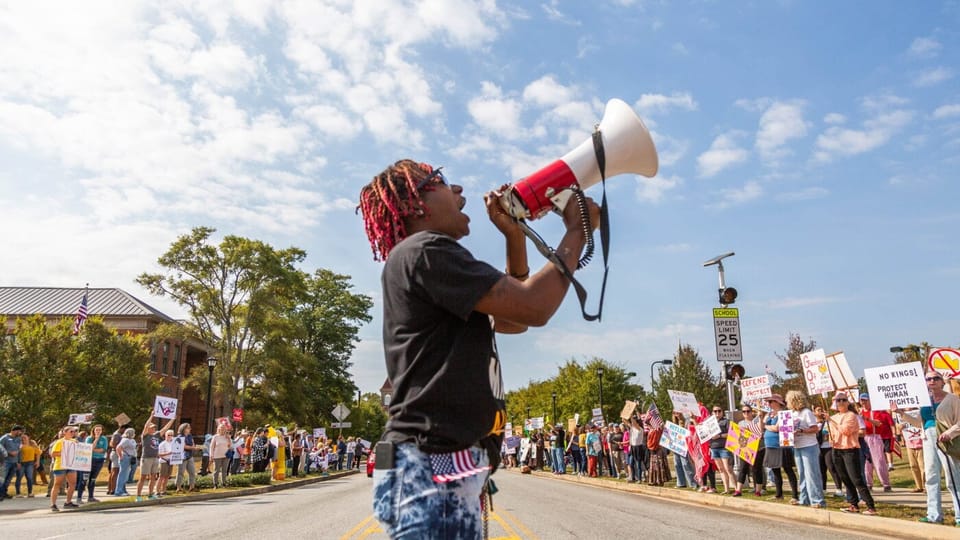
Two people can express identical support for an elaborate conspiracy theory, yet behave in completely divergent ways.1 One hears that shadowy elites covertly manipulate world events, shrugs at the claim, and continues daily routines.1 Another hears the identical claim, refuses a medical treatment, attends a protest, and donates money to an activist campaign.1 For social psychologists studying conspiratorial thinking, this disparity between mental agreement and tangible conduct has represented an enduring puzzle.1
Understanding that gap carries urgent consequences because the societal harm associated with conspiracy theories stems from outward deeds rather than private convictions.1 Earlier research has linked conspiratorial beliefs to reduced contraception use, vaccine hesitancy, altered voting choices, heightened prejudice, distrust of science, and sympathy for political violence.1 When people convert speculative distrust into real-world action, public health measures falter and democratic institutions face disruption.
For an idea to produce physical action, human cognition must move through an orderly progression of steps. An individual must first encounter a proposition and accept it as an accurate description of reality. That belief must then inform the person's attitude toward a concrete behavior, determining whether performing that action feels desirable or justified.1 Next, that attitude must generate a behavioral intention.1 Finally, that intention must overcome logistical obstacles to produce physical action. If any link in that sequence breaks, an internal conviction remains inert.
Psychologists Javier A. Granados Samayoa of Texas Christian University and Dolores Albarracín of the University of Pennsylvania's Annenberg Public Policy Center investigated why some beliefs successfully traverse that sequence while others stall.12 In a study published in the British Journal of Social Psychology, Granados Samayoa and Albarracín report that conspiracy beliefs are substantially more likely to guide behavior when individuals hold them with firm certainty, regard them as personally important, and view them as useful guides for deciding how to act.12 Their findings show that how a person holds an idea matters just as much as its factual content.1
How does an idea in the mind lead to physical action?
The path from an internal belief to outward physical behavior runs through attitudes toward specific actions, with the connection solidifying only when an individual treats that belief as a dependable guide for living.1 In psychological theory formulated by Martin Fishbein and Icek Ajzen during the nineteen-seventies, general beliefs serve as building blocks for attitudes toward specific behaviors.1 A person who believes that elections are compromised does not automatically take to the streets; that belief informs their positive attitude toward protesting, which subsequently prompts them to march.1

To explain why some beliefs exert a powerful pull on attitudes while others barely register, Granados Samayoa and Albarracín adapted principles from attitude strength research.1 Decades of work have established that attitudes held with high confidence and personal relevance predict future actions far more accurately than flimsy opinions.1 A meta-analysis co-authored by Albarracín in 2006 confirmed that attitudes formed through stable, confident processes serve as durable indicators of subsequent conduct.1 The new research extends that insight to underlying beliefs, grouping certainty, personal importance, and perceived utility into a collective property known as belief strength.1
What makes a conspiracy belief feel actionable?
A conspiracy belief feels actionable when an individual interprets the narrative as a direct call that dictates specific personal choices rather than an observation about distant events.1 Granados Samayoa and Albarracín introduced the concept of perceived actionability to capture whether a person considers a belief relevant to their own daily conduct.1 Some conspiracy narratives suggest extensive practical steps; a belief that an election was stolen readily suggests attending rallies, donating to campaigns, or recruiting neighbors.1 In contrast, a belief that the lunar landing was staged provides few obvious avenues for physical intervention beyond discussing the topic online.1
Perceived actionability operates as a cognitive amplifier rather than an independent driver of conduct.1 When evaluated alone, perceiving a belief as actionable did not consistently tighten the connection between belief endorsement and behavioral attitudes.1 Instead, perceived actionability functioned as a force multiplier, sharply intensifying the behavioral impact of beliefs that individuals had already embraced with high certainty or deemed personally important.1
Where does the evidence for belief strength come from?
The empirical evidence for the belief strength model comes from three separate surveys that examined 6,082 adult participants across the United States.1 Two of the investigations relied on nationally representative probability samples, allowing the researchers to evaluate whether the theoretical framework held across diverse demographic backgrounds and distinct conspiracy claims.1
In the first study, which was pre-registered, the researchers surveyed 1,959 adult participants recruited online about the great replacement conspiracy theory, the claim that secretive groups are deliberately using immigration to make White Americans a minority.1 Stronger belief predicted more favorable attitudes toward anti-immigration actions, such as voting for a politician backing strict policies.1 When participants viewed the belief as highly actionable, the link between belief and anti-immigration attitudes was roughly four times as strong among highly certain believers compared with uncertain ones.1 When actionability was low, that gap narrowed considerably.1

The second study surveyed 2,572 adults in December 2022 regarding claims that COVID-19 vaccines contain tracking microchips or alter human genetic material.1 Endorsement of those claims predicted unfavorable attitudes toward vaccination, and those negative attitudes strongly predicted whether respondents had actually received a COVID-19 vaccine shot.1 The progression from conspiratorial belief to actual immunization behavior was strongest among respondents who rated the issue as personally important and regarded their views as useful for personal decision-making.1
The third investigation tracked 1,551 adult participants over three months in 2023 regarding beliefs that a deep state of government officials was working illegally to undermine Donald Trump.1 Participants rated their attitudes toward five actions: seeking and sharing information, donating, volunteering, and attending rallies.1 Attitudes measured at the start predicted how often participants performed those actions three months later, with certainty, importance, and actionability combining to predict behavioral frequency.1
The survey data reveal consistent patterns, but the methodology imposes clear boundaries. The three investigations relied on correlational data and statistical mediation models, a mathematical approach that traces hypothetical pathways between variables but cannot establish causality.1 In addition, the vaccine items in the second study measured endorsement of medical misinformation about microchips and genetic modification rather than elaborate conspiracies.1 The researchers explicitly cautioned readers against drawing causal conclusions, acknowledging that statistical mediation models have drawn sustained methodological criticism.1
Why is debunking false claims insufficient on its own?
Debunking false assertions fails to stop real-world behavior because factual corrections address only whether a statement is true, leaving untouched the certainty and perceived utility that compel people to act.1 Most conventional strategies designed to limit conspiratorial harm concentrate on informational content, such as labeling deceptive posts, issuing fact-checks, or educating audiences about manipulation tactics.1 While these interventions can correct errors, they leave the psychological infrastructure of belief strength intact.1
The researchers point to two psychological levers: eroding an individual's subjective certainty and diminishing the perceived usefulness of the belief as a foundation for daily conduct.1 This approach aligns with self-validation theory, developed by Pablo Briñol and Richard Petty, which holds that thoughts people regard as valid carry outsized weight in shaping judgments and choices.1 Prompting individuals to question the reliability of their assumptions introduces constructive doubt, reducing the confidence required to justify disruptive actions.1
The next challenge for social psychologists is testing whether targeted interventions can deliberately manipulate perceived actionability in controlled experimental settings.1 If public communicators can show individuals that conspiratorial narratives offer no practical roadmap for solving tangible everyday concerns, the motive to translate passive suspicion into harmful action may diminish.1 Examining whether the belief strength framework applies to broader religious, political, and scientific convictions remains an open frontier for future behavioral research.1
The record
49 sentences trace to 2 sources.
-
1
S
 scientificinquirer
Document
· scientificinquirer.com · 27 Oct 2026
Why Some Conspiracy Believers Act — and Others Just Believe
See the source
- 2 Publications — Javier Granados Samayoa See the source