University curriculum tracking breaks when learning outcome definitions quietly shift
Quiet rewrites in course syllabi create phantom drops and conceal real shortfalls in university outcome tracking, according to a study of institutional attainment data.

Across higher education, universities evaluate academic programmes by measuring how well students master specific skills. In outcome-based education, every course sets explicit targets called course learning outcomes, which define what a student should understand or execute upon completing the class.1 Instructors grade quizzes, homework assignments, midterms, and final examinations, mapping each question to these target outcomes.1 Digital platforms then calculate attainment percentages, aggregating student scores into metrics that administrators and accreditation evaluators inspect to judge instructional quality.21 When an attainment score drops below an institutional threshold, faculty members are expected to intervene, revise teaching strategies, and demonstrate subsequent recovery.
This continuous improvement process rests on an unspoken assumption: that an outcome metric reported under a specific number measures the same underlying competency from one semester to the next. When that continuity breaks, the data trail becomes misleading. An apparent drop in student performance may reflect a complete rewriting of the syllabus rather than instructional failure, while genuine declines can hide behind altered definitions. According to a preprint posted on the arXiv server by Elakkiya Rajasekar, an associate professor in the Department of Computer Science at the Birla Institute of Technology and Science Pilani, Dubai Campus, current institutional software fails to track these semantic shifts, breaking the chain between assessment data and educational reform.213
Why do learning outcome measurements fail across semesters?
Course learning outcomes change frequently during academic handovers, yet institutional reporting platforms record scores against static numerical labels. For an outcome-based education system to function reliably, four sequential steps must occur. First, a department must define distinct learning competencies and assess them through structured examinations. Second, an automated platform must compute the percentage of students meeting each target. Third, when a shortfall appears, educators must design an evidence-based instructional intervention. Fourth, the platform must track subsequent deliveries of the course to measure whether that intervention closed the learning gap. If the wording of an outcome changes between semesters, comparing numerical scores across deliveries compares two different skills as if they were identical.
Rajasekar reported that accreditation bodies enforce rigorous continuous improvement rules that existing software cannot trace end to end.21 Criterion 4 of the Accreditation Board for Engineering and Technology requires an institutional process for evaluating attainment and using findings for programme improvement.21 The National Board of Accreditation expects programme outcomes to remain stable while treating course outcome revisions as standard corrective actions.21 In the United Arab Emirates, the Commission for Academic Accreditation mandates four-band attainment reporting and documented intervention cycles.21 Rajasekar observed that university committees typically discharge these mandates through disconnected meeting minutes and static spreadsheets, leaving the link between a detected deficiency, the chosen remedy, and subsequent student progress untracked by software.21
Reviews of curriculum analytics confirm this institutional disconnect. Rajasekar noted that published analytics platforms compute attainment per semester offering or screen courses at an aggregate level, but do not maintain multi-semester outcome histories, raise automated shortfall alerts, or tie interventions to subsequent gains.21 When an instructor updates the wording of a course outcome to match an evolving textbook or a new instructional emphasis, the underlying platform continues reporting numbers against the legacy outcome number. The resulting historical record assumes continuity where none exists.
How does the new computational design preserve continuity and trace reforms?
The proposed framework, named OBER+, introduces automated tracking rules that link measured shortfalls directly to instructional remedies while validating that outcome definitions remain stable over time.21 Rajasekar designed the system as an extension of a deployed institutional attainment platform rather than a replacement.1 The framework runs on five connected operational stages, termed the 5R cycle: Report, Reflect, Recommend, Redesign, and Reassess.12 In the Report stage, the platform stores attainment records across successive course deliveries.1 In the Reflect stage, it evaluates multi-semester trends, flagging persistent shortfalls against regulatory severity bands.2 In the Recommend stage, the tool presents faculty with evidence-graded interventions, from active learning and peer instruction to cognitive load adjustments.21 In the Redesign stage, the platform logs the specific instructional changes adopted.2 In the Reassess stage, it calculates the degree of gap closure achieved in subsequent offerings.21
To prevent false comparisons across semesters, the design incorporates an outcome continuity verification rule. The method computes sentence embeddings, which are mathematical vector representations of text meaning, to measure the semantic cosine similarity between consecutive statements of an outcome.21 It pairs this semantic comparison with an analysis of the cognitive level of the leading action verb, drawn from educational taxonomies that classify cognitive tasks from basic recall to complex evaluation.21 By evaluating these properties simultaneously, the platform determines whether a statement has remained unchanged, underwent minor paraphrasing, shifted its cognitive depth, or was replaced entirely by different subject matter.12
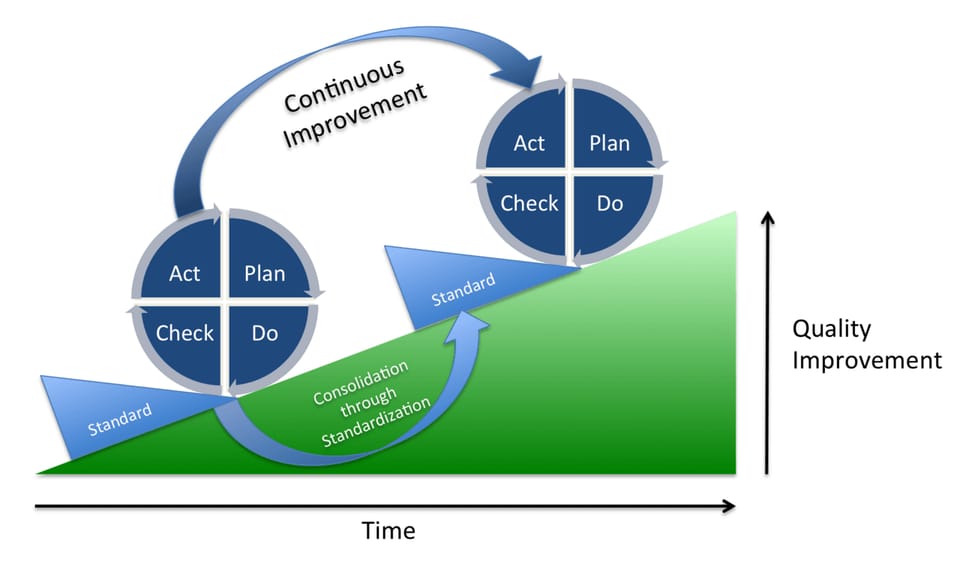
Explaining how these decision rules operate, Elakkiya said in response to questions from Primary that two quantities are computed for each outcome across consecutive deliveries: the cosine similarity between sentence embeddings and the set of Revised Bloom's Taxonomy levels assigned to the leading action verb. Elakkiya explained that if the two statements are identical up to case and spacing the outcome is Unchanged, whereas if similarity falls below 0.90 the outcome has been replaced. If the similarity is 0.90 or above but the level sets share no common category, the wording has stayed close while the cognitive demand has moved, which registers as a level change; otherwise, the system records a paraphrase. As Elakkiya noted, "Similarity alone cannot do this, because raising an outcome from applying a method to designing one alters very few words, and the verb level is what catches it." Elakkiya added that the classification only annotates the record and never suppresses a shortfall signal, ensuring that no rewording can obscure weak student results.
Clarifying the underlying mechanics, Elakkiya told Primary that the framework relies on two distinct checks, only one of which uses an empirical cutoff. The classification into paraphrase, level change, or replacement uses a 0.90 similarity threshold calibrated on 24 constructed statement pairs. In contrast, the numbering alignment check operates completely free of thresholds and labelling.2 For every outcome in a new delivery, the system identifies which outcome of the previous delivery it lies nearest to in embedding space, reporting a misalignment whenever the nearest statement does not carry the matching number. Elakkiya pointed out that this comparison represents an ordering of similarities rather than a cutoff, making it independent of both the similarity threshold and taxonomy verb levels.
What did an audit of live university records reveal?
Applying these computational rules to a live institutional dataset revealed significant distortions that traditional reporting platforms missed. Rajasekar audited the live records of two real university courses in computer science, including two consecutive deliveries of a core course.21 In that core course, every single learning outcome had been substantively redefined between consecutive semesters.21 Topics had moved between different outcome numbers, meaning the third outcome in the first semester described entirely different material than the third outcome in the second.21 A standard platform reading these records sequentially reported a 25-point collapse in attainment, creating the appearance of severe academic regression when the quantities actually measured different learning objectives.21
Describing the failure of baseline assumptions in this core course, Elakkiya told Primary that traditional systems assume an outcome number denotes the same learning from one delivery to the next. Read naively as a continuous series, the course attainment fell from 65.0 to 40.3 percent, with each of its five individual outcomes dropping by 13 to 37 percentage points. Although Elakkiya, serving as the course instructor in charge, knew the handout had been rewritten, the institutional platform showed no trace of the change. When the continuity rule ran on the two handouts, no outcome returned as unchanged; the fifth outcome of the new delivery lay nearest to the fourth of the old, while the new fourth outcome, covering pushdown automata, had no historical counterpart. Furthermore, the evaluation scheme had expanded from five components to six and the mapping to programme outcomes had altered, converging three separate sources of incomparability at a single semester boundary. As Elakkiya observed, "the point is that the record cannot separate a fall in attainment from a redefinition of what was measured."
The audit also exposed fundamental errors in how institutional software calculated attainment figures. When Rajasekar recomputed the platform metrics from the university's own documented mathematical formulas, six out of 10 outcome calculations differed by margins larger than rounding errors could explain.21 The discrepancy stemmed from an implementation defect in how the institutional system weighted assessment marks, a flaw that Rajasekar subsequently reported to university administrators.21
Addressing this mathematical variance, Elakkiya said that the divergence is fully explained by which matrix the weighting is read from. A course handout provides both a weightage distribution matrix, giving each component a percentage weight per outcome, and a mark distribution matrix, defining the raw marks allocated per outcome. Recomputing with the weightage matrix matches the documented formula, whereas calculating with the mark distribution matrix reproduces every reported outcome figure of the core course to within about half a percentage point. The two methods coincide only when a component's share of an outcome's marks equals its percentage weightage, which is why four calculations agreed while six diverged. Because OBER+ reads reported attainment values directly without recomputing them, its operational rules remain unaffected, though Elakkiya noted that verifying attainment values mathematically belongs ahead of the improvement cycle.
Across 15 outcome statement pairs drawn from three historical course transitions, five pairs were identical character for character.21 Among the 10 pairs that were modified, semantic analysis showed that the outcome carrying a given number was nearest in meaning to a differently numbered outcome from the preceding delivery in six instances.21 This confirmed that numerical labels do not track instructional subject matter reliably across academic years.
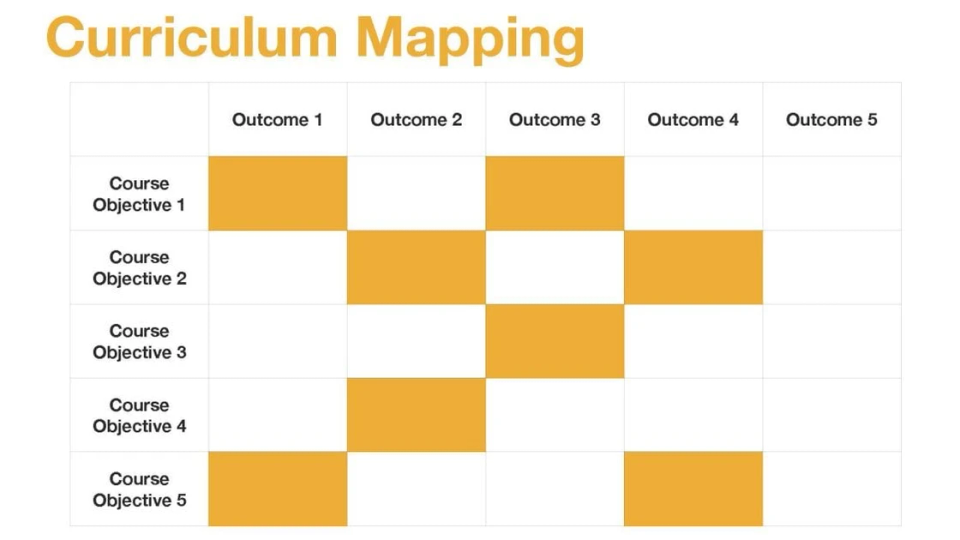
When asked what syllabus changes could produce false matches in automated remapping, Elakkiya identified two specific challenges. The first occurs when distinct outcomes are written using identical disciplinary vocabulary and identical leading verbs, such as an elective course pair comparing feature detection with machine learning for image classification that scored a high similarity of 0.928 and returned as a paraphrase despite addressing different topics. The second challenge arises from splitting or merging outcomes, such as combining decidability and complexity into a single outcome on Turing machines, where the nearest earlier statement forms a legitimate but partial match. Because of these nuances, Elakkiya emphasized that a detected misalignment serves as an alert prompting faculty to review syllabus handouts rather than a definitive final verdict.
What the framework cannot yet determine
These findings come from an initial evaluation of a computational design rather than an institution-wide deployment across multiple departments. Rajasekar evaluated the framework on live records from two courses in a single computer science department where the author served as the course instructor in charge.21 The dataset represents a targeted test of algorithmic verification rather than a comprehensive survey of global institutional practices. The underlying preprint has been posted to the arXiv repository and submitted to IEEE Transactions on Learning Technologies, and has not yet completed peer review.35
Discussing these empirical boundaries, Elakkiya told Primary that because the evidence covers two courses and three deliveries within one department, it demonstrates that outcome statements can be redefined without leaving a trace, but does not measure how frequently this occurs across broader curricula. In addition, the automated shortfall flag, regulatory severity banding, and quantitative gap closure metrics have so far executed only on constructed test records, with an upcoming third delivery of the core course planned as their first live operational test. Elakkiya also noted that the framework is least effective in settings where student achievement is evaluated through holistic rubrics rather than itemised marked components, or where learning outcomes begin with ambiguous verbs assigned to multiple cognitive tiers.
Furthermore, while the computational model can trace whether a specific intervention was followed by higher attainment scores, it does not prove direct causation in complex classroom environments. Fluctuations in student cohort preparation, external grading variations, and examination difficulty can influence attainment percentages independently of pedagogical interventions. The framework logs historical movements and enforces data integrity, but human educators must still evaluate the qualitative context of their classrooms.
How automated tracking can reshape educational accreditation
Despite these constraints, building continuity-aware verification into academic software addresses a major vulnerability in university analytics. When institutions present accreditation portfolios to external reviewers, they frequently rely on aggregate numbers that conceal syllabus drift, calculation bugs, and untracked curriculum changes. By formalising continuous improvement into auditable computational steps, universities can ensure that recorded performance gains reflect genuine instructional progress.
Rajasekar noted that the mathematical rules governing OBER+ are platform-agnostic and can be integrated into existing university management systems that report delivery-level student scores.21 When asked about architectural limitations, Elakkiya confirmed that nothing in standard system architectures breaks integration as long as the host platform computes attainment per course learning outcome for each offering. However, Elakkiya cautioned that commercial learning management systems that record raw assessment grades without maintaining explicit mappings from individual questions to learning outcomes cannot supply the necessary input data.
Future development focuses on expanding automated audits across multi-departmental records and integrating natural language processing tools that suggest structural alignments before course syllabi are finalized.
This piece was prepared from the arXiv preprint and public records together with answers from Elakkiya to seven questions from the Primary news team, completed September 2026.
The record
62 sentences trace to 4 sources and 1 contributor.
-
1
A
 arxiv.org
Paper
· arxiv.org
OBER+: Continuity-Aware Reporting and TraceableContinuous Improvement in Outcome-Based Education
Preprint · may not have been peer reviewed
See the source
-
2
ER
Elakkiya Rajasekar
Paper
· arxiv.org · 4 Sep 2026
OBER+: Continuity-Aware Reporting and Traceable Continuous Improvement in Outcome-Based Education
Preprint · may not have been peer reviewed
See the source
-
3
A
arxiv.org
Paper
· arxiv.org
Machine Learning
Preprint · may not have been peer reviewed
See the source
- 4 Contribution — Elakkiya Rajasekar 30 statements added to this article
-
5
A
arxiv.org
Paper
· arxiv.org
Computers and Society
Preprint · may not have been peer reviewed
See the source
Other consulted pages1 page
paperreading.club1 page
Article history
-
Published 29 Oct 2026, 21:37Assembled by the Primary desk from 4 sources · 1 contributor · 62 cited sentences
-
Elakkiya Rajasekar, an associate professor in the Department of Computer Science at the Birla Institute of Technology and Science Pilani
- Go to the sentence: Explaining how these decision rules operate, Elakkiya said in response to questions from Primary that two quantities are computed for each outcome across consecutive deliveries: the cosine similarity between sentence embeddings and the set of Revised Bloom's Taxonomy levels assigned to the leading action verb.
- Go to the sentence: Elakkiya explained that if the two statements are identical up to case and spacing the outcome is Unchanged, whereas if similarity falls below 0.90 the outcome has been replaced.
- Go to the sentence: If the similarity is 0.90 or above but the level sets share no common category, the wording has stayed close while the cognitive demand has moved, which registers as a level change; otherwise, the system records a paraphrase.
- Go to the sentence: As Elakkiya noted, "Similarity alone cannot do this, because raising an outcome from applying a method to designing one alters very few words, and the verb level is what catches it."
- Go to the sentence: Elakkiya added that the classification only annotates the record and never suppresses a shortfall signal, ensuring that no rewording can obscure weak student results.
- Go to the sentence: Clarifying the underlying mechanics, Elakkiya told Primary that the framework relies on two distinct checks, only one of which uses an empirical cutoff.
- Go to the sentence: The classification into paraphrase, level change, or replacement uses a 0.90 similarity threshold calibrated on 24 constructed statement pairs.
- Go to the sentence: In contrast, the numbering alignment check operates completely free of thresholds and labelling.
- Go to the sentence: For every outcome in a new delivery, the system identifies which outcome of the previous delivery it lies nearest to in embedding space, reporting a misalignment whenever the nearest statement does not carry the matching number.
- Go to the sentence: Elakkiya pointed out that this comparison represents an ordering of similarities rather than a cutoff, making it independent of both the similarity threshold and taxonomy verb levels.
- Go to the sentence: Describing the failure of baseline assumptions in this core course, Elakkiya told Primary that traditional systems assume an outcome number denotes the same learning from one delivery to the next.
- Go to the sentence: Read naively as a continuous series, the course attainment fell from 65.0 to 40.3 percent, with each of its five individual outcomes dropping by 13 to 37 percentage points.
- Go to the sentence: Although Elakkiya, serving as the course instructor in charge, knew the handout had been rewritten, the institutional platform showed no trace of the change.
- Go to the sentence: When the continuity rule ran on the two handouts, no outcome returned as unchanged; the fifth outcome of the new delivery lay nearest to the fourth of the old, while the new fourth outcome, covering pushdown automata, had no historical counterpart.
- Go to the sentence: Furthermore, the evaluation scheme had expanded from five components to six and the mapping to programme outcomes had altered, converging three separate sources of incomparability at a single semester boundary.
- Go to the sentence: As Elakkiya observed, "the point is that the record cannot separate a fall in attainment from a redefinition of what was measured."
- Go to the sentence: Addressing this mathematical variance, Elakkiya said that the divergence is fully explained by which matrix the weighting is read from.
- Go to the sentence: A course handout provides both a weightage distribution matrix, giving each component a percentage weight per outcome, and a mark distribution matrix, defining the raw marks allocated per outcome.
- Go to the sentence: Recomputing with the weightage matrix matches the documented formula, whereas calculating with the mark distribution matrix reproduces every reported outcome figure of the core course to within about half a percentage point.
- Go to the sentence: The two methods coincide only when a component's share of an outcome's marks equals its percentage weightage, which is why four calculations agreed while six diverged.
- Go to the sentence: Because OBER+ reads reported attainment values directly without recomputing them, its operational rules remain unaffected, though Elakkiya noted that verifying attainment values mathematically belongs ahead of the improvement cycle.
- Go to the sentence: When asked what syllabus changes could produce false matches in automated remapping, Elakkiya identified two specific challenges.
- Go to the sentence: The first occurs when distinct outcomes are written using identical disciplinary vocabulary and identical leading verbs, such as an elective course pair comparing feature detection with machine learning for image classification that scored a high similarity of 0.928 and returned as a paraphrase despite addressing different topics.
- Go to the sentence: The second challenge arises from splitting or merging outcomes, such as combining decidability and complexity into a single outcome on Turing machines, where the nearest earlier statement forms a legitimate but partial match.
- Go to the sentence: Because of these nuances, Elakkiya emphasized that a detected misalignment serves as an alert prompting faculty to review syllabus handouts rather than a definitive final verdict.
- Go to the sentence: Discussing these empirical boundaries, Elakkiya told Primary that because the evidence covers two courses and three deliveries within one department, it demonstrates that outcome statements can be redefined without leaving a trace, but does not measure how frequently this occurs across broader curricula.
- Go to the sentence: In addition, the automated shortfall flag, regulatory severity banding, and quantitative gap closure metrics have so far executed only on constructed test records, with an upcoming third delivery of the core course planned as their first live operational test.
- Go to the sentence: Elakkiya also noted that the framework is least effective in settings where student achievement is evaluated through holistic rubrics rather than itemised marked components, or where learning outcomes begin with ambiguous verbs assigned to multiple cognitive tiers.
- Go to the sentence: When asked about architectural limitations, Elakkiya confirmed that nothing in standard system architectures breaks integration as long as the host platform computes attainment per course learning outcome for each offering.
- Go to the sentence: However, Elakkiya cautioned that commercial learning management systems that record raw assessment grades without maintaining explicit mappings from individual questions to learning outcomes cannot supply the necessary input data.