Engineer details 3D crack mechanics in stretchable polymers
New measurements show crosslink density and step geometries govern energy dissipation along tear fronts in flexible networks.
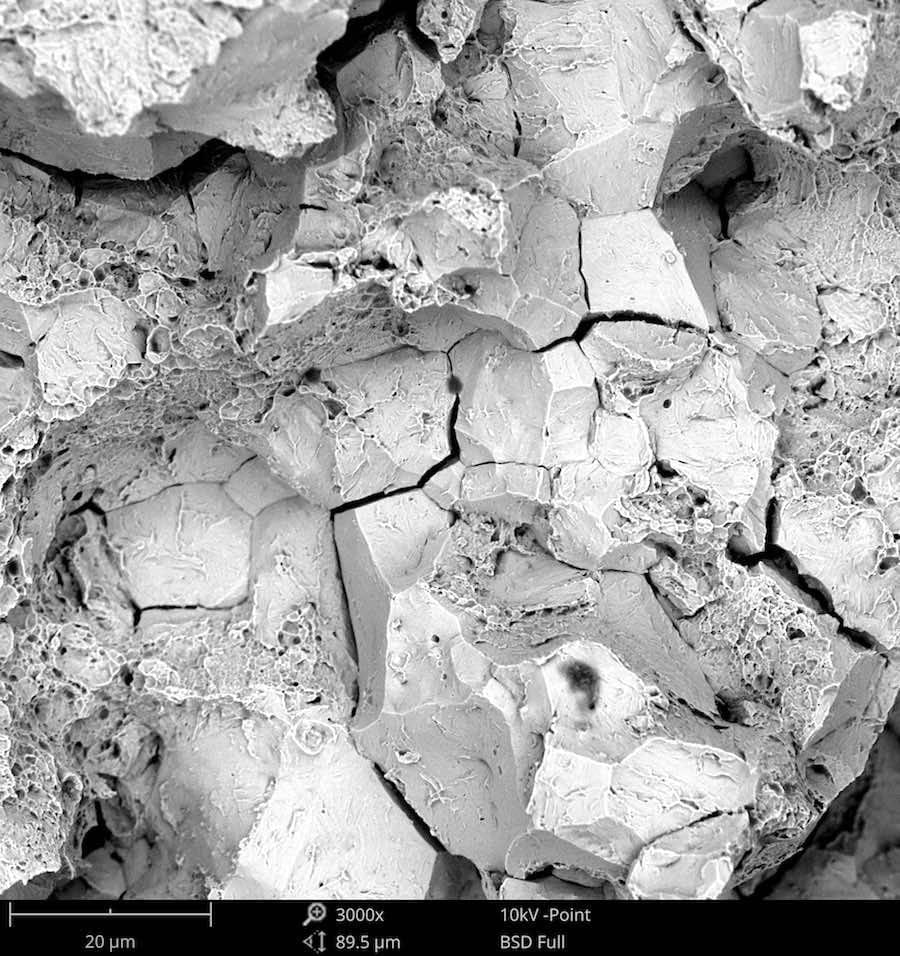
Tracking fracture fronts across deformable solids
Engineers analyzing how soft polymers tear have assembled a foundational literature linking mechanical instabilities to surface topography. A research group led by Tenghao Yin, Etienne Barthel, Chung-Yuen Hui, Costantino Creton, and Matteo Ciccotti published a study titled 3D patterns on fractured surfaces of soft stretchable materials on September 17, 2026. The researchers, working at the Laboratoire Sciences et Ingénierie de la Matière Molle at the École supérieure de physique et de chimie industrielles, documented the physical mechanics governing crack paths in pliable networks.
Understanding how cracks propagate through flexible substrates requires examining both classical elastomer tearing and newer gel formulations. Early investigations into rubber failure laid the groundwork for modern fracture analysis. In 1956, H. W. Greensmith published findings on the rupture of rubber, examining tear properties in vulcanizates reinforced with carbon black.1 A decade later, G. J. Lake and A. G. Thomas evaluated the strength of highly elastic materials in a landmark 1967 paper for the Royal Society of London.1
Subsequent experiments detailed how tears form microscopic surface features. In 1978, Y. Fukahori and E. H. Andrews described fracture surface roughness in highly deformable polymers.1 That work was complemented in 1983 by D. K. Setua and S. K. De, who used scanning electron microscopy to inspect tear mechanisms in styrene-butadiene rubber.1 In 1984, A. N. Gent and C. T. R. Pulford analyzed the micromechanics of elastomer fracture, helping define how rubber chains separate under mechanical stress.1
Instabilities and three-dimensional crack geometry
As fracture mechanics expanded into hydrogels and soft matter, researchers identified complex three-dimensional patterns along moving crack fronts. In 1996, Y. Tanaka and colleagues documented regular pattern formation on the fracture surfaces of polymer gels.1 Tanaka expanded on that work two years later, detailing discontinuous crack fronts during three-dimensional fractures.1 Such discontinuous lines demonstrate that a tear does not always advance as a uniform, flat plane through a deformable body.
Similar pattern transitions appeared in earlier physics experiments. In 1993, A. Yuse and M. Sano identified transitions between crack patterns in quenched glass plates.1 That same year, J. P. Bouchaud, E. Bouchaud, G. Lapasset, and J. Planès introduced fractal crack models to capture structural irregularity.1 In hydrogel systems, T. Baumberger, C. Caroli, D. Martina, and O. Ronsin reported magic angles and cross-hatching instability in hydrogel fracture in 2008, establishing that soft network geometry dictates rupture orientation.1
That interpretation has faced renewed scrutiny during recent laboratory trials. Matteo told Primary that "polymer network geometry does not determine the rupture angle by itself" and explained that network density alters local stress fields. In experiments, "changing the network crosslink density systematically changes the three-dimensional step geometry: at low crosslink density, neighboring steps can merge, while at higher crosslink density the rupture angle approaches about 45 degrees," Matteo said. The observed cross-hatching patterns arise from an interaction between network structure, crack-front instability, and local mixed-mode fracture conditions.
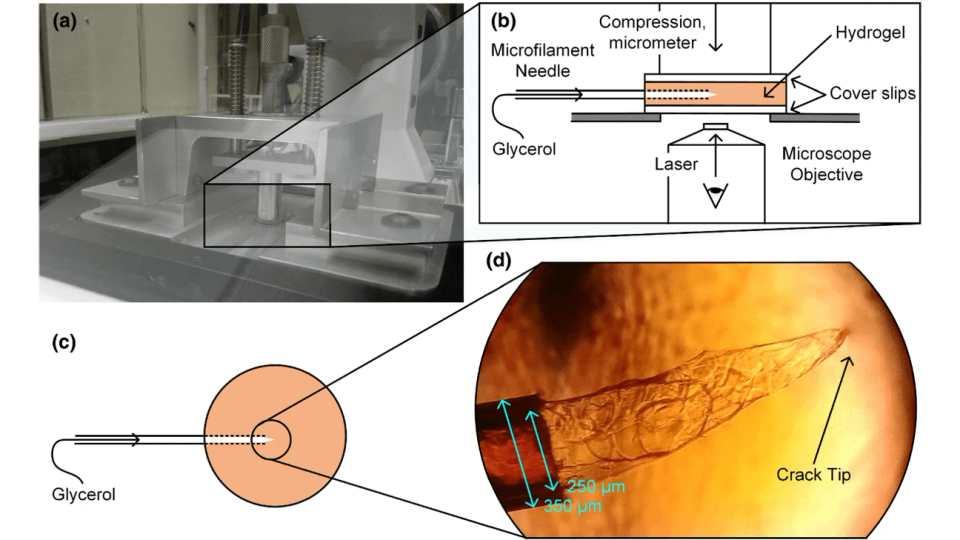
Mixed-mode loading introduces additional spatial distortions to moving cracks. In 2010, A. J. Pons and A. Karma analyzed helical crack-front instability in mixed-mode fracture.1 Four years later, Ronsin, Caroli, and Baumberger identified crack front échelon instability in the mixed-mode fracture of a strongly nonlinear elastic solid.1 C.-H. Chen and collaborators expanded on this in 2015 by reporting crack front segmentation and facet coarsening under mixed-mode loads.1
Dynamic crack behavior also introduces localized microstructural bifurcations. In 2017, I. Kolvin, J. Fineberg, and M. Adda-Bedia investigated nonlinear focusing in dynamic crack fronts and the microbranching transition.13 J. Bleyer and J.-F. Molinari explored that phenomenon numerically that same year, modeling microbranching instability in dynamic brittle fracture using phase-field formulations.1 More recently, M. Wang, Adda-Bedia, J. M. Kolinski, and Fineberg demonstrated in 2022 how hidden three-dimensional structures within crack fronts reveal mechanical energy balance.1
Direct structural observations provide clear evidence of these thermodynamic tradeoffs. Matteo told Primary that "the height and orientation of fracture steps are particularly informative" when tracking rupture fronts. Matteo noted that "step size reflects the characteristic length scale of the fracture process, while step angle reflects the local mixed-mode condition." Together, these visible signatures indicate how mechanical energy is redistributed across the tearing sample.
Structural heterogeneity plays an equally critical role in shaping crack surfaces. In 2022, W. Steinhardt and S. M. Rubinstein outlined how material heterogeneity creates rough fractures.1 Two years later, X. Wei, C. Li, C. McCarthy, and Kolinski showed that the geometric complexity of crack fronts enhances the toughness of brittle solids.1 Matteo told Primary that "geometric complexity increases the step height and creates additional fracture surface beyond the main crack plane." Forming these three-dimensional steps "requires extra energy dissipation, which increases the overall fracture resistance," Matteo added. In 2024, Wang, E. Bouchbinder, and Fineberg analyzed size selection in crack front defects, focusing on multiple fracture-plane interactions and intrinsic length scales.1
Hydrogel networks and interfacial toughness
Modern soft robotics and wearable components demand materials that resist cyclic loading without tearing. In 2023, B. Liu and co-authors described tough and fatigue-resistant polymer networks achieved through crack tip softening.1 Matteo told Primary that "crack-tip softening suppresses fatigue growth by de-concentrating stress near the crack tip and providing elastic shielding to the surrounding network." This mechanism lowers the local driving force for bond rupture and prevents further crack propagation.
Hydrogel networks have formed a primary testing ground for these mechanical principles. A multi-part investigation into polyacrylamide hydrogels examined network imperfection in 2019 by C. Yang, T. Yin, and Z. Suo, followed by an analysis of elastic dissipation by J. Liu and colleagues.1 In 2020, Y. Wang, X. Yang, G. Nian, and Suo measured the strength and toughness of soft material adhesion during lap shear tests.1 Wang, Yin, and Suo extended the series in 2021 by evaluating lap shear and peel mechanics in polyacrylamide hydrogels, while Wang, Nian, J. Kim, and Suo published data on synthesis-property relations in 2023.1
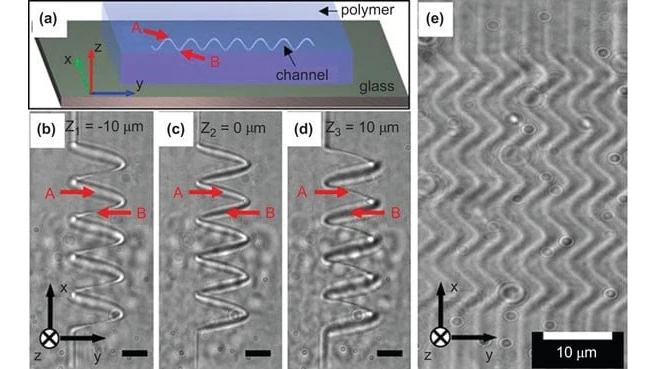
In 2021, Yin, T. Wu, J. Liu, S. Qu, and W. Yang measured the essential work of fracture in soft elastomers.1 Explaining the experimental methodology, Matteo told Primary that "we varied the distance between two crack tips to control the interaction between their fracture process zones." By tracking how total dissipation changed with this interaction, the research team separated the essential work of fracture from additional bulk dissipation.
Understanding crack paths along material interfaces draws heavily on theoretical mechanics developed by J. W. Hutchinson and collaborators. In 1989, M.-Y. He and Hutchinson analyzed crack kinking out of an interface.1 In 1991, He, A. Bartlett, A. G. Evans, and Hutchinson examined in-plane stress effects during interfacial kinking, while Hutchinson and Suo consolidated mixed-mode cracking theory for layered materials.1 A. Papangelo and M. Ciavarella revisited mixed-mode fracture models in 2019 to analyze contact area reduction under shear loads, and Y. Lu and colleagues evaluated mixed-mode fracture in soft elastomers in 2021.1 Matteo told Primary that "combined shear and tension change the local mode mixity and increase the driving force for interfacial fracture at the contact edge." As the edge progressively debonds, the contact area shrinks.
Functional surfaces and biological adhesion
Fracture mechanics and patterned surfaces intersect across multiple physical applications, ranging from synthetic adhesives to living tissues. Biological attachment systems offer natural benchmarks for surface contact. In 2000, K. Autumn and fellow researchers measured the adhesive force of a single gecko foot-hair, confirming that microscale fibrillar structures generate significant dry adhesion.1 In 2006, Y. Tian and co-authors detailed adhesion and friction dynamics during gecko toe attachment and detachment.1
Engineers have harnessed similar microscale surface architectures to manipulate fluids and guide cellular growth. In 1998, Y. Xia and G. M. Whitesides published a comprehensive guide to soft lithography techniques for casting polymeric microstructures.1 In 2017, J. Li and colleagues constructed a topological liquid diode for directional fluid transport, and D. Wang and collaborators designed robust superhydrophobic surfaces in 2020.1 In 2024, J. J. Webber and M. G. Worster modeled wrinkling instabilities in swelling hydrogels.1
Surface patterning has also entered medical electronics and cellular engineering. S. J. P. Callens and collaborators reported in 2023 that bone cells exhibit emergent collective organization when cultured within complex curvature fields.1 In 2025, H. Seo and co-authors developed topographical patterning of cell-repellent interfaces for immune-stealth implantable electronics using multiphoton ablation lithography.1 Matteo told Primary that "multiphoton ablation creates multiscale micro-grooves and nano-islands that disrupt focal adhesion formation." This microstructural geometry hinders immune cell attachment, reducing inflammation and fibrosis around flexible implants.
Dynamic actuation systems extend these surface concepts into active mechanical devices. In 2000, R. Pelrine, R. Kornbluh, Q. Pei, and J. Joseph demonstrated high-speed electrically actuated elastomers operating with strains greater than 100%.1 In 2025, Y. Zhang and colleagues achieved symmetric snap-through buckling using designed magnetic actuation.1 Meanwhile, durable bonding methods remain essential for integrating compliant polymers with rigid devices. In 2016, H. Yuk, T. Zhang, S. Lin, G. A. Parada, and X. Zhao detailed methods for achieving tough bonding of hydrogels to diverse non-porous surfaces, providing a mechanical anchor for flexible functional systems.1 Matteo told Primary that "tough adhesion comes from combining strong interfacial bonding with substantial energy dissipation in the hydrogel." Covalent anchoring prevents easy interfacial separation while the polymer network absorbs energy near the moving crack tip.
The record
55 sentences trace to 2 sources and 1 contributor.
- 1 3D patterns on fractured surfaces of soft stretchable materials See the source
- 2 Contribution — Matteo Ciccotti 26 statements added to this article
-
3
A
 arxiv.org
Paper
· arxiv.org
Search | arXiv e-print repository
Preprint · may not have been peer reviewed
See the source
Other consulted pages1 page
Article history
-
Published 29 Oct 2026, 13:44Assembled by the Primary desk from 2 sources · 1 contributor · 55 cited sentences
-
Matteo Ciccotti
- Go to the sentence: In hydrogel systems, T. Baumberger, C. Caroli, D. Martina, and O. Ronsin reported magic angles and cross-hatching instability in hydrogel fracture in 2008, establishing that soft network geometry dictates rupture orientation.
- Go to the sentence: Matteo told Primary that "polymer network geometry does not determine the rupture angle by itself" and explained that network density alters local stress fields.
- Go to the sentence: In experiments, "changing the network crosslink density systematically changes the three-dimensional step geometry: at low crosslink density, neighboring steps can merge, while at higher crosslink density the rupture angle approaches about 45 degrees," Matteo said.
- Go to the sentence: The observed cross-hatching patterns arise from an interaction between network structure, crack-front instability, and local mixed-mode fracture conditions.
- Go to the sentence: More recently, M. Wang, Adda-Bedia, J. M. Kolinski, and Fineberg demonstrated in 2022 how hidden three-dimensional structures within crack fronts reveal mechanical energy balance.
- Go to the sentence: Matteo told Primary that "the height and orientation of fracture steps are particularly informative" when tracking rupture fronts.
- Go to the sentence: Matteo noted that "step size reflects the characteristic length scale of the fracture process, while step angle reflects the local mixed-mode condition."
- Go to the sentence: Together, these visible signatures indicate how mechanical energy is redistributed across the tearing sample.
- Go to the sentence: Two years later, X. Wei, C. Li, C. McCarthy, and Kolinski showed that the geometric complexity of crack fronts enhances the toughness of brittle solids.
- Go to the sentence: Matteo told Primary that "geometric complexity increases the step height and creates additional fracture surface beyond the main crack plane."
- Go to the sentence: Forming these three-dimensional steps "requires extra energy dissipation, which increases the overall fracture resistance," Matteo added.
- Go to the sentence: In 2023, B. Liu and co-authors described tough and fatigue-resistant polymer networks achieved through crack tip softening.
- Go to the sentence: Matteo told Primary that "crack-tip softening suppresses fatigue growth by de-concentrating stress near the crack tip and providing elastic shielding to the surrounding network."
- Go to the sentence: This mechanism lowers the local driving force for bond rupture and prevents further crack propagation.
- Go to the sentence: In 2021, Yin, T. Wu, J. Liu, S. Qu, and W. Yang measured the essential work of fracture in soft elastomers.
- Go to the sentence: Explaining the experimental methodology, Matteo told Primary that "we varied the distance between two crack tips to control the interaction between their fracture process zones."
- Go to the sentence: By tracking how total dissipation changed with this interaction, the research team separated the essential work of fracture from additional bulk dissipation.
- Go to the sentence: A. Papangelo and M. Ciavarella revisited mixed-mode fracture models in 2019 to analyze contact area reduction under shear loads, and Y. Lu and colleagues evaluated mixed-mode fracture in soft elastomers in 2021.
- Go to the sentence: Matteo told Primary that "combined shear and tension change the local mode mixity and increase the driving force for interfacial fracture at the contact edge."
- Go to the sentence: As the edge progressively debonds, the contact area shrinks.
- Go to the sentence: In 2025, H. Seo and co-authors developed topographical patterning of cell-repellent interfaces for immune-stealth implantable electronics using multiphoton ablation lithography.
- Go to the sentence: Matteo told Primary that "multiphoton ablation creates multiscale micro-grooves and nano-islands that disrupt focal adhesion formation."
- Go to the sentence: This microstructural geometry hinders immune cell attachment, reducing inflammation and fibrosis around flexible implants.
- Go to the sentence: In 2016, H. Yuk, T. Zhang, S. Lin, G. A. Parada, and X. Zhao detailed methods for achieving tough bonding of hydrogels to diverse non-porous surfaces, providing a mechanical anchor for flexible functional systems.
- Go to the sentence: Matteo told Primary that "tough adhesion comes from combining strong interfacial bonding with substantial energy dissipation in the hydrogel."
- Go to the sentence: Covalent anchoring prevents easy interfacial separation while the polymer network absorbs energy near the moving crack tip.