Bacterial gene loss can make cells grow faster
Discarding unnecessary genetic controls allows bacteria to reallocate finite cellular machinery toward replication, according to computational and proteomic modeling.
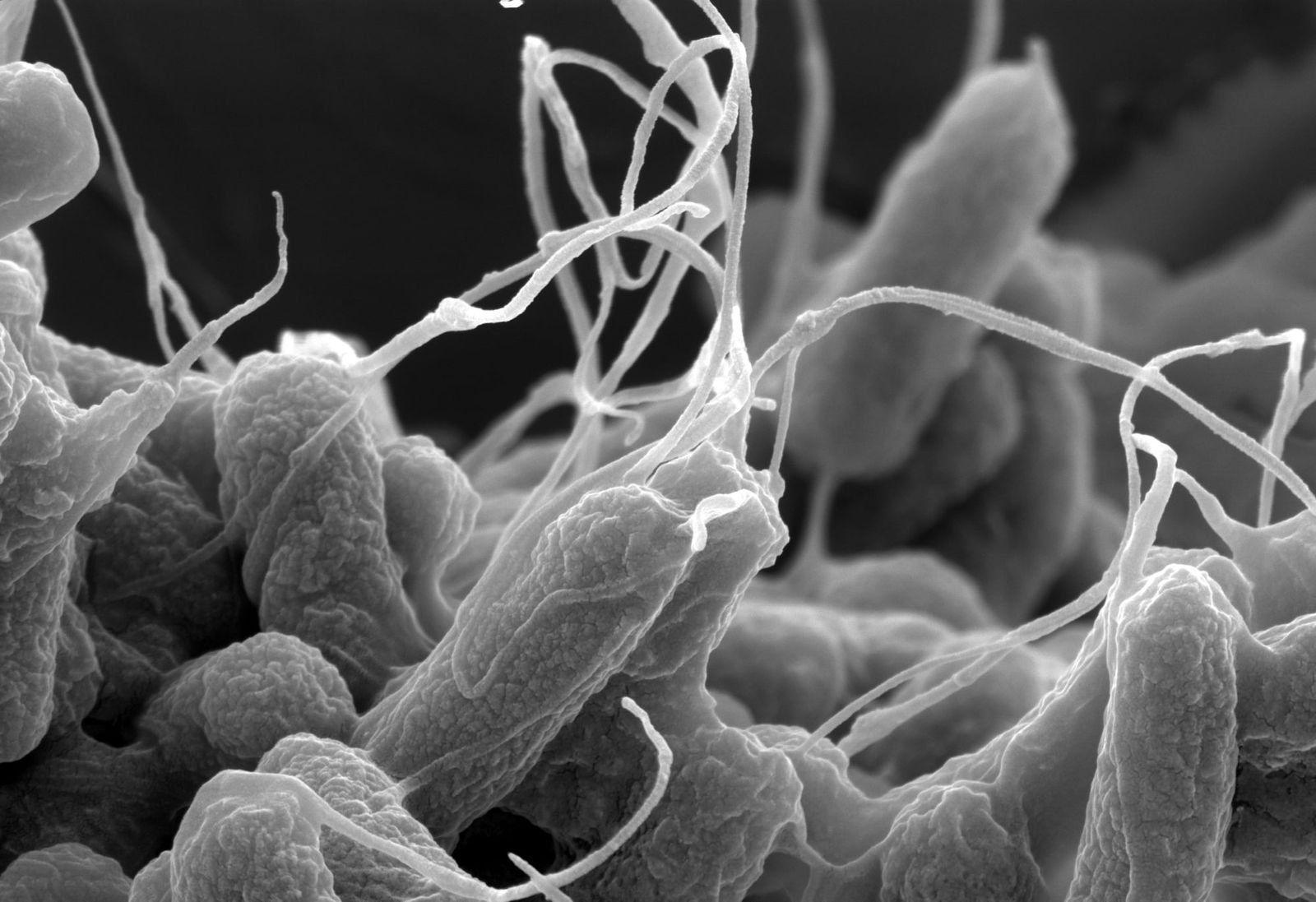
A living bacterium must manufacture all of the proteins required to sustain its life, but carrying instructions for every possible emergency comes at an energetic price. Inside a single cell, resources such as ribosomes and amino acids are strictly finite. Every molecule dedicated to building a protein that is not currently useful represents fuel and machinery diverted away from basic growth and division. When an organism resides in a stable, nutrient-rich environment, maintaining cellular machinery designed for fluctuating conditions can slow it down.
Biologists often assume that losing functional genes will impair an organism or produce no noticeable effect. Yet shedding unused genetic baggage can actually streamline an organism, freeing up metabolic capacity so it can replicate more quickly. Understanding which genes can be dropped without penalty helps clarify how bacterial genomes contract over evolutionary timescales, and it offers engineers a blueprint for constructing stripped-down microbial factories that convert nutrients into valuable chemicals without wasting energy on unneeded biological pathways.
For a gene deletion to improve a bacterium's growth, a straightforward chain of events must occur. First, the intact cell normally synthesizes proteins encoded by that gene, consuming energy and molecular building blocks during transcription and translation. Next, if that gene is disabled or removed, the cell halts production of those specific proteins. Finally, the ribosomes and cellular energy previously consumed by that production are freed to synthesize the core molecular machinery required for biomass synthesis and cell division. In a preprint posted to bioRxiv that has not yet undergone peer review, researchers investigated how this reallocation operates across the entire genetic catalogue of a model bacterium.12
How much cellular protein can bacteria safely discard?
Between 31 and 75 percent of the total protein mass inside Escherichia coli belongs to a broad category of nonessential genes whose loss causes only modest changes to growth.12 David Hidalgo, Lizeth Soto-Ávila, O. Alejandro Aguilar-Vera, Daniela Ledezma-Tejeida, Jose A. Farías-Rico, and Jose Utrilla at the Universidad Nacional Autónoma de México classified the organism's genes by their measured impact on cellular fitness into four distinct groups: essential, important, mean-effect, and fitness-enhancing.1 By comparing experimental proteomic measurements against computational simulations using a metabolic and macromolecular expression model, the researchers calculated the cumulative proteome fractions devoted to these mean-effect genes.12 They observed the highest proportion of this flexible protein pool, reaching up to 75 percent, when the bacteria grew in rich lysogeny broth medium.12
Jose told Primary that this substantial allocation provides reserve capacity that bacteria deploy during environmental shifts. Jose said that "That 31-75% is there to be used when conditions change, therefore we think that in severe nutrient limitation or other \"harsh\" conditions that will be of use and if we study those conditions we will see a much lower nonessentiall allocation" in response to questions from Primary.
An enrichment analysis conducted on core mean-effect genes revealed that transmembrane transport, the specialized protein machinery responsible for shuttling molecules across the cell envelope, accounted for the primary functional category within this pool.12 The authors report that maintaining molecular transport capacity represents a high burden for nutrient readiness, because bacteria constantly produce transport proteins to sample diverse foodstuffs that may not actually be present in their immediate surroundings.12 While genes that occupy a high proteomic mass fraction were more likely to alter fitness when eliminated, the authors observed that deletions that increased fitness rarely worked simply by slashing this bulk protein burden.12
Why does disabling regulators enhance cellular fitness?
Disabling specific regulatory genes can enhance bacterial growth by deactivating complex genetic control networks that restrain cellular replication. The authors identified a discrete subset of gene deletions that increased fitness compared to the population mean.12 These fitness-enhancing genes generally exhibited low baseline expression levels, and many carried uncharacterized functions.12 Jose said in response to questions from Primary that "Some low aboundance proteins, such as regulators, control de expression of a large fraction of the proteome. That is one of the mechanisms that we propose" to explain how these knockouts free resources.
Jose also told Primary that when evaluating unexpected fitness increases from uncharacterized deletions, "beside from regulators we where thinking in metabolic sinks or other proteins that may control pathways for saving resources in case conditions change" during initial analyses. Using artificial intelligence structural analysis tools, the researchers detected structural domains and conserved sequence features typical of DNA-binding proteins, suggesting that several of these uncharacterized genes act as putative transcriptional regulators.12
One prominent regulator identified in the fitness-enhancing group was RpoS, a specialized stress sigma factor known to direct the expression of up to 15 percent of the bacterium's total proteome.12 Under steady laboratory growth conditions, investing resources into the broad stress responses governed by RpoS offers little immediate advantage. The authors suggest that the evolutionary cost of operating as a generalist bacterium is linked to transcriptional regulation, where maintaining complex regulatory safety nets dampens maximal growth rates in uniform environments.12 Jose noted that this drag is specific to unvarying settings, saying that "Be aware that the conclusion only applies to stable environments, we think that the \"regulatory safte nets\" as you call them are there for natural environmental fluctuations and in those conditions are not a drag."
What can these genetic measurements tell researchers?
Laboratory growth measurements reveal how bacteria balance cellular resources, but they describe performance under steady conditions rather than across natural habitats. The computational simulations relied on established metabolic expression frameworks that approximate cellular economy without capturing every physiological stress response. In addition, the predicted functions for the newly highlighted fitness-enhancing genes derive from structural predictions and sequence homology, which represent working hypotheses that require direct experimental biochemical validation before their exact mechanisms can be confirmed. Jose told Primary that "The most direct assay is EMSA or pull-down assays, but you need to know or predict the binding sites. To do that a genome-scale analysis such as RNAseq or Chipseq could be informative" to verify regulatory activity. The paper was posted to the bioRxiv preprint server and has not yet been certified by peer review.2
If these regulatory mechanisms are corroborated by follow-up biochemical experiments, the principles could transform synthetic biology and metabolic engineering. By selectively removing nonessential regulatory controls and redundant nutrient transport systems, bioengineers could generate streamlined microbial strains tailored for biomanufacturing without compromising cell viability.12 However, Jose warned that "Industrial conditions can be quite challenging in many ways. If streamlined strains cannot cope with large-scale bioreactor heterogeneity, they may reduce productivity in industrial setups even if they perform very well in the lab" when deployed commercially. For evolutionary biologists, the work clarifies how natural selection trims bacterial genomes during adaptation to stable ecological niches.
The record
24 sentences trace to 2 sources and 1 contributor.
-
1
HD
Hidalgo, D., Soto-Avila, L., Aguilar-Vera, O. A., Ledezma-Tejeida, D., Farias-Rico, J. A., Utrilla, J. Paper · biorxiv.org · 18 Aug 2026 Potential benefit of loss-of-function on bacterial fitness Preprint · may not have been peer reviewed See the source
-
2
B
- 3 Contribution — Jose 6 statements added to this article
Other consulted pages1 page
Article history
-
Published 30 Oct 2026, 16:28Assembled by the Primary desk from 2 sources · 1 contributor · 24 cited sentences
-
Jose
- Go to the sentence: Jose said that "That 31-75% is there to be used when conditions change, therefore we think that in severe nutrient limitation or other \"harsh\" conditions that will be of use and if we study those conditions we will see a much lower nonessentiall allocation" in response to questions from Primary.
- Go to the sentence: Jose said in response to questions from Primary that "Some low aboundance proteins, such as regulators, control de expression of a large fraction of the proteome. That is one of the mechanisms that we propose" to explain how these knockouts free resources.
- Go to the sentence: Jose also told Primary that when evaluating unexpected fitness increases from uncharacterized deletions, "beside from regulators we where thinking in metabolic sinks or other proteins that may control pathways for saving resources in case conditions change" during initial analyses.
- Go to the sentence: Jose noted that this drag is specific to unvarying settings, saying that "Be aware that the conclusion only applies to stable environments, we think that the \"regulatory safte nets\" as you call them are there for natural environmental fluctuations and in those conditions are not a drag."
- Go to the sentence: Jose told Primary that "The most direct assay is EMSA or pull-down assays, but you need to know or predict the binding sites. To do that a genome-scale analysis such as RNAseq or Chipseq could be informative" to verify regulatory activity.
- Go to the sentence: However, Jose warned that "Industrial conditions can be quite challenging in many ways. If streamlined strains cannot cope with large-scale bioreactor heterogeneity, they may reduce productivity in industrial setups even if they perform very well in the lab" when deployed commercially.