A catalytic membrane breaks down stubborn forever chemicals in water
Destroying perfluoroalkyl substances rather than trapping them in disposable filters could eliminate toxic waste streams, though the high market price of precious metals complicates widespread municipal deployment.
Most municipal water treatment systems currently deployed against industrial chemical pollutants do not destroy them.1 Standard cleanup facilities rely on porous carbon beds, synthetic ion-exchange resins, or microscopic filtration membranes to strain hazardous molecules out of contaminated drinking supplies.1 While these approaches prevent the contaminants from reaching household taps, they leave the underlying chemical structures undamaged, concentrating toxic molecules into secondary waste streams that require long-term isolation or disposal.1
The persistent substances, widely known as forever chemicals or per- and polyfluoroalkyl substances, accumulate within living tissue and resist natural decomposition.1 Manufactured for decades to repel oil and water, the compounds now circulate through soils, aquifers, and food webs, and human populations carry measurable body burdens worldwide.1 Two widely used variants, perfluorooctane sulfonic acid and perfluorooctanoic acid, appear on the international register of persistent organic pollutants under the Stockholm Convention.1
To address that persistent waste loop, environmental engineers have attempted to build treatment systems capable of destroying the molecules during active water processing. Researchers led by Bruce Rittmann, director of the Biodesign Swette Center for Environmental Biotechnology at Arizona State University, reported in the Proceedings of the National Academy of Sciences that a catalytic membrane can capture targeted forever chemicals and dismantle their molecular framework on a single material surface.1
Breaking down these chemicals in flowing water requires several physical and chemical events to occur in strict succession. First, the dissolved pollutant molecule must collide with and adhere to a reactive solid surface rather than drifting past in the liquid stream. Second, active reducing agents must be generated directly at that interface to initiate chemical attack. Third, those agents must systematically strip away the outer barrier of fluorine atoms from the underlying carbon skeleton, substituting weaker elements to destabilize the molecular core. Finally, the resulting fragments must release from the catalytic sites to allow incoming contaminants to bind.
Why are perfluoroalkyl substances so difficult to destroy?
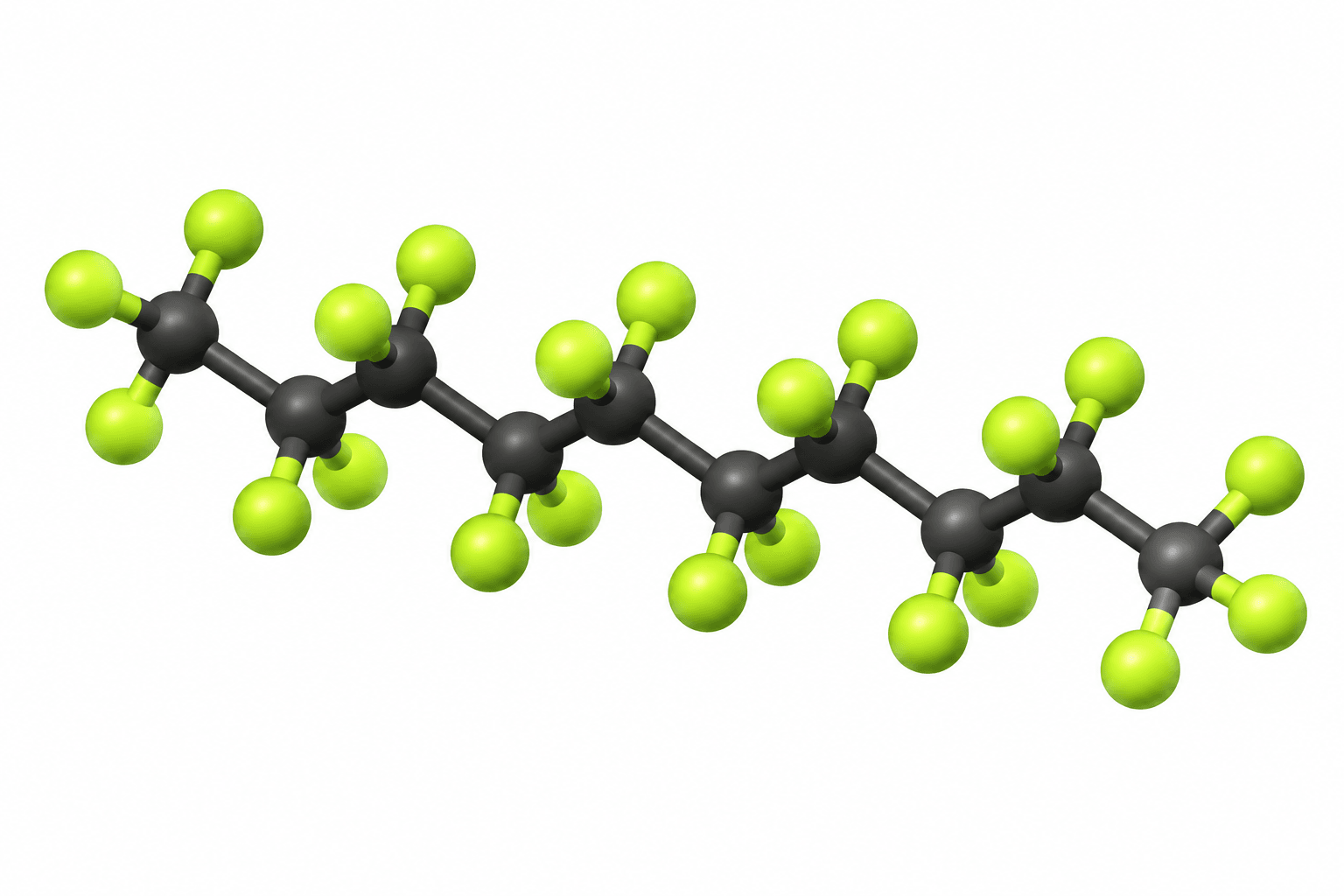
Perfluoroalkyl substances resist chemical degradation because the chemical bond between carbon and fluorine is exceptionally stable and tightly shielded.1 Fluorine possesses the highest electronegativity of any element in the periodic table, enabling it to draw electrons close and form the strongest single covalent link available to carbon atoms.1 Breaking such a linkage requires an immense input of chemical energy, meaning standard water purification reagents fail to break the bonds under ambient operating conditions.1
Beyond the fundamental strength of the bond, the physical arrangement of the atoms creates a protective shield around the molecular spine.1 In fully fluorinated compounds, densely packed fluorine atoms encase the central carbon backbone, creating steric hindrance that physically blocks outside reactants from making contact.1 Reactive chemical groups that water treatment operators typically use to split organic contaminants find no open target along the chain.1 Rittmann observed that this complete outer shield leaves conventional oxidation processes without an accessible starting point to begin breakdown.1
The same unyielding stability that makes these molecules persistent environmental hazards also explains their extensive commercial utility.1 Manufacturers have incorporated fluorinated compounds into non-stick coatings, firefighting foams, and water-repellent fabrics specifically because the carbon-fluorine architecture resists heat, moisture, and biological decay.1 As Rittmann noted, that commercial durability has turned into a major legacy problem, because the compounds do not degrade in natural environments, migrate upward through food chains, and remain largely unassessed across thousands of synthetic variants.1
How does a reactive metal membrane break these stubborn bonds?
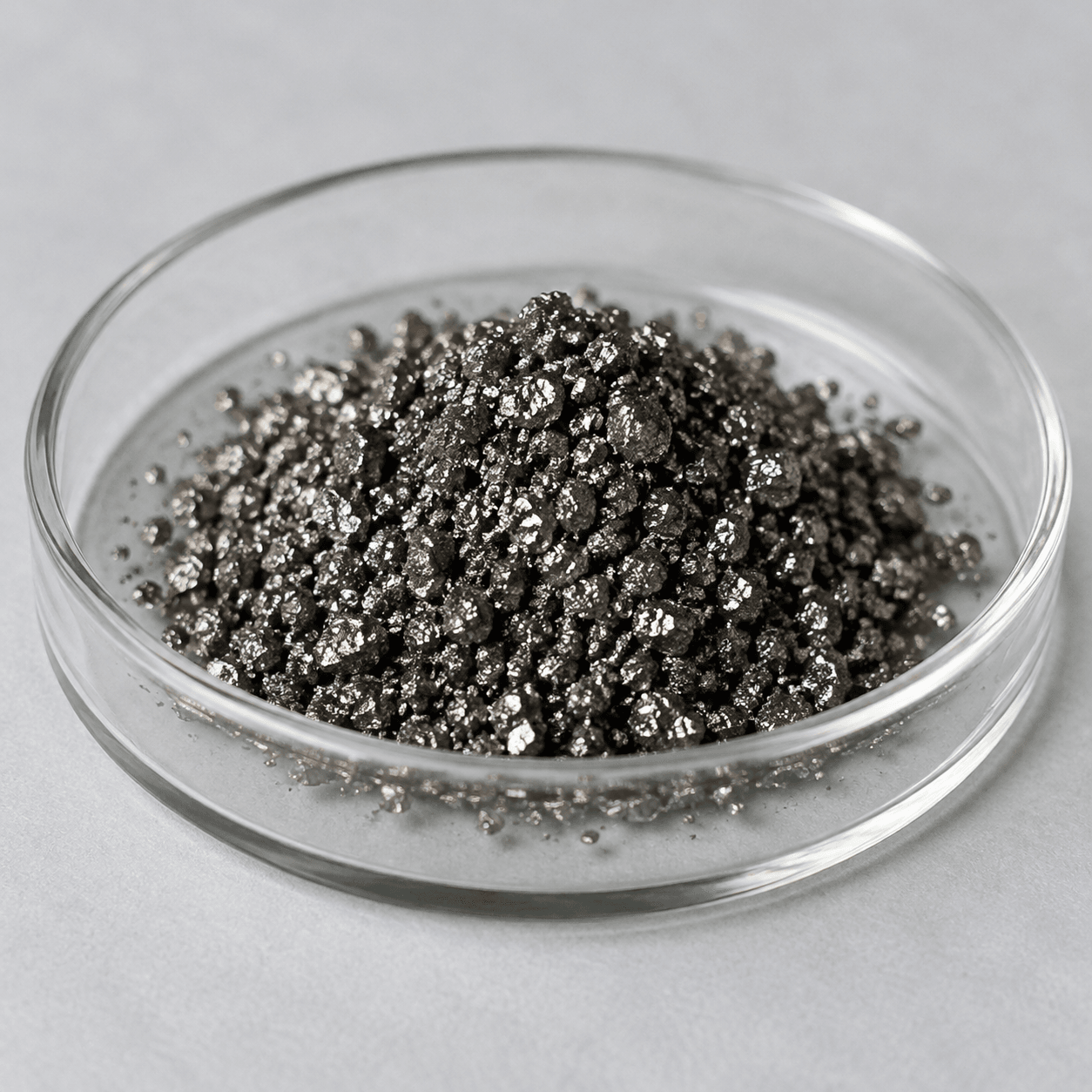
A catalytic membrane breaks these resilient bonds by feeding hydrogen gas from within its porous interior into a thin surface coating of palladium.1 The design unites physical filtration with catalytic reaction on a shared substrate, operating through an arrangement described by the authors as hunter-killer chemistry.1 As contaminated water flows across the exterior of the membrane, the palladium surface attracts and binds the targeted perfluoroalkyl molecules while simultaneously drawing in hydrogen delivered from behind the catalytic film.1
The internal delivery path for the gas changes how chemical reduction proceeds at the interface.1 Instead of dissolving large volumes of hydrogen gas directly into the flowing water stream, the membrane forces hydrogen through its porous wall directly into the base of the palladium layer.1 Palladium absorbs the gas into its metallic lattice and splits diatomic hydrogen molecules into individual atomic hydrogen radicals.1 These liberated hydrogen atoms act as far more aggressive chemical reducing agents than ordinary dissolved hydrogen gas, attacking pollutants precisely where the molecules are pinned to the surface.1
The resulting degradation reaction occurs through hydrodefluorination, in which energetic atomic hydrogen progressively displaces fluorine atoms along the carbon chain.1 Each successful substitution replaces a carbon-fluorine bond with a carbon-hydrogen bond, weakening the surrounding molecular structure and rendering the remaining framework far more vulnerable to subsequent decomposition.1 Delivering hydrogen strictly at the active catalytic surface where it is consumed avoids the energy losses associated with saturating whole water streams with gas.1
The chemical mechanism targets the shared carbon backbone of the molecules rather than their terminal functional groups, allowing it to act on diverse pollutants.1 Rittmann emphasised that this broad mode of action proved effective across all six regulatory-concern forever chemicals tested in the study, functioning as a universal reaction pathway.1 While six compounds represent a tiny fraction of the thousands of fluorinated chemicals produced commercially, the molecules examined differ substantially in chain length and chemical structure, supporting the general applicability of backbone defluorination.1
During continuous laboratory testing, the catalytic system sustained steady performance across 58 days of uninterrupted operation.1 The membrane removed more than 90 percent of each of the six targeted perfluoroalkyl compounds from the test liquid over that period and cleaved approximately 83 percent of the total fluorine atoms from the molecules.1 In catalytic water treatment, systems frequently fail within weeks because surfaces become poisoned, catalytic metals leach into the water, or organic debris fouls the reactive sites.1 Operating continuously for nearly two months without catastrophic loss of performance indicates notable physical durability.1
What practical hurdles stand in the way of municipal water treatment?
The principal obstacle to deploying catalytic palladium membranes in public water systems is the steep price and volatile global supply of palladium metal. Rittmann pointed out that refined palladium currently trades near $50,000 per kilogram on commercial commodity markets.1 Because palladium is a platinum-group precious metal produced predominantly as a secondary by-product of platinum and nickel mining in a small number of countries, municipal water districts adopting such technology would face severe financial vulnerability and supply chain uncertainty.1
To make large-scale water treatment economically viable, researchers must find ways to lower the required mass of precious metal per unit of treated water.1 Standard chemical engineering strategies include dispersing palladium as ultrafine nanoparticles across porous supports or creating catalytic alloys by blending palladium with less expensive transition metals.1 However, significantly reducing the density of active metal often results in decreased chemical reaction rates or accelerated structural degradation, and the reported 58-day trial relied on an unreduced metal loading that maintained stable reactivity.1
The findings represent a preliminary laboratory evaluation rather than an operational municipal demonstration, leaving important engineering questions unanswered.1 The published paper does not report essential operational parameters, omitting liquid flow rates, influent chemical concentrations, and total electrical energy inputs required to operate the membrane.1 Furthermore, the publication does not specify whether the 58-day durability run treated synthetic laboratory solutions or authentic contaminated groundwater.1 Real groundwater contains natural organic matter, competing inorganic ions, and microbial populations that commonly foul catalytic metal surfaces under continuous operating conditions.1
To address downstream processing and full mineralisation, the research group is developing hybrid systems that integrate catalytic palladium membranes with pollutant-degrading bacteria.1 Partial defluorination carried out by the metallic catalyst strips away the protective fluorine shield, leaving behind hydrocarbon fragments that biological organisms can metabolise and digest into harmless end products.1 The collaborative project included researchers from Rice University, Tongji University, the National University of Singapore, and Nanjing University, although the public announcement did not identify individual co-authors or specify the external funding agencies that supported the research.1
The record
46 sentences trace to 1 source.
-
1
S
scientificinquirer Document · scientificinquirer.com · 29 Oct 2026 A Palladium Membrane Stripped 83 Per Cent of the Fluorine Out of Six Forever Chemicals See the source