Hunger makes alcohol memories form faster in fruit flies
A single octopamine cell in the insect brain accelerates learned alcohol reward, offering clues to how physical deprivation reshapes substance cravings.
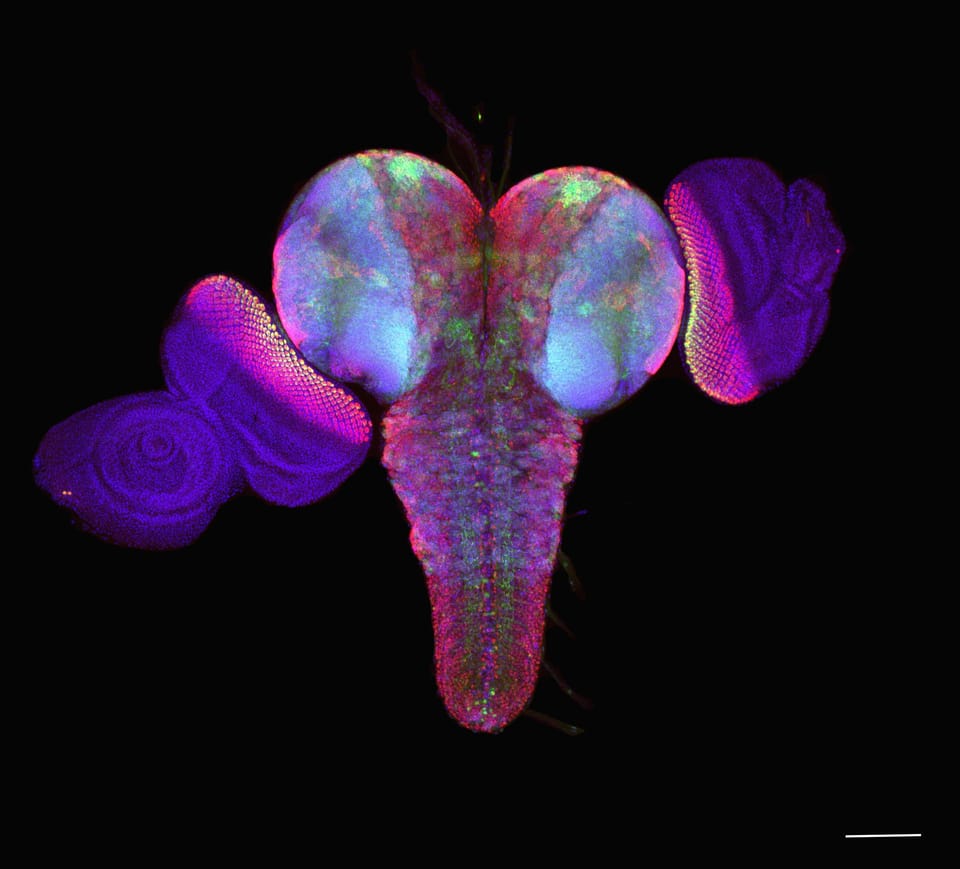
A familiar sign outside a tavern can fade into the background on an ordinary evening, only to stand out sharply when someone walks past on an empty stomach. Everyday observation suggests that bodily needs alter how people register the world around them, making sights, smells and routines associated with indulgence feel suddenly magnetic. Yet working out whether physical deprivation directly alters the brain circuits that record pleasure, or simply makes an individual seek calories wherever they can be found, has remained difficult to untangle in human studies.
Understanding that shift matters because substance use disorders frequently take hold when people face physical deprivation, poverty or acute bodily stress. Psychological explanations often attribute this vulnerability to emotional strain or reduced self-control. If an empty stomach directly recruits extra nerve cells into the memory machinery that registers chemical rewards, however, physiological deprivation would not just be an emotional backdrop to addiction. It would act as a physical switch inside the brain that makes cues linked to intoxicating substances take root faster and pull harder.
The sequence that connects an environmental sign to a craving follows a straightforward path. An organism encounters an external signal, such as an unfamiliar odor or a visual marker, at the same moment it consumes a substance that alters its nervous system. The brain evaluates the physical consequence, registers whether the experience produced a rewarding feeling, and binds that reward to the sensory cue so the cue can guide future choices. When nourishment runs short, the nervous system mobilizes stress and foraging signals to help locate energy. If those same metabolic signals intercept the memory circuit while it records an intoxicating substance, the memory forms more quickly and establishes a stronger attraction.
How does hunger accelerate alcohol preference?
Hungry fruit flies develop a preference for an alcohol-associated odor three hours sooner than well-fed companions, according to a study published on October 19, 2026, in Current Biology by neuroscientists at Brown University.123 The research team, led by Karla R. Kaun, an associate professor of neuroscience affiliated with the Carney Institute for Brain Science at Brown University, trained common fruit flies, known scientifically as Drosophila melanogaster, to pair specific odors with intoxicating ethanol vapors.21 Under ordinary conditions, both hungry and fed flies initially avoided the smell paired with alcohol intoxication.1 Over the course of 24 hours, that initial aversion flipped into an active preference as the flies consolidated an enduring memory of alcohol as a reward.1 In flies kept on a nutrient-free agar gel, that behavioral flip occurred roughly three hours earlier than in flies supplied with yeast food.1
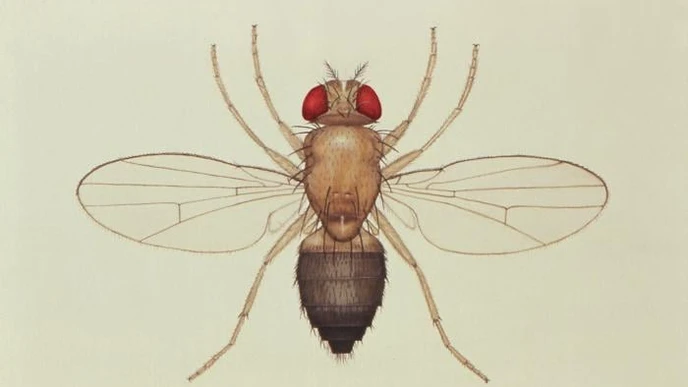
The researchers traced this accelerated preference to an invertebrate neurotransmitter called octopamine, a chemical counterpart of human norepinephrine that governs arousal, foraging and energy mobilization.42 While dopamine has long received the bulk of scientific attention in substance abuse research, octopamine serves as a key signal for bodily stress in insects.24 In the Brown University experiments, flies unable to synthesize octopamine failed to demonstrate the accelerated preference when starved, while well-fed flies showed normal reward memories regardless of whether octopamine signaling was present.1
Brain imaging and genetic manipulation revealed that the effect rests upon a single, identifiable octopamine-producing neuron designated as VUMa3.41 Lewis M. Sherer, a postdoctoral researcher at Brown University and co-first author of the paper alongside Kavin M. Nuñez, tracked the resting activity of VUMa3 in living flies.12 The resting electrical activity of VUMa3 climbed steadily as food deprivation lengthened, peaking around the exact time that the flies shifted from avoiding the alcohol scent to seeking it out.1 In imaging experiments involving groups of 8 to 14 flies, the VUMa3 neuron in hungry insects lit up selectively in response to the alcohol-linked odor at 24 hours after training, whereas fed flies exhibited no such difference.1
Why does one neuron act only during starvation?
The single neuron VUMa3 alters alcohol preference exclusively when an animal is starved, acting as a conditional gate rather than a universal reward pathway.43 When the researchers used genetic tools to silence VUMa3, hungry flies lost their accelerated attraction to the ethanol odor, behaving just like well-fed insects.31 Satiated flies, by contrast, continued to form alcohol reward memories normally through alternative neural circuits that do not require VUMa3.31 To confirm the specific role of the cell, the team applied heat-activated genetic switches to stimulate VUMa3 alongside an adjacent connected neuron called VPM4 in fully fed flies, which eliminated their early avoidance of the alcohol smell.1
Structural mapping of the fruit fly brain showed that VUMa3 sends wide branches into the mushroom body, the primary learning and olfactory memory center of the insect.1 Satiated flies also rely on this central memory structure to record the pleasure of ethanol, but hunger appears to recruit VUMa3 as a parallel booster line that feeds extra octopamine into the mushroom body circuits.13 The neuron also maintains its own heightened arousal: VUMa3 expresses an autoreceptor that detects the octopamine it releases, and reducing the abundance of this receptor suppressed alcohol seeking only in starved flies.1
Flies offer a tractable model for this circuitry because their brains contain approximately 100,000 neurons, compared to more than 100 billion neurons in the human brain.54 Many individual insect neurons can be identified by name from one animal to another and manipulated with genetic switches.4 Fruit flies also display behavioral responses to ethanol that mirror mammals, passing from initial hyperactivity and disinhibition into sedation, acquiring tolerance after repeated exposure, and learning to seek out cues paired with alcohol.4
What can fruit fly circuitry tell us about human addiction?
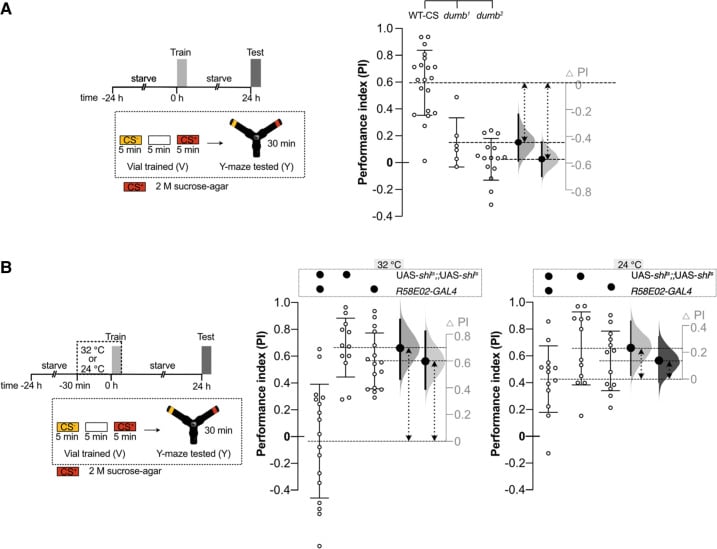
Experiments in fruit flies cannot establish whether human brains operate through an identical mechanism or whether hunger directly increases clinical addiction in people.31 The Brown University study measured learned odor choices in a laboratory Y-shaped maze across groups of approximately 60 male flies, rather than subjective cravings or compulsive drug seeking.1 Translating findings from invertebrate nervous systems to humans remains an open scientific question, as the experiments did not evaluate mammalian brain tissue, clinical patients or human behavioral choices.43
The study also faced practical experimental boundaries within its insect model.1 Food deprivation is a severe physiological challenge for a tiny insect, and ethanol itself contains metabolic calories.4 While control experiments confirmed that silenced flies retained normal movement and olfactory perception, separating an animal seeking calories from one processing chemical reward requires continued investigation.14 Furthermore, the heat-activation experiments stimulated both VUMa3 and VPM4 together, and the mutant flies lacking octopamine also exhibited an eightfold elevation in a related chemical called tyramine, which complicates the isolation of octopamine alone.1
Earlier research from Kaun's laboratory, published in October 2018 in the journal Neuron, established that alcohol alters gene expression in conserved memory pathways in flies, modifying a dopamine-2-like receptor via the Notch signaling cascade after repeated exposure.5 The current findings add an internal physiological component to that memory foundation, demonstrating that metabolic deprivation can recruit distinct neuromodulatory cells into memory circuits that would otherwise remain dormant.32
For researchers studying human substance abuse, the presence of a distinct hunger-activated pathway suggests that environmental cues might exert different psychological power depending on momentary metabolic states.42 Norepinephrine circuits in mammals, which correspond functionally to the insect octopamine network, are already targeted by existing therapeutic medications.4 The next step for neuroscientists is to test whether mammalian brains similarly deploy parallel, hunger-sensitive circuits during reward learning, clarifying how internal physical stress interacts with the persistent sensory cues that drive relapse.34
The record
34 sentences trace to 5 sources.
- 1 Hunger May Hasten Alcohol Cravings, Study Suggests See the source
- 2 Hunger may play a role in alcohol addiction, new study finds See the source
- 3 Could Hunger Increase Alcohol Addiction? A New Study Finds Clues in the Brain See the source
-
4
S
 scientificinquirer
Document
· scientificinquirer.com · 29 Oct 2026
Hungry Flies Found Alcohol More Rewarding, and a Single Neuron Decided It
See the source
-
5
E
 eurekalert.org
Third-party reporting
· eurekalert.org
Just a few drinks can change how memories are formed
See the source