Amyloid fibers in semen carry genetic cargo into sperm and early embryos
Paternal RNA hitched to protein filaments linked to neurodegenerative disease can enter sperm cells and activate inside fertilized eggs, offering clues to non-genetic inheritance.
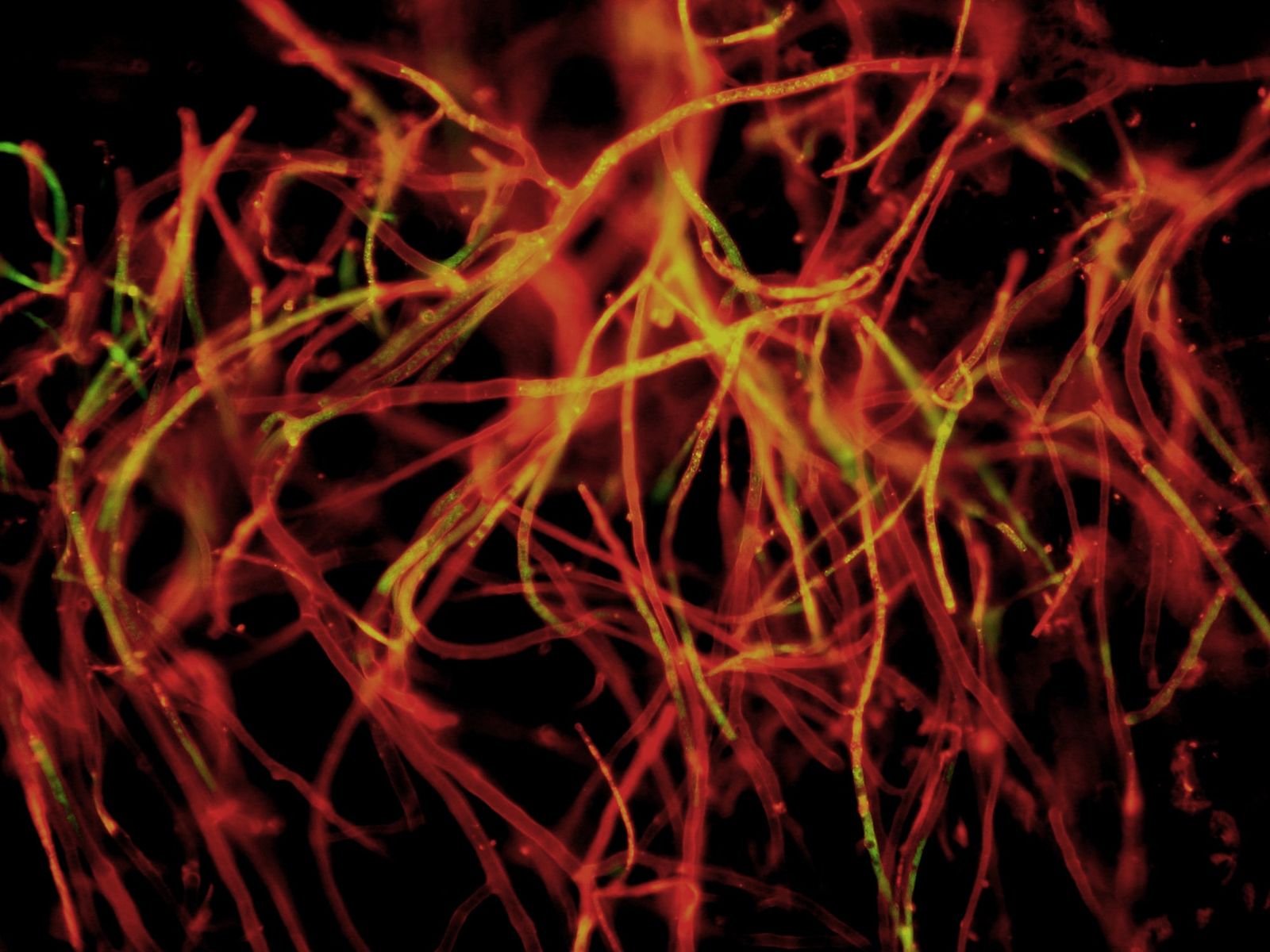
How does paternal experience reach the next generation?
For decades, biological inheritance appeared to run strictly through the sequences written into paternal chromosomes. A father was understood to supply nuclear DNA, while the egg supplied cellular machinery, mitochondria, and developmental instructions. Yet observations across mammalian biology have complicated that division of labor. Environmental conditions experienced by a father, including diet and metabolic stress, can alter the health of his future offspring without altering a single letter of his genomic DNA code.12
To influence embryonic development through paternal molecules, a distinct causal chain must unfold. Seminal fluid and reproductive tissues produce non-coding RNA molecules that reflect a father's physiological state. For these molecular instructions to alter early development, they must first survive in the fluid surrounding sperm cells. Next, the molecules must pass across the outer membrane of mature sperm. Finally, the sperm must carry this cargo into an egg during fertilization, where the molecules must uncouple from their carrier and interact with the transcription machinery of the newly formed embryo.
Researchers at Columbia University have identified a molecular carrier that performs this exact delivery route: amyloid fibers. The investigation, led by senior author Anthony Fitzpatrick at Columbia University's Mortimer B. Zuckerman Mind Brain Behavior Institute and published in the journal Molecular Cell, showed that protein fibers naturally present in human semen bind to RNA molecules, penetrate sperm membranes, and deliver usable genetic cargo into early embryos.3
How do semen fibers assemble to transport biological cargo?
Amyloid fibers in semen form spontaneously from fragments of prostatic acid phosphatase, an abundant protein secreted by the prostate gland.34 Amyloids are widely recognized as dense, cross-sheet protein aggregations that accumulate in neurodegenerative conditions such as Alzheimer's disease and Parkinson's disease.3 In the reproductive tract, however, these fibrous structures carry a positive electrostatic charge that readily attracts negatively charged nucleic acids.3
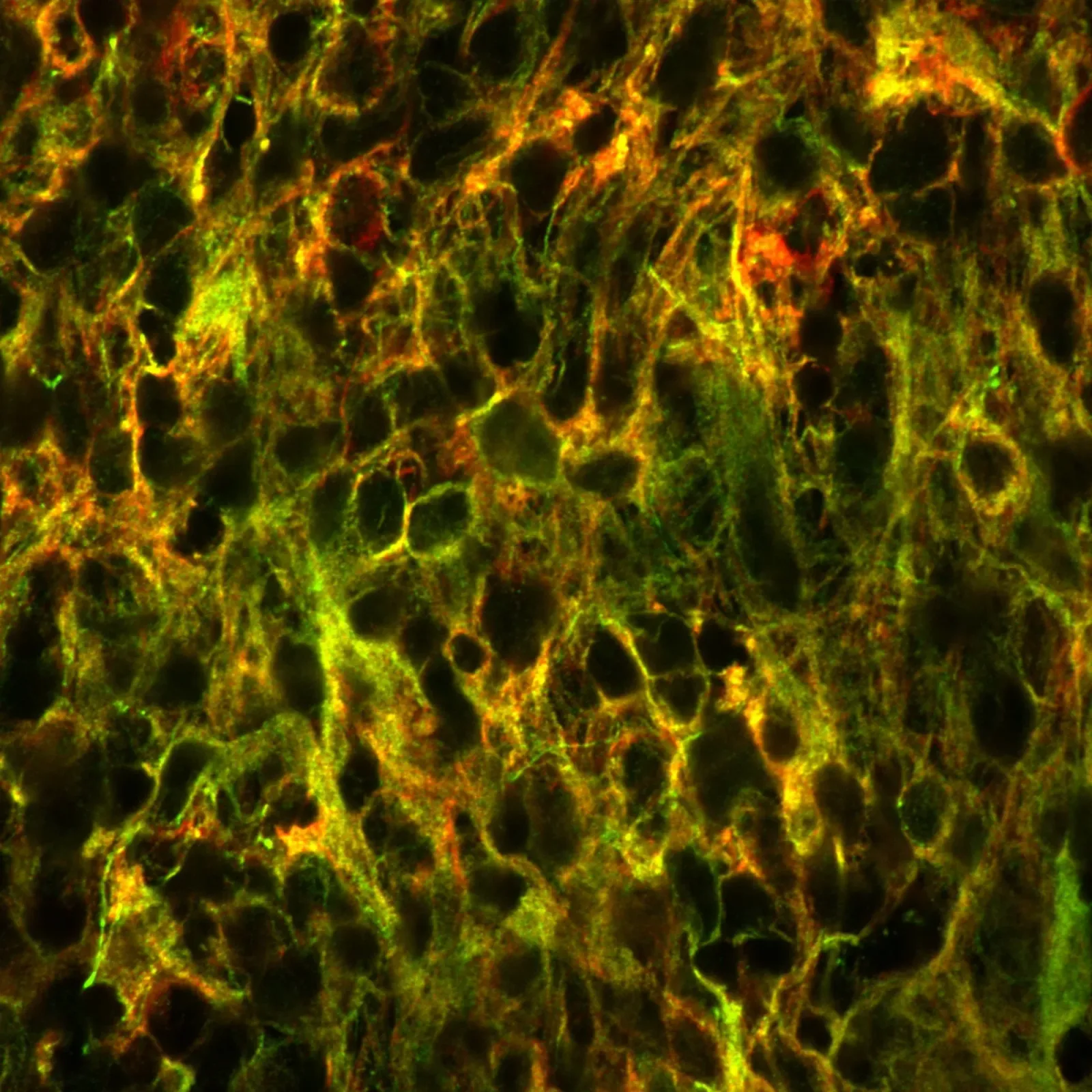
The interaction between semen protein fragments and RNA was first suspected because of research into viral transmission. In a 2007 study published in the journal Cell, researchers led by Jan Münch discovered that prostatic acid phosphatase fragments in human semen assembled into amyloid fibrils that bound HIV particles and dramatically increased their ability to infect human host cells. Because HIV stores its genetic code in RNA molecules, the team at Columbia University investigated whether similar semen-derived fibrils could bind and transport cellular RNA independently of any virus.3
“This is wild biology,” said Anthony Fitzpatrick, the study's senior author at Columbia University's Zuckerman Institute. “Amyloids are most often thought of as a hallmark of Alzheimer’s, Parkinson’s and other neurodegenerative diseases in the brain, but they also have functional roles throughout the body and keep turning up in unexpected places.”3
Working with synthetic fragments of prostatic acid phosphatase, lead researcher William Mallen observed that mixing the protein pieces with RNA caused the molecules to coalesce into microscopic liquid droplets.3 Within these droplets, the proteins rapidly assembled into rigid amyloid fibers with the RNA molecules embedded directly along their structure.3 When the team isolated amyloid-rich material directly from human semen, they discovered that natural fibers carried endogenous small non-coding RNAs, particularly fragments of transfer RNA that regulate protein synthesis.3
Can amyloid carriers deliver usable genetic material into an embryo?
Direct imaging revealed that amyloid fibers cross the protective outer membranes of living sperm cells within minutes.3 To establish that the protein filaments entered the cells rather than merely coating the exterior, the Columbia University researchers tagged synthetic fibers with tiny gold particles and analyzed bull sperm using three-dimensional electron microscopy.3 The cross-sectional reconstructions demonstrated that the fibers penetrated beyond the outer cellular membrane into the interior cytoplasm.3
“Seeing those amyloid fibers inside sperm cells was just so extraordinary to me,” Mallen said in the Columbia announcement. “There were hints of this happening earlier in our other experiments, but actually seeing this just totally blew us away.”3
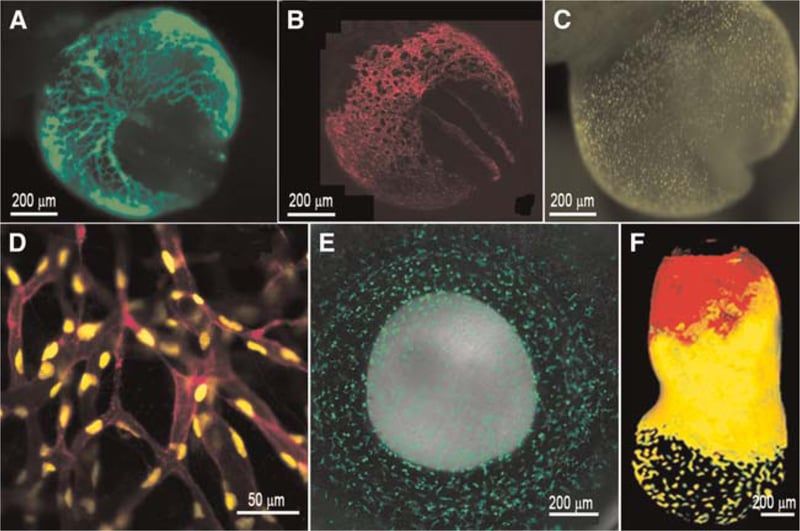
Fluorescent dye experiments confirmed that living sperm from mice and humans also internalize the amyloid fibers.3 The crucial developmental test followed in laboratory fertilization trials. Researchers exposed mouse sperm to amyloid fibers loaded with synthetic messenger RNA engineered to produce green fluorescent protein.3 The treated sperm were then used to fertilize mouse eggs in vitro.3 Early embryos derived from the treated sperm produced at least 10 times more green fluorescent protein than control embryos, demonstrating that the delivered RNA remained intact and biologically active inside the fertilized egg.3
The team discovered that an additional reproductive protein, clusterin, operates as the molecular key that unpacks the delivery vehicle.3 Clusterin is abundant in seminal plasma, sperm, and early embryonic environments, and its presence causes the amyloid fibers to loosen and release their bound RNA so the recipient embryonic cells can translate the code.3
What questions remain about non-genetic inheritance?
The laboratory experiments demonstrate a cellular delivery pathway, but they do not prove that amyloid-carried RNA causes inherited diseases or lasting behavioral traits in living animals.3 The fertilization trials relied on synthetic fibers prepared in controlled laboratory solutions rather than unmanipulated ejaculate, and the researchers did not track fertilized embryos through gestation to evaluate adult offspring.3 High-resolution electron microscopy also captured only a small number of definitive cross-sectional views of fibers inside sperm cells, leaving open questions about how frequently this internalization occurs during natural conception.3
Previous research has established that sperm acquire regulatory small RNAs as they transit the epididymis, the coiled tube behind the testes where sperm mature.32 A 2024 study led by Raffaele Teperino and published in Nature showed that exposing male mice to a two-week high-fat diet altered mitochondrial transfer RNA fragments in epididymal sperm, causing approximately 30 percent of male offspring to develop glucose intolerance and insulin resistance.21 Related work by Angela Jane Crean and colleagues, published in Nature Communications in 2024, established that shifting the ratio of protein, fat, and carbohydrates in paternal diets altered anxiety-like behaviors in male offspring and body fat in female offspring.5
The Columbia University findings suggest that sperm can continue absorbing non-genetic signals after leaving the epididymis, picking up environmental messages directly from seminal fluid during ejaculation.3 Although researchers have speculated that synthetic amyloid carriers could someday deliver gene-editing tools such as CRISPR into reproductive cells, the safety and biological consequences of artificial amyloid delivery remain unverified.3 For now, the discovery reveals that an architecture notorious for destroying neurons in aging brains also serves an essential transport function at the threshold of life.
The record
30 sentences trace to 5 sources.
-
1
P
pmc.ncbi.nlm.nih.gov Official record · pmc.ncbi.nlm.nih.gov Father’s diet influences son’s metabolic health - PMC See the source
-
2
N
nature.com Paper · nature.com Epigenetic inheritance of diet-induced and sperm-borne mitochondrial RNAs - Nature Journal article See the source
- 3 A Protein Structure Linked to Alzheimer’s Has a Secret Job in Sperm Not published online
-
4
P
pubmed.ncbi.nlm.nih.gov Official record · pubmed.ncbi.nlm.nih.gov Semen-derived amyloid fibrils drastically enhance HIV infection - PubMed See the source
-
5
N