Young stars may have ended the cosmic dark age before supernovas exploded
New observations of compact starburst galaxies suggest violent stellar deaths trapped ionizing radiation rather than releasing it into the early universe.
During the first few hundred million years of cosmic history, the universe was shrouded in an impenetrable blanket of neutral hydrogen gas that prevented ultraviolet light from travelling across space.12 Astronomers describe this era as the cosmic dark age, an epoch when the universe was cold, dark, and opaque. Only after the first generations of stars ignited did energetic radiation begin to alter that landscape, breaking neutral hydrogen atoms apart into constituent protons and electrons.12 This transformation, known to astrophysicists as the Epoch of Reionization, turned the opaque cosmic fog into a transparent plasma, allowing light to shine across intergalactic space and eventually reach modern telescopes.12
For decades, astrophysical models assumed that supernovas, the violent detonations of dying massive stars, served as the primary cosmic bulldozers responsible for clearing exit channels out of early galaxies.12 According to this traditional view, the kinetic energy of supernova explosions blew sweeping bubbles and fast galactic winds through surrounding gas, carving tunnels through which trapped ultraviolet light escaped into deep space. Without these explosive conduits, theorists argued, the dense interstellar gas within fledgling galaxies would have absorbed the very radiation needed to clear the universe at large.
A study published on October 15, 2026, in the journal Nature Astronomy challenges that foundational narrative.31 A research team led by Cody Carr, a postdoctoral researcher at the University of Michigan who conducted the work while at Zhejiang University, found that ionizing radiation escapes early in a galaxy's star-forming life, well before supernova winds gather strength.23 Rather than aiding the escape of light, the eventual onset of supernova explosions appears to shut down the process by churning up gas and dust, trapping the radiation inside.13
How did the universe emerge from its primordial fog?
The universe became transparent when energetic ultraviolet radiation escaped from newborn star clusters and ionized the neutral hydrogen gas that filled intergalactic space.12 For this transformation to succeed, a precise sequence of events had to take place in the early cosmos. First, giant clouds of gas collapsed under their own gravity to form dense clusters of massive stars. Next, these intense newborn stars began producing copious amounts of energetic ultraviolet photons, specifically Lyman continuum radiation, which carries enough energy to strip electrons from hydrogen nuclei.31 Finally, that radiation had to break out of the dense native gas and dust clouds inside the host galaxy before the photons were absorbed locally. If the light escaped into intergalactic space, it could strike surrounding hydrogen gas, converting neutral atoms into an ionized plasma and clearing the primordial mist.
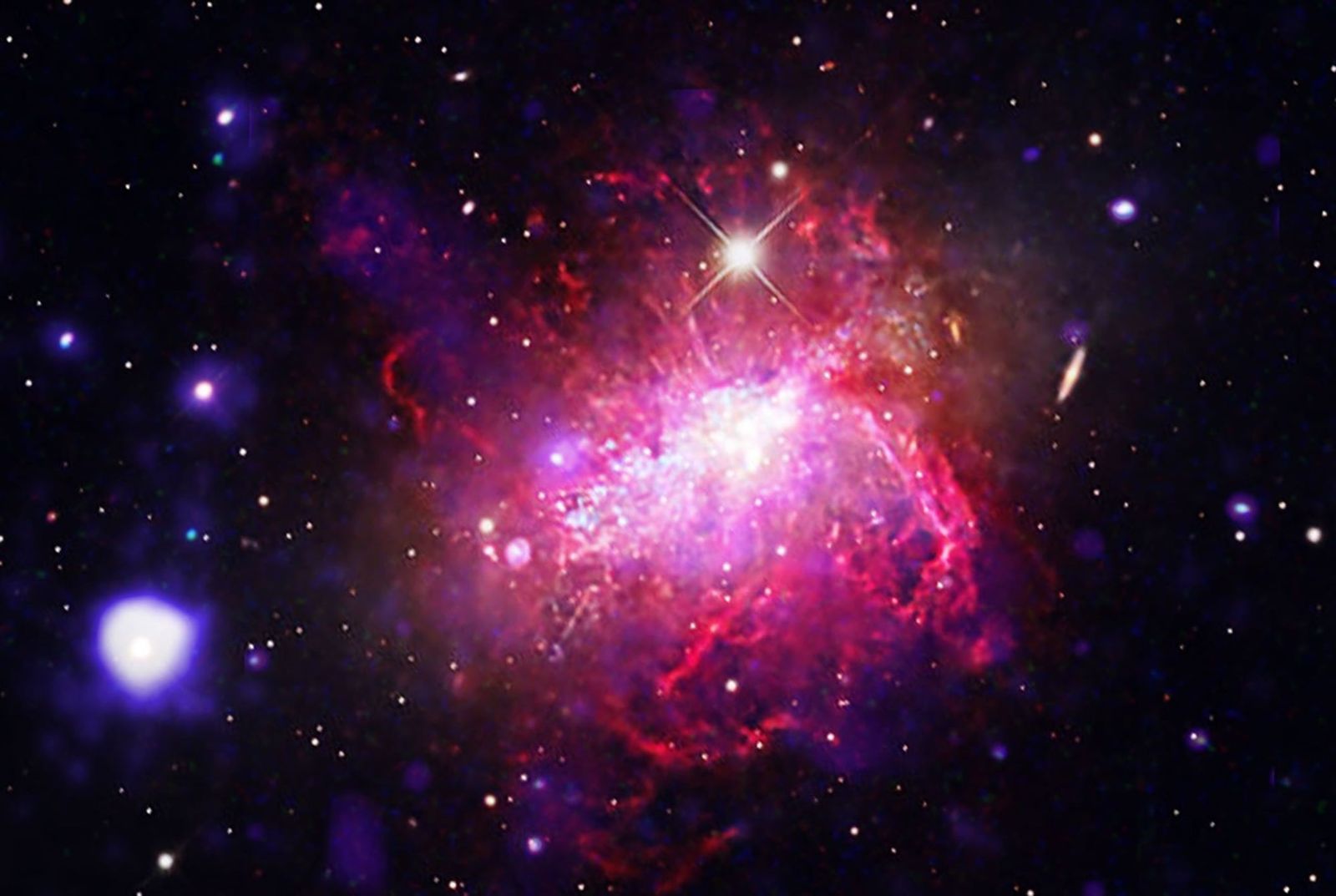
Around 400,000 years after the Big Bang, the expanding universe had cooled sufficiently for protons and electrons to combine into neutral hydrogen atoms.1 This neutral gas absorbed high-energy ultraviolet photons completely, plunging the universe into its dark age.12 The subsequent parting of this cosmic curtain, occurring within the first billion years after the Big Bang, represents what researchers describe as the last major phase transition in the universe.12 Yet establishing precisely how ionizing light escaped the compact environments of early galaxies has remained an enduring mystery in observational cosmology.
Why do supernova explosions fail to clear a path for light?
Supernova explosions fail to clear escape pathways for ionizing radiation because their violent blasts churn up dense gas and load the surrounding space with opaque debris.21 In a University of Michigan statement, Carr explained that astrophysicists know reionization took place, but they lack complete answers about what objects caused it or how the transformation unfolded.21 The prevailing assumption held that supernovas from stars weighing eight to 50 times the mass of the Sun blasted open clear vents in galactic disks, allowing ionizing light to pour through.1
The observations by Carr and colleagues demonstrate an unexpected two-phase timeline.13 During an initial phase, lasting roughly the first 3 million years of star formation, newly born massive stars launch their own fierce stellar winds.31 These radiant stellar winds carve clean corridors through neutral gas and dust at speeds approaching 3,000 kilometres per second, or nearly 2,000 miles per second.1 That rapid clearing allows high-energy Lyman continuum photons to exit into deep space unhindered.13 Intense, short-lived O-type stars, the hottest and most massive stars in the cosmos, provide both the driving winds and the bulk of this early ionizing radiation.1
A second phase begins approximately 3 million years after star formation commences, when these massive stars reach the end of their brief lives and detonate.31 Instead of opening larger channels, the expelled material from these explosions stirs up the surrounding environment. Senior author Stephan McCandliss, director of the Center for Astrophysical Sciences at Johns Hopkins University, explained that the energy injected by supernovas increases the coverage of neutral gas and dust, suppressing the escape of ionizing radiation rather than helping it.2 The oldest systems in the study, which possessed the fastest supernova-generated winds, allowed the least amount of ionizing light to leave their borders.12
What do nearby starburst galaxies reveal about early cosmic history?
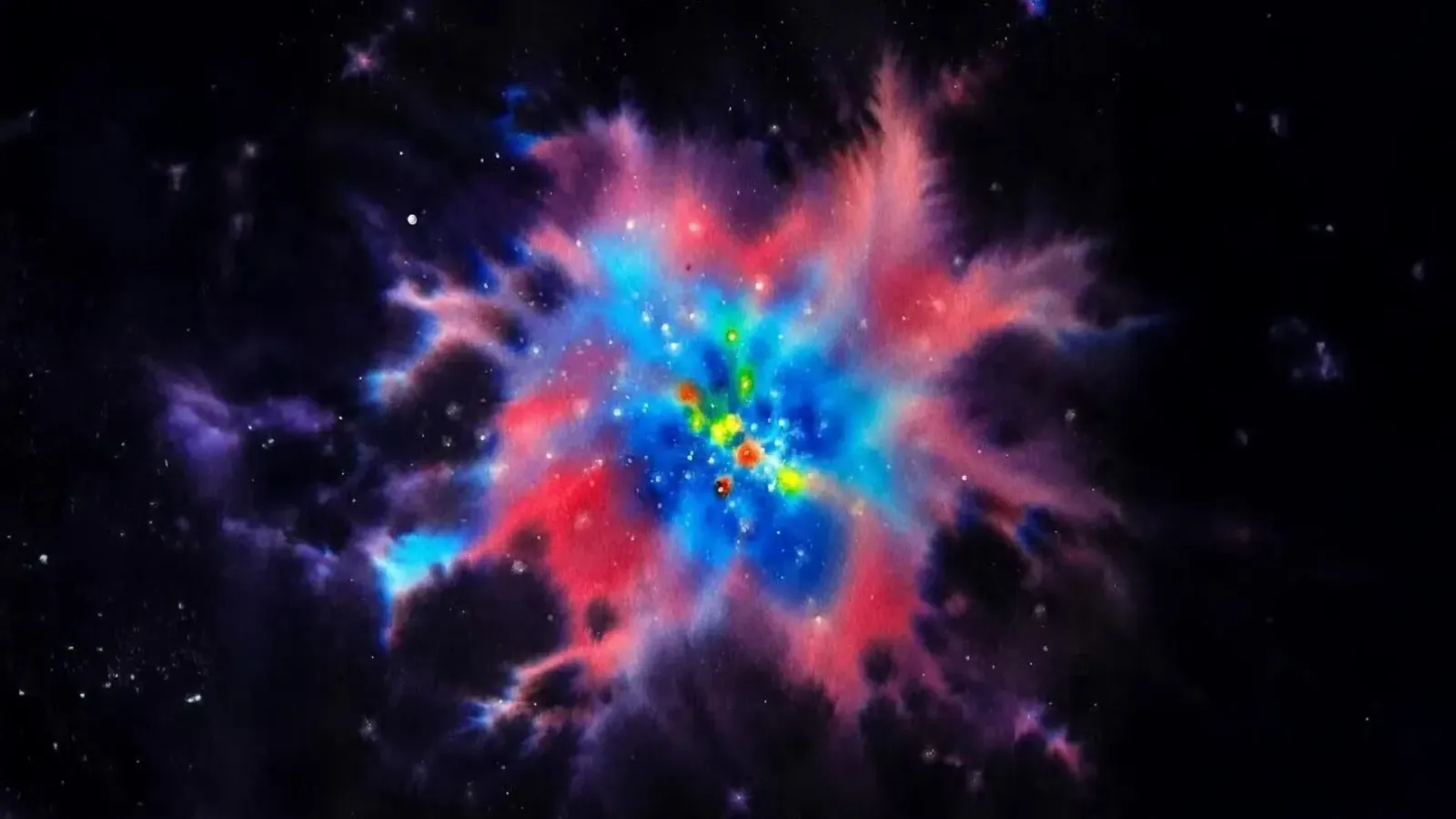
Nearby starburst galaxies provide observable analogues for the compact, energetic systems that populated the universe during the Epoch of Reionization.12 Because direct ultraviolet observations of the earliest galaxies are difficult across billions of light-years of intervening gas, the researchers examined six compact starburst galaxies located approximately 3.5 billion light-years from Earth.13 These local analogues measure less than 6,500 light-years in diameter yet form roughly 10 solar masses worth of stars per year.1 That star-formation rate is several times higher than that of the Milky Way, despite the Milky Way being up to 20 times larger in physical extent.1
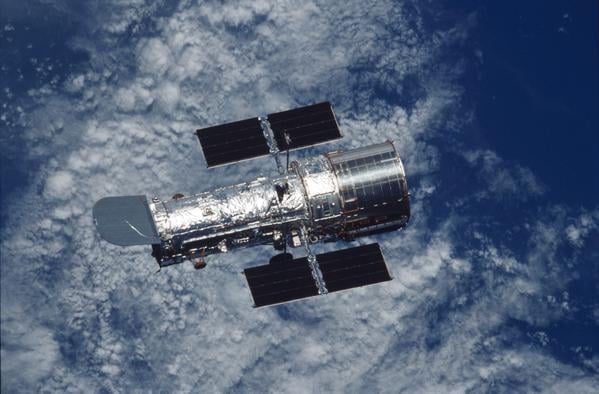
Using the Cosmic Origins Spectrograph aboard the Hubble Space Telescope, the team examined the ultraviolet spectra emitted by each of the six systems.32 These light fingerprints reveal the speed, direction, and chemical makeup of escaping gas, marked by distinct absorption dips where outflowing clouds intercept background light.21 By comparing systems across different evolutionary stages, the researchers tracked how the escape of Lyman continuum photons varied with the development of outflows. The spectral measurements showed that the galaxies with the highest escape fractions had not yet developed fast, widespread galactic winds.12
These observations carry distinct physical limitations that caution against treating them as definitive proof of primeval conditions. The six galaxies examined are modern analogues in the nearby cosmos, not pristine galaxies observed directly inside the ancient Epoch of Reionization.21 The investigation relies on a sample of six targets, a small group whose observed properties may not capture the full diversity of early starburst environments.32 Furthermore, while the inverse relationship between wind velocity and radiation escape is directly measured from spectral lines, the detailed physical mechanisms of dust loading and gas churning represent interpretive deductions based on those spectra.23
How will these findings reshape cosmological models?
Cosmological simulations must be revised because most current models assume supernova winds are the primary mechanism that permits ionizing radiation to escape early galaxies.12 Senior author Renyue Cen, director of the Center for Cosmology and Computational Astrophysics at Zhejiang University, noted that supernovas occupy a central role in hydrodynamic simulations explaining reionization.2 Cen stressed that future theoretical models will need to examine how the radiation and winds of massive young stars sculpt surrounding gas before the first stellar detonations occur.
Rather than serving as the engine of cosmic reionization, supernovas may have acted as a brake that curtailed the escape of ionizing photons once starbursts matured. Carr and colleagues are seeking additional observation time on the Hubble Space Telescope to examine a larger cohort of compact galaxies across multiple wavelengths.21 As astronomers incorporate these observations into next-generation cosmological models, the emerging picture suggests that the dawn of the transparent universe was illuminated by the brief, brilliant lives of infant stars rather than their explosive deaths.
The record
36 sentences trace to 3 sources.
-
1
IF
 Ivan Farkas
Document
· livescience.com · 31 Oct 2026
Astronomers may have been wrong about what ended the 'Cosmic Dark Age'
See the source
- 2 Hubble and Reionization: Radiation Escaped Before Winds See the source
-
3
N
 nature.com
Paper
· nature.com
Lyman continuum escape during the onset of galactic winds in compact starbursts - Nature Astronomy
Journal article
See the source