Childhood age shapes how bacterial diarrhea spreads through households and communities
Infants encounter high bacterial exposure outside the home regardless of pathogen durability, challenging long-standing assumptions about domestic sanitation and disease prevention.
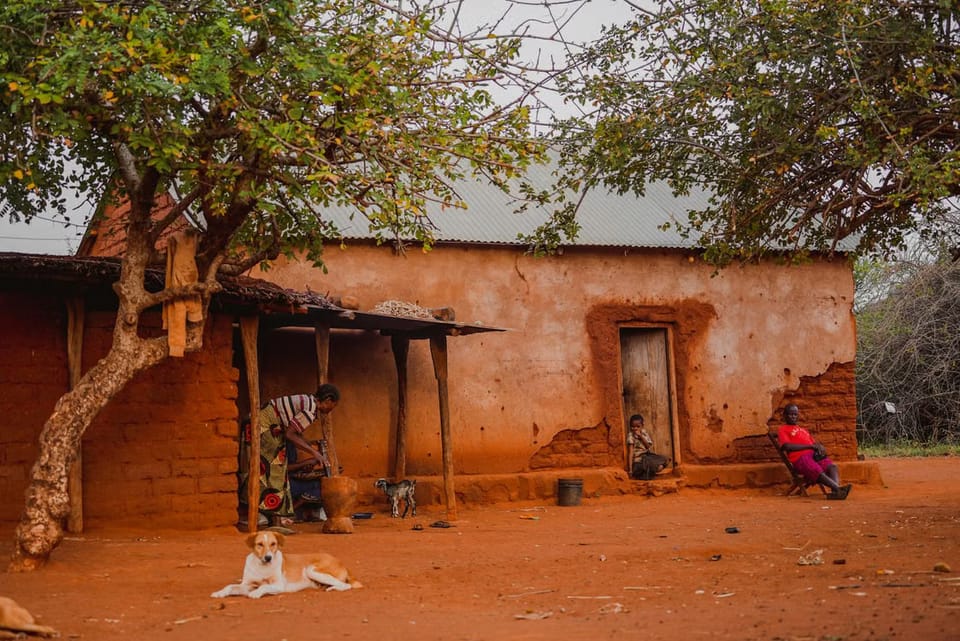
When bacterial diarrhea spreads through a community, public health strategies traditionally assume that a pathogen's physical durability dictates how it travels between hosts. Under standard epidemiological models, hardy bacteria are expected to strike primarily from contaminated surroundings outside the home, while fragile species pass directly between family members sharing domestic quarters. Yet sanitation campaigns focused on household latrines and handwashing repeatedly fail to prevent either infection in infants, exposing a major gap in understanding where early exposures occur.
Diarrheal diseases remain the third leading cause of death worldwide among children under five years old.1 Beyond acute dehydration, recurrent enteric infections induce chronic gut inflammation and disrupt nutrient absorption, leading to impaired linear growth and developmental delays during formative early years. Halting these infections requires public health programs to identify where infants encounter pathogenic bacteria and whether transmission pathways change as children mature.
Before evaluating how infections move, it is helpful to trace the basic chain of transmission. For bacterial diarrhea to occur, an infected person or animal must shed viable organisms into the environment. Those bacteria must survive on hands, soil, food, or water long enough to be swallowed by a susceptible individual in a quantity sufficient to overcome stomach acid and colonize the gut. Within a home, family members exchange microbes through physical handling, shared beds, and utensils. Outside, exposure occurs through shared water, soil, livestock, flies, and market food.
A study posted to the preprint server medRxiv on September 4, 2026, by Hannah Van Wyk, an epidemiologist at the University of Michigan, and colleagues indicates that host age, rather than pathogen resilience, governs the dominant transmission route.2 Following 200 households with infants for a year in urban Bangladesh and rural Tanzania, the authors demonstrated that children under five acquire both hardy and fragile bacteria primarily from sources outside their homes.23 Domestic contacts, long assumed to dominate the spread of human-adapted pathogens, accounted for a smaller share of transmission in early childhood than communal exposures.
Why do standard hygiene measures fail to halt bacterial diarrhea?
Standard household hygiene interventions fail to halt bacterial diarrhea because young children encounter heavy microbial exposure in the wider community beyond domestic soap and latrines. For decades, researchers differentiated enteric bacteria by their biological persistence. Shigella, a human-adapted bacterium with a low infectious dose and poor environmental survival, was thought to spread primarily through person-to-person contact within homes. In contrast, Campylobacter, a zoonotic bacterium carried by livestock with a higher infectious dose and greater environmental stability, was presumed to spread predominantly through contaminated food and agricultural reservoirs.
Despite these biological differences, large randomized trials evaluating water, sanitation, and hygiene packages observed minimal reductions in either Shigella or Campylobacter infections among young children. While improved domestic latrines, treated water, and handwashing stations reduced viral and protozoal diarrhea, bacterial transmission persisted. These trial outcomes suggested that laboratory-measured traits do not solely govern transmission in communities, and that daily mobility and exploratory behavior may instead determine where individuals encounter infectious doses.

To evaluate these dynamics, Mami Taniuchi and James Platts-Mills led the paired longitudinal cohort studies, with co-authors across the University of Michigan, the University of Virginia, Emory University, and the International Centre for Diarrhoeal Disease Research, Bangladesh. Between 2022 and 2024, the researchers enrolled 100 households in urban Mirpur, Dhaka, and 100 households in rural Haydom, Tanzania. Each household contained an infant under one year of age at baseline, allowing field teams to monitor transmission across early childhood.3
Environmental measurements from rural Tanzania reinforce how readily enteric bacteria disperse beyond domestic walls. In a related study at Emory University, Fabiana Barrero Castedo analyzed 1,205 environmental and stool observations in Haydom, finding child infections significantly associated with contamination across multiple pathways. Positivity for Shigella in food carried an adjusted relative risk of 4.05 for child infection, while contamination in soil showed an adjusted relative risk of 10.18.1 For Campylobacter, detection in flies, milk, and soil also increased infection risks, showing that infants crawl and feed in environments saturated with external contamination.1
How do researchers track daily transmission pathways?
Researchers reconstruct daily transmission pathways by pairing biological surveillance of households with mathematical models that separate domestic exposure from external community pressure. Field staff visited the 200 enrolled households twice weekly for one year to monitor for incident diarrhea, defined as three or more loose stools within 24 hours or a single stool containing visible blood. Alongside monthly routine stool collection from all household members, staff gathered stool specimens twice weekly for four weeks from any participant who experienced diarrheal symptoms.
Laboratory technicians processed stool samples to identify bacterial pathogens using molecular detection methods. Technicians extracted total nucleic acids from stool aliquots and performed multiplex quantitative real-time polymerase chain reaction assays targeting Shigella species and Campylobacter jejuni, the species causing most human campylobacteriosis. The Tanzanian protocol used standardized extraction kits and amplification systems, while the laboratory in Dhaka employed a matched multiplex molecular protocol to ensure comparable diagnostic sensitivity across sites.
Because intermittent stool sampling captures discrete moments in time, the authors used a data augmentation algorithm to reconstruct daily infection status for each participant. Individuals were classified as infectious when stool samples yielded a cycle threshold value of 30 or lower. The team generated 10,000 augmented daily datasets per participant, incorporating a three-day latent period before shedding. A mathematical model then estimated two parameters: within-household transmission from an infectious family member, and community-to-household transmission from external sources such as neighbors, soil, livestock, and market food.
What changes when children reach different ages?
Transmission patterns change substantially with host age, as children under five years old experience higher community-to-household transmission rates than within-household transmission rates for both pathogens. Overall, the study found that 8.8% of Campylobacter infections and 7.6% of Shigella infections were symptomatic, meaning the vast majority of bacterial colonization occurred without overt diarrhea.23 Joseph, a study co-author at the University of Michigan, told Primary that measuring subclinical rates was historically difficult and expensive. "Recently, molecular methods that can measure infection has become increasingly less expensive to administer; and therefore, we are seeing more studies presenting subclinical infection data," Joseph said. "These studies like ours are both reaffirming the fact that most infections are subclinical and also providing data to obtain estimates of the proportion of infections that present with symptoms."
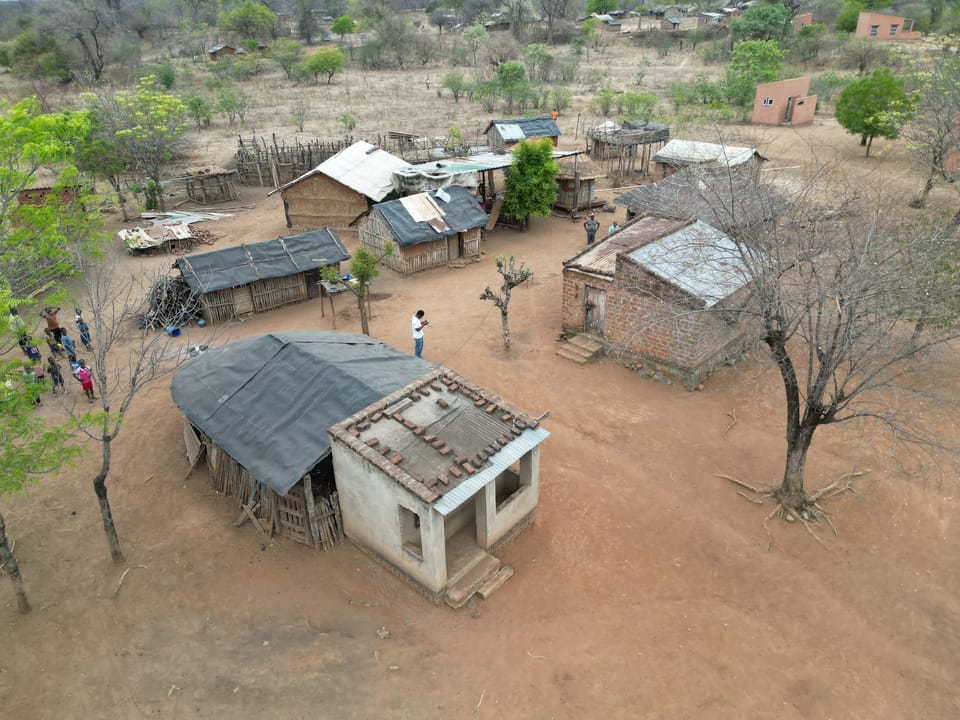
In crude comparisons, Campylobacter appeared to have a greater ratio of community transmission than Shigella, matching historical assumptions. However, statistical forward selection revealed that this difference was driven entirely by effect modification by age. Children under five years old had higher transmission rates for Campylobacter than for Shigella, and for both pathogens, their community-to-household transmission rates exceeded within-household rates.23 In contrast, household members aged five years and older exhibited higher Shigella transmission rates overall.23 Under the source-supplied framing, Campylobacter infection is community-driven because it infects young children who experience more community transmission, while Shigella is person-to-person driven because adults and older children are more infected and engage in more person-to-person transmission.
Joseph explained that transmission dynamics reflect both social contact and biological infectivity. "The first is contact with the pathogen, usually expressed as a contact rate and is driven by social processes," Joseph told Primary. "The second, infectivity, the probability of infection given contact, is a biological process that is a function of both pathogen and host properties." Explaining why individuals aged five and older showed higher Shigella transmission, Joseph noted that while older people are considered less susceptible, Shigella has high infectivity and "older individuals are generally more mobile and in contact with more people."
Living environment also influenced the baseline intensity of bacterial transmission across cohorts. Geographic setting also influenced total disease pressure: the overall incidence of Shigella and Campylobacter was 2.3 and 1.4 times higher, respectively, in urban Bangladesh compared to rural Tanzania.23 "Mitigation in dense urban settings like Dhaka will be different than in rural less dense settings," Joseph said in response to questions from Primary. In dense urban settings, "we expect that a neighbor’s level of contamination will impact your risks more so in urban Dhaka than rural Tanzania," Joseph noted, whereas in rural Tanzania, "the lack of even basic WASH is a driving factor in transmission."
What are the limits of the transmission estimates?
Mathematical transmission models rely on statistical inferences and molecular detection thresholds that cannot pinpoint the exact physical objects or individual interactions through which bacteria pass. The community-to-household transmission parameter pools all external exposures into a single mathematical term, meaning it cannot distinguish whether an infant ingested bacteria from contaminated soil, unpasteurized milk, synanthropic flies, agricultural runoff, or an infected playmate outside the home.
Defining infectiousness by a cycle threshold cutoff of 30 represents an approximation of bacterial shedding. Polymerase chain reaction assays detect bacterial nucleic acids but cannot verify whether detected organisms were viable and capable of establishing new infections. To test these assumptions, the authors conducted sensitivity analyses using alternate cutoffs of 27 and 35 and varied assumed infection durations between 20 and 40 days, yielding consistent relative transmission patterns.2 The study was posted as a preprint on medRxiv and has not yet undergone formal peer review.2
These findings indicate that child survival initiatives must expand beyond domestic compounds to address community contamination, animal husbandry, and food safety. Because young children acquire both hardy zoonotic bacteria and fragile human-adapted pathogens primarily from external community reservoirs, domestic hygiene packages alone cannot shield infants from chronic exposure. Interventions must target communal environments where crawling infants encounter pathogens, including play areas, livestock enclosures, and food preparation sites. Future research combining genomic sequencing with environmental sampling will help evaluate whether structural measures, such as protective play surfaces and fly management, can interrupt these external exposure pathways.
The record
18 sentences trace to 3 sources and 1 contributor.
- 1 ETD | Environmental Transmission of Shigella and Campylobacter Among Infants in Tanzania: A Culture-Independent Molecular Approach | ID: df65v917z | Emory Theses and Dissertations See the source
- 2 Comparative analysis of Shigella and Campylobacter transmission in paired longitudinal household cohort studies in urban Bangladesh and rural Tanzania Preprint · may not have been peer reviewed Download the document
- 3 Comparative analysis of Shigella and Campylobacter transmission in paired longitudinal household cohort studies in urban Bangladesh and rural Tanzania Preprint · may not have been peer reviewed See the source
- 4 Contribution — Joseph N.S. Eisenberg 6 statements added to this article
Other consulted pages1 page
medrxiv.org1 page
pubmed.ncbi.nlm.nih.gov1 page
Article history
-
Published 3 Nov 2026, 13:18Assembled by the Primary desk from 3 sources · 1 contributor · 18 cited sentences
-
Joseph N.S. Eisenberg
- Go to the sentence: "These studies like ours are both reaffirming the fact that most infections are subclinical and also providing data to obtain estimates of the proportion of infections that present with symptoms."
- Go to the sentence: "The first is contact with the pathogen, usually expressed as a contact rate and is driven by social processes," Joseph told Primary.
- Go to the sentence: "The second, infectivity, the probability of infection given contact, is a biological process that is a function of both pathogen and host properties."
- Go to the sentence: Explaining why individuals aged five and older showed higher Shigella transmission, Joseph noted that while older people are considered less susceptible, Shigella has high infectivity and "older individuals are generally more mobile and in contact with more people."
- Go to the sentence: "Mitigation in dense urban settings like Dhaka will be different than in rural less dense settings," Joseph said in response to questions from Primary.
- Go to the sentence: In dense urban settings, "we expect that a neighbor’s level of contamination will impact your risks more so in urban Dhaka than rural Tanzania," Joseph noted, whereas in rural Tanzania, "the lack of even basic WASH is a driving factor in transmission."