Ancient Maya red paint poisoned tropical lake networks with toxic mercury
Centuries of washing mineral pigments off plastered cities contaminated drinking water and collapsed freshwater food webs across the Yucatán Peninsula.
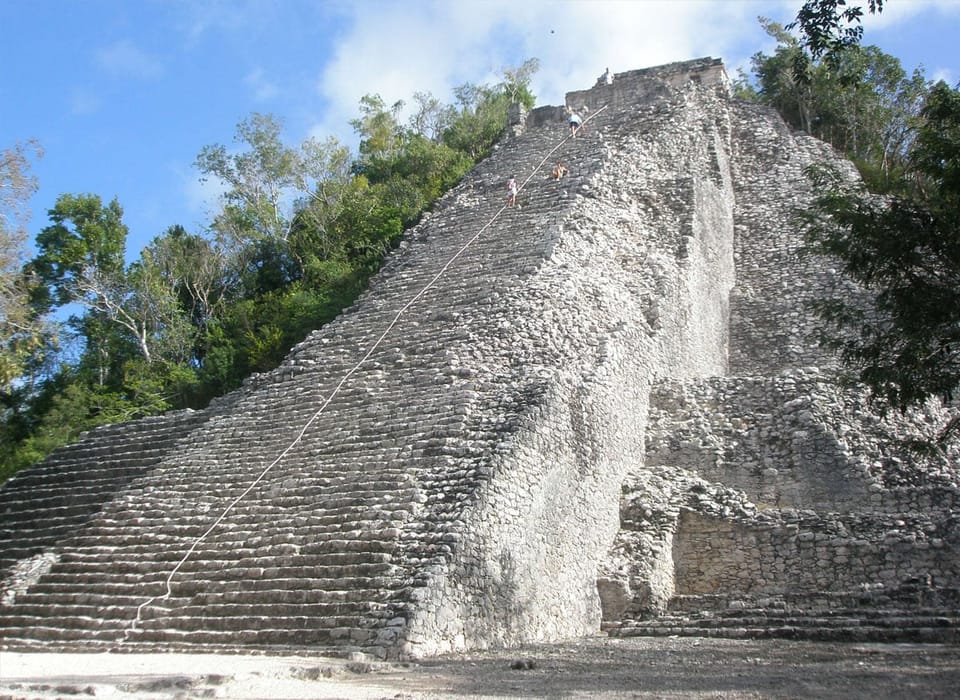
Across the ancient settlements of the Yucatán Peninsula, brilliant scarlet coated nearly every civic surface.1 Plastered pyramid steps, broad public plazas, limestone monuments, ceramic vessels and ceremonial burials gleamed in deep vermilion.12 To the Maya, the vivid hue represented the radiant vitality of the sun, blood and continuing life. Yet maintaining that intense crimson across generations required massive quantities of cinnabar, a heavy, toxic mineral compound of mercury and sulfur that does not form naturally in the limestone shelf of northern Mexico.12 Long after storms washed the imported mineral dust from civic stone into urban reservoirs and tropical sinkholes, the paint left a quiet, enduring poison behind.
The contamination matters because fresh water was the lifeblood of lowland urban centers that had no running rivers. In the northern peninsula, communities relied on standing lakes and flooded limestone sinkholes, known locally as cenotes, for domestic drinking supplies, irrigation and aquatic food webs. When heavy metals drain into still water bodies, they do not simply dilute and disappear. Instead, the persistent contaminants settle into lake-bed mud, where ecological processes can transform an insoluble pigment into a mobile environmental poison that moves up through the food chain and threatens aquatic life and human consumers.
How did decorative red pigment turn into an environmental poison?
The transformation from architectural art to an ecological crisis followed a clear chemical chain. First, Maya builders ground imported cinnabar rocks into fine vermilion powder and bound it into paints applied to buildings, sculptures, ceramics and funeral shrouds.1 Second, seasonal tropical downpours and soil erosion washed the weathering mineral grains off the stone facades and courtyards, sweeping the heavy metal across settled landscapes.13 Third, runoff carried the mineral particles into nearby lakes and cenotes, where they accumulated in bottom sediments.1 In those oxygen-poor lake floors, anaerobic bacteria digested the settled compounds, converting the relatively stable mercury sulfide into methylmercury, an organic form that enters living cells.13 Once absorbed by algae and single-celled organisms, the chemical accumulated in the tissues of grazing invertebrates, small fish and shellfish, multiplying in concentration as larger animals consumed them.13
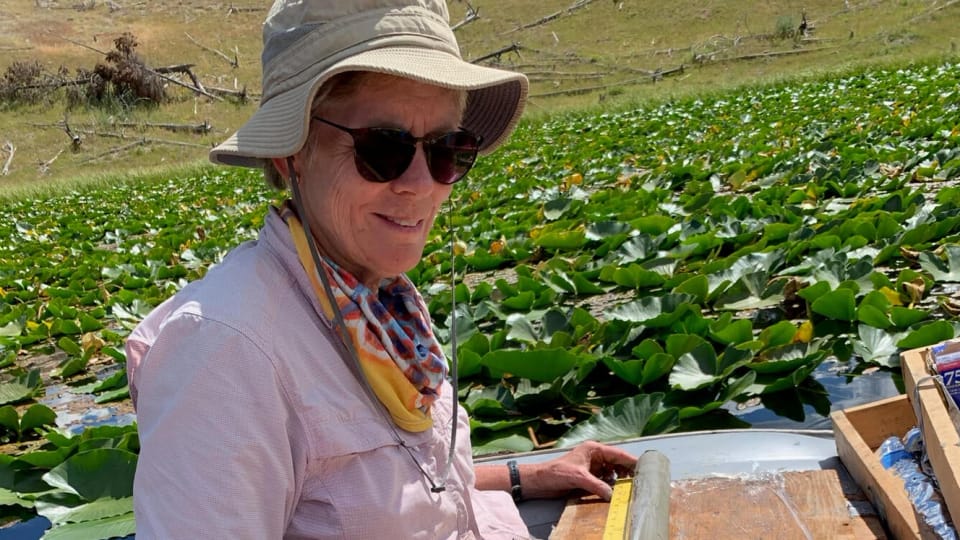
A research team led by Matthew Neal Waters, an environmental sciences professor and paleolimnologist at Auburn University in Alabama, documented the physical record of that poisoning in a study published in the journal Science Advances.123 Examining deep columns of mud recovered from the Yucatán Lowlands, the researchers discovered that lake sediments experienced extreme spikes of mercury contamination during the Classic Period, lasting from roughly 250 CE to 920 CE.2 The toxic accumulation reached levels far beyond established modern ecological safety guidelines, persisting for decades at one urban site and for nearly three centuries at another.1 In the same layers where mercury spiked, the fossil record of microscopic life revealed an abrupt ecological collapse across multiple rungs of the aquatic food web.43
What did ancient lake sediments reveal about the contamination?
Sediment cores pulled from the bottom of two ancient water basins preserved a continuous chronological timeline of the chemical changes. Waters and his colleagues extracted mud cylinders from Lago Cobá, a shallow lake directly adjoining the major Maya metropolis of Cobá, and Cenote Xcach, a flooded sinkhole approximately 100 meters wide situated beside a ruined urban settlement in the jungle.1 Radiocarbon dating of preserved charcoal and wood fragments allowed the researchers to date individual sedimentary layers spanning more than 2,000 years.31 The historical baseline for natural mercury in the undisturbed mud of Lago Cobá was roughly 0.02 micrograms per gram of sediment, or 20 parts per billion.1 As urban activity expanded, concentrations began climbing around 40 CE, eventually reaching a peak of approximately 2.3 micrograms per gram between 250 CE and 300 CE before settling back to natural background levels around 520 CE.1
Sediment retrieved from Cenote Xcach registered an even more persistent history of poisoning that unfolded in three distinct waves.3 The earliest rise occurred around 125 CE, when mercury levels climbed to roughly 3 micrograms per gram.3 A second spike took place from 330 CE to 370 CE, matching the Cobá peak at roughly 2.0 micrograms per gram. The third and most severe contamination surge began around 535 CE and lasted until approximately 820 CE, averaging 8.4 micrograms per gram and peaking near 18 micrograms per gram around 720 CE.3 Under modern environmental sediment guidelines, concentrations above 1.06 micrograms per gram represent the probable effect concentration where damage to sediment organisms becomes likely, while levels above 2.0 micrograms per gram mark the severe effect level where extensive mortality occurs.32 Cobá exceeded the probable damage threshold for more than 200 years and spent nearly a century above the severe effect level, whereas Cenote Xcach remained above the severe effect threshold for nearly three continuous centuries.2
The biological indicators buried alongside the metal confirmed that high mercury levels severely degraded the lakes' living communities. In normal tropical freshwater environments, microfossils of ostracods, which are tiny bivalved crustaceans, remain abundant in bottom sediments.2 In the cores from Lago Cobá, ostracod shells completely disappeared from the sediment layers corresponding to the mercury peak, mirroring an unexplained absence first noted by University of Florida scientists examining climate cores from the site in 1996. Biological markers from algae, photosynthetic cyanobacteria and purple sulfur bacteria also dropped sharply once sediment contamination crossed the severe effect threshold.23 Microscopic analysis of midge larvae preserved in the Cenote Xcach cores, performed in collaboration with researchers at the University of Southampton, revealed that dominant species such as Goeldichironomus almost entirely vanished, replaced temporarily by more tolerant larvae belonging to the genus Beardius before water quality improved.23
Where did the toxic minerals originate and what are the study limits?
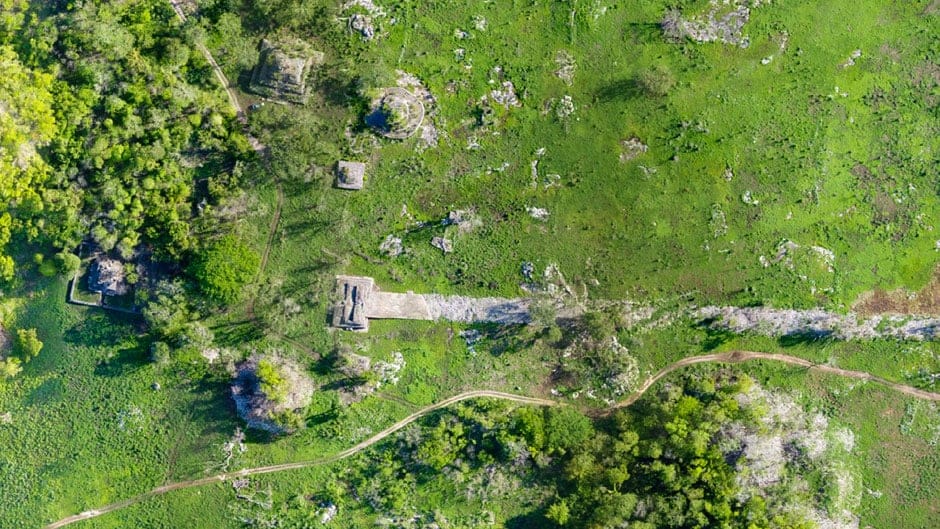
Geological analysis of the Yucatán Lowlands indicates that the mercury arrived exclusively through deliberate human transport. The flat limestone platform of the peninsula contains no natural volcanic deposits or native cinnabar veins, meaning every gram of the raw mineral had to be imported from highland sources hundreds of kilometers away, likely from regions in modern-day Honduras or the volcanic highlands of southern Guatemala.12 Cobá possessed a sprawling network of raised stone causeways called sacbeob, which facilitated extensive regional commerce in obsidian, jade, fine stone weapons and exotic pigments.2 Sediment tests from two distant Yucatán lakes lacking urban centers, Lake Polol and Lake Chichancanab, showed no corresponding rise in mercury during the Classic Period, confirming that atmospheric deposition from global volcanic eruptions did not cause the spike.
These sediment reconstructions cannot provide a definitive census of human poisoning symptoms or fish morbidity in Maya cities. The researchers measured total elemental mercury trapped in mineral mud rather than directly quantifying methylmercury, because organic mercury compounds degrade and transform across millennia of burial.3 While the disappearance of algae and invertebrate shells demonstrates severe disruption to the foundation of the aquatic food web, larger creatures such as fish and turtles did not leave continuous fossil remains in the recovered sediment cores.21 Furthermore, the findings reflect conditions in two specific settled basins rather than uniform regional water quality across every ancient settlement.2
The legacy of this environmental contamination adds an unexamined factor to historical discussions of societal vulnerability. Classic Maya communities were already struggling with severe regional droughts, intensive agricultural deforestation and soil erosion as populations expanded.32 In modern water systems, the United States Environmental Protection Agency considers drinking water unsafe when dissolved mercury exceeds 2 parts per billion, while commercial fish are subject to seizure when tissue concentrations surpass 1 part per million.1 Severe neurological damage, organ failure and mortality can develop in humans when blood concentrations exceed 100 parts per billion.1 By introducing an invisible, persistent poison into municipal reservoirs, the ancient pursuit of religious and civic beauty degraded the very water supplies upon which everyday survival depended.
The record
32 sentences trace to 4 sources.
-
1
TM
 Tom Metcalfe
Document
· livescience.com · 7 Nov 2026
The Maya used so much red paint that they poisoned their water with mercury, mud sediments reveal
See the source
- 2 Mercury and the Maya See the source
- 3 Mercury from Maya cities leaked into Yucatán lakes at toxic levels for centuries, study finds | Archaeology News Online Magazine See the source
-
4
E
 eurekalert.org
Third-party reporting
· eurekalert.org
Mayans’ enthusiastic use of mercury helped the toxin infiltrate the Yucatán environment
See the source