Repurposed coal plants could burn iron powder to back up clean power grids
Converting decommissioned coal stations to burn recyclable metal dust offers European power networks a practical way to store renewable energy without building vast hydrogen caverns.
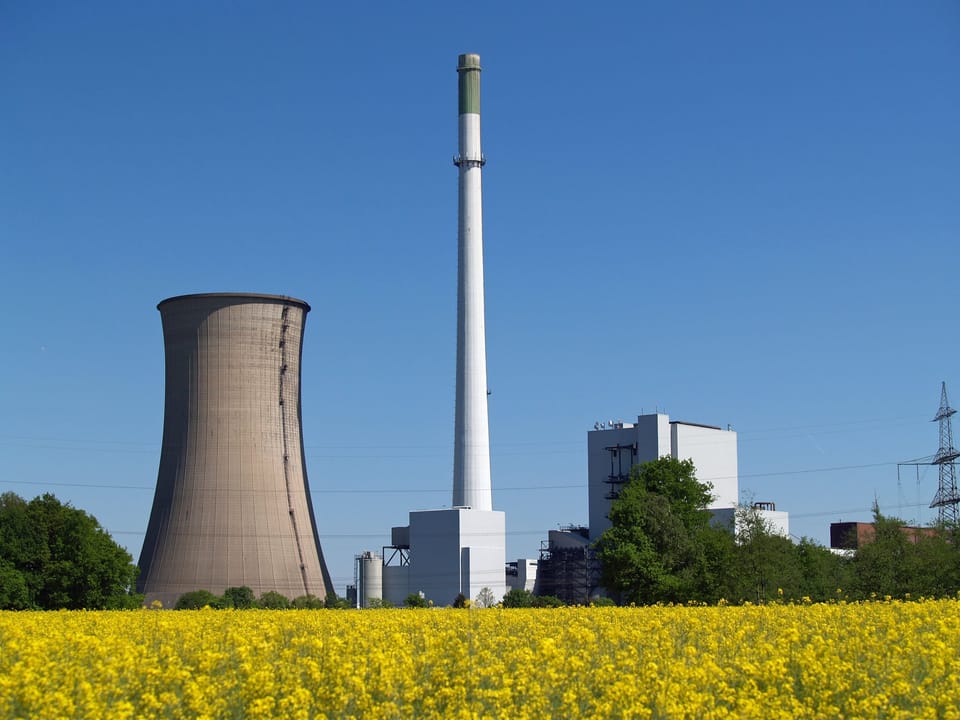
When modern electrical grids phase out fossil fuels, they encounter an stubborn physical barrier. Modern solar arrays and wind farms generate abundant electricity during sunny afternoons and blustery weeks, yet winter weather systems routinely bring extended periods of dense cloud cover and stagnant air across entire continents. Standard battery installations can store surplus energy for several hours, but maintaining an electrical network through weeks of cloudy stillness requires keeping weeks of reserve power on standby. Without vast reserves of fossil fuel to fire on demand, power systems must either construct enormous energy storage facilities or find an entirely different fuel that releases heat without dumping carbon dioxide into the atmosphere.
A potential answer sits inside one of the most common materials on Earth. When ground into fine particles that resemble workshop dust, elemental iron burns in air, releasing intense thermal energy while bonding with oxygen to form iron oxide, commonly known as rust.1 Unlike fossil fuels, the solid residue does not vanish into the sky as greenhouse gas. Instead, the resulting rust particles can be trapped, collected, and stripped of their oxygen atoms using hydrogen gas generated from water through clean electrolysis.1 The reconstructed iron powder can then be shipped, stored in standard grain silos, and burned again in a closed, circular loop.1
Writing in the journal Chem Circularity, lead author Julia Schuler and colleagues at the Karlsruhe Institute of Technology in Germany modeled how European power systems could repurpose retired coal infrastructure to run on this metallic fuel cycle.1 The mechanical machinery that turns heat into electricity inside a coal station—massive boilers, steam turbines, water cooling circuits, and high-voltage grid connections—can remain largely intact.1 By substituting pulverized coal with fine iron grains, plant operators could preserve billions of euros in heavy industrial equipment while providing emergency backup electricity that can sit indefinitely without leaking.1
How does burning metal generate usable electricity?
Fine iron particles combust by reacting rapidly with atmospheric oxygen at elevated temperatures, generating a flame that produces dense heat and solid iron oxide.1 The physical process mirrors coal combustion closely enough that existing plant equipment can harness it. “When burned, iron powder behaves very much like coal. We wanted to find out whether it was possible to repurpose existing coal power plants to iron-firing,” said Julia Schuler, the study's lead author.1 The intense heat released by the oxidising iron boils water into high-pressure steam, which expands across the curved blades of a conventional steam turbine to spin an electromagnetic generator.1
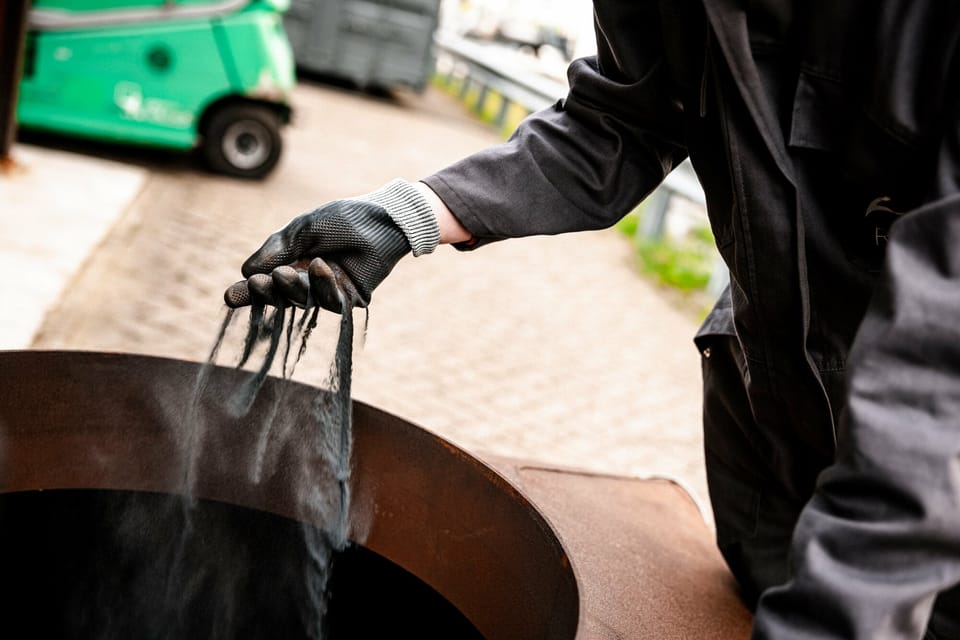
The complete cycle functions as a mechanical and chemical storage device. When renewable energy is abundant, grid operators can run electrolysers to split water into oxygen and hydrogen gas.1 That hydrogen is then fed into an industrial reduction furnace to pull oxygen atoms away from rust particles, yielding water vapor and pure metallic iron.1 Because pure iron does not evaporate, decompose, or slowly seep through steel walls, it solves the primary storage bottleneck that bedevils pure hydrogen gas. Hydrogen consists of the smallest molecule in chemistry and readily escapes through microscopic fissures, requiring highly specialized pressurized tanks or deep subterranean salt caverns to keep it contained.1
Small-scale engineering projects have already shown that the basic chemistry works outside theoretical calculations. In 2020, researchers at Eindhoven University of Technology in the Netherlands installed a 100-kilowatt iron burner at an operating commercial brewery, burning metal powder to generate industrial process steam for brewing beer.1 A separate study from Eindhoven University of Technology in 2026 proved that researchers could burn iron powder, collect the spent oxide dust, and chemically regenerate the metallic fuel across ten successive cycles without exhausting the material.1
Where would iron power plants provide an economic advantage?
Repurposing coal plants into iron-burning stations makes the most financial sense in countries that lack natural salt caverns for underground hydrogen storage and have little mountainous terrain for hydropower reservoirs. Schuler and her team simulated the European energy system through 2050 to see where metallic fuel would outcompete conventional lithium-ion batteries and dedicated hydrogen power plants.1 While battery banks excel at balancing intraday variations over four to eight hours, scaling battery capacity to cover multi-week winter deficits becomes prohibitively expensive.1 Dedicated hydrogen plants, meanwhile, demand expensive transport pipelines and geological cavern formations that exist only in select European regions.1
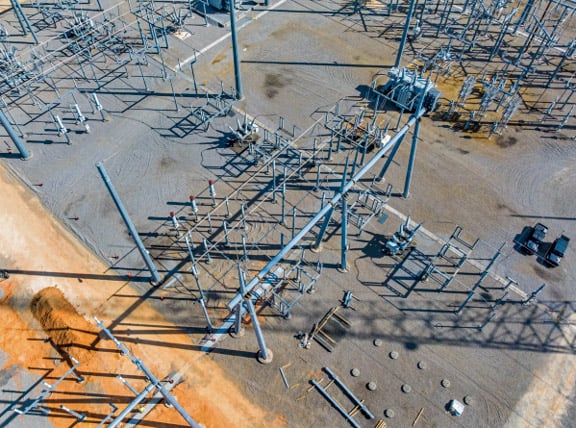
Geographic constraints divide Europe into distinct energy zones. Countries including Ireland, Finland, and the Czech Republic possess minimal underground salt cavern capacity and limited domestic hydropower to stabilize their power systems during cloudy, windless intervals.1 In the model, stocking dry iron powder in surface silos and burning it during acute renewable shortages proved significantly cheaper for these nations than expanding battery arrays or constructing overland hydrogen conduits.1 Retaining the existing turbines, alternators, transformers, and switchyards of decommissioned coal stations reduced the capital expenditure required to bring new clean generation capacity online.1
Across the researchers' baseline 2050 projection, Europe adopted approximately 17 gigawatts of iron-fired generation capacity.1 Converted coal stations accounted for roughly 13.6 gigawatts of that total fleet, with the remainder coming from newly constructed facilities concentrated primarily in Ireland and Finland.1 The introduction of iron fuel reduced the total capacity of hydrogen-fired power plants required across the continent by about 9 percent.1 National outcomes diverged sharply based on local geology: Denmark, France, and the Netherlands converted 100 percent of their eligible coal-plant capacity in the simulation, whereas Germany converted roughly 19 percent.1 By contrast, Poland and Spain added no iron-fired plants because both countries possess favorable geology for underground hydrogen storage, and Romania avoided the technology due to ample hydropower and accessible hydrogen imports.1
What limitations stand between laboratory dust and the grid?
Simulated power plant operations show that iron-fired facilities would run between 2 and 14 percent of the year, operating as emergency reserves during severe seasonal shortages rather than steady baseload power stations.1 Overall savings in the authors' baseline system model remained modest at a few billion euros across the continent.1 A separate European energy model published in November 2026 projected potential savings reaching up to €18 billion annually, although that secondary study included district heating networks and employed different structural assumptions that prevent direct comparisons.1
Real-world engineering hurdles remain formidable before commercial coal stations can burn metal. Power plant boilers require specialized burners, pneumatic powder-handling machinery, and high-efficiency particulate filtration equipment to capture the resulting rust particles before exhaust gases escape.1 More critically, the industrial process for turning rust back into iron using hydrogen remains expensive and technically complex at commercial volumes.1 When the researchers modeled more efficient, low-cost iron regeneration methods, projected European iron capacity expanded to 38.4 gigawatts, but higher retrofit costs caused adoption to decline rapidly.1
The study's numerical projections also carry analytical constraints. The underlying computer model evaluated European energy demand across five representative weather weeks per year, a framework that may not fully capture the most punishing, multi-week seasonal wind droughts.1 Furthermore, burning iron powder is not chemically pristine: laboratory trials have recorded emissions of nitrogen oxides, formed when atmospheric nitrogen reacts in the hot flame, alongside ultra-fine metallic dust that demands rigorous electrostatic scrubbing.1 In the multi-cycle experiments conducted at Eindhoven University of Technology, the overall system recovered only a small share of the energy initially invested during electrolysis and reduction.1
Transforming metal dust into a practical energy reservoir ultimately hinges on whether industrial engineers can drive down the cost of hydrogen reduction and scale up powder-handling machinery before disused coal plants are dismantled. If power utilities tear down decommissioned coal infrastructure too quickly, they risk destroying steam turbines, electrical substations, and grid interconnections that could otherwise serve as long-duration clean batteries for the continent's renewable future.1
The record
37 sentences trace to 1 source.
-
1
TP
 Tibi Puiu
Document
· zmescience.com · 12 Nov 2026
Old Coal Power Plants Could Get a Surprising Second Life by Burning Iron Instead to Store Renewable Energy
See the source